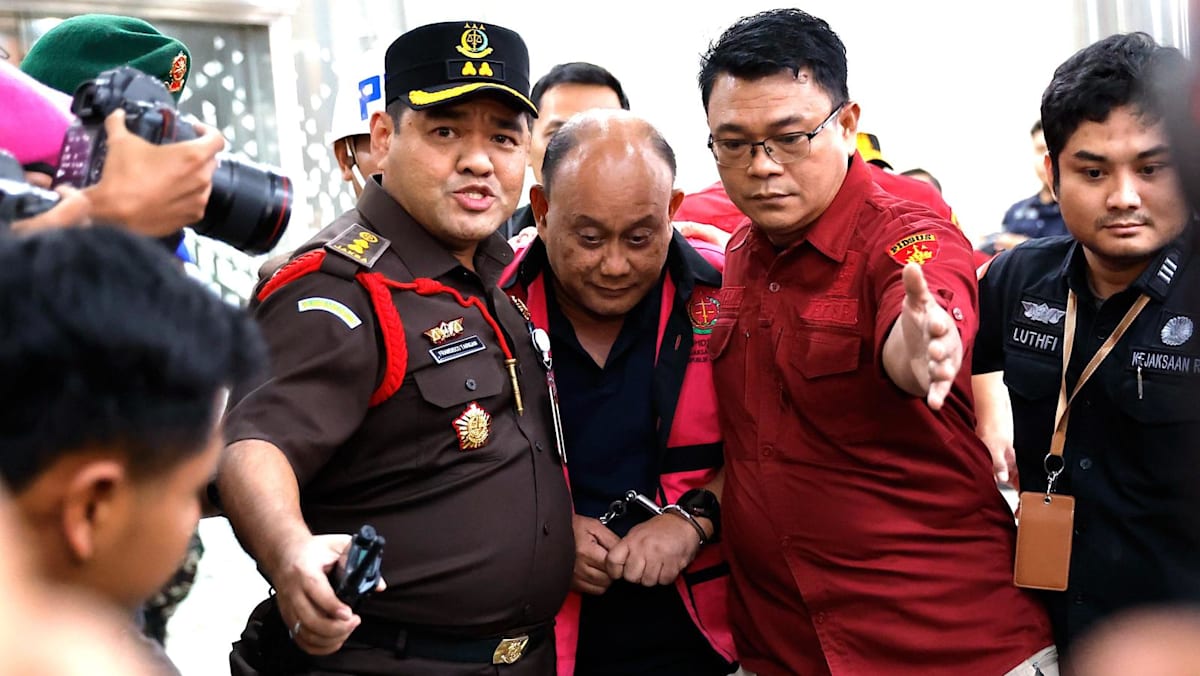
Indonesia Arrests Former Head of President Prabowo’s Flagship Free Meal Scheme – CNA: Corruption and Crisis in Nutrition Agency
The early days of President Prabowo Subianto’s administration have been hit by a significant political and legal tremor. In a move that has sent shockwaves through Jakarta’s political establishment, Indonesia arrests former head of President Prabowo’s flagship free meal scheme – CNA and other international outlets have highlighted the gravity of the situation as prosecutors dive deep into allegations of systemic corruption and gross negligence.
The arrest of the former nutrition agency chief is not merely a legal matter; it is a direct blow to the centerpiece of Prabowo’s social agenda. The “Free Nutritious Meal” program was designed to be a legacy-defining initiative aimed at eradicating stunting and boosting the cognitive development of millions of Indonesian children. However, the transition from a campaign promise to a national reality has been marred by reports of mass food poisonings and, now, a high-level corruption probe that suggests funds intended for the nation’s youth may have been diverted into private pockets.
This development raises critical questions about the oversight mechanisms within the newly formed agency and whether the rush to implement a massive, multi-billion dollar program created a vacuum of accountability that corrupt actors were eager to exploit.
The Anatomy of the Arrest: Corruption Allegations and Agency Raids
The legal crackdown began with a series of coordinated raids by Indonesian prosecutors on the offices of the agency responsible for the meal program. These searches were not random; they were the culmination of an investigation into financial irregularities that appeared shortly after the program’s rollout began. The focus of the probe centers on the procurement process—the mechanism by which the government selects vendors, buys ingredients and distributes meals across the archipelago.
Investigators are reportedly examining evidence of “mark-ups” and kickbacks. In large-scale government procurement, corruption often manifests as the inflation of costs for basic goods, where the difference between the actual market price and the billed price is split between corrupt officials and complicit contractors. For a program of this scale, even a modest percentage of inflation per meal translates into trillions of rupiah in misappropriated funds.
The former head of the agency, who had already been dismissed by President Prabowo following a string of operational failures, now faces formal charges. The arrest serves as a signal that the administration is attempting to distance itself from the scandal, framing the issue as a failure of individual leadership rather than a systemic flaw in the policy itself.
“The integrity of social welfare programs is paramount. When funds meant for the nutrition of children are compromised, it is not just a financial crime; it is a betrayal of the public trust and a threat to the future of the nation’s human capital.”
Key Elements of the Investigation
- Procurement Fraud: Allegations that contracts were awarded to preferred vendors without competitive bidding.
- Budgetary Leakage: Discrepancies between the allocated budget for meal quality and the actual nutritional value of the food delivered.
- Administrative Negligence: A lack of rigorous auditing during the initial phase of the program’s implementation.
From Vision to Nightmare: The Plight of Mass Poisonings
Long before the corruption charges surfaced, the free meal scheme was already under intense scrutiny due to a series of public health crises. Reports of mass food poisonings in several regions had begun to emerge, with hundreds of students falling ill after consuming the government-provided meals. These incidents pointed to a catastrophic failure in food safety standards and supply chain management.

The contrast between the program’s goals and its execution was stark. While the administration spoke of “gold generation” children and improved IQs, the reality on the ground involved emergency room visits and parental panic. These health scares provided the initial catalyst for President Prabowo to fire the agency’s head, but the subsequent arrest suggests that the poor quality of the food was not just a result of incompetence, but a symptom of corruption.
When officials skim money off the top of a food budget, the quality of the ingredients is the first thing to suffer. Lower-grade meat, expired preservatives, or improper storage conditions are often the result of cost-cutting measures implemented to cover the “costs” of bribes. The mass poisonings were not isolated accidents; they were the physical manifestation of financial graft.
| Phase of Failure | Operational Symptom | Underlying Cause (Suspected) |
|---|---|---|
| Implementation | Mass food poisonings in schools | Substandard ingredients due to budget cuts |
| Management | Inefficient distribution and waste | Lack of professional logistics oversight |
| Governance | Arrest of agency chief | Systemic corruption and procurement fraud |
The Political Stakes for President Prabowo
For President Prabowo, the “Free Nutritious Meal” program is more than just a policy; it is a cornerstone of his political identity. By centering his campaign on the health and intelligence of the next generation, he positioned himself as a leader focused on long-term national strength. The current scandal, is a significant political liability.
The administration now faces a delicate balancing act. On one hand, it must show a “zero tolerance” approach to corruption to maintain public trust and satisfy anti-corruption advocates. The arrest of a high-ranking official in a flagship program suggests a failure in the President’s own appointment process. If the head of a critical agency can be arrested for corruption shortly after taking office, critics will ask how many other “leaks” exist in the administration’s infrastructure.
the program’s massive budget puts a strain on the national treasury. With the Indonesian economy facing global headwinds, the revelation that billions of rupiah may have been stolen adds a layer of fiscal irresponsibility to the narrative. The government must now prove that it can salvage the program without compromising the national budget or the safety of the children it intends to serve.
The “Urgency Trap”
Political analysts suggest that the administration may have fallen into the “urgency trap.” In an effort to deliver on a campaign promise quickly and visibly, the government may have bypassed traditional safeguards and due diligence. When speed is prioritized over stability, the result is often a fragile system where corruption can flourish unchecked. This rush to implement the meal scheme likely created the very gaps that the former agency head is now accused of exploiting.
Comparing the Crisis to Global Social Welfare Failures
Indonesia’s struggle with its free meal program is not unique. Many nations have attempted large-scale school feeding programs, and many have stumbled due to the sheer complexity of the logistics. However, the intersection of food safety failures and high-level corruption is a recurring theme in developing economies where procurement laws are loosely enforced.
In other regions, successful programs have relied on decentralized procurement—allowing local communities and farmers to provide the food rather than relying on massive, centralized contracts. By centralizing the nutrition agency, the Prabowo administration created a “single point of failure.” If the head of that agency is corrupt, the entire national system is compromised.
To fix this, Indonesia may need to shift toward a more transparent, community-based model. Moving away from “mega-contracts” and toward local sourcing would not only reduce the opportunity for high-level graft but also stimulate local economies, aligning the program with broader rural development goals.
For more on the evolution of Indonesian governance, see our related explainer on Indonesia’s anti-corruption efforts.
Systemic Implications: Corruption in Public Procurement
The arrest of the nutrition agency chief highlights a deeper, systemic issue in Indonesia: the vulnerability of public procurement. Despite the efforts of the Corruption Eradication Commission (KPK) over the years, the “tender” process remains a primary site for illicit financial flows. The process of awarding government contracts is often opaque, with “winning” bids decided in private meetings long before the official announcement.
The current scandal underscores the need for a digital transformation in how Indonesia handles its social spending. The implementation of “e-catalogs” and blockchain-based tracking for food supplies could potentially eliminate the human intermediaries who facilitate bribes. If every bag of rice and every liter of milk could be tracked from the farm to the student’s plate, the room for “mark-ups” would vanish.
Common Misconceptions About the Scandal
- Misconception: The program is being cancelled due to the arrest.
Reality: The program is too politically important to be scrapped; instead, it is being “recalibrated” with new leadership and stricter oversight. - Misconception: The food poisonings were simply “bad luck.”
Reality: Evidence suggests a direct link between the diversion of funds (corruption) and the purchase of substandard, unsafe food. - Misconception: This is a move by political rivals to weaken Prabowo.
Reality: While political rivalry exists, the raids and arrests were conducted by state prosecutors based on tangible financial discrepancies.
The Road to Recovery for the Nutrition Agency
As the legal process unfolds, the Indonesian government must decide how to rebuild the nutrition agency. The priority is no longer just “delivery” but “integrity.” The new leadership will need to implement a three-pronged strategy to regain public confidence:

- Rigorous Auditing: An independent, third-party audit of all contracts signed during the previous tenure to identify every cent of missing funds.
- Safety Certification: The establishment of a strict food safety certification process that is independent of the procurement office.
- Transparency Portals: A public-facing dashboard where parents and citizens can see exactly how much is being spent per meal and which vendors are being used.
The success or failure of these measures will determine whether the free meal scheme becomes a model for social welfare or a cautionary tale of administrative hubris.
Frequently Asked Questions
Why was the head of Indonesia’s free meal scheme arrested?
The former head was arrested as part of a corruption probe involving the misappropriation of funds and procurement fraud. Investigators believe that budgets intended for children’s meals were illegally diverted or inflated for personal gain.
Did the corruption lead to the mass food poisonings?
While not explicitly stated as a legal charge in every case, investigators and analysts suggest a strong correlation. When funds are stolen from a food budget, the quality of ingredients typically drops, leading to the use of unsafe or substandard food, which likely contributed to the poisoning incidents.
Is President Prabowo still continuing the free meal program?
Yes. The program is a flagship campaign promise and a central part of his administration’s goals to fight stunting. Rather than cancelling the program, the government has fired the problematic leadership and is attempting to restructure the agency to prevent further corruption.
What is “stunting” and why is this program important?
Stunting is the impaired growth and development that children experience from poor nutrition, repeated infection, and inadequate psychosocial stimulation. It can lead to permanent cognitive deficits. The free meal program aims to provide essential nutrients to prevent this and improve the overall health of the Indonesian youth.
Who is investigating the nutrition agency?
The investigation is being led by Indonesian state prosecutors, who have conducted raids on the agency’s offices to seize documents and financial records related to the procurement of meals.
The current crisis serves as a stark reminder that the most ambitious social policies are only as effective as the people tasked with managing them. As the legal battle over the diverted funds continues, the eyes of the nation—and the world—remain on the children of Indonesia, whose health and future were used as pawns in a game of political and financial greed. The administration’s ability to turn this disaster into a lesson in transparency will be the true test of Prabowo’s leadership.
