Breakthrough in Multiple Sclerosis Treatment: New Drug Shows Promise for Advanced Cases
Recent clinical trials have revealed a significant development in the management of multiple sclerosis (MS), with a novel therapeutic approach demonstrating tangible benefits for patients in later stages of the disease. This advancement, reported by leading medical journals and research institutions, has sparked renewed hope for individuals facing progressive forms of MS, which often prove resistant to conventional treatments.
The Study and Its Implications
At the heart of this discovery is a drug that targets specific immune system pathways, offering a new mechanism for slowing the deterioration associated with advanced MS. The findings, published in a peer-reviewed journal, indicate that the medication not only mitigates symptoms but also delays the progression of physical and cognitive impairments. This represents a critical shift in the treatment paradigm, as prior interventions have largely focused on managing early-stage relapses rather than addressing long-term disease progression.
The study involved a diverse cohort of participants, including those with relapsing-remitting MS and secondary progressive MS. Researchers observed a measurable reduction in disability progression among those receiving the experimental therapy, with some patients experiencing improvements in mobility and daily functioning. These results are particularly noteworthy given the limited options available for individuals whose conditions have advanced beyond the initial phases.
Understanding the Mechanism
Unlike traditional MS treatments that primarily suppress immune system activity, the new drug operates by modulating specific immune cells, particularly B cells, which play a role in the autoimmune attack on nerve fibers. This targeted approach aims to reduce inflammation while preserving essential immune functions, a balance that has proven challenging in previous therapies.
However, the study also highlighted complexities. While higher doses of the drug increased B cell depletion, this did not translate to accelerated therapeutic benefits. Researchers noted that the relationship between dosage intensity and clinical outcomes was not linear, underscoring the need for personalized treatment strategies.
Context and Background
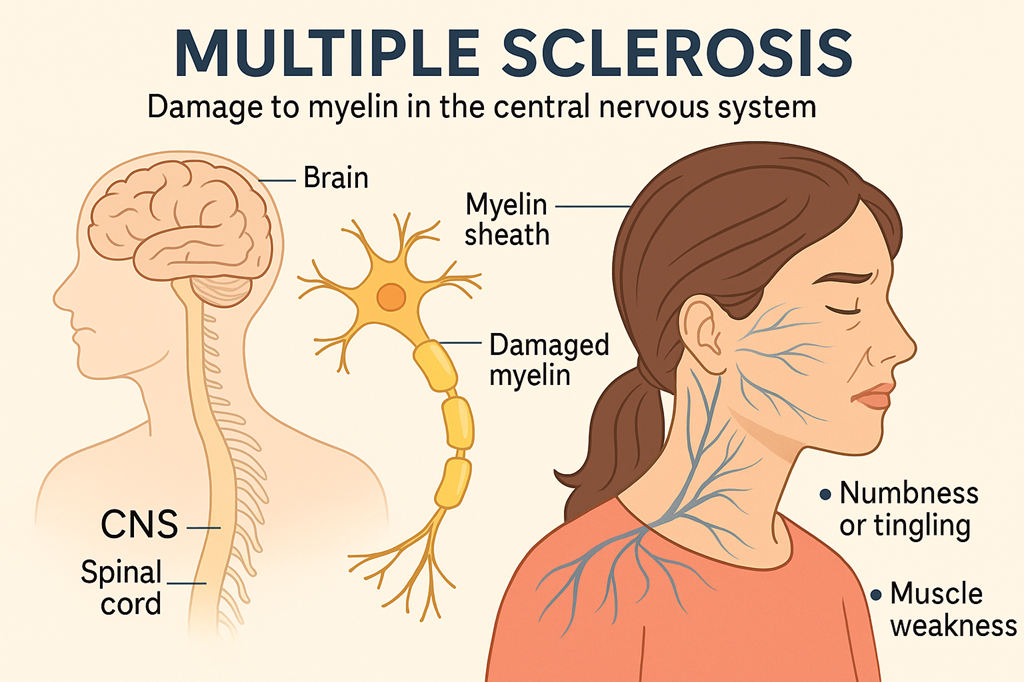
Multiple sclerosis is a chronic autoimmune disorder that affects the central nervous system, leading to a range of symptoms including muscle weakness, vision problems, and cognitive decline. According to the World Health Organization, over 2.8 million people globally live with MS, with progressive forms accounting for a significant portion of cases. The economic and social burden of the disease is substantial, with patients often requiring long-term care and support.
Historically, treatment options for advanced MS have been limited. While several therapies exist to manage relapses, none have consistently addressed the progressive degeneration that occurs in later stages. This gap in care has driven research into novel approaches, including immunomodulatory drugs and neuroprotective agents.
Key Stakeholders and Reactions
The findings have elicited mixed reactions from the medical community. While many experts applaud the progress, others caution against overestimating the drug’s potential. Dr. Emily Carter, a neurologist specializing in autoimmune disorders, noted, “This study opens new avenues, but we must remain cautious. Long-term data and real-world efficacy remain critical to validate these results.”

Pharmaceutical companies involved in the development of the drug have emphasized the importance of further research. A spokesperson for the manufacturer stated, “We are committed to advancing this treatment and ensuring it meets the highest standards of safety and efficacy. Additional trials are underway to explore its potential in broader patient populations.”
Challenges and Considerations
Despite the promising results, several challenges remain. The cost of the drug is a significant concern, as many patients and healthcare systems may struggle to afford such treatments. The need for regular monitoring and potential side effects could complicate widespread adoption.
Experts also highlight the importance of patient selection. Not all individuals with advanced MS may benefit equally from the therapy, and identifying the right candidates will require careful evaluation. Factors such as disease duration, genetic predispositions, and overall health will likely influence treatment outcomes.
Comparisons to Previous Treatments
When compared to existing therapies, the new drug offers a unique approach. Traditional treatments often involve broad immune suppression, which can increase the risk of infections and other complications. In contrast, the targeted mechanism of this drug may reduce some of these risks, though long-term safety data is still being collected.
For example, a 2022 study on another MS medication found that while it reduced relapse rates, it did not significantly impact disability progression. This underscores the importance of the current findings, which address a critical unmet need in MS care.
What’s Next for Research and Treatment?
The next steps involve expanding the scope of clinical trials to include more diverse patient groups and longer follow-up periods. Researchers are also exploring the possibility of combining this drug with other therapies to enhance its effectiveness. Studies are underway to investigate its potential in preventing the onset of progressive MS in earlier stages.
Public health officials are monitoring the situation closely, with some advocating for policies that ensure equitable access to the treatment. “Access to innovative therapies should not be a privilege,” said a representative from a global health organization. “We must work toward solutions that are both effective and accessible.”
Frequently Asked Questions
What is multiple sclerosis, and why is it challenging to treat?
Multiple sclerosis (MS) is a chronic autoimmune disease that attacks the central nervous system. Its unpredictable nature and varying symptoms make it difficult to manage. While treatments exist for relapsing forms, progressive MS remains a significant challenge due to its gradual deterioration of nerve function.
How does the new drug differ from existing MS treatments?
The new drug targets specific immune cells (B cells) involved in the autoimmune response, offering a more precise approach compared to traditional therapies that broadly suppress the immune system. This targeted mechanism may reduce side effects while addressing the root cause of disease progression.
Are there any risks associated with this treatment?
Like all medications, the drug carries potential risks, including side effects related to immune modulation. Patients will need regular monitoring to ensure safety. Long-term
