Kafelnikov on Jodar: ‘He is like a young Carlos Alcaraz five years ago’ – ATP Tour
The tennis world is currently witnessing the ascent of a phenomenon that feels both familiar and entirely new. As the 2026 French Open unfolds, the conversation has shifted from the established titans of the game to a teenager who is rewriting the script of Roland Garros in real-time. The catalyst for this global fascination was a striking comparison made by former Grand Slam champion Yevgeny Kafelnikov, who remarked, “Kafelnikov on Jodar: ‘He is like a young Carlos Alcaraz five years ago’ – ATP Tour,” signaling the arrival of a player who possesses not just the skill, but the raw, disruptive energy that once catapulted Alcaraz into superstardom.
Rafael Jodar is not merely a name on a draw sheet; he is a statement of intent. Entering the tournament with the weight of Spanish expectations on his shoulders, Jodar has managed to transcend the “prodigy” label by delivering performances that defy his age. His journey through the clay of Paris has been characterized by a rare blend of audacity and resilience, most notably evidenced by a stunning comeback that has left analysts and veterans alike questioning whether we are seeing the birth of the next great clay-court dynasty.
The Anatomy of a Comeback: Jodar’s Defiance at Roland Garros
To understand why the tennis community is buzzing, one must look at the sheer magnitude of Jodar’s recent progression. In a match that will likely be remembered as a turning point in his career, the teenager found himself staring at the brink of elimination. Trailing by two sets, Jodar was facing a deficit that would break most seasoned professionals, let alone a teenager making his mark on the biggest stage in tennis.
What followed was a masterclass in mental fortitude. Rather than collapsing under the pressure, Jodar shifted his tactical approach, increasing his aggression and utilizing a variety of drop shots and heavy topspin that mirrored the legendary patterns of Rafael Nadal. He didn’t just claw his way back into the match; he dominated the final stages, overturning a two-set deficit to secure a victory that has set up a high-stakes quarter-final clash against Alexander Zverev.
This specific victory is significant for several reasons:
- Psychological Dominance: Coming back from two sets down at a Major demonstrates a level of maturity and “big-match temperament” rarely seen in players under 20.
- Physical Endurance: The grueling nature of clay-court tennis requires immense aerobic capacity; Jodar’s ability to maintain intensity over five sets suggests a physical peak that rivals the top ten.
- Tactical Flexibility: His ability to pivot mid-match proves that he is not just a “ball-striker” but a strategic thinker.
Analyzing the Kafelnikov Comparison: Why Alcaraz?
When Yevgeny Kafelnikov compared Jodar to a young Carlos Alcaraz from five years ago, he wasn’t just talking about the nationality or the age. He was referring to a specific type of tennis player—the “disruptor.”
“The way he moves, the way he attacks the ball and that fearless instinct to go for the lines when the pressure is highest… It’s a mirror image of what we saw with Carlos in his earliest breakthrough stages. He plays with a freedom that is terrifying for his opponents.”
The comparison holds weight when examining the technical parallels between the two. Like Alcaraz, Jodar possesses an explosive first step and an ability to transition from defense to offense in a single stroke. While many young players rely on a single powerhouse shot, Jodar exhibits a comprehensive game: a lethal forehand, a stable backhand, and a net game that is surprisingly sophisticated for a baseline-oriented player.
Technical Parallels: Jodar vs. The Alcaraz Blueprint
| Attribute | The Alcaraz Blueprint (Early Years) | The Rafael Jodar Approach |
|---|---|---|
| Court Coverage | Hyper-aggressive, sliding into shots | Fluid, explosive lateral movement |
| Shot Selection | High-risk, high-reward winners | Calculated aggression with variety |
| Mental State | Fearless, joyful competitiveness | Disciplined, focused, yet bold |
| Clay Proficiency | Heavy topspin, strategic patience | Nadal-esque intensity and angles |
The Shadow of Giants: Following Nadal and Alcaraz
For any young Spanish player, the ghosts of Rafael Nadal and Carlos Alcaraz are always present. The expectation is not simply to be “excellent,” but to be “dominant” on clay. Jodar has been open about his ambitions, stating his desire to conquer Roland Garros in a manner reminiscent of Nadal’s legendary reign. However, the burden of such a legacy can often crush a young athlete.
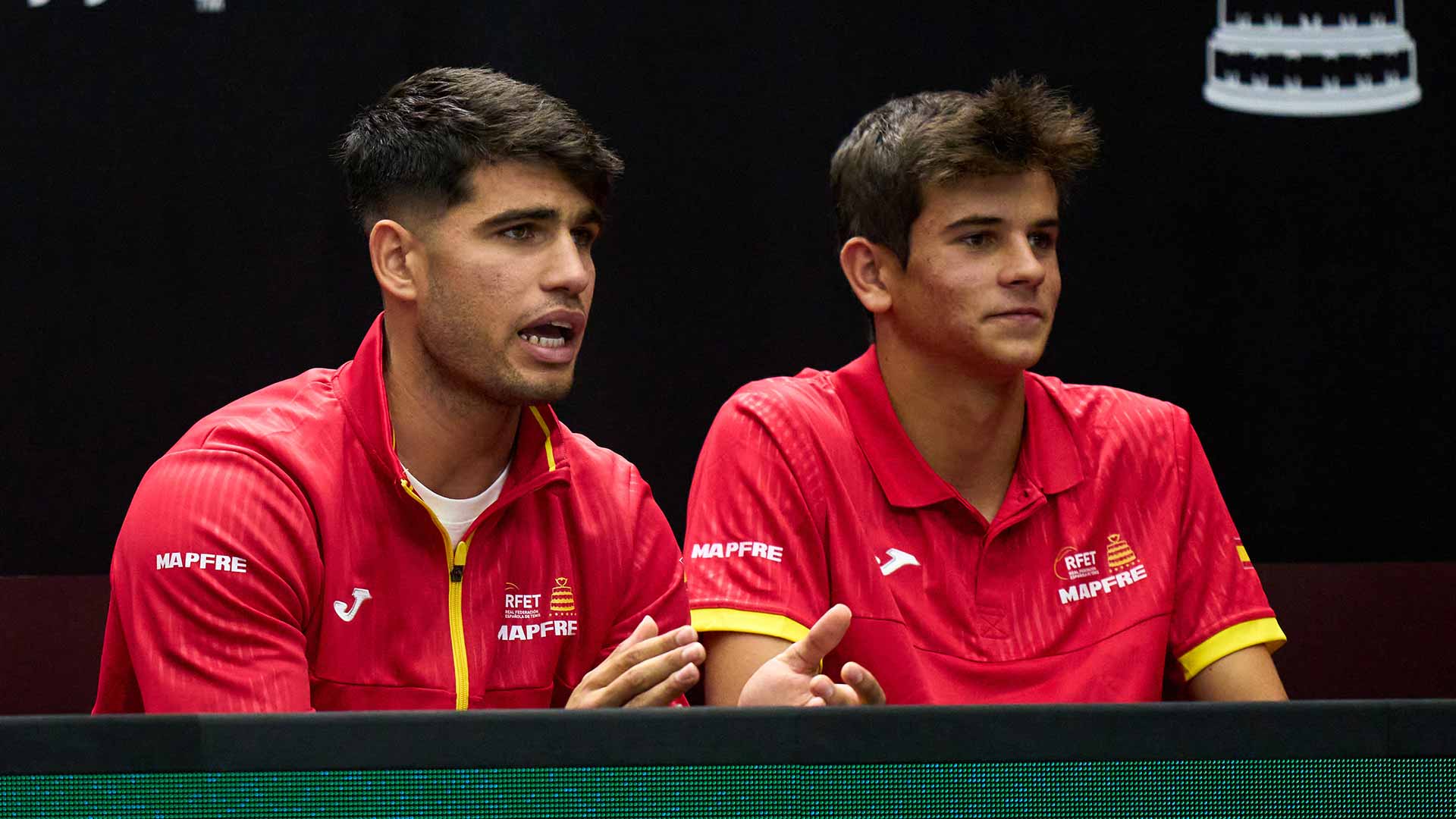
Interestingly, Jodar has adopted a philosophy of “aggressive humility.” Despite the media frenzy and the comparisons to the greatest to ever play the game, he has remained steadfast in his insistence on staying grounded. This balance between an elite competitive drive and a humble public persona is often the secret ingredient in the longevity of sports icons.
By acknowledging the footsteps of those who came before him, Jodar is not merely copying them; he is using their blueprints to build his own identity. He recognizes that while the style of the Spanish school is rooted in endurance and topspin, the modern game requires more versatility and speed—elements he has integrated seamlessly into his play.
The Road Ahead: Jodar vs. Zverev and the Quarter-Final Hurdle
The upcoming quarter-final against Alexander Zverev represents the ultimate litmus test for Jodar. Zverev is a seasoned veteran with a towering serve and a clinical baseline game. For Jodar, this match is more than just a path to the semi-finals; it is a clash of generations and styles.
To defeat Zverev, Jodar will need to leverage the exceptionally traits Kafelnikov praised. He cannot afford to be outmuscled from the baseline; instead, he must use his agility to pull Zverev out of position and employ the drop shots that have become his trademark this tournament. The narrative of the “teenager vs. The titan” is a classic sports trope, but in this instance, the teenager possesses the momentum of a player who feels invincible.
Key Factors for the Zverev Matchup:
- Neutralizing the Serve: Jodar’s return game will be critical in preventing Zverev from holding serve easily.
- Varying the Pace: Using slices and drop shots to disrupt Zverev’s rhythm and force him to move forward.
- Emotional Control: Maintaining the “humble” mindset to avoid being overwhelmed by the scale of the occasion.
The Broader Impact on the ATP Tour
The emergence of Rafael Jodar comes at a pivotal moment for the ATP Tour. As the era of the “Big Three” has transitioned into a more fragmented landscape, the tour has been searching for a definitive new face—a player who can command the same global attention and sporting awe. While Alcaraz has filled much of that void, the arrival of another generational talent like Jodar suggests that the “Spanish Era” is not ending, but evolving.
This development has several implications for the professional circuit:
- Shift in Training Paradigms: Jodar’s success emphasizes the importance of early specialization in movement and mental resilience.
- Commercial Appeal: A young, charismatic star with a “Cinderella story” trajectory is a goldmine for sponsors and tournament organizers.
- Competitive Pressure: The rise of Jodar puts pressure on other young players in the top 100 to accelerate their development.
For those interested in how the next generation is shaping the sport, a related explainer on the evolution of baseline play provides deeper insight into the technical shifts we are seeing in the modern game.
Common Misconceptions Regarding Young Prodigies
When a player like Jodar bursts onto the scene, it is easy for the public and media to fall into certain traps of oversimplification. It is important to clarify a few points to maintain a balanced perspective on his trajectory.

Misconception 1: He is “The Next Nadal.”
While Jodar admires Nadal and plays a similar style on clay, calling him “the next” anyone is premature. Every great player must carve their own path. Jodar’s game is more aligned with the hybrid speed of Alcaraz than the pure attrition of Nadal.
Misconception 2: A single tournament defines a career.
A deep run at the French Open is a massive achievement, but the true test of a champion is consistency across different surfaces. The world will be watching closely to see how Jodar adapts his game to the grass of Wimbledon and the hard courts of the US Open.
Misconception 3: Humility is a PR strategy.
While athletes are coached on media relations, the psychological benefit of humility is real. By staying “humble,” Jodar protects himself from the crushing pressure of expectation, allowing him to play with the freedom that Kafelnikov noted.
The Legacy in the Making
Whether Rafael Jodar goes on to win the 2026 French Open or falls short in the quarter-finals, the impact of his performance is already cemented. He has reminded the sporting world that tennis is still capable of producing “lightning-strike” moments—where a teenager arrives on the scene and fundamentally changes the energy of a tournament.
The quote “Kafelnikov on Jodar: ‘He is like a young Carlos Alcaraz five years ago’ – ATP Tour” serves as more than just a compliment; it is a benchmark. It sets a standard for what Jodar is capable of achieving. By blending the grit of the past with the speed of the present, Jodar is not just following in the footsteps of legends—he is beginning to leave a trail of his own.
As he prepares to face Zverev, the tennis world isn’t just watching a match; they are watching the potential dawn of a new epoch in the sport. The combination of technical brilliance, mental toughness, and a grounded personality makes Rafael Jodar the most compelling story of the 2026 season.
Frequently Asked Questions
Who is Rafael Jodar?
Rafael Jodar is a rising Spanish tennis star who has gained international attention during the 2026 French Open for his exceptional play and mental resilience, drawing comparisons to Carlos Alcaraz and Rafael Nadal.
Why did Yevgeny Kafelnikov compare Jodar to Carlos Alcaraz?
Kafelnikov noted similarities in Jodar’s aggressive court coverage, fearless shot-making, and the overall disruptive energy he brings to the court, which mirrors Alcaraz’s early breakthrough period.
What was Jodar’s most impressive feat at the 2026 French Open?
His most notable achievement was coming back from two sets down in a high-pressure match to secure a victory and advance to the quarter-finals against Alexander Zverev.
Does Jodar play like Rafael Nadal?
While he incorporates elements of Nadal’s clay-court mastery—such as heavy topspin and extreme endurance—his game is more a hybrid of Nadal’s grit and Alcaraz’s modern speed and versatility.
What is the significance of Jodar’s quarter-final match against Zverev?
It represents a clash between a seasoned ATP veteran and a teenage prodigy, serving as a critical test of Jodar’s ability to handle top-tier opposition on a global stage.
