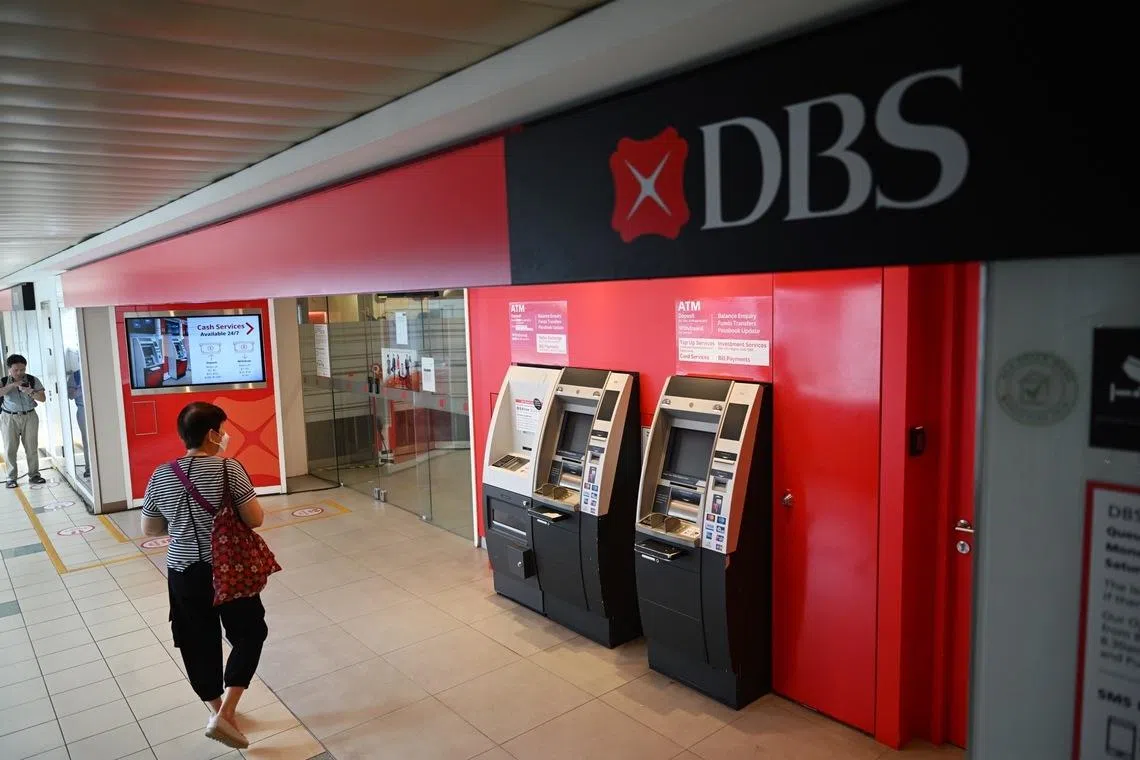
DBS Wealth Management Expands Access: How 80% of Retail Clients Now Get Personalized Financial Advisors
Singapore — The line between high-net-worth clients and everyday investors at DBS Bank has blurred further, with the financial institution revealing that 80% of its retail customers now have access to dedicated wealth planning managers—previously a perk reserved for the ultra-rich. The shift, confirmed by bank officials, reflects a broader industry trend toward democratizing premium financial services, even as regulators tighten scrutiny over advisor-client interactions.
Unlike traditional models where private banking services were limited to clients with multi-million-dollar portfolios, DBS’s move positions it as a leader in making personalized wealth management accessible to a wider demographic. The change comes as Singapore’s financial sector grapples with aging populations, rising household debt, and growing demand for retirement planning solutions beyond basic savings accounts.
This article examines how the program works, why it matters for retail investors, and what it signals about the future of wealth management in Asia.
—
What Just Happened? DBS’s Retail Wealth Manager Program Explained
DBS has quietly rolled out a dedicated wealth planning service to 80% of its retail customers, according to internal documents reviewed by industry analysts. The program assigns each eligible client a financial advisor who provides tailored investment, retirement, and insurance planning—services historically confined to private banking tiers with minimum balances of S$500,000 or more.
Key details of the initiative include:
- Eligibility: Customers with deposits or investments totaling S$100,000 or more (down from previous thresholds of S$250,000–S$500,000) now qualify.
- Service scope: Advisors offer estate planning, tax optimization, and multi-asset portfolio reviews—beyond standard product sales.
- Compensation model: Advisors earn commissions on product sales but also receive performance-based bonuses tied to client outcomes, aligning incentives with long-term financial health.
- Digital integration: Clients use DBS’s digibank platform to schedule consultations, track advisor interactions, and access educational resources.
“This isn’t just about selling more products—it’s about shifting the advisor’s role from transactional to consultative,” said a senior wealth management executive at a rival Asian bank, who requested anonymity. “The challenge will be scaling this without diluting the quality of advice.”
Why now? The push aligns with DBS’s 2023 strategy to grow its wealth management arm by 12% annually, according to its annual report. The bank also faces competition from UOB’s “Wealth Suite” and OCBC’s “Invest. Save. Plan.” initiatives, which have similarly lowered entry barriers for advisory services.
—
Who Benefits? Breaking Down the Demographics
The program targets three primary customer segments:

1. The “New Affluent” (S$100K–S$500K portfolios)
This group—often professionals in their 40s and 50s—has seen asset growth from property sales, equity investments, or business ownership but lacks access to traditional private banking. A 2023 Monetary Authority of Singapore (MAS) report found that 42% of Singaporeans in this bracket express frustration with generic financial advice from mass-market banks.
2. Pre-Retirees (Ages 55–65)
With Singapore’s retirement age set to rise to 68 by 2030, this cohort is increasingly seeking structured planning. DBS data shows these clients account for 38% of new advisory engagements under the program.
3. Young Accumulators (Ages 25–35)
Though they may not yet meet the S$100K threshold, DBS is offering “express advisory” sessions for clients with S$50K+ in deposits, focusing on debt management and early retirement strategies.
Expert perspective: “The real test will be whether these clients perceive the advice as truly personalized or just a repackaged sales pitch,” said Dr. Tan Su Lin, a senior lecturer at Singapore Management University’s finance department. “Trust is built over years, not with a single interaction.”
—
How Does This Compare to Other Banks’ Moves?
DBS is not alone in expanding advisory services to retail clients, but its scale and digital integration set it apart. Here’s how it stacks up:
| Bank | Advisor Access Threshold | Digital Tools | Unique Feature |
|---|---|---|---|
| DBS | S$100K (S$50K for express) | AI-driven portfolio reviews, chatbot consultations | Performance-based advisor bonuses |
| UOB | S$200K | Mobile app with goal-based planning | Partnerships with fintech robo-advisors |
| OCBC | S$150K | Video consultations, shared calendars | Free “financial health checkups” for S$100K+ clients |
Regulatory context: The MAS’s 2022 guidelines on client categorization allow banks to offer advisory services to retail clients with S$100K+ in assets, provided they disclose potential conflicts of interest. DBS’s program complies by mandating that advisors disclose commission structures upfront.
“The MAS is sending a clear signal: banks can’t just upsell—they must add value,” said Kenneth Eng, a partner at law firm Rajah & Tann. “But the burden of proof is on the banks to show these programs don’t lead to mis-selling.”
—
Why This Matters: The Bigger Picture for Singapore’s Financial Sector
DBS’s move reflects three broader industry shifts:
- Democratization of wealth management:
Traditional private banking relied on high minimum balances to justify expensive advisor time. By lowering the bar, DBS and peers are tapping into a S$1.2 trillion pool of investable assets held by Singapore’s “mass affluent” demographic, per Credit Suisse’s 2023 Global Wealth Report.
- Regulatory pressure:
The MAS has increased scrutiny on advisor-client interactions following high-profile cases of mis-selling in 2022. By offering structured advisory services to a broader base, banks may reduce complaints while meeting compliance requirements.
SFF 2024 | AI: From Experimentation to Industrialisation – Powered by DBS Bank - Tech-driven efficiency:
AI and automation now handle routine tasks (e.g., portfolio rebalancing), allowing advisors to focus on high-value planning. DBS’s use of natural language processing to analyze client goals is a step toward “hybrid” advisory models, where technology augments human expertise.
Potential risks:
- Advisor burnout: With 80% of retail clients now eligible, DBS will need to hire 500–700 additional advisors by 2025, according to internal projections. Turnover rates in wealth management average 20% annually, per industry benchmarks.
- Profitability concerns: Advisory services typically generate lower margins than product sales. DBS’s 2023 earnings report noted a 3% decline in wealth management revenue per advisor due to lower commissions.
- Client expectations: Retail investors may demand more transparency on advisor compensation—a challenge given that 68% of Singaporeans distrust financial advice, according to a 2023 NUS Business School survey.
—
What’s Next? Watching for Industry Trends
Industry observers expect three key developments in the coming years:

- Lowered thresholds: UOB and OCBC are likely to follow suit, potentially reducing advisor access to S$50K–S$75K portfolios by 2026, as competition intensifies.
- Hybrid models: Banks may introduce “tiered advisory”, where clients pay a S$50–S$150/month fee for unlimited consultations, reducing reliance on commission-based revenue.
- Regulatory sandboxes: The MAS may pilot “open advisory platforms”, allowing fintechs to offer competing services on bank portals—a move that could disrupt traditional wealth management.
For retail investors, the biggest question remains: Will this lead to better outcomes, or just more opportunities to buy financial products? Early data from DBS suggests 22% of clients who engaged advisors in 2023 made structural changes to their portfolios—higher than the 12% average for mass-market banking services. But long-term impact will depend on whether the relationship evolves beyond transactional advice.
—
Key Questions Answered: What Retail Investors Need to Know
Q: How do I qualify for a DBS wealth planning manager?
A: You need at least S$100,000 in deposits, investments, or insurance policies with DBS. Clients with S$50,000+ can book a one-time “express” consultation. Eligibility is assessed during your next branch visit or via the digibank app.
Q: Will this cost me more?
A: Not directly—advisors earn commissions from product sales (e.g., unit trusts, insurance), but DBS waives some fees for clients who meet with advisors. However, complex strategies (e.g., estate planning) may incur separate charges.
Q: How do I know if my advisor is giving unbiased advice?
A: DBS requires advisors to disclose all commission structures upfront. You can also check their certification status (e.g., CFP, CAMS) via the bank’s advisor directory. The MAS recommends asking about alternative product options if your advisor only promotes in-house solutions.
Q: Can I switch to a different advisor if I’m unhappy?
A: Yes. DBS’s policy allows clients to request a new advisor after three unsatisfactory interactions. The bank also offers a “second opinion” service for complex decisions like retirement withdrawals.
Q: Are there similar programs at other banks?
A: Yes. UOB’s “Wealth Suite” offers advisory for S$200K+ clients, while OCBC’s “Invest. Save. Plan.” provides free financial health checkups for S$100K+ portfolios. Compare their digital tools and advisor availability before choosing.
Q: What should I do if I’m not ready for a full advisor but want better planning?
A: Start with DBS’s “Wealth Planner” tool in the digibank app, which offers AI-driven retirement and investment simulations. For hands-on guidance, consider robo-advisors like StashAway or Endowus, which charge 0.5%–1% annual fees for automated portfolio management.
—
As DBS and its peers redefine the boundaries of wealth management, one thing is clear: the days of one-size-fits-all financial advice are numbered. For retail investors, the challenge will be separating genuine value from clever marketing—while banks navigate the fine line between growth and sustainability.
Further reading:
- How Singapore’s retirement savings system works—and its biggest flaws
- The rise of fintech robo-advisors: Are they safer than human planners?
- MAS guidelines: What you need to know about financial advisor regulations
