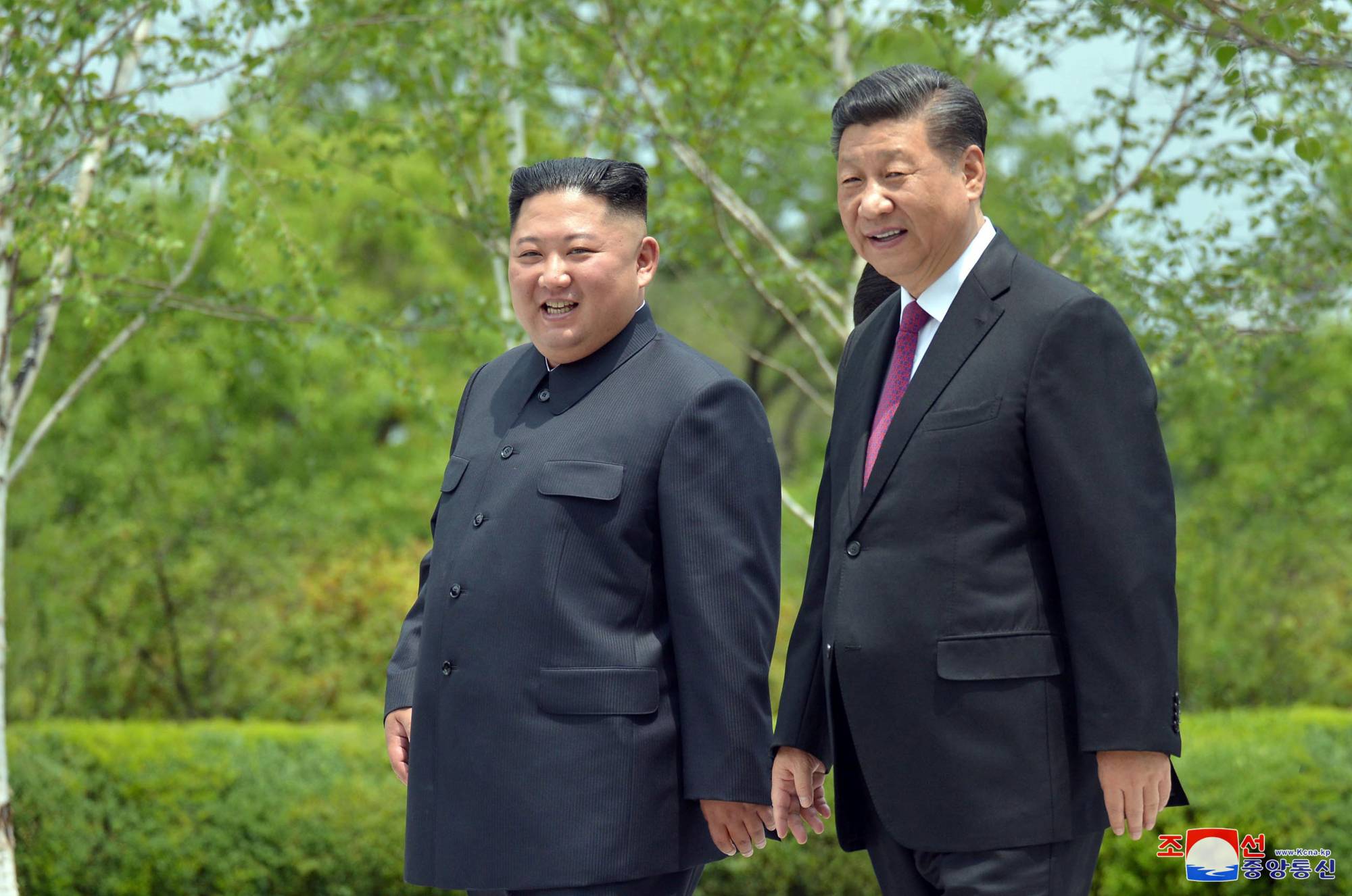
Diplomatic Pivot: Xi to Visit North Korea June 8-9, for First Time Since 2019
In a move that signals a significant recalibration of East Asian geopolitics, Chinese President Xi Jinping is scheduled to conduct a state visit to the Democratic People’s Republic of Korea (DPRK) on June 8 and 9. This high-profile diplomatic engagement marks the first time the Chinese leader has stepped onto North Korean soil since 2019, ending a prolonged hiatus that has mirrored the deepening isolation of Pyongyang and the shifting strategic priorities of Beijing.
The announcement that Xi to Visit North Korea June 8-9, for First Time Since 2019 has sent ripples through diplomatic circles in Seoul, Tokyo and Washington. For years, the relationship between the two communist neighbors has been characterized by a complex blend of strategic necessity and mutual distrust. However, the timing of this visit suggests a renewed urgency to solidify a partnership that serves as a critical bulwark against Western influence in the Pacific.
This visit is not merely a ceremonial gesture. It occurs against a backdrop of heightened regional tensions, including North Korea’s accelerating missile program and a tightening security alliance between the United States, South Korea, and Japan. By returning to Pyongyang, President Xi is sending a clear message about China’s role as the primary guarantor of stability—and the primary patron—of the Kim Jong Un regime.
The Mechanics of the Visit: What We Know
The planned itinerary for June 8 and 9 is expected to follow the traditional protocols of a state visit, involving high-level bilateral talks, joint statements, and symbolic displays of solidarity. While the specific agenda remains closely guarded by both governments, the nature of these meetings typically focuses on three primary pillars: security coordination, economic assistance, and ideological alignment.
Observers note that the logistics of such a visit are immense, requiring extraordinary security measures and meticulous planning. In the lead-up to the announcement, intelligence analysts pointed to unusual activity at border crossings and airports. The use of satellite imagery has played a pivotal role in predicting this movement, with analysts spotting increased security cordons and diplomatic preparations that hinted at a high-level arrival long before official channels confirmed the dates.
| Key Detail | Description |
|---|---|
| Dates of Visit | June 8 – June 9 |
| Last Visit | 2019 |
| Primary Objective | Strengthening strategic ties and regional security coordination |
| Key Participants | President Xi Jinping and Supreme Leader Kim Jong Un |
| Primary Indicator | Satellite imagery and official state media confirmations |
The Role of Intelligence and Satellite Speculation
One of the most intriguing aspects of this diplomatic event is the role of open-source intelligence (OSINT). Before the formal announcement, satellite images fueled widespread speculation regarding the visit. Analysts observed an increase in aircraft movements at Pyongyang’s Sunan International Airport and heightened activity along the Dandong-Sinuiju border crossing, the primary artery for China-DPRK trade.
This reliance on imagery highlights the opacity of the North Korean state. Because Pyongyang rarely announces high-level visits in advance, the international community must rely on “digital footprints”—such as the movement of luxury vehicles, the cleaning of specific government plazas, and the deployment of elite security units—to gauge the likelihood of a visiting head of state.
Analyzing the Five-Year Gap: Why Now?
The fact that this is the first visit since 2019 is a detail of immense geopolitical weight. To understand why the gap occurred and why We see closing now, one must look at the intersection of global health crises and strategic pivots.
The Pandemic and Extreme Isolation
Following the 2019 visit, the COVID-19 pandemic hit the world, and North Korea responded with some of the most stringent border closures in human history. For nearly three years, the DPRK effectively shuttered its doors to almost all foreign nationals, including those from China. This “hermit” phase was not just about public health; it allowed Kim Jong Un to tighten internal control and purge perceived weaknesses within his administration without external interference.
Shifting Strategic Priorities in Beijing
Beijing’s approach to Pyongyang has also evolved. While China has always viewed North Korea as a necessary “buffer state” to prevent US troops from being stationed directly on its border, the relationship has often been strained. China has historically expressed frustration with North Korea’s nuclear provocations, which risk triggering US-led sanctions or military escalations that could destabilize the region.
However, the global landscape has changed. The intensification of the US-China trade war and the formation of more cohesive security pacts (such as AUKUS and the Quad) have pushed Beijing closer to Pyongyang. In a world where the US is actively “containing” China, having a loyal, nuclear-armed ally on its periphery is an asset that outweighs the headaches of North Korea’s erratic behavior.
“The return of President Xi to Pyongyang is less about endorsing North Korea’s nuclear ambitions and more about ensuring that the North remains a stable, predictable partner in a region increasingly dominated by US military architecture.”
The Strategic Imperatives: What is at Stake?
The meeting between Xi and Kim is centered on several critical imperatives that affect not only the two nations but the global security order. To understand the depth of this visit, we must examine the specific levers of power being pulled.
1. The “Buffer State” Doctrine
For China, the primary objective is the survival of the North Korean state. The nightmare scenario for Beijing is a regime collapse in Pyongyang, which would likely result in a massive refugee crisis and, more critically, the potential for a unified Korea under a pro-US government. This would effectively put US forces on the Yalu River. By visiting on June 8-9, Xi reaffirms that China will not allow the regime to fail.
2. Economic Lifelines and Trade
North Korea’s economy has been decimated by a combination of UN sanctions and the pandemic. China remains the DPRK’s only significant economic lifeline, providing the vast majority of its food, fuel, and consumer goods. This visit likely involves discussions on expanding trade quotas and providing targeted economic aid to ensure the North Korean population remains fed and the elite remain loyal.
3. Nuclear Deterrence and Leverage
While China officially supports the denuclearization of the Korean Peninsula, it is unlikely to pressure Kim Jong Un aggressively to give up his nuclear arsenal at this stage. Instead, Beijing views North Korea’s capabilities as a tool of leverage. If North Korea can keep the US preoccupied and defensive in East Asia, it diverts American resources and attention away from other flashpoints, such as the Taiwan Strait.
4. Ideological Solidarity
There is a powerful symbolic element to this visit. By treating Kim Jong Un as a peer and a strategic partner, Xi elevates the status of the DPRK on the world stage. This mutual legitimacy helps both leaders frame their respective systems as viable, sovereign alternatives to Western liberal democracy.
- Security: Coordination on missile tests and joint military signaling.
- Economy: Negotiation of “grey market” trade and sanctions evasion tactics.
- Diplomacy: Creating a united front against the US-South Korea-Japan trilateral alliance.
- Logistics: Improving cross-border infrastructure for faster resource movement.
Regional Reactions: Seoul, Tokyo, and Washington
The news that Xi to Visit North Korea June 8-9, for First Time Since 2019 has triggered immediate concern across the democratic bloc in East Asia. Each stakeholder views the visit through a different lens of risk.
South Korea: The Anxiety of a New Axis
For Seoul, a close China-DPRK alignment is a strategic nightmare. The South Korean government fears that Beijing will provide a “diplomatic shield” at the UN Security Council, preventing new sanctions from being imposed even as North Korea continues to refine its ICBM (Intercontinental Ballistic Missile) technology. There is a palpable worry that China may encourage Pyongyang to be more aggressive in its rhetoric to distract from China’s own internal economic struggles.
Japan: The Nuclear Threat
Tokyo views the visit as a signal that the “pressure” campaign on North Korea is failing. Japan is particularly concerned about the potential for technology transfers—specifically, whether China might provide advanced aerospace or cyber-warfare capabilities to the DPRK in exchange for strategic loyalty.
The United States: The Great Power Competition
From Washington’s perspective, this visit is a clear manifestation of the “New Cold War.” The US sees the Xi-Kim meeting as an attempt to build a bloc of autocratic states designed to challenge US hegemony in the Indo-Pacific. The US response is likely to be a doubling down on its “Integrated Deterrence” strategy, increasing joint military exercises with its allies to signal that a China-DPRK axis cannot unilaterally change the status quo.
Common Misconceptions About the Xi-Kim Relationship
To the casual observer, the relationship between China and North Korea looks like a seamless alliance. However, a deeper analysis reveals significant frictions that are often overlooked.
Misconception 1: China fully supports North Korea’s nuclear program.
In reality, Beijing is deeply ambivalent. While they prefer a nuclear North Korea to a collapsed one, they dislike the instability and the justification it gives the US to deploy more missile defense systems (like THAAD) in the region. China wants a “frozen” conflict, not an escalating one.
Misconception 2: Kim Jong Un is a puppet of Beijing.
Kim has consistently proven that he is willing to defy Chinese wishes if he believes it serves his own survival. He has ignored Beijing’s pleas for restraint during several missile cycles and has carefully managed his relationship with the US and Russia to ensure he isn’t overly dependent on a single patron.
Misconception 3: The visit is purely about economics.
While trade is vital, the visit is primarily about signaling. In the world of high-stakes diplomacy, the act of visiting is often more important than the actual agreements signed. It is a performance of power intended for an audience in Washington.
Historical Context: The “Blood-Cemented” Friendship
To understand the weight of the June 8-9 visit, one must look back at the historical foundations of the China-DPRK relationship. The bond was forged during the Korean War (1950-1953), when Chinese “volunteers” entered the conflict to prevent the collapse of the North Korean regime. This created a legacy of “blood-cemented friendship” that continues to be cited in official rhetoric.
However, this friendship has always been transactional. During the Mao era, the relationship was ideological. Under Deng Xiaoping, it became more pragmatic. Under Xi Jinping, it has become strategic. The evolution of this bond reflects China’s own rise as a global superpower; Beijing no longer sees North Korea just as a neighbor to be managed, but as a piece on a global chessboard.
For those interested in the broader implications of regional security, a related explainer on the US-Japan-South Korea trilateral alliance provides necessary context on the forces Beijing is attempting to counter through this visit.
Frequently Asked Questions
Why is it significant that Xi Jinping is visiting North Korea for the first time since 2019?
The five-year gap represents a period of extreme isolation for North Korea due to the pandemic and a period of strategic reassessment for China. A return visit signals that the “isolation phase” is over and that China is once again prioritizing the active management and support of the Kim regime to counter US influence in the region.
What are the likely outcomes of the June 8-9 meetings?
The most likely outcomes include an agreement to increase bilateral trade, a joint statement condemning “external interference” in the region, and a strategic coordination plan for upcoming UN Security Council votes regarding sanctions on the DPRK.

How does this visit affect the possibility of North Korean denuclearization?
Most analysts believe this visit decreases the likelihood of denuclearization in the short term. If North Korea feels it has the full diplomatic and economic backing of China, it has less incentive to negotiate with the United States or make concessions regarding its nuclear arsenal.
What role did satellite imagery play in this news?
Satellite imagery acted as an early warning system. By tracking unusual movements of security forces, aircraft, and border activity, intelligence analysts were able to predict a high-level visit before official government channels confirmed the dates of June 8 and 9.
Will this visit lead to a direct conflict with the United States?
While the visit increases tensions, it is unlikely to trigger a direct conflict. Instead, it is a form of “gray zone” diplomacy—using political and economic alignment to pressure the US without crossing the threshold into open military aggression.
The Path Forward: Monitoring the Aftermath
As the dates of June 8 and 9 approach, the world will be watching for more than just the photos of the two leaders shaking hands. The real story lies in the nuances of the joint communiqué and the subsequent actions of the North Korean military. If the visit is followed by a period of relative calm, it suggests that Xi has successfully exerted “big brother” influence over Kim Jong Un.
Conversely, if the visit is followed by a surge in missile tests, it would indicate that Beijing has given Pyongyang a “green light” to pressure the West, or that Kim is using Chinese support as a shield to accelerate his weapons program.
The geopolitical gravity of East Asia is shifting. The rekindling of the Beijing-Pyongyang axis suggests that the region is moving away from the hope of a “grand bargain” for peace and toward a permanent state of managed confrontation. The visit is a stark reminder that in the game of global power, stability is often maintained not through the resolution of conflict, but through the strategic alignment of interests between powerful actors.
the significance of the visit extends beyond the two countries involved. It forces a reconsideration of the “containment” strategy employed by the West and highlights the enduring importance of the land-based strategic buffer in the Pacific. As the delegates depart Pyongyang on June 9, the international community will be left to decipher whether this was a move toward regional stability or a calculated step toward a more divided and dangerous world.
