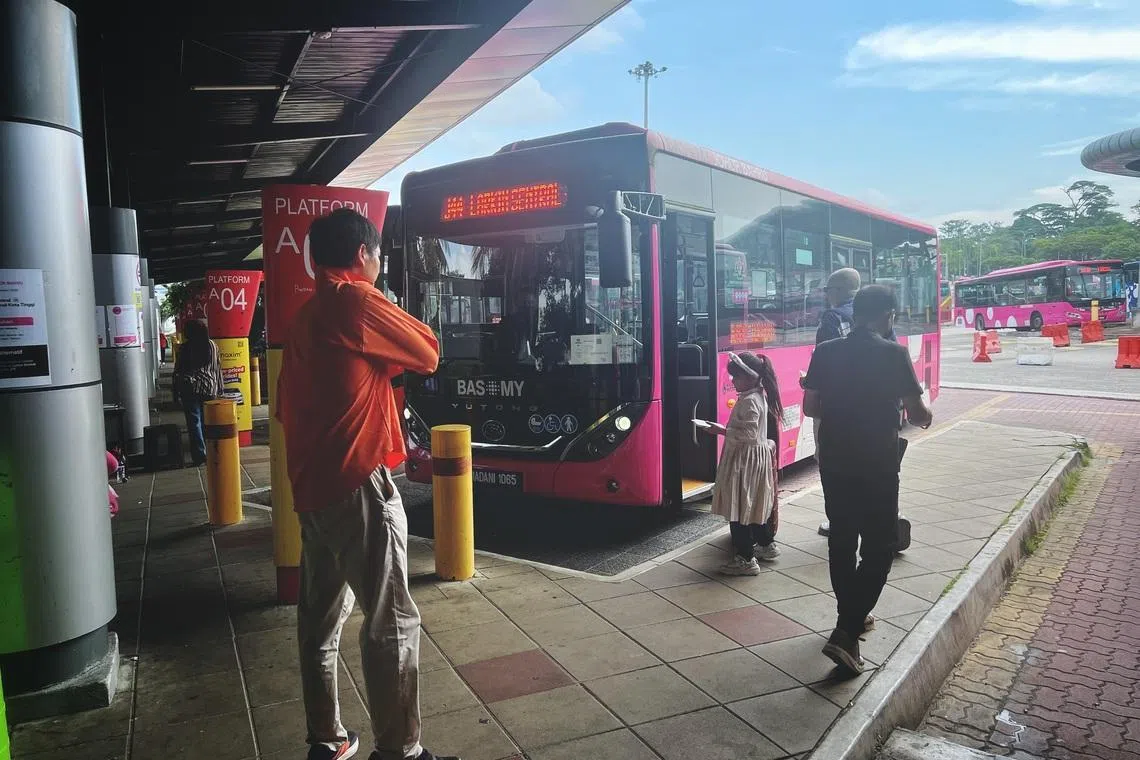
Why there are still so few people taking JB buses – The Straits Times
Low ridership for buses traveling between Singapore and Johor Bahru persists because commuters prioritize the speed and door-to-door convenience of private cars and taxis over the unpredictable wait times and indirect routing of bus services, according to transport data and commuter reports. While cross-border traffic remains high, the systemic friction at the Causeway checkpoints renders bus travel less attractive for the majority of travelers.
The persistent gap in cross-border bus ridership
Despite a surge in travel between Singapore and Johor Bahru (JB) following the lifting of pandemic-era restrictions, bus operators have struggled to fill seats. The disparity is stark: while the Causeway sees hundreds of thousands of crossings daily, the proportion of those using public bus services remains low. This trend persists even as the Singapore dollar remains strong against the Malaysian ringgit, which typically encourages more Singaporeans to visit JB for shopping, dining, and medical services.
Transport analysts point to a fundamental misalignment between how buses operate and how modern commuters behave. Most travelers to JB are not looking for a budget-friendly commute; they are looking for the most efficient path to a specific destination. The current bus infrastructure, which often involves multiple stops and fixed boarding points, fails to compete with the flexibility of private transport.
Key factors contributing to this ridership gap include:
- The “Last Mile” Problem: Bus drop-off points often leave passengers far from their final destinations in JB, requiring another transfer via Grab or local taxis.
- Immigration Bottlenecks: Buses are subject to the same Causeway congestion as cars, but passengers are “trapped” in the vehicle, unable to pivot to faster lanes or alternative routes.
- Boarding Friction: The process of queuing for buses at designated terminals adds a layer of time-cost that private car owners avoid.
Why the Causeway experience deters bus commuters
The primary deterrent for potential bus riders is the unpredictability of the Woodlands Checkpoint and the Sultan Iskandar Building (CIQ). For a car driver, the frustration of a jam is mitigated by the privacy of the vehicle and the ability to leave the moment the border is cleared. For a bus passenger, the experience is collective and often slower.
According to commuter feedback, the “clearance lag” is a major issue. A bus cannot move forward until every single passenger has cleared immigration. If one traveler is delayed due to documentation issues or secondary inspections, the entire bus—and all its passengers—remains stationary. This creates a perceived risk that makes the bus a “gamble” compared to the relative control offered by a private vehicle.
Furthermore, the physical layout of the bus terminals often necessitates long walks. In the heat and humidity of the region, the transition from a cooled bus to a walking path to the immigration hall, and then back to another vehicle, reduces the appeal of public transit. Private cars provide a seamless, climate-controlled environment from the point of origin to the final destination.
| Feature | Private Car/Taxi | Cross-Border Bus |
|---|---|---|
| Flexibility | High (Door-to-door) | Low (Fixed stops) |
| Border Control | Individual clearance | Collective clearance (Wait for all) |
| Cost | Higher (Tolls, Petrol, Parking) | Lower (Ticket price) |
| Comfort | Private/Climate controlled | Shared/Variable |
Comparing the cost-benefit analysis of travel modes
For many Singaporeans, the financial saving of a bus ticket is outweighed by the value of time. When calculating the “true cost” of a trip, the time spent waiting for a bus and navigating the last mile in JB often exceeds the cost of a toll or a ride-sharing service.
Transport observers note that the exchange rate plays a paradoxical role. While a strong Singapore dollar makes the trip to JB cheaper, it also makes the premium cost of a private taxi or Grab more affordable for Singaporeans. When the cost of a private ride is perceived as “cheap” due to currency fluctuations, the incentive to use a budget bus service vanishes.
This shift in consumer behavior is evident in the rise of point-to-point ride-hailing services. Many travelers now prefer to take a Grab or a private hire car directly from their home in Singapore to their hotel or mall in JB. This eliminates the need to carry luggage through terminals and removes the stress of coordinating bus schedules.
Related explainer on Singapore-Malaysia transport agreements provides further context on how these regulations affect vehicle quotas and pricing.
The shadow of the RTS Link
The anticipation of the Rapid Transit System (RTS) Link is likely contributing to the current stagnation of bus ridership. The RTS Link, a rail connection between Woodlands in Singapore and Bukit Chagar in Johor Bahru, is designed specifically to solve the problems that plague the bus system.

The RTS Link promises a streamlined immigration process where passengers clear both Singapore and Malaysia customs at the point of departure. This removes the “stop-and-start” nature of the Causeway crossing that makes bus travel so tedious. Because the rail system operates on a fixed track, it bypasses the road congestion entirely, offering a level of predictability that no bus service can match.
Industry analysts suggest that commuters are subconsciously “waiting out” the current road-based options. The knowledge that a high-frequency, rail-based alternative is coming reduces the willingness of travelers to adapt to the inconveniences of the current bus network. The RTS Link is not just another transport option; it is a systemic upgrade that renders the traditional cross-border bus model obsolete for the average daily commuter.
Projected impact of the RTS Link on transport modes:
- Bus Services: Likely to see a further decline in short-haul commuters, potentially pivoting toward long-distance coach travel to other Malaysian cities.
- Private Cars: May see a reduction in daily commuters, though leisure travelers may still prefer cars for flexibility.
- Taxis/Ride-hailing: Will likely shift toward “last-mile” feeder services from the RTS station to final destinations.
Operational challenges for bus providers
Bus operators face a difficult economic environment. To attract more riders, they would need to either lower prices—which is difficult given rising fuel and labor costs—or improve the quality of the service. However, the primary barriers to ridership are not within the operators’ control; they are systemic issues related to border infrastructure and urban planning.
Operators cannot control the length of the queue at the Woodlands Checkpoint. They cannot change the location of the immigration halls. Consequently, they are unable to offer a “guaranteed” travel time, which is the primary demand of the modern commuter.
Some operators have attempted to introduce premium services with fewer stops and more comfortable seating, but these still suffer from the same collective immigration delays. The structural flaw is the requirement for the vehicle to remain stationary until the last passenger is cleared. Until the immigration process is decoupled from the vehicle, the bus will always be at a disadvantage compared to the car.
Misconceptions about cross-border transit
A common misconception is that bus ridership is low because the tickets are too expensive. In reality, bus fares are significantly lower than the combined cost of tolls, fuel, and parking for a private car. The issue is not price, but value. In the context of cross-border travel, value is measured in minutes and convenience, not just dollars.
Another misconception is that adding more bus routes or increasing frequency would solve the problem. Increasing the number of buses does not solve the congestion at the border; in fact, more buses can contribute to the very traffic jams that deter passengers. The solution is not more capacity on the road, but a shift in the mode of transport—which is exactly what the RTS Link aims to achieve.
Many also assume that the lack of ridership is a result of poor marketing. However, the “product” (the bus journey) is well-known to the target audience. The lack of demand is a rational response to a suboptimal user experience. No amount of marketing can overcome the frustration of a three-hour jam in a shared vehicle.
Wider implications for regional connectivity
The struggle of the JB bus services is a case study in the “friction of distance.” Even a short physical distance can become a significant barrier if the administrative and infrastructural hurdles are too high. This situation highlights the importance of integrated border management.
When immigration is handled as a series of stops, the slowest link determines the speed of the entire system. The shift toward “co-located” facilities—where both countries’ immigration officers operate in one building—is the only proven way to increase throughput. The current bus system is a victim of an outdated border model that was designed for lower volumes of traffic.
This issue also reflects a broader trend in Southeast Asian urban mobility: the move away from traditional hubs and spokes toward point-to-point connectivity. Commuters no longer want to go to a terminal, wait for a scheduled departure, and then take another vehicle from a destination terminal. They want a seamless transition from home to destination.
Frequently Asked Questions
Why are buses not popular for traveling from Singapore to JB?
Buses are less popular primarily due to the lack of door-to-door convenience and the “collective delay” at immigration. Unlike cars, a bus must wait for every passenger to clear customs before moving, which often makes the journey slower and more unpredictable.
Will the RTS Link replace the need for JB buses?
The RTS Link is expected to capture a significant portion of the daily commuter market by bypassing road traffic and streamlining immigration. While long-distance buses to other parts of Malaysia will likely remain, the short-haul shuttle buses may see a sharp decline in demand.
Is it cheaper to take a bus or a car to Johor Bahru?
Taking a bus is significantly cheaper in terms of direct costs, as it avoids tolls, petrol, and parking fees. However, many travelers find the time lost and the inconvenience of the “last mile” to be a higher cost than the monetary expense of a private vehicle.
How does the exchange rate affect bus ridership?
A strong Singapore dollar makes private ride-hailing and taxis more affordable for Singaporeans. This reduces the incentive to use the cheapest option (the bus) because the “premium” for a more convenient private ride becomes negligible in real terms.
What is the “last mile” problem in the context of JB buses?
The last mile problem refers to the distance between the bus drop-off point and the traveler’s actual destination. Since buses have fixed routes, passengers often have to pay for another taxi or ride-share to reach their final location, adding time and cost to the trip.
As the region moves toward more integrated transport solutions, the focus will likely shift from increasing the number of vehicles on the Causeway to improving the efficiency of the crossing itself. The current state of bus ridership serves as a clear indicator that for the modern traveler, time and predictability are the most valuable currencies.
