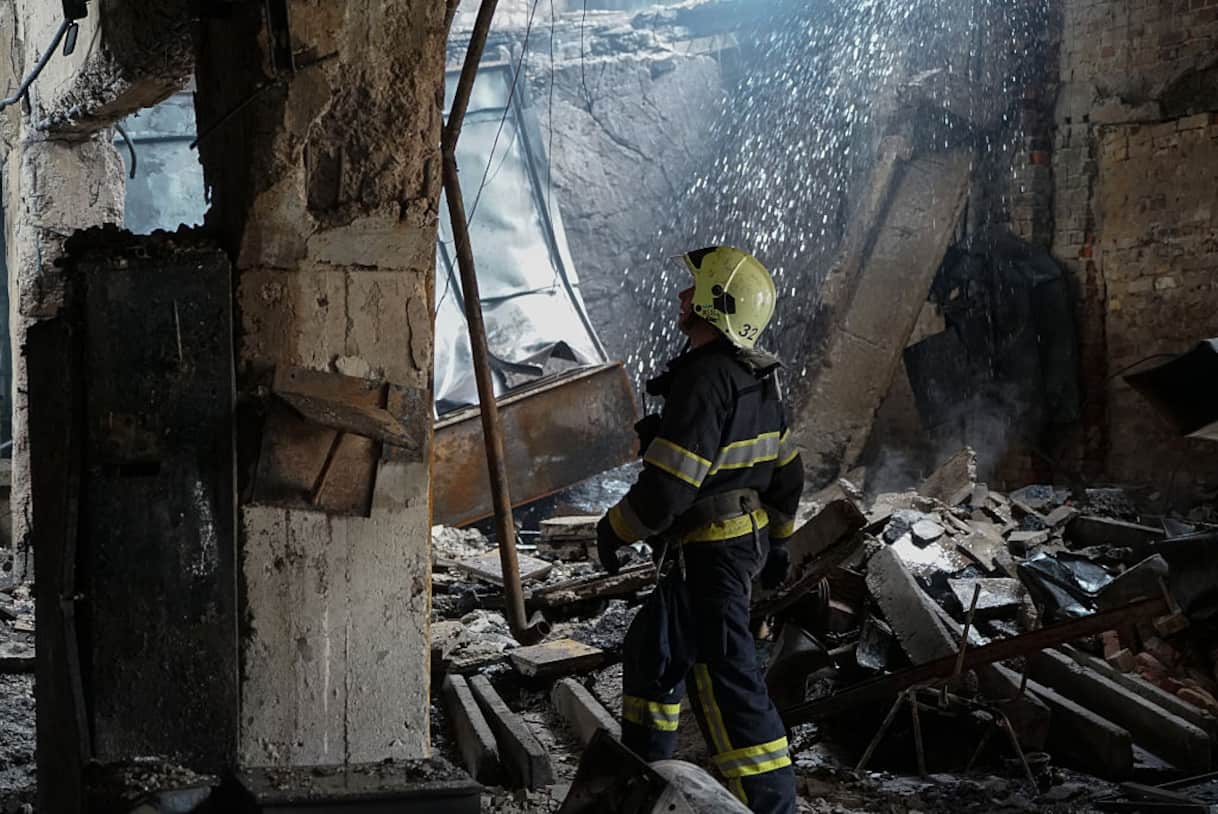
At least five people, including a child, died following a Russian attack on Kharkiv, Ukraine, according to reports from la Repubblica and Sky TG24. In a simultaneous escalation of long-range capabilities, Ukrainian drones traveled 2,000 kilometers beyond the Ural Mountains to strike a large refinery in Siberia, RaiNews reported.
- Kharkiv Casualties: Death tolls range from one to five, including a child, according to various reports.
- Siberian Strike: Ukrainian drones reached targets 2,000 km away, crossing the Urals.
- Nuclear Risk: The IAEA confirmed the 20th power interruption at the Zaporizhzhia Nuclear Power Plant.
How many casualties occurred in Kharkiv?
Reports on the casualties in Kharkiv vary between news agencies. According to la Repubblica, the Russian strike left five people dead, specifically noting that a child was among the victims. However, ANSA reported a lower figure, stating at least one person died and nine others were injured in the attack.
What is the impact of the Siberian refinery strike?
Ukrainian forces have extended their operational reach deep into Russian territory. According to RaiNews, drones flew more than 2,000 kilometers, crossing the Ural Mountains to hit a major refinery located in Siberia. This strike marks a significant geographical expansion of Ukrainian aerial operations, bringing the conflict to industrial hubs far from the front lines.
Why is the Zaporizhzhia power situation critical?
The International Atomic Energy Agency (IAEA) has documented a continuing pattern of instability at the Zaporizhzhia Nuclear Power Plant. According to the agency, the facility has now experienced its 20th interruption of external power supply. These outages force the plant to rely on emergency diesel generators to maintain cooling systems for the reactors, a situation that international observers view as a high-risk vulnerability.
How are attacks on Moscow changing the conflict’s psychology?
Beyond the physical damage, recent Ukrainian strikes on Moscow are being analyzed as a shift in the psychological warfare of the invasion. According to an analysis by Linkiesta, the ability of Ukraine to strike the Russian capital has effectively stripped Vladimir Putin of his "monopoly on fear," suggesting that the Russian leadership and population are now directly exposed to the realities of the war.
