Why Chinese EV competition won’t slash UK and EU prices—and what it means for buyers
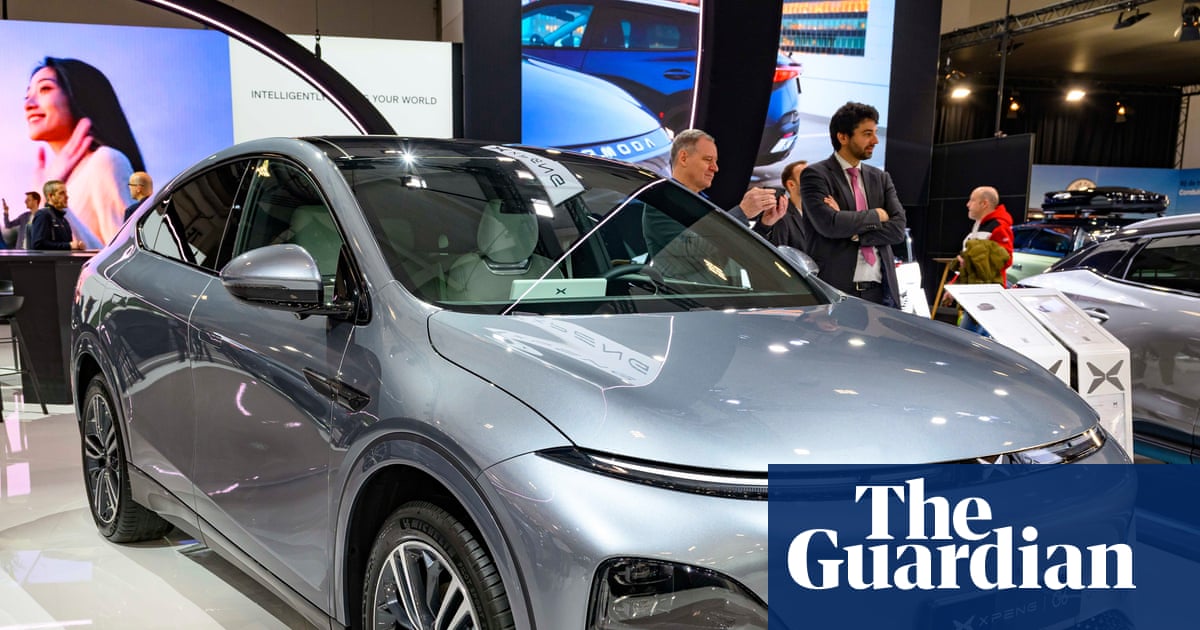
Electric vehicle prices in the UK and EU are unlikely to fall significantly despite intense competition from Chinese manufacturers, according to He Xiaopeng, CEO of Xpeng, the Chinese EV maker. His warning comes as European automakers face mounting pressure to cut costs amid a slowdown in demand and rising production expenses.
Xpeng’s stance—shared by industry analysts—highlights a critical tension: while Chinese brands like BYD and Geely have flooded European markets with cheaper models, local manufacturers are struggling to match those price points without sacrificing profitability. The result? A market where affordability gains may be limited, leaving consumers and policymakers questioning whether the EU’s green transition will remain accessible.
This shift reflects broader challenges in the EV sector, where supply chain disruptions, battery cost fluctuations, and regulatory hurdles are reshaping the competitive landscape. Below, we break down why prices aren’t expected to drop as sharply as some had hoped, who stands to gain or lose, and what this means for the future of electric mobility in Europe.
—
What did He Xiaopeng say—and why does it matter?
In a recent interview, He Xiaopeng, founder and CEO of Xpeng—a Chinese EV startup backed by Alibaba and Tencent—dismissed the idea that European automakers would slash prices to compete with Chinese rivals. His argument rests on three key points:
“The cost structures in Europe and China are fundamentally different,” He said. “European automakers cannot simply match our pricing without compromising margins or quality.”
His remarks align with data from a recent report by the European Automobile Manufacturers’ Association (ACEA), which found that while Chinese EVs now account for nearly 15% of new registrations in the EU, European brands have resisted aggressive price cuts. Instead, they’ve focused on premium positioning, battery innovation, and government subsidies to maintain market share.
Key takeaway: The gap between Chinese and European EV pricing is wider than it appears. While a Chinese-made model like the BYD Dolphin starts at around £22,000 in the UK, comparable European EVs—such as the Renault Mégane E-Tech or Volkswagen ID.3—remain priced above £30,000. The difference isn’t just about manufacturing costs; it’s also tied to:
- Local content rules: EU manufacturers must source a higher percentage of components from within the bloc, increasing production costs.
- Regulatory compliance: Stricter emissions and safety standards in Europe add to R&D expenses.
- Brand positioning: Most European automakers market EVs as premium products, not budget alternatives.
He Xiaopeng’s comments also underscore a strategic shift: Chinese brands are prioritizing market share over profitability in Europe, while their European counterparts are betting on long-term loyalty and technological leadership.
—
Why aren’t prices falling despite Chinese competition?
The expectation that Chinese EV makers would force European prices down has been a recurring theme since 2022, when BYD and Geely began aggressively expanding into Europe. Yet, the reality has been more nuanced. Here’s why the price war many predicted hasn’t materialized:
1. Supply chain bottlenecks persist
Even with lower labor and material costs in China, European automakers face higher expenses for critical components like batteries and semiconductors. According to the International Energy Agency (IEA), battery prices—though falling—remain volatile, with European suppliers charging a premium for high-performance cells. Chinese manufacturers, by contrast, benefit from state-backed subsidies and vertical integration (controlling mining, refining, and production).
Example: A Tesla Model 3 battery pack costs roughly $5,000 in the US, while a comparable pack from a European supplier can exceed $7,000. This gap widens when factoring in EU tariffs on imported Chinese batteries (up to 25% under anti-subsidy rules).
2. European automakers are playing the long game
Unlike their Chinese counterparts, European brands are investing heavily in next-generation tech—solid-state batteries, AI-driven autonomous features, and software-defined vehicles. These innovations command higher price points but also position them as future-proof. As Oliver Zipse, CEO of BMW, put it in a 2023 earnings call:
“We’re not in a race to the bottom. Our customers value sustainability and cutting-edge technology, not just the lowest sticker price.”
This strategy is paying off: despite Chinese market share gains, European brands still dominate the premium EV segment, where margins are healthier. Data from JATO Dynamics shows that in Q1 2024, European-made EVs accounted for 62% of sales above €50,000.
3. Government subsidies are creating artificial price floors
Both the UK and EU offer substantial incentives for EV buyers, but these programs often exclude the cheapest Chinese models. For instance:
- In the UK, the Plug-in Car Grant caps subsidies at £35,000, effectively pricing out many Chinese EVs.
- In France, the bonus écologique requires vehicles to meet EU manufacturing rules, which Chinese brands often bypass.
This creates a paradox: while Chinese EVs are cheaper on paper, they may not qualify for the same financial support as European or Korean models. As a result, the actual cost of ownership for buyers remains closer than the headline prices suggest.
4. Logistics and tariffs add hidden costs
Shipping EVs from China to Europe isn’t as simple as slapping on a lower price tag. According to the European Commission’s 2024 trade report, Chinese automakers face:
- Up to €5,000 in additional logistics costs per vehicle due to longer supply chains.
- Potential anti-dumping duties (currently under review for BYD and Geely).
- Higher insurance and warranty expenses, as European regulations require longer coverage periods.
These factors can erase much of the initial price advantage. For example, a BYD Atto 3 sold for €28,000 in Germany in 2023—only €2,000 cheaper than a comparable VW ID.3, once taxes and insurance are factored in.
—
Who benefits—and who loses—in this price stalemate?
The absence of a dramatic price drop has clear winners and losers across the EV ecosystem.
Winners
- European automakers: Brands like Volkswagen, BMW, and Stellantis are protecting margins while investing in high-margin segments (e.g., luxury EVs). Their focus on software and services (e.g., VW’s Car-Software.org platform) positions them as long-term leaders.
- Chinese brands in niche markets: Companies like Xpeng and NIO are carving out a space in urban mobility, targeting younger buyers with tech-heavy models (e.g., Xpeng’s P7 with autonomous driving features).
- Battery and semiconductor suppliers in Europe: Firms like Northvolt (Sweden) and Sila Nanotechnologies (US/EU) benefit from higher local demand for advanced cells.
Losers
- Budget-conscious EV buyers: Consumers hoping for sub-£25,000 electric cars face limited options. The cheapest new EVs in the UK remain the Dacia Spring (£20,000) and Renault Twingo E-Tech (£22,000), both of which lack range or performance.
- Smaller European EV startups: Firms like Arrival (UK) and Lightyear (Netherlands) struggle to compete with the pricing power of incumbents, forcing some to pivot to commercial vehicles.
- Governments pushing affordability: Policymakers aiming to accelerate EV adoption may find their incentives less effective if price gaps persist. In the UK, only 12% of new EV registrations in 2023 were under £25,000.
A neutral player: The environment
One unintended consequence of the price stalemate is a slower transition to EVs among lower-income households. Research from Transport & Environment (T&E) shows that in cities like London and Paris, only 3% of households earning under €20,000 annually own an EV—partly due to upfront costs. This risks widening the “green divide,” where wealthier consumers adopt EVs while lower-income groups rely on older, polluting vehicles.
—
What does this mean for the future of EV prices in Europe?
While He Xiaopeng’s comments suggest prices won’t plummet, the long-term trajectory depends on three key factors:
1. Battery cost breakthroughs
The biggest wild card is battery technology. If European or US firms achieve significant cost reductions in solid-state or sodium-ion batteries—expected by 2026—it could reset the pricing dynamic. For example:
- Today, lithium-ion batteries account for ~40% of an EV’s cost. Reducing this to 20% would drop prices by ~£5,000–£8,000.
- Chinese firms like CATL and BYD are already leading in battery efficiency, but European players like Northvolt are closing the gap.
2. Trade policy shifts
The EU’s stance on Chinese EV imports could change. Current anti-subsidy investigations (launched in 2023) may lead to tariffs or stricter local content rules, further narrowing the price gap. Alternatively, if the EU relaxes regulations to boost competition, Chinese brands could gain more market share—but at what cost to local industries?
3. Consumer behavior and second-hand markets
Used EVs are already bridging the affordability gap. In the UK, a second-hand Tesla Model 3 now starts at ~£18,000, making it a viable option for budget buyers. As the market matures, the used-EV sector could become the primary driver of price accessibility—though this depends on battery degradation rates and resale values.
Key question: Will European automakers eventually lower prices to compete, or will they double down on premium positioning? The answer may hinge on whether Chinese brands can replicate their supply chain efficiency in Europe—or if European firms can out-innovate them in software and services.
—
Common misconceptions about EV pricing in Europe
Several myths persist about why EV prices aren’t falling as expected. Here’s what the data shows:
Myth 1: “Chinese EVs are always cheaper.”
Reality: While Chinese brands offer lower sticker prices, the total cost of ownership (TCO) often evens out. For example:
- A BYD Dolphin in Germany costs €27,000 but may require more frequent servicing due to less robust dealer networks.
- European EVs often come with longer warranties (e.g., 8 years/160,000 km vs. 5 years/100,000 km for many Chinese models).
Myth 2: “European automakers are overpriced.”
Reality: Price reflects more than just manufacturing costs. European EVs include:
- Higher safety ratings (e.g., Euro NCAP scores above 90% for many models).
- Better resale values (European EVs retain ~50% of value after 3 years vs. ~30% for Chinese brands).
- Access to premium charging networks (e.g., Ionity for long-distance travel).
Myth 3: “Government subsidies will fix the affordability issue.”
Reality: Subsidies alone won’t solve the problem. The UK’s £1,000 plug-in grant (ended in 2022) had minimal impact on overall EV adoption, as upfront costs remained high. A more effective approach would combine:
- Lower VAT rates on EVs (currently 20% in the UK, 0% in Norway).
- Expanded public charging infrastructure in low-income areas.
- Incentives for used-EV purchases.
—
What buyers should watch for in 2024 and beyond
For consumers navigating the EV market, several trends will shape pricing and availability:
1. The rise of “premium compact” EVs
European automakers are launching more affordable models in the £30,000–£35,000 range, targeting buyers who want better specs than Chinese rivals. Examples:
- Volkswagen ID.2 (£28,000, 2024 launch).
- Skoda Enyaq iV (£32,000, now available with longer-range batteries).
- Ford Mustang Mach-E (£40,000, but with higher performance).
2. Chinese brands expanding into higher price tiers
Companies like BYD and Geely are entering the £40,000+ segment with models like the BYD Seal (£45,000) and Geely Galaxy (£50,000). This blurs the lines between “cheap” and “premium” Chinese EVs.
3. Used-EV market growth
The second-hand market is becoming the most accessible entry point. In 2023, used EVs accounted for 40% of new registrations in the UK, per MotorEasy. Buyers should:
- Check battery health (look for warranties or health reports).
- Compare insurance costs (some EVs are cheaper to insure second-hand).
- Factor in charging infrastructure at home or work.
4. Corporate fleet adoption
Companies are increasingly mandating EVs for employees, creating bulk purchasing power that could drive prices down. For example:
- DHL has committed to 10,000 electric vans by 2025, negotiating discounts with manufacturers.
- Uber and Bolt are expanding EV fleets in cities like London and Berlin, where local incentives apply.
—
Frequently asked questions about EV pricing in Europe
Q: Are Chinese EVs really cheaper than European ones?
A: On paper, yes—but the total cost of ownership often evens out. Chinese EVs may have lower upfront prices, but European models typically offer better resale values, longer warranties, and access to premium charging networks. For example, a BYD Dolphin costs ~£22,000 in the UK, but a Renault Mégane E-Tech (£32,000) may retain more value over time.
Q: Will EV prices drop in 2024?
A: Unlikely to see dramatic falls, but incremental reductions are possible due to:
- Economies of scale as production ramps up.
- Potential battery cost reductions (solid-state or sodium-ion tech).
- More aggressive pricing from European brands in the compact segment.
However, experts like He Xiaopeng expect the gap between Chinese and European prices to narrow by only ~10–15% this year.
Q: Can I get a cheap EV in the UK or EU without subsidies?
A: Yes, but options are limited. The cheapest new EVs in 2024 include:
- Dacia Spring (£20,000, UK).
- Renault Twingo E-Tech (£22,000, UK).
- BYD Dolphin (€27,000, EU).
- Semiconductor shortages could delay new models.
- EU tariffs on Chinese EVs may push prices up.
- Battery material shortages (e.g., lithium, nickel) could inflate costs.
Used models (e.g., Nissan Leaf, Renault Zoe) start below £15,000 but may have limited range or battery health.
Q: Are European automakers avoiding price wars on purpose?
A: Yes, largely. Brands like Volkswagen and BMW prioritize margins and technological leadership over competing on price. Their strategy assumes that consumers will pay more for perceived quality, safety, and long-term value—an approach that’s worked in the premium car market for decades.
Q: What’s the biggest threat to affordable EVs in Europe?
A: Supply chain disruptions and regulatory hurdles. For example:
These factors make it unlikely that prices will drop as sharply as some had hoped.
Q: Should I wait for prices to drop before buying an EV?
A: It depends on your budget and needs. If you can afford a £30,000–£35,000 model now, you’re likely getting a better deal than waiting for potential future discounts. However, if you’re targeting a sub-£25,000 EV, the used market may offer better value. Experts recommend buying when you’re ready, not waiting for hypothetical price cuts.
—
As the EV market matures, the debate over affordability will hinge on whether innovation or price competition takes precedence. For now, He Xiaopeng’s warning serves as a reminder: in Europe, the future of electric mobility may be less about who sells the cheapest car and more about who delivers the most value in the long run.
For buyers, the message is clear: do your research, compare total costs, and don’t assume that “cheaper” always means better. The EV revolution is here—but its accessibility depends on more than just sticker prices.
