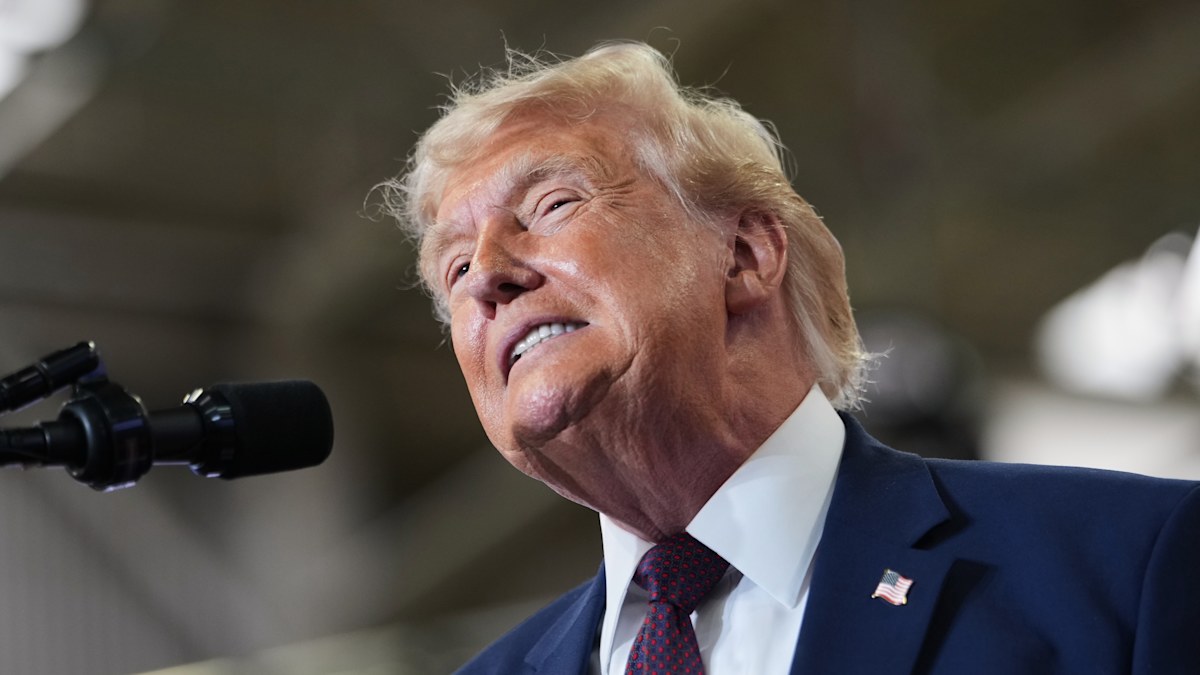
Trump Claims Iran Agrees to Nuclear Inspections for ‘Infinity’
Donald Trump stated that Iran has agreed to nuclear inspections for “infinity,” according to recent reports. This claim suggests a permanent oversight mechanism for Iranian nuclear facilities, which would represent a fundamental shift from the time-limited restrictions established in previous international agreements.
What did Donald Trump say about Iran’s nuclear inspections?
Donald Trump recently claimed that Iran has committed to allowing international inspectors access to its nuclear sites indefinitely. The assertion, highlighted in reports such as “LIVE: Trump says Iran agrees to nuclear inspections for ‘infinity’ – Nine.com.au,” suggests a breakthrough in the long-standing tension between the United States and the Islamic Republic of Iran regarding the latter’s nuclear capabilities.
According to Trump, this agreement ensures that Iran cannot secretly resume the development of a nuclear weapon because monitors will be present “for infinity.” This phrasing marks a sharp departure from the structured “sunset clauses” that characterized the 2015 Joint Comprehensive Plan of Action (JCPOA), where certain restrictions on uranium enrichment and centrifuge research were set to expire after 10 to 15 years.
The claim emphasizes a total and permanent surrender of nuclear privacy for the Iranian government. While the statement provides a clear political victory in terms of rhetoric, official diplomatic documents verifying a signed, permanent treaty have not been released to the public. In newsroom terms, the claim remains a statement of intent or a reported outcome from the former president rather than a ratified international law.
How does the ‘infinity’ claim differ from the JCPOA?
To understand why the term “infinity” is significant, it is necessary to compare it to the 2015 JCPOA. The original deal was designed as a temporary freeze to prevent Iran from reaching a “breakout” capacity—the point at which it has enough fissile material for one nuclear bomb.
The JCPOA relied on a phased approach. Some restrictions were immediate, while others were slated to end in 2023, 2025, and 2030. Critics, including Donald Trump during his presidency, argued that these sunset clauses essentially provided Iran with a legal path to a nuclear weapon in the future.
By claiming an agreement for “infinity,” Trump is signaling the removal of these expiration dates. A permanent inspection regime would mean the International Atomic Energy Agency (IAEA) would have perpetual authority to monitor Iranian sites without the risk of a deadline triggering a return to unrestricted enrichment.
| Feature | JCPOA (2015 Deal) | Trump’s ‘Infinity’ Claim |
|---|---|---|
| Inspection Duration | Limited/Phased (Sunset Clauses) | Permanent / Indefinite |
| Enrichment Caps | Temporary limits on stockpiles | Implied permanent oversight |
| IAEA Access | Negotiated access to specific sites | Continuous, perpetual access |
| Legal Status | Multilateral Agreement | Reported Verbal/Political Claim |
Who are the key stakeholders in the Iran nuclear dispute?
The claim regarding permanent inspections affects a complex web of international actors, each with conflicting security interests.
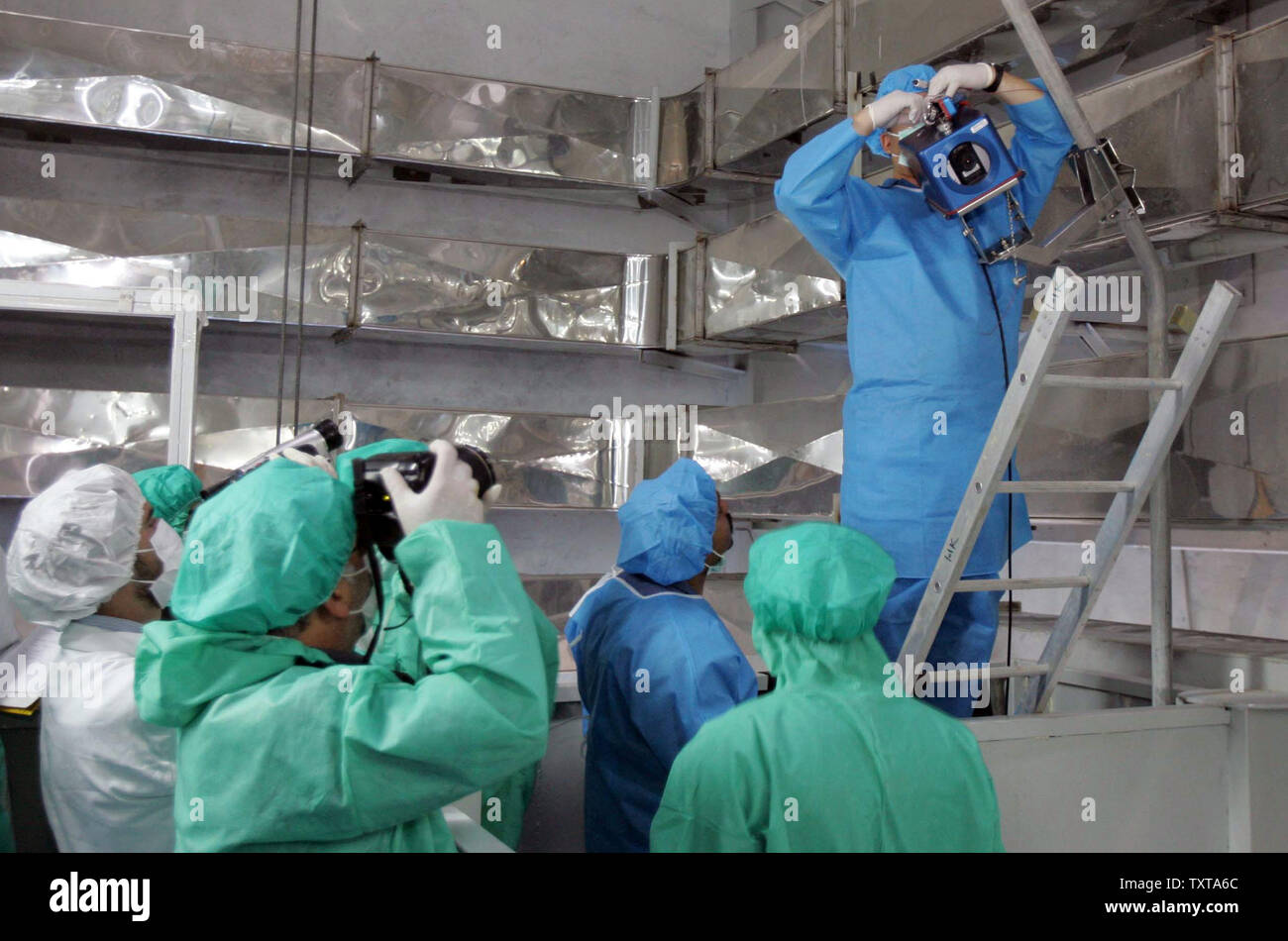
The International Atomic Energy Agency (IAEA)
As the UN’s nuclear watchdog, the IAEA is the body responsible for conducting the actual inspections. For the IAEA, “infinity” would mean a permanent mandate and consistent funding to maintain a presence in Iran. However, the agency’s ability to inspect depends on the cooperation of the host country and the legal framework provided by the UN Security Council.
The Islamic Republic of Iran
Tehran has historically viewed intrusive inspections as “nuclear espionage.” While Iran has claimed its nuclear program is purely for peaceful energy and medical purposes, it has frequently clashed with the IAEA over access to undeclared sites. An agreement for permanent inspections would require a massive shift in Iranian domestic policy and a high level of trust in U.S. guarantees.
Israel and Saudi Arabia
Both nations view a nuclear-armed Iran as an existential threat. Israel, specifically, has long argued that any deal with “sunset clauses” is a failure. From the perspective of Israeli intelligence, only a “permanent” ban on enrichment—verified by permanent inspections—would be acceptable. The “infinity” claim aligns with the maximum-pressure goals often advocated by these regional allies.

The European Union (E3)
France, Germany, and the UK (the E3) have generally sought a diplomatic middle ground. They prefer a return to the JCPOA framework but acknowledge the need for “longer and stronger” restrictions. Their focus remains on preventing regional escalation while maintaining economic ties with Tehran.
Why permanent inspections matter for global security
The core of the nuclear dispute is the concept of “breakout time.” This is the time required for a state to produce enough weapons-grade uranium for a single nuclear device. When inspections are limited or temporary, the breakout time can shrink rapidly once restrictions expire.
- Preventing Secret Facilities: Permanent inspections are designed to catch “clandestine” activity. If inspectors are permanently embedded, it becomes harder for a state to build secret parallel facilities.
- Deterring Proliferation: If Iran is permanently barred from nuclear weapons, it reduces the incentive for other Middle Eastern nations, such as Saudi Arabia or Turkey, to pursue their own nuclear programs to maintain a balance of power.
- Stabilizing Energy Markets: Nuclear tension in the Strait of Hormuz often leads to oil price volatility. A permanent, verified resolution to the nuclear issue could theoretically lower the risk of military conflict in the region.
However, the practicality of “infinity” is questioned by many diplomatic historians. International treaties are rarely permanent; they are subject to the whims of changing governments. A change in leadership in either Washington or Tehran could lead to a withdrawal from the agreement, regardless of the intended duration.
Timeline of U.S.-Iran Nuclear Negotiations
The path to the current claims of permanent inspections has been marked by extreme volatility and shifts in U.S. foreign policy.
| Year | Event | Outcome |
|---|---|---|
| 2015 | JCPOA Signed | Iran limits enrichment in exchange for sanctions relief. |
| 2018 | U.S. Withdrawal | Trump administration exits the deal, citing sunset clauses. |
| 2019-2021 | Maximum Pressure | U.S. imposes heavy sanctions; Iran increases enrichment levels. |
| 2021-2023 | Attempted Revival | Biden administration attempts to bring Iran back to JCPOA. |
| Present | ‘Infinity’ Claims | Trump asserts a new, permanent inspection agreement exists. |
Analysis of the ‘Infinity’ claim vs. diplomatic reality
In the realm of international law, the word “infinity” does not exist in treaty language. Agreements are typically written with specific durations or “until such time as” certain conditions are met. The use of this term in the context of “LIVE: Trump says Iran agrees to nuclear inspections for ‘infinity’ – Nine.com.au” suggests a political framing rather than a legal one.
Diplomats often distinguish between a political commitment and a legal obligation. A political commitment is a promise made by a leader; a legal obligation is a signed treaty ratified by a legislative body (like the U.S. Senate). Without a ratified treaty, an “infinity” agreement could be overturned by the next administration, mirroring how the 2015 deal was dismantled in 2018.
Furthermore, the IAEA’s “Additional Protocol” already allows for expanded inspections. The debate is not whether inspections can happen, but whether they are mandatory and unrestricted. For an agreement to be truly permanent, Iran would have to accept the “Anywhere, Anytime” inspection model, which it has historically resisted on the grounds of national sovereignty.
“The tension between national sovereignty and international security is the primary hurdle in nuclear diplomacy. No nation enjoys permanent foreign monitors on its soil unless the perceived benefit—usually the removal of crippling sanctions—is immense.”
Common misconceptions about nuclear monitoring
Many readers confuse “nuclear inspections” with “nuclear disarmament.” It is important to clarify these distinctions to understand the stakes of the Trump claim.
Misconception 1: Inspections mean Iran has no nuclear materials.
Inspections do not remove uranium; they monitor it. Iran is permitted to have nuclear material for civilian use (power plants, medicine). The goal of inspections is to ensure that the uranium is not enriched beyond 3.67% or 5% (low-enriched) to the 90% required for a weapon (highly-enriched).
Misconception 2: The IAEA can force its way into any building.
The IAEA does not have an army. It relies on “access agreements.” If a country refuses entry to a site, the IAEA can only report the violation to the UN Security Council. The “infinity” agreement would only work if Iran continues to grant that access voluntarily or under the threat of sanctions.
Misconception 3: A deal with Trump is the same as a deal with the U.S. Government.
Because the JCPOA was an executive agreement and not a treaty, it did not require Senate approval. This made it easier to sign but also easier to cancel. Any new “infinity” deal would face the same fragility unless it is codified into federal law.
What to monitor in the coming months
To determine if the claim of permanent inspections is a reality, observers should look for three specific indicators:
- IAEA Board Reports: The IAEA issues quarterly reports on Iran’s compliance. If a new, permanent inspection regime is in place, the Director General will explicitly mention new access protocols.
- Sanctions Relief: Iran will not agree to permanent inspections without a corresponding permanent removal of U.S. sanctions. Watch for Treasury Department movements regarding Iranian oil exports.
- Formal Treaty Text: Look for the release of a “Memorandum of Understanding” or a formal treaty. Verbal claims of “infinity” are not enforceable in international courts.
The geopolitical landscape remains volatile. The intersection of U.S. election cycles and Iranian internal politics means that any agreement—whether it lasts for ten years or “infinity”—is subject to constant renegotiation.
Frequently Asked Questions
What does “inspections for infinity” actually mean?
It refers to a claim by Donald Trump that Iran has agreed to allow international monitors (likely from the IAEA) to inspect its nuclear facilities permanently, without the expiration dates (sunset clauses) found in previous deals.
Why was the original 2015 nuclear deal (JCPOA) criticized?
Critics argued that the JCPOA only delayed Iran’s nuclear ambitions rather than stopping them, because the restrictions on uranium enrichment and centrifuge research were temporary.
Can the IAEA actually monitor Iran forever?
Technically, yes, if Iran agrees to it and the UN Security Council mandates it. However, such agreements are usually subject to periodic review and can be cancelled if the host country withdraws its consent.
How does this affect the risk of war in the Middle East?
A verified, permanent inspection regime would likely reduce the risk of a preemptive strike by Israel or the U.S., as it would provide higher confidence that Iran is not building a nuclear weapon.
Is there an official document proving this agreement?
At this time, the “infinity” claim is based on statements made by Donald Trump. No formal, ratified treaty reflecting this specific term has been made public by the U.S. State Department or the IAEA.
For those tracking the evolution of these negotiations, a related explainer on nuclear breakout time provides deeper insight into the technical side of uranium enrichment.
