
Tom Hanks Says AI Could Create Woody Voice for ‘Toy Story 6’ – Variety
Tom Hanks indicated that artificial intelligence could potentially be used to recreate his voice as Woody for a future Toy Story 6, according to Variety. This statement arrives as reports surface that a Pixar director is currently developing a creative framework for a sixth installment of the franchise.
How AI Could Shape the Voice of Woody in Toy Story 6
The possibility of using generative AI to maintain the sonic identity of Woody marks a significant shift in how Pixar and Disney approach legacy characters. Tom Hanks, who has voiced the iconic cowboy since 1995, acknowledged the technical capability of AI to mirror his specific vocal patterns, cadence, and emotional delivery. According to Variety, this suggests a future where the character’s voice is not entirely dependent on the actor’s physical presence in a recording booth.
Voice synthesis technology has reached a point where “digital twins” can be created using existing audio libraries. For a character like Woody, whose voice is etched into decades of film archives, the data set available for AI training is vast. This allows software to generate new dialogue that sounds indistinguishable from Hanks’ original performances.
Key technical factors enabling this include:
- Neural Text-to-Speech (TTS): Advanced models that analyze the timbre and pitch of a specific human voice.
- Prosody Modeling: The ability of AI to mimic the rhythm and intonation of speech, which is critical for the emotional weight of a character like Woody.
- Existing Archive Data: The four previous Toy Story films provide thousands of lines of clean audio for high-fidelity training.
Pixar’s Creative Framework for Toy Story 6
While the industry focuses on the technology, Pixar is simultaneously focusing on the narrative. Reports indicate that a director is already establishing a creative framework for Toy Story 6. This framework serves as the architectural blueprint for the story, determining which characters return, the central conflict, and the thematic resolution of the series.
Developing a framework this early suggests that Disney is treating Toy Story as a permanent pillar of its intellectual property strategy. Rather than a one-off sequel, the studio appears to be planning a long-term trajectory for the characters. The intersection of this narrative planning with AI voice technology suggests a strategy to “future-proof” the franchise against the aging or unavailability of its original cast.
The creative framework likely addresses several critical questions:
- How to evolve Woody’s journey after the events of the previous films.
- Whether to introduce a new generation of toys to maintain relevance with younger audiences.
- How to balance nostalgic elements with new storytelling directions.
The Industry Impact of AI Voice Synthesis
The mention of AI in relation to a high-profile actor like Tom Hanks highlights a broader tension within Hollywood. The 2023 SAG-AFTRA strikes centered heavily on the use of “digital replicas.” Actors fought for strict regulations ensuring that studios cannot use AI to recreate a performer’s voice or likeness without explicit consent and fair compensation.
If Pixar utilizes AI for Woody, it will likely set a precedent for how “legacy voices” are handled in animation. Unlike live-action films, where an actor’s physical aging is visible, voice acting allows for a character to remain timeless. However, the shift from a human performance to an AI-generated one raises questions about the “soul” of the performance.
Industry analysts note that while AI can mimic a voice, it cannot “act” in the traditional sense—interpreting a script, improvising, or reacting to a director’s nuance in real-time. The use of AI in Toy Story 6 would likely be a hybrid process, where a human director guides the AI output to ensure the emotional beats land correctly.
| Feature | Human Voice Performance | AI Voice Synthesis |
|---|---|---|
| Emotional Nuance | Organic, intuitive, and improvisational. | Calculated, based on existing patterns. |
| Production Speed | Dependent on actor availability and scheduling. | Near-instantaneous generation. |
| Consistency | May vary slightly over decades of aging. | Perfectly consistent with a chosen “era” of the voice. |
| Legal/Ethical | Standard contract and royalty agreements. | Complex likeness rights and AI royalties. |
Comparing AI Voice Precedents in Cinema
The potential use of AI for Woody is not an isolated concept. Other major franchises have already navigated the waters of digital voice recreation. For example, the Star Wars franchise utilized voice synthesis and archival audio to bring back characters or refine dialogue in recent series. Similarly, the Indiana Jones franchise used “de-aging” and voice manipulation to maintain Harrison Ford’s younger sound in certain sequences.
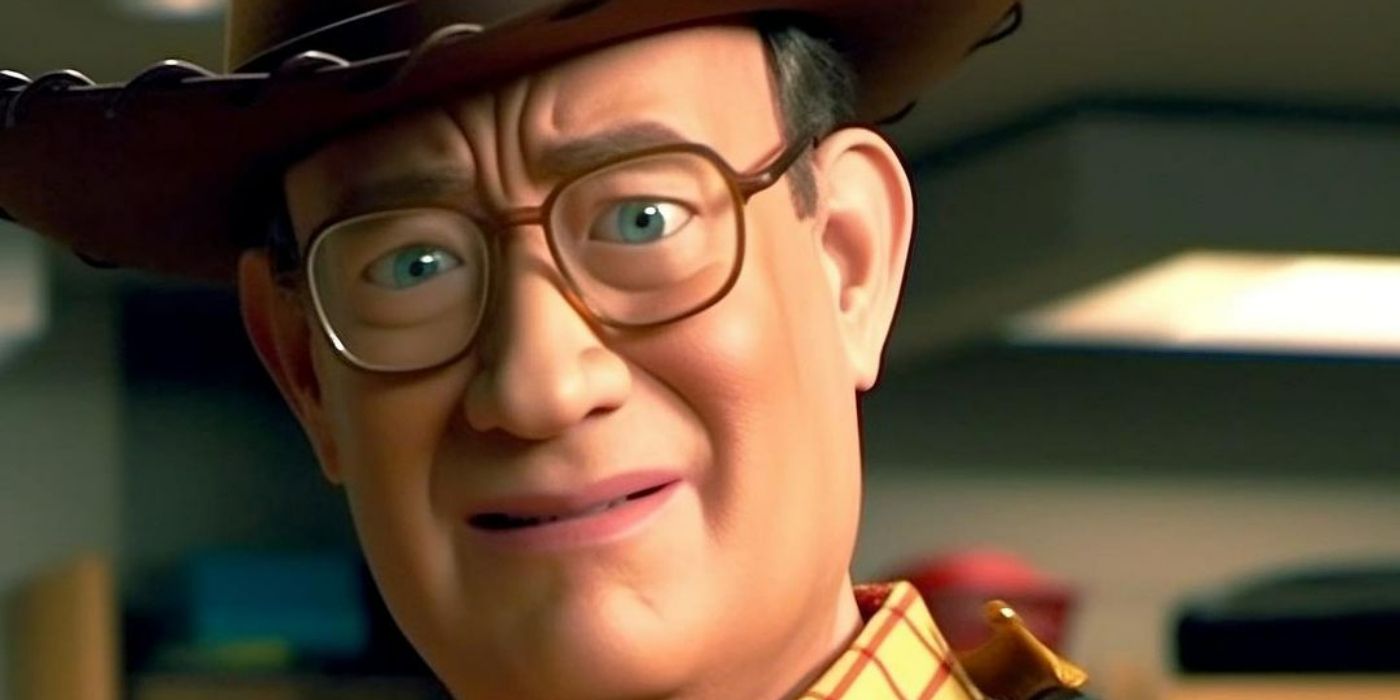
However, the Toy Story case is different because it involves a fully animated character. In live-action, the voice is tied to a physical body. In animation, the voice is the character. If Woody’s voice becomes a synthetic product, the boundary between the actor and the IP blurs. According to industry standards, this increases the value of the “voice asset” for the studio while potentially decoupling it from the living performer.
Contrast this with the approach taken in some independent animations, where voice actors are replaced by cheaper AI alternatives. In the case of Toy Story, the goal is not cost-cutting—as Disney can afford Tom Hanks—but rather consistency and longevity.
Legal and Ethical Considerations for Digital Likeness
The legal landscape regarding AI voices is currently being written in real-time. The “No AI Fraud Act,” proposed in the U.S. Senate, aims to protect the voice and visual likeness of individuals from unauthorized AI simulations. While Tom Hanks’ comments suggest a willingness to explore the technology, the actual implementation would require a complex legal agreement.
Potential legal hurdles include:
- Usage Rights: Does the studio own the “sound” of Woody, or does Tom Hanks own the “sound” of his voice?
- Royalties: How is an actor compensated when an AI generates a line of dialogue they never actually spoke?
- Moral Rights: Does an actor have the right to veto lines spoken by their AI twin if they disagree with the script?
These issues make the “creative framework” for Toy Story 6 as much a legal document as a storytelling one. Any move toward AI synthesis will require a blueprint for compensation that satisfies both the studio’s desire for control and the actor’s right to their identity.
The Evolution of the Toy Story Franchise
To understand why the voice of Woody is so critical, one must look at the trajectory of the series. Since its debut in 1995, Toy Story has transitioned from a story about childhood jealousy to a meditation on abandonment, growth, and eventually, letting go.
The franchise has consistently pushed technical boundaries:
- Toy Story (1995): The first fully computer-animated feature film.
- Toy Story 2 (1999): Expanded the scope of world-building and character depth.
- Toy Story 3 (2010): Focused on the emotional climax of growing up.
- Toy Story 4 (2019): Explored the concept of a toy’s purpose beyond a single child.
With a fifth and potentially sixth film in development, Pixar faces the challenge of “franchise fatigue.” The introduction of AI voice technology could be a tool to maintain the nostalgic comfort of Woody’s voice while allowing the story to move in directions that might be physically or logistically difficult for a human cast to sustain over several more decades.
For more on how animation is changing, see a related explainer on generative AI in cinema.
Common Misconceptions About AI Voice Acting
There is a frequent misunderstanding that AI voice acting simply means “typing text into a computer and getting a voice.” In a high-budget Pixar production, the process is far more rigorous. It is more likely that a “voice guide” or a professional voice actor would record the lines first to establish the emotion and timing. The AI would then be used as a “skin” to transform that performance into Tom Hanks’ voice.
Another misconception is that AI will completely replace actors. In the case of A-list talent like Hanks, AI is more likely to serve as a tool for efficiency—reducing the number of recording sessions required for pick-ups or minor dialogue changes—rather than replacing the initial creative performance.
What to Watch for in the Development of Toy Story 6
As Pixar continues to build the framework for the sixth film, several indicators will reveal whether AI voice synthesis becomes a reality. First, look for announcements regarding the casting of “legacy” characters. If the studio emphasizes “archival” or “digital” elements, it may signal an AI approach.
Second, observe the contracts negotiated between Disney and the primary voice cast. The terms regarding “digital replicas” will be the true indicator of how this technology is integrated. Finally, the final audio quality of Toy Story 5 will likely serve as a testbed for the technologies that might be fully deployed in Toy Story 6.
The integration of AI into the Toy Story universe represents a crossroads for the industry. It balances the desire for immortal characters with the necessity of protecting human artistry. Whether Woody’s voice remains a human performance or becomes a digital asset, the move signals a new era of cinematic production.
Frequently Asked Questions
Is Toy Story 6 officially confirmed?
While Pixar is reportedly developing a creative framework for Toy Story 6, the studio has not yet released a formal production date or official trailer. However, the planning phase indicates a strong intent to continue the series.
Will Tom Hanks still be in Toy Story 6?
Tom Hanks has voiced Woody in all previous films. While he mentioned that AI could create the voice, it is not yet confirmed whether he will record the lines himself or if a synthetic version will be used.
How does AI voice synthesis work for movies?
AI voice synthesis uses machine learning to analyze thousands of hours of a person’s speech. It identifies unique patterns in pitch, tone, and rhythm to create a digital model that can generate new speech based on text or another actor’s performance.
Is using AI voices legal in Hollywood?
The legality depends on the contract between the actor and the studio. Following the SAG-AFTRA strikes of 2023, new protections are in place requiring informed consent and fair compensation for the use of digital replicas.
Why would Pixar use AI instead of just recording Tom Hanks?
AI can offer greater flexibility in scheduling, allow for perfect consistency across multiple films over many years, and simplify the process of making minor dialogue changes without requiring the actor to return to the studio.
