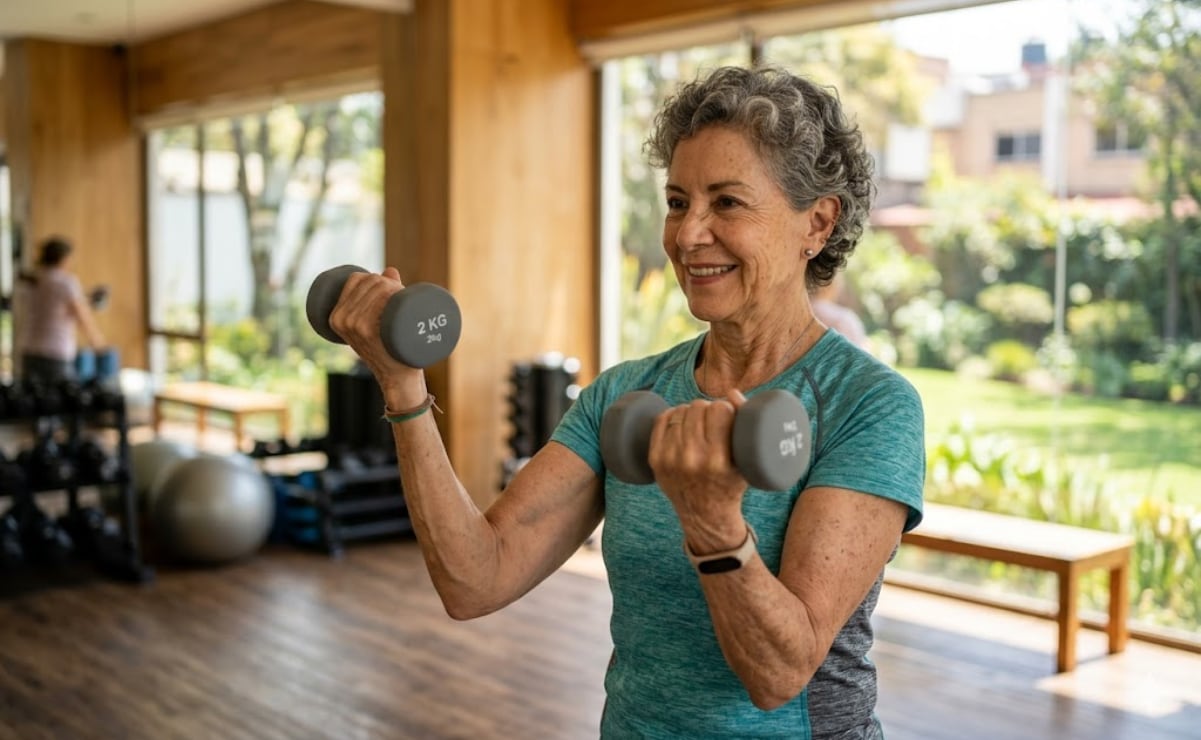
Between 90 and 120 minutes of strength training per week reduces the risk of mortality by 13%, according to a Harvard study involving 140,000 participants. The research indicates that this specific duration of resistance exercise, especially when paired with cardiovascular activity, provides the most significant longevity benefits.
- Mortality risk reduction: 13% decrease associated with specific strength training doses.
- Optimal duration: 90 to 120 minutes of strength exercise per week.
- Synergistic effect: Greater benefits occur when combining weights with cardiovascular exercise.
- Study scale: Data collected from 140,000 people over a 30-year period.
How much strength training reduces mortality risk?
Research from Harvard suggests a specific “dose” of resistance training to maximize health outcomes. According to reports from El HuffPost and El Mundo, the lowest risk of mortality is linked to 90 to 120 minutes of strength training weekly. The data indicates that exceeding two hours of weight training per week does not provide additional mortality benefits.
This 13% reduction in mortality risk highlights the role of muscle preservation and strength in slowing the biological effects of aging, according to El Universal. The findings emphasize that consistency within this 90-to-120-minute window is more effective than excessive training volumes.
Why combine strength and cardio for longevity?
While strength training alone reduces risk, the most effective regimen integrates both resistance and aerobic exercises. According to El Mundo, the reduction in mortality is more pronounced when strength training is combined with cardiovascular activity.

Public health guidance cited by Prensa Latina recommends the integration of strength exercises into general physical activity routines. This combined approach addresses different physiological systems, pairing the heart-health benefits of cardio with the metabolic and structural advantages of muscle-building exercises.
The scope of the Harvard research
The findings are based on a long-term longitudinal study spanning 30 years, according to OkDiario. By tracking 140,000 individuals, researchers were able to observe the long-term correlation between exercise habits and lifespan.
The study’s scale allows for a higher degree of statistical confidence in the 13% risk reduction figure. By analyzing three decades of data, the research team identified that the specific volume of 90 to 120 minutes of strength work acted as a critical threshold for improving survival rates among the participants.
