
Micron Executives Warn Chip Supply Constraints Will Persist Beyond 2027
Micron executives stated that semiconductor supply constraints are expected to continue beyond 2027, according to CNBC. This long-term tightening is driven by surging demand for AI-capable memory and high-performance computing components, signaling a prolonged period of scarcity for critical chip architectures required for generative AI.
Why is chip supply expected to remain constrained through 2027?
The persistence of chip shortages into the late 2020s stems from a fundamental shift in how data centers are built. According to reporting from CNBC, Micron executives pointed to the aggressive ramp-up of artificial intelligence (AI) infrastructure as the primary catalyst. Unlike previous cycles of chip shortages, which often resulted from temporary logistics failures or sudden spikes in consumer electronics demand, the current constraint is tied to the physical limits of producing High Bandwidth Memory (HBM).
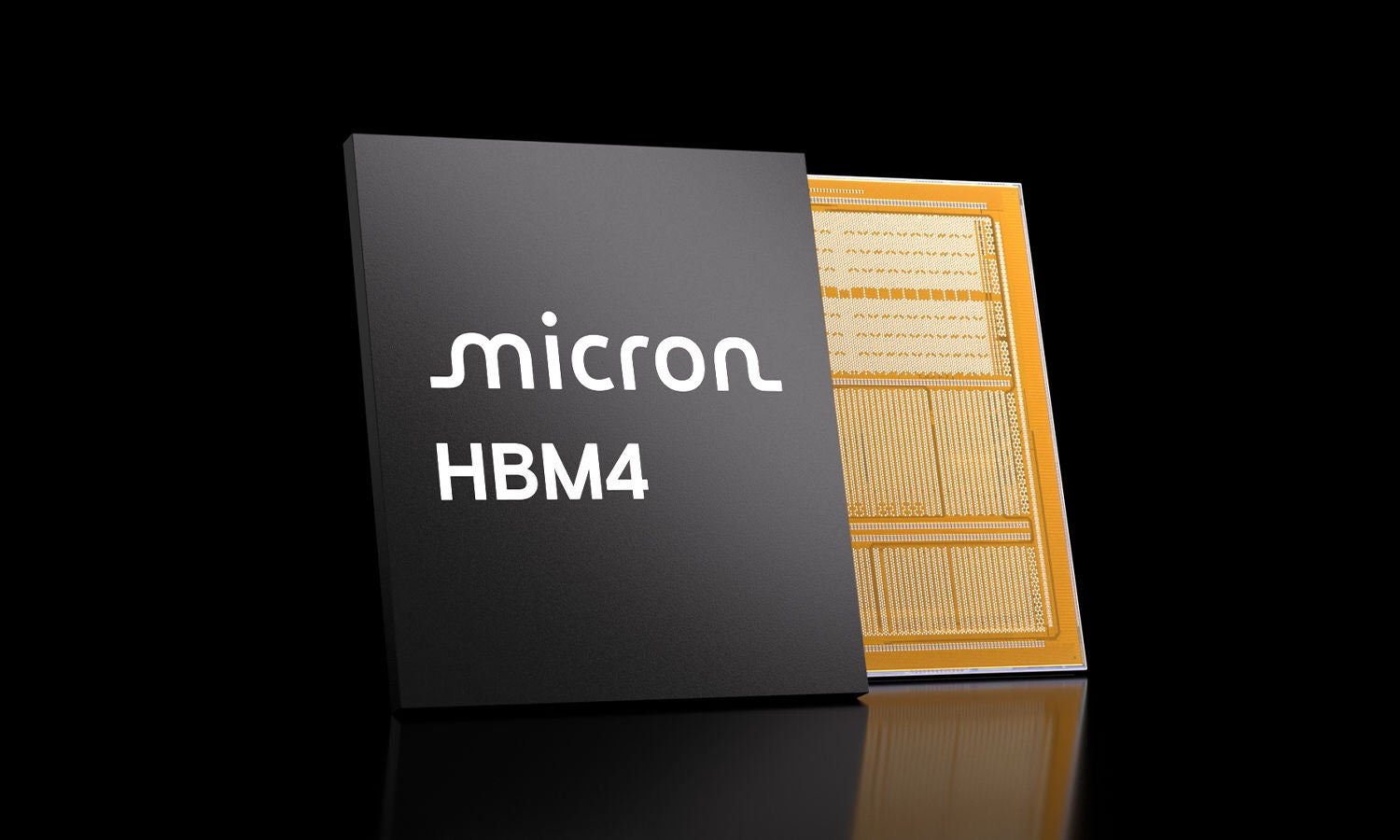
HBM is a specialized type of DRAM (Dynamic Random Access Memory) that stacks memory chips vertically to increase speed and bandwidth. This technology is essential for the GPUs (Graphics Processing Units) that power large language models. Because HBM is significantly more complex to manufacture than standard DDR5 memory, it requires more production capacity and has a lower yield rate, meaning more chips are discarded during the manufacturing process.
Executives at Micron Technology (NASDAQ: MU) indicated that the demand for these high-end components is outstripping the industry’s ability to build new fabrication plants (fabs). Building a modern semiconductor fab takes years and billions of dollars in capital expenditure, creating a structural lag between the moment demand spikes and the moment new supply hits the market.
- AI Integration: The transition from general-purpose computing to AI-accelerated computing requires a higher ratio of memory per GPU.
- Production Complexity: HBM3E and subsequent generations require advanced packaging techniques that limit total output.
- Capital Lead Times: The time required to commission new cleanrooms and install lithography equipment prevents an immediate supply response.
How does this impact the broader technology ecosystem?
The supply constraints cited by Micron do not exist in a vacuum. They affect a wide array of stakeholders, from chip designers like NVIDIA and AMD to hardware integrators like Apple and Intel. As noted in market analysis from Barron’s and Benzinga, Micron’s position as a leading memory provider makes its supply outlook a bellwether for the entire sector.
For companies like Intel and Apple, these constraints create a strategic bottleneck. If the memory required to support the latest AI processors is unavailable or prohibitively expensive, the launch cycles for new laptops, servers, and smartphones could be delayed. This creates a “domino effect” where the lack of a secondary component (memory) halts the distribution of a primary component (the processor).
“The demand for HBM is not just a trend but a structural shift in the computing architecture,” according to industry analysis of the current semiconductor landscape.
Furthermore, the constraints influence the valuation of “trending stocks” such as Super Micro Computer (SMCI) and Palantir (PLTR), which rely on the availability of AI hardware to deploy their software and server solutions. When Micron signals that supply will remain tight beyond 2027, it suggests that the “AI gold rush” will be limited not by software innovation, but by the physical availability of silicon.
Comparing the AI-Driven Shortage to the 2020-2022 Chip Crisis
While the current situation is described as “constrained,” it differs significantly from the global semiconductor shortage experienced during the COVID-19 pandemic. The previous crisis was characterized by a lack of “legacy nodes”—older, simpler chips used in automotive braking systems and household appliances. The current constraint is centered on “leading-edge nodes”—the most advanced, smallest, and fastest chips in existence.
| Feature | 2020-2022 Shortage | Post-2027 AI Constraint |
|---|---|---|
| Primary Driver | Pandemic lockdowns & auto demand | Generative AI & Large Language Models |
| Affected Tech | Legacy nodes (Analog/Power chips) | Leading-edge nodes (HBM/GPUs) |
| Key Bottleneck | Logistics and raw materials | Manufacturing complexity and fab capacity |
| Impacted Sector | Automotive and Consumer Electronics | Enterprise Data Centers and Cloud Providers |
This distinction is critical for investors and policymakers. The 2020 crisis was solved by increasing the production of older chips, which is relatively fast. Solving the AI constraint requires the development of entirely new manufacturing processes and the construction of state-of-the-art facilities, which explains why Micron executives are looking so far ahead into 2027 and beyond.
The Strategic Role of Micron in the Global Supply Chain
Micron Technology operates as one of the few companies globally capable of producing the high-density memory required for AI. In a market dominated by a handful of players—including SK Hynix and Samsung—any signal regarding supply constraints has immediate implications for pricing power. When supply is constrained, the producers typically gain more leverage in pricing contracts with cloud giants like Alphabet (Google) and Microsoft.
According to reports from the Wall Street Journal and Benzinga, Micron’s ability to manage its product mix—balancing standard DRAM with HBM—will determine its profitability over the next three years. If Micron pivots too heavily toward HBM, it may leave a gap in the commodity memory market. If it pivots too slowly, it loses the high-margin AI business to competitors.
The company’s outlook suggests a “sold-out” scenario for several quarters. This means that for the foreseeable future, Micron is not competing for customers, but rather deciding which customers get priority allocation of its limited chip supply.
Geopolitical and Economic Implications of Long-Term Constraints
The warning that supply will remain tight beyond 2027 adds urgency to national semiconductor strategies, such as the U.S. CHIPS and Science Act. Governments are treating chip supply not just as a business issue, but as a matter of national security. If the hardware necessary for AI is constrained for the next four years, the countries that secure the most “silicon real estate” will have a significant advantage in AI development.
This creates a high-stakes environment for companies like Intel, which is attempting to build out a domestic foundry business in the U.S. to reduce reliance on overseas manufacturing. The constraints cited by Micron highlight the risk of “concentration,” where the world relies on a very small number of factories to produce the most advanced memory and logic chips.
Economically, these constraints may lead to “AI inflation.” As the cost of the underlying hardware remains high due to scarcity, the cost of running AI services—from ChatGPT to enterprise data analytics—may remain elevated, potentially slowing the adoption of AI in smaller businesses that cannot afford the premium for compute power.
Common Misconceptions Regarding the Chip Shortage
A frequent oversimplification is the belief that “more factories” automatically equal “more chips.” This is not the case in the realm of high-end AI memory. The constraint is not just about the number of buildings, but the availability of specific machinery, such as Extreme Ultraviolet (EUV) lithography machines produced by ASML.
Another misconception is that the supply constraint will resolve once the current “hype” around AI settles. Micron executives suggest otherwise, arguing that the demand is structural. This means that even if the initial excitement fades, the underlying need for more memory in every server, phone, and PC will continue to grow as AI features become integrated into standard operating systems.
- Myth: The shortage is just a temporary glitch in the supply chain.
- Fact: It is a structural capacity issue involving the physical limits of HBM production.
- Myth: Any chip factory can make AI memory.
- Fact: Only a few specialized fabs have the precision and equipment to produce HBM3E.
What to watch in the semiconductor market moving forward
As the industry moves toward 2027, several key indicators will reveal whether the constraints are easing or intensifying. First, investors should monitor the “yield rates” of HBM production. If Micron and its competitors can increase the percentage of usable chips per wafer, the effective supply will increase without needing new factories.
Second, the development of “CXL” (Compute Express Link) technology could change the equation. CXL allows for memory to be shared across a network more efficiently, potentially reducing the absolute amount of HBM required per server. If CXL adoption accelerates, it could alleviate some of the pressure on Micron’s supply chain.
Finally, the entry of new players or the expansion of existing ones in the “advanced packaging” space will be critical. Since HBM requires stacking dies on top of one another, the bottleneck is often the packaging process rather than the initial wafer fabrication. Any breakthrough in 3D packaging could pull the “beyond 2027” timeline forward.
Frequently Asked Questions
Why did Micron executives say supply will be constrained beyond 2027?
According to CNBC, the constraints are driven by the massive demand for High Bandwidth Memory (HBM) required for AI. Because HBM is difficult to manufacture and requires significant investment in new fabrication plants, supply cannot keep pace with the rapid growth of AI infrastructure.
What is HBM and why is it causing a shortage?
HBM (High Bandwidth Memory) is a high-performance RAM that stacks memory chips vertically. It is essential for AI GPUs because it allows data to move much faster than traditional memory. It causes shortages because it is more complex to produce, has lower yields, and requires specialized manufacturing equipment.
How does this affect the price of electronics?
While the current constraint primarily affects enterprise AI servers, long-term scarcity in the memory market can lead to higher costs for high-end consumer electronics, such as AI-integrated laptops and smartphones, as manufacturers pass the increased cost of components to the consumer.
Which companies are most affected by these chip constraints?
Companies that design AI hardware, such as NVIDIA, and those that build AI infrastructure, such as Alphabet, Microsoft, and Super Micro Computer, are most directly affected. Additionally, hardware giants like Apple and Intel may face challenges in sourcing the memory needed for their next-generation AI processors.
Is this the same as the chip shortage from 2020?
No. The 2020 shortage was largely about “legacy chips” used in cars and appliances. The current constraint is about “leading-edge” AI memory. The solutions for the two are different: the first required better logistics and more basic capacity, while the second requires advanced physics and multi-billion dollar new factories.
