
SpaceX Market Cap Surpasses Amazon After Nasdaq Debut: 5 Key Statistics from the First Week
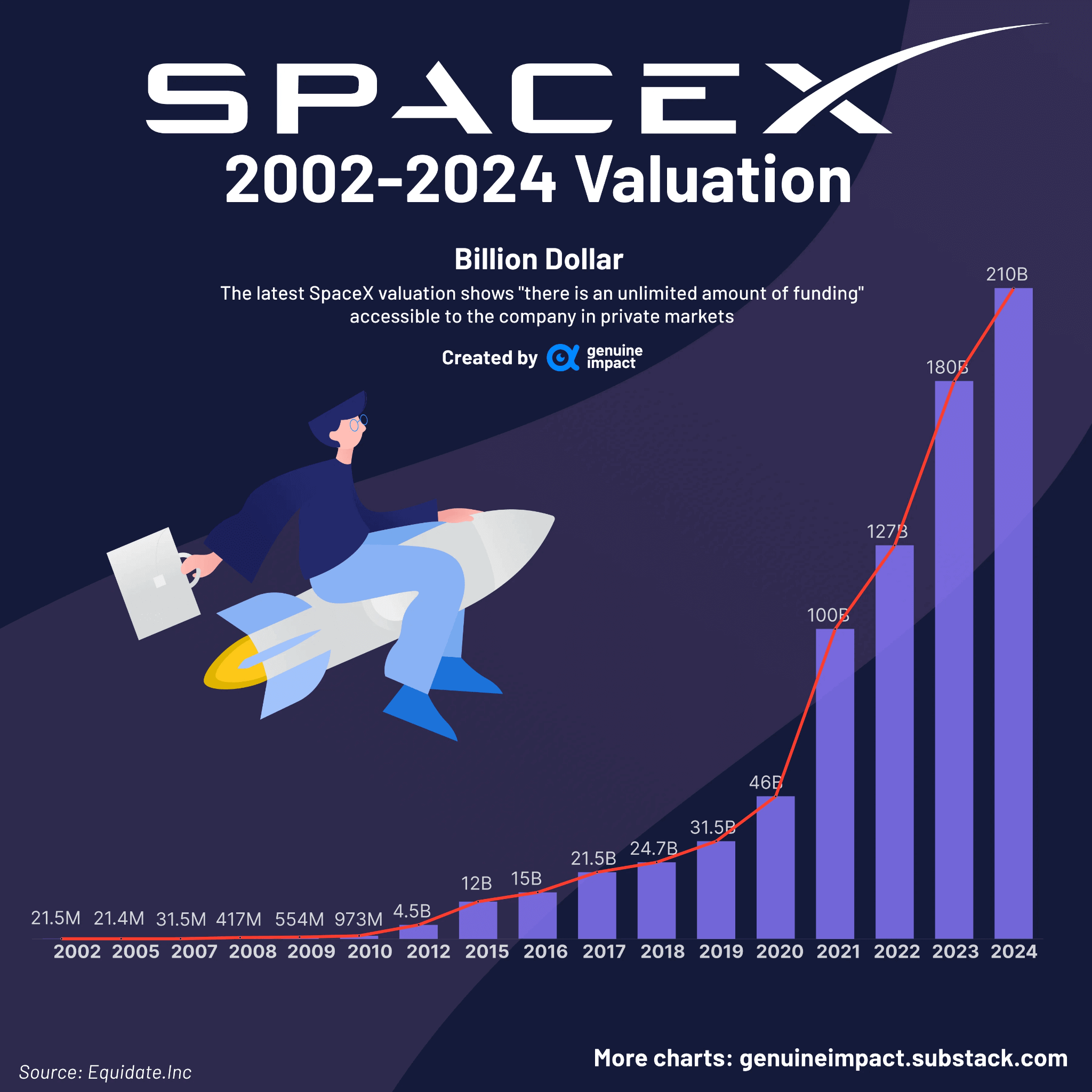
SpaceX reached a valuation approaching $3 trillion during its first week of trading on the Nasdaq, surpassing the market capitalization of Amazon, according to reports from Axios and Yahoo Finance. The rally establishes the aerospace company as a primary contender for the title of the world’s most valuable company, though analysts at Yahoo Finance note a significant “catch” regarding the sustainability and nature of this valuation.
What are the 5 wild stats from SpaceX’s first week on the Nasdaq – CNBC?
The initial trading period for SpaceX on the Nasdaq has been characterized by unprecedented valuation jumps and market volatility. According to reporting from CNBC, the first week yielded several statistics that challenge traditional aerospace and tech sector benchmarks. These figures highlight a market appetite for SpaceX that extends beyond its current launch capabilities and into the projected dominance of its satellite and interplanetary ambitions.
The five primary statistics driving the conversation include:
- The Amazon Overpass: SpaceX’s market capitalization rose above that of Amazon, a milestone reported by Axios, signaling a shift in how investors value infrastructure-heavy tech companies versus e-commerce giants.
- The $3 Trillion Threshold: Yahoo Finance reports that the rally has pushed the company’s valuation toward the $3 trillion mark, placing it in the same stratosphere as Apple and Microsoft.
- Velocity of Valuation: The speed at which the stock climbed during its first five days of trading exceeded the debut trajectories of most “mega-cap” tech stocks from the previous decade.
- Comparison to Global Aerospace: The market cap of SpaceX now dwarfs the combined valuation of several legacy aerospace and defense contractors.
- The “Most Valuable” Probability: CNBC analyzed the odds of SpaceX becoming the world’s most valuable company, noting that the current trajectory makes this a statistical possibility if Starlink and Starship meet their operational milestones.
These statistics reflect a market that is pricing in future monopolies rather than current quarterly earnings. While legacy aerospace companies are valued on government contracts and steady dividends, SpaceX is being traded as a growth engine for the entire orbital economy.
How does the SpaceX valuation compare to other tech giants?
The ascent of SpaceX on the Nasdaq has disrupted the established hierarchy of the “Big Tech” ecosystem. For years, the ceiling for market capitalization was held by a small group of software and consumer electronics firms. SpaceX’s entry into the public market has introduced a heavy-industry entity into this elite bracket.
According to Axios, the moment SpaceX soared above Amazon in market cap, it signaled a pivot in investor sentiment. Amazon’s valuation is rooted in logistics, cloud computing (AWS), and retail. SpaceX’s valuation, by contrast, is rooted in the vertical integration of launch services and the global internet provision of Starlink.
| Company | Primary Valuation Driver | Market Status (First Week) | |
|---|---|---|---|
| SpaceX | Starlink / Starship / Launch | Surpassed Amazon | |
| Amazon | E-commerce / AWS | Overtaken by SpaceX | |
| Apple/Microsoft | Hardware / Software / AI | Current Market Leaders |
The probability of SpaceX becoming the most valuable company in the world depends on the scaling of its Starlink constellation. CNBC notes that if Starlink achieves a dominant share of the global broadband market, the revenue streams could justify a valuation that rivals or exceeds the current leaders in the S&P 500.
What is the “big catch” in the $3 trillion rally?
Despite the euphoria surrounding the stock’s performance, Yahoo Finance identifies a “big catch” associated with the nearly $3 trillion rally. This caveat typically refers to the distinction between market capitalization—the total value of all shares—and the actual liquid cash flow or profitability of the enterprise.
The “catch” involves several critical factors:
- Capital Expenditure: SpaceX requires billions of dollars in ongoing investment to develop the Starship system and maintain the Starlink fleet. This creates a high “burn rate” that can clash with the expectations of public shareholders who demand dividends or buybacks.
- Concentration of Ownership: Much of the valuation is driven by a small number of high-conviction holders and the perceived influence of the company’s leadership.
- Regulatory Risk: Unlike software companies, SpaceX is subject to intense federal regulation via the FAA and FCC. A single regulatory setback regarding launch licenses could cause a sharp correction in the stock price.
This volatility is a central theme in the analysis provided by Paul Krugman via Substack, where the rally is framed through the lens of “Hype and Glory.” Krugman suggests that the market may be overestimating the immediate financial returns of space exploration while underestimating the risks of a capital-intensive business model.
Why does the “Hype and Glory” narrative matter for investors?
The tension between the “glory” of SpaceX’s technical achievements and the “hype” of its stock price creates a precarious environment for retail investors. When a company is valued at nearly $3 trillion, the market is not paying for what the company is today, but for what it promises to be in ten to twenty years.
According to the analysis in “Hype and Glory,” the valuation assumes a near-perfect execution of the following:
- Starship Operationality: The ability to launch massive payloads cheaply and reliably to the moon and Mars.
- Starlink Monetization: Converting millions of subscribers into a high-margin, recurring revenue stream that can fund other ventures.
- Government Reliance: Maintaining its status as the primary partner for NASA and the U.S. Department of Defense.
If any of these pillars fail, the $3 trillion valuation could be viewed as a speculative bubble. However, supporters argue that SpaceX is the only company in history to successfully implement reusable rocket technology at scale, which fundamentally changes the cost equations of space travel.
For more on how this affects the broader market, see our related explainer on aerospace market volatility.
Who are the primary stakeholders affected by this market shift?
The impact of SpaceX’s Nasdaq debut extends beyond the company’s shareholders. It affects the entire geopolitical and economic landscape of the 21st century.
Institutional Investors and Hedge Funds
Large funds are now balancing their portfolios between traditional tech (like the “Magnificent Seven”) and “Deep Tech” entities like SpaceX. The ability to trade SpaceX shares publicly allows institutional investors to hedge their bets on the future of the orbital economy.
Legacy Aerospace Competitors
Companies like Boeing and Lockheed Martin now face a competitor that is not only technically agile but possesses a market valuation that allows it to raise capital far more cheaply than traditional firms. This valuation gap can lead to a “brain drain,” where top engineering talent migrates toward the company with the highest market confidence.
Global Telecommunications Providers
The valuation of SpaceX is inextricably linked to Starlink. Traditional telecom companies providing terrestrial internet are now competing with a company that has a $3 trillion valuation backing its infrastructure expansion. This puts pressure on traditional ISPs to innovate or risk obsolescence in rural and underserved markets.
Common misconceptions about the SpaceX valuation
There are several prevailing myths regarding the current market cap of SpaceX that require factual correction based on the reports from CNBC and Yahoo Finance.
Misconception 1: The valuation is based on current profits.
In reality, the valuation is based on future discounted cash flows. SpaceX’s value is derived from the potential of Starlink and the colonization of Mars, not from current quarterly earnings reports.
Misconception 2: Surpassing Amazon means SpaceX is “bigger” than Amazon.
Market capitalization is a measure of perceived value, not size in terms of employees, revenue, or physical assets. Amazon still operates a vastly larger logistics network and generates significantly more annual revenue than SpaceX.
Misconception 3: The stock is a “safe” bet because of NASA contracts.
While NASA contracts provide a floor of stability, the $3 trillion rally is driven by the commercial potential of the company. Government contracts alone cannot support a multi-trillion dollar valuation.
What to monitor in the coming months
The first week on the Nasdaq was a sprint; the coming months will be a marathon. Analysts are focusing on several key indicators to determine if the rally is sustainable.
- Starship Flight Tests: Every successful test flight acts as a catalyst for the stock, while any major failure could lead to a rapid devaluation.
- Quarterly Starlink Growth: Investors will look for evidence that Starlink is scaling its user base in international markets without incurring unsustainable customer acquisition costs.
- Insider Trading Patterns: Monitoring whether early investors and executives are selling shares (cashing out) or holding their positions will signal internal confidence.
The intersection of high-finance and high-frontier exploration has created a unique asset class. As SpaceX continues its tenure on the Nasdaq, it serves as a bellwether for whether the public markets are ready to value “moonshot” projects with the same intensity they once reserved for software and social media.
Frequently Asked Questions
Why did SpaceX’s market cap rise so quickly on the Nasdaq?
According to CNBC and Axios, the rapid rise is due to intense investor demand for exposure to the “orbital economy,” specifically the growth potential of Starlink and the development of the Starship launch system.
Is SpaceX now the most valuable company in the world?
While SpaceX has surpassed Amazon and is approaching a $3 trillion valuation, it is still competing with Apple and Microsoft for the top spot. CNBC reports that it has a statistical possibility of becoming the most valuable company if its long-term goals are realized.

What is the “catch” mentioned by Yahoo Finance regarding the rally?
The “catch” refers to the gap between the company’s massive market capitalization and its actual liquidity and profitability, noting that the valuation relies heavily on future projections rather than current earnings.
How does SpaceX’s valuation differ from Amazon’s?
Amazon’s value is rooted in diversified revenue from e-commerce and cloud services (AWS). SpaceX’s value is concentrated in its monopoly on reusable heavy-lift launches and its ambition to provide global satellite internet.
Does the $3 trillion valuation mean SpaceX is profitable?
Not necessarily. Market capitalization represents what investors are willing to pay for the company, not the amount of profit the company currently makes. Much of SpaceX’s value is speculative, based on future growth.
