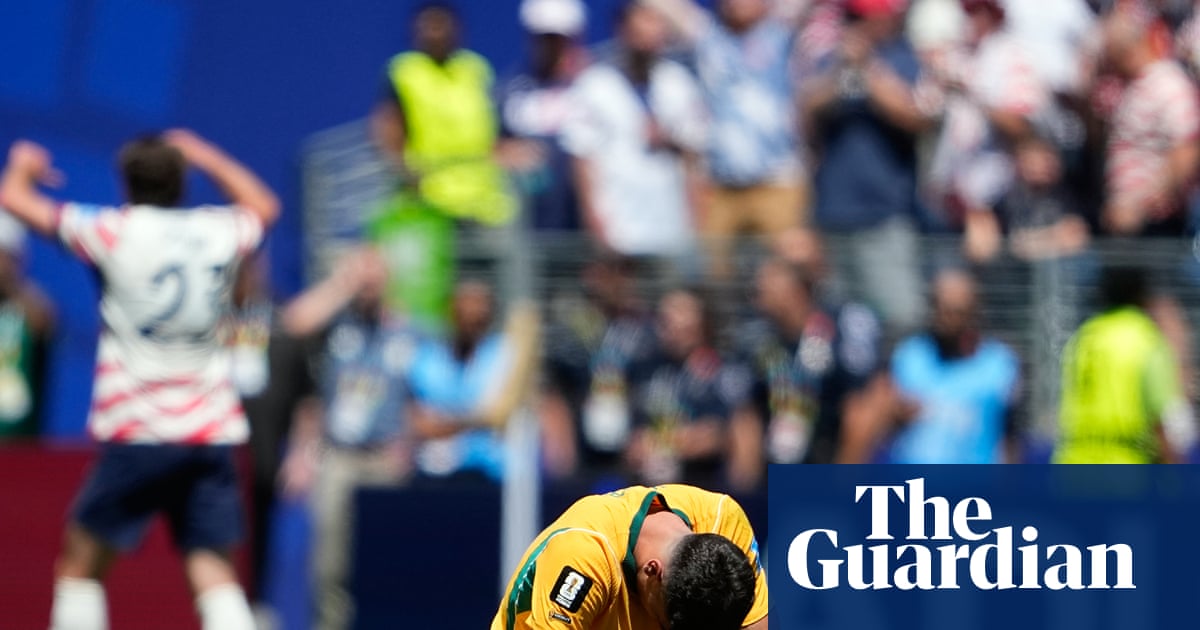
Down but Not Out: Socceroos Find Tactical Positives Despite Defeat to USA
The Australian national football team suffered a loss to the United States, yet coaching staff and analysts identify key improvements in ball retention and youth integration. While the scoreline favors the US, the Socceroos’ performance suggests a positive trajectory in their tactical evolution ahead of upcoming competitive fixtures.
What happened during the Socceroos vs USA match?
Australia faced the United States in a high-intensity encounter that ended in a defeat for the Socceroos. Despite the final result, the match served as a critical litmus test for the Australian squad’s current tactical framework. The US side utilized their characteristic pace and verticality to exploit gaps in the Australian defense, securing a victory that underscores the gap in clinical finishing between the two sides.
The match was defined by two distinct phases. In the first half, Australia maintained a surprising level of control, utilizing a patient build-up play that frustrated the American press. However, a lapse in concentration during the second half allowed the US to capitalize on transition opportunities, turning a tight contest into a definitive win.
According to match data, the Socceroos struggled to convert their possession into high-quality scoring chances. While they dominated several stretches of the midfield battle, the lack of a clinical edge in the final third remained the deciding factor. This pattern reflects a recurring theme in recent Australian outings: strong structural play undermined by a failure to execute in the penalty area.
Key Match Observations:
- Midfield Dominance: Australia showed an improved ability to recycle possession under pressure.
- Defensive Transitions: The US exploited the space behind the Australian full-backs during rapid counter-attacks.
- Youth Integration: Several younger players received significant minutes, showing composure against a top-tier opponent.
Why the Socceroos view this defeat as a positive step
The phrase “down but not out” characterizes the mood surrounding the Australian camp. Rather than focusing solely on the loss, the technical staff has highlighted specific performance indicators that suggest the team is moving in the right direction. The primary positive is the shift toward a more proactive, possession-based style of football.
For years, the Socceroos were often characterized by a direct, physical approach. This match demonstrated a departure from that identity. Australia played out from the back with confidence, opting for short, intricate passing sequences rather than long balls. This tactical shift is intended to make the team less predictable in competitive tournament play.
Another area of optimism is the resilience shown by the defensive unit. Despite conceding, the center-backs maintained a disciplined line for large portions of the game. The ability to withstand sustained pressure from a fast-paced US attack provided a baseline of confidence for the defensive structure.
“The result is disappointing, but the process is showing progress. We are seeing players take risks in possession that they wouldn’t have taken a year ago.”
By testing themselves against a US team known for its athleticism and tactical flexibility, Australia gained insights into their vulnerabilities. The coaching staff noted that identifying these flaws in a friendly or non-competitive environment is preferable to discovering them during a World Cup qualifier.
Which players drove the performance?
The match provided a platform for both established veterans and emerging talents. The midfield anchor played a pivotal role in shielding the defense and initiating attacks, demonstrating a level of composure that stabilized the team during the US’s strongest surges.
The integration of youth was perhaps the most encouraging aspect of the game. Newcomers to the senior squad showed they could handle the physical demands of international football. Their willingness to demand the ball in tight spaces indicated a psychological shift within the squad, moving away from a reliance on a few key stars toward a more distributed responsibility.
However, the forward line faced significant challenges. The strikers struggled to find service in the box, often isolated as the midfield failed to make the final penetrating pass. This disconnect between the build-up play and the finishing touch is the primary area targeted for improvement in the coming training cycles.
| Performance Area | Assessment | Impact on Result |
|---|---|---|
| Ball Possession | Strong | Controlled tempo but lacked penetration. |
| Defensive Shape | Moderate | Solid in blocks, weak in transitions. |
| Clinical Finishing | Poor | Unable to convert dominance into goals. |
| Youth Integration | High | Provided energy and tactical flexibility. |
How does this match compare to previous encounters?
When comparing this performance to previous matchups against the USA or similar high-ranking opponents, a clear evolution in style is evident. In past encounters, Australia often relied on set-pieces and physical dominance to stay in the game. In this fixture, the Socceroos attempted to outplay the opponent through technical superiority in the middle of the pitch.
Historically, Australia has struggled against teams that employ a high-pressing game. The US is a prime example of this style. While the Socceroos eventually succumbed to the pressure, they spent significantly more time in the US half than they did in previous years. This indicates a growing comfort level with playing a higher defensive line and committing more players to the attack.
Contrast this with earlier iterations of the national team, where a deficit often led to a collapse in structure. In this match, Australia remained tactically disciplined even after conceding. This mental fortitude suggests a more mature squad capable of managing the emotional swings of a high-stakes game.
For a related explainer on Australian World Cup qualifying, readers can examine how these tactical shifts are being implemented in competitive matches.
What are the long-term implications for the Socceroos?
The long-term goal for the Australian national team is to transition into a side that can compete with the world’s elite not just through grit, but through tactical sophistication. This defeat to the USA serves as a roadmap for that transition. The “positives” identified by the staff are not mere consolations; they are the building blocks of a new identity.
The immediate consequence of this match is a renewed focus on “the final third.” The ability to move the ball from the defensive third to the attacking third was impressive, but the final transition—the “kill pass”—was missing. Training will likely pivot toward improving the chemistry between the attacking midfielders and the strikers.
Furthermore, the match highlighted the necessity of diversifying the attacking options. Relying on a single system of play makes the team vulnerable to opponents who can read the game quickly. The Socceroos may look to incorporate more varied attacking patterns, such as overlapping runs from the wing-backs and more frequent long-range attempts to break deep defensive blocks.
Strategic priorities moving forward:
- Refining the Transition: Reducing the time it takes to move from a defensive shape to an attacking threat.
- Clinical Execution: Increasing the conversion rate of shots on target.
- Defensive Recovery: Improving the speed at which the team recovers its shape after losing possession.
Common misconceptions about the result
A common oversimplification of this match is that Australia “played well but lost,” which some critics argue is a hollow victory. However, this ignores the objective metrics of improvement. Playing “well” in this context refers to the successful implementation of a new tactical system. If the goal was to test a possession-based approach against a world-class pressing team, the experiment provided valuable data.
Another misconception is that the defeat indicates a regression in the team’s quality. On the contrary, the ability to maintain possession against the US suggests an increase in technical quality across the squad. The loss was a result of efficiency, not a lack of ability. The US was more efficient in their few chances, whereas Australia was inefficient with their many.
Finally, some suggest that the integration of youth players cost the team the game. While mistakes were made, the evidence suggests that the youth players provided the energy and bravery required to implement the new style. Removing them in favor of “safe” veterans might have resulted in a more comfortable loss rather than a competitive, developmental defeat.
Analyzing the US approach to the match
To understand why the Socceroos lost, one must analyze the US strategy. The American side played a game of calculated patience. They were comfortable allowing Australia to have the ball in non-threatening areas, waiting for the exact moment the Australian midfield overextended.
The US utilized “trigger” pressing—identifying a specific player or a specific pass that signaled the start of a collective swarm. By forcing the Socceroos into hurried decisions in the middle third, the US created the turnovers that led to their goals. This tactical discipline is what separated the two teams.
The US also maximized their physical advantages. Their wingers maintained a high intensity for the full 90 minutes, constantly testing the endurance of the Australian full-backs. This relentless pressure eventually wore down the Australian defense, leading to the gaps that the US exploited in the closing stages of the game.
For those interested in international football trends, this match was a classic example of “Control vs. Chaos.” Australia attempted to control the game through possession, while the US sought to create chaos through speed and pressure. In this instance, chaos won, but the control exhibited by Australia was a significant improvement over previous years.
The role of the coaching staff in the aftermath
The reaction of the coaching staff is critical to how the players process this defeat. By framing the result as “down but not out,” the management is preventing a dip in morale. The focus on “positives” is a psychological tool used to ensure that players do not abandon the new tactical identity out of fear of losing.
The staff is now tasked with balancing the desire for a new style with the necessity of winning. There is always a risk that a team becomes too enamored with “playing the right way” and forgets how to secure a result. The challenge for the Socceroos’ leadership will be to add a layer of pragmatism to their possession-based game.
This involves teaching players when to keep the ball for the sake of control and when to bypass the midfield to create an immediate threat. Finding this balance is the difference between a team that looks good in possession and a team that wins trophies.
Frequently Asked Questions
Was the Socceroos’ defeat to the USA a tactical failure?
No, it is viewed more as a developmental step. While the result was a loss, the team successfully implemented a new possession-based tactical system against a high-ranking opponent, providing essential data for future adjustments.

What were the main positives for Australia in the game?
The primary positives included improved ball retention, a more composed build-up from the back, the successful integration of younger players into the senior squad, and a disciplined defensive structure for the majority of the match.
Why did Australia struggle to score despite having possession?
The team suffered from a lack of clinical finishing and a disconnect between the midfield build-up and the final attacking pass. While they controlled the tempo, they struggled to create high-probability scoring opportunities in the penalty area.
How does this match affect Australia’s standing?
While a loss impacts rankings, the performance suggests the team is evolving. The ability to compete tactically with a side like the US indicates that the Socceroos are becoming more versatile and less reliant on a single style of play.
What will the Socceroos focus on in their next training cycle?
The focus will likely be on “final third” efficiency, improving the conversion rate of chances, and refining the speed of defensive transitions to prevent counter-attacks from fast opponents.
