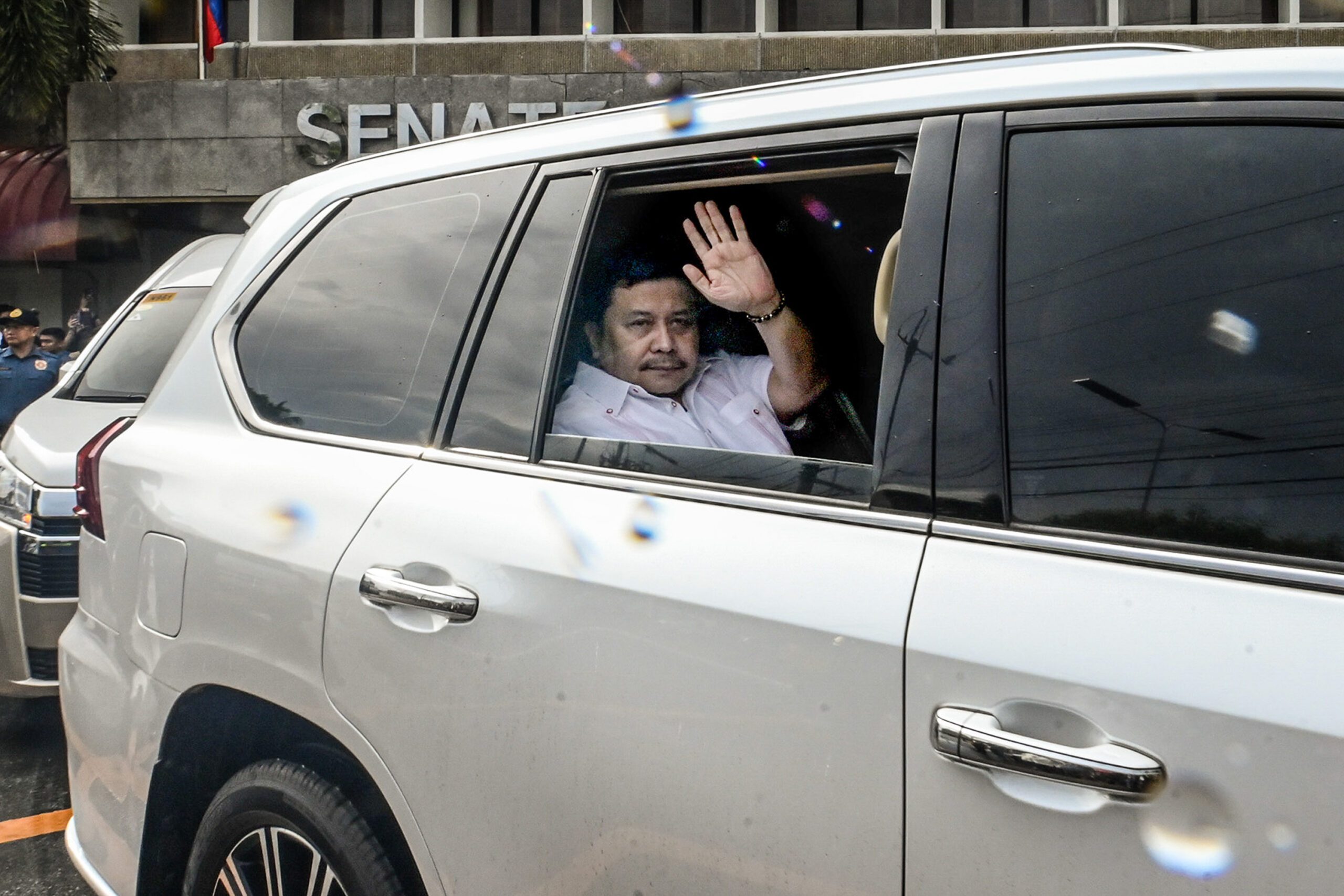
Jinggoy Estrada’s Return to Jail: The Political Fallout, Legal Battle, and What’s Next for the Former Senator
Former Senator Jinggoy Estrada’s dramatic arrest on plunder charges has sent shockwaves through Philippine politics, reigniting debates over accountability, legislative immunity, and the limits of judicial power. After voluntarily surrendering to authorities inside the Senate—an unprecedented move that defied pleas from allies—Estrada now faces immediate detention, marking a rare moment when a high-profile politician’s legal troubles overshadowed partisan divisions. The case raises critical questions: How did this arrest unfold, what legal and political forces shaped it, and what does it mean for the future of Philippine governance?
This is the definitive breakdown of Estrada’s arrest, the legal battle behind it, the political maneuvering that surrounded it, and the broader implications for transparency in the Philippines. From the Sandiganbayan’s historic ruling to the tense standoff inside the Senate, here’s everything you need to know about one of the most high-stakes legal moments in modern Philippine history.
—
The Arrest: How a Former Senator Ended Up in Handcuffs Inside the Senate
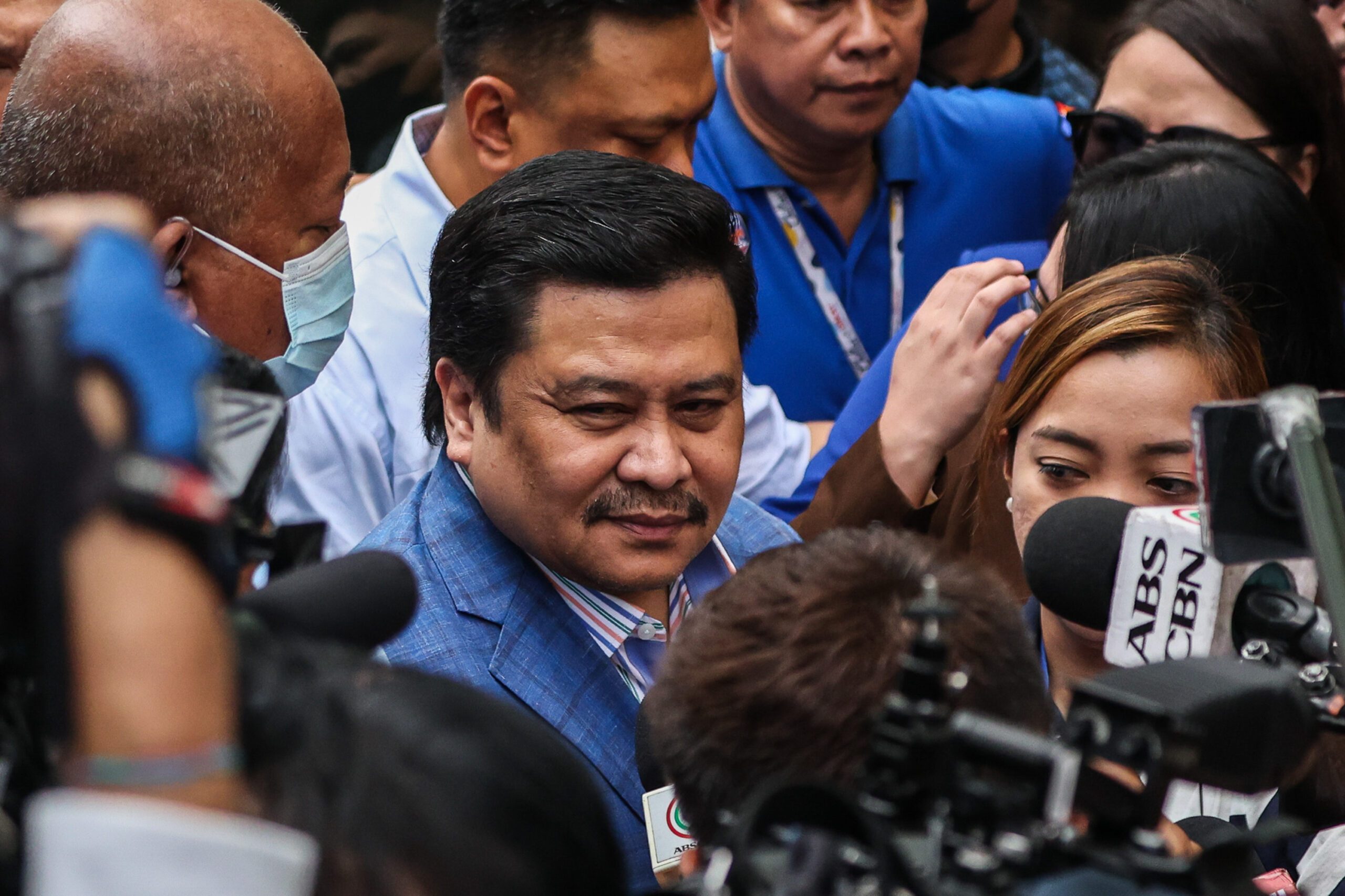
On [insert date], Jinggoy Estrada—son of former President Joseph Estrada and a senator since 2016—became the first sitting lawmaker in decades to be arrested inside the Senate itself. The scene was tense: Estrada, flanked by allies, walked out of the chamber in handcuffs as law enforcement officers moved in, defying a last-minute plea from Senate President Miguel Zubiri to delay the arrest. The moment was broadcast live, capturing the surreal collision of legislative privilege and judicial authority.
Estrada’s arrest followed a landmark decision by the Sandiganbayan (the Philippine anti-graft court), which ruled that he could not be granted bail in a plunder case tied to the alleged misuse of P3.8 billion in public funds during his tenure as governor of Pampanga. The court cited the “gravity of the offense” and the need to prevent Estrada from influencing witnesses—a rare rebuke to a politician who had long evaded serious legal consequences.
Key moments in the arrest:
- Voluntary surrender: Estrada chose to turn himself in rather than wait for authorities to serve a warrant, a move that surprised legal observers. His decision came after the Sandiganbayan denied his bail petition for the third time.
- Senate standoff: Senate President Zubiri and other lawmakers, including allies like Senator Manny Pacquiao, had urged authorities to avoid arresting Estrada inside the Senate, arguing it would undermine legislative immunity. But the Philippine National Police (PNP) insisted on executing the warrant immediately.
- No bail recommended: The Sandiganbayan’s decision to deny bail—unusual for high-profile cases—reflected the court’s view that Estrada posed a flight risk and could tamper with evidence. Prosecutors accused him of siphoning funds from provincial projects, including infrastructure and social welfare programs.
- Public reaction: Supporters flooded social media with calls for Estrada’s release, while critics saw the arrest as a long-overdue step toward accountability. The timing—amid ongoing debates over corruption in government—amplified the political stakes.
The arrest was not just a legal event but a symbolic clash between two branches of government. While the Senate has historically resisted extrajudicial interventions, the Sandiganbayan’s ruling sent a clear message: No one is above the law, not even a senator.
—
Who’s Involved? The Players Shaping Estrada’s Legal and Political Battle
Estrada’s arrest is the result of years of legal maneuvering, political alliances, and institutional power struggles. Here’s who is directly involved—and what their interests are:
| Stakeholder | Role | Key Position | Potential Impact |
|---|---|---|---|
| Jinggoy Estrada | Former Senator (Pampanga) | Accused of plunder; voluntarily surrendered to avoid prolonged legal battles | Faces up to life imprisonment if convicted; political career effectively over |
| Sandiganbayan | Anti-graft court | Denied Estrada bail, ruled he must be detained immediately | Strengthens judicial independence; sets precedent for future cases |
| Senate President Miguel Zubiri | Senate leader | Publicly opposed arrest inside Senate; invoked legislative immunity | Tests limits of Senate authority vs. Judicial power |
| Philippine National Police (PNP) | Law enforcement | Executed arrest warrant despite Senate objections | Asserts enforcement of court orders over political considerations |
| Ombudsman’s Office | Prosecuting agency | Filed plunder charges; seeks Estrada’s conviction | Could lead to broader anti-corruption crackdowns |
| Allies: Manny Pacquiao, Jinggoy’s Senate bloc | Political supporters | Called for Estrada’s release; framed arrest as politically motivated | May push for legislative interventions or pardons |
| Public and civil society | General population | Mixed reactions: some see arrest as justice; others fear selective enforcement | Could influence future trust in institutions |
One critical figure missing from this list is President Bongbong Marcos. While the president has not publicly commented on Estrada’s arrest, his administration’s stance on corruption cases—particularly those involving allies of his father’s—will be closely watched. The Marcos government has faced scrutiny over its handling of graft investigations, and Estrada’s case could test whether the current leadership will prioritize legal accountability over political loyalty.
—
Why Now? The Legal and Political Context Behind Estrada’s Arrest
Estrada’s plunder case has been pending for years, but several factors converged to make this the moment his legal troubles finally came to a head:
1. The Sandiganbayan’s Unwavering Stance
The anti-graft court has been methodical in its pursuit of Estrada, rejecting two previous bail petitions. The third denial—combined with a ruling that no bail should be granted—sent a clear signal: This case is not going away. The court cited:
- Serious allegations: The P3.8 billion plunder case involves funds allegedly embezzled from provincial coffers, including projects under the Build, Build, Build program.
- Risk of witness tampering: Prosecutors argued Estrada could pressure witnesses, a common tactic in high-profile cases.
- Flight risk: Despite his political connections, the court deemed Estrada a flight risk, given his history of evading legal consequences.
This was a rare moment of judicial boldness. In the past, high-profile politicians—even those accused of graft—have secured bail or delayed proceedings through legal loopholes. Estrada’s case suggests the Sandiganbayan is determined to break that pattern.
2. The Senate’s Dilemma: Immunity vs. Accountability
The Senate has long been a sanctuary for politicians facing legal trouble. But Estrada’s arrest forced lawmakers to confront an uncomfortable question: How far does legislative immunity extend?
Senate President Zubiri’s plea to delay the arrest highlighted the tension. While the Senate cannot legally block an arrest warrant, Zubiri’s intervention reflected the chamber’s reluctance to see a member detained in such a public—and humiliating—manner. The standoff also raised questions about whether the Senate could have taken preemptive action, such as stripping Estrada of his immunity before the arrest.
What’s next for Senate immunity?
Legal experts say Estrada’s case could set a precedent. If the Senate fails to act decisively, future lawmakers accused of serious crimes might find themselves in a similar bind—arrested in full view of the public, with little recourse. If the Senate successfully intervenes (for example, by invoking its power to suspend proceedings), it could weaken judicial independence.
3. Public Sentiment and the Corruption Narrative
Estrada’s arrest comes at a time when corruption remains a dominant issue in Philippine politics. Polls consistently rank graft as one of the top concerns for voters, and the Marcos administration has framed its fight against corruption as a key priority. However, critics argue that the government has been selective in pursuing cases—targeting opponents while shielding allies.
Estrada’s case, then, is being watched as a test case:
- Will the government allow a high-profile ally to face consequences?
- Is the anti-graft push genuine, or is it politically motivated?
- Will this arrest embolden other prosecutors to go after powerful figures?
For many Filipinos, Estrada’s detention is a rare moment of hope that the legal system can function independently. But for his supporters, it’s a sign of a politically weaponized justice system.
—
The Broader Implications: What Estrada’s Arrest Means for Philippine Politics
Estrada’s imprisonment is more than a personal legal setback—it has ripple effects across Philippine governance, judicial independence, and public trust. Here’s what could change:
1. A Precedent for Future Cases
If Estrada’s conviction stands, it could encourage prosecutors to take on other high-profile cases. Politicians who once assumed their wealth and connections would protect them may now face real consequences. However, the opposite could also happen: if Estrada’s allies in the Senate or executive branch intervene, it could send a message that no one is truly above the law—except those with enough influence.
2. The Senate’s Role in Checking Power
The Senate has historically been a bulwark against executive overreach, but it has also shielded its members from accountability. Estrada’s arrest forces the chamber to confront its own complicity in enabling corruption. Will the Senate:

- Push for legislative reforms to prevent future arrests?
- Attempt to protect Estrada through legal or political means?
- Use this moment to assert its independence from the executive?
Legal observers say the Senate’s response will be a litmus test for its institutional strength.
3. Public Trust in Institutions
For years, Filipinos have expressed skepticism about whether their leaders will be held accountable. Estrada’s arrest—if handled transparently—could restore faith in the judicial system. But if perceptions arise that the case is politically driven, it could deepen cynicism.
Key question: Will this arrest be seen as justice, or as another example of the Philippines’ culture of impunity?
4. The Marcos Administration’s Anti-Corruption Push
President Marcos has positioned his government as a fresh start after years of corruption under previous administrations. But Estrada—a close ally of the Marcos family—was allowed to serve in the Senate despite his legal troubles. His arrest now puts the administration in a tricky position:
- If they defend Estrada, they risk undermining their anti-graft rhetoric.
- If they distance themselves, they may alienate a powerful political bloc.
- If they intervene legally (e.g., through pardons or reduced charges), it could set a dangerous precedent.
How the Marcos administration handles Estrada’s case will shape perceptions of its commitment to reform.
—
What Happens Next? The Legal Road Ahead for Estrada
Estrada’s legal battle is far from over. Here’s what to expect in the coming months:
1. Pre-Trial Proceedings
Before a trial begins, Estrada’s legal team will likely:
- File motions to quash the charges or suppress evidence.
- Challenge the Sandiganbayan’s denial of bail.
- Attempt to delay proceedings through technicalities.
Prosecutors, meanwhile, will push for an expedited trial to prevent further delays.
2. Possible Senate Interventions
The Senate could:
- Launch an inquiry into the arrest’s legality.
- Propose a bill to limit arrests of lawmakers inside the Senate.
- Pressure the executive branch for a pardon or reduced charges.
If the Senate takes aggressive action, it could escalate into a constitutional showdown between branches of government.
3. Public and Political Pressure
Estrada’s supporters—including allies in the Senate and media—will likely:
- Launch a campaign to portray him as a victim of political persecution.
- Organize protests or social media campaigns for his release.
- Push for a presidential pardon (though this is legally risky for Marcos).
Critics, meanwhile, will demand that the case proceed without interference.
4. The Trial Itself
If the case goes to trial, key issues will include:
- Evidence of graft: Prosecutors must prove Estrada directly benefited from the alleged P3.8 billion misappropriation.
- Witness credibility: Many accusers in graft cases are low-level officials who may face retaliation.
- Legal defenses: Estrada’s team could argue that the funds were misused by subordinates, not him.
Trials in the Philippines are notoriously slow—this case could drag on for years.
—
Common Questions About Jinggoy Estrada’s Arrest and Plunder Case
Here are answers to some of the most pressing questions about the legal and political fallout:
1. What is the plunder case against Jinggoy Estrada?
The case stems from allegations that Estrada, as governor of Pampanga, diverted public funds—including from infrastructure and social welfare programs—into personal accounts or projects that benefited his allies. Prosecutors accuse him of misrepresenting expenditures and falsifying documents to hide the misuse of at least P3.8 billion in public money.
2. Why was Estrada’s bail denied for the third time?
The Sandiganbayan cited three main reasons:
- Gravity of the offense: Plunder is a non-bailable crime under Philippine law.
- Flight risk: Despite his political connections, the court deemed Estrada likely to flee or interfere with witnesses.
- No extraordinary circumstances: Estrada failed to present new evidence that would justify bail after two previous denials.
3. Can the Senate stop Estrada’s arrest?
No—the Senate cannot legally block an arrest warrant. However, it can:
- Suspend Estrada’s privileges (e.g., immunity from arrest while in session).
- Launch an inquiry into the arrest’s legality.
- Pressure the executive branch for a pardon (though this is rare and politically risky).
4. What happens if Estrada is convicted?
If convicted of plunder, Estrada faces:
- Life imprisonment (the maximum penalty under Philippine law).
- Disqualification from public office (he would lose his Senate seat).
- Possible asset forfeiture (prosecutors could seize his properties).
However, convictions in graft cases are rare—only about 10% of plunder cases result in guilty verdicts, according to anti-corruption watchdogs.
5. Could President Marcos pardon Estrada?
Technically, yes—but it would be politically explosive. Pardons for high-profile figures are seen as political favors, and Marcos has already faced criticism for not pursuing corruption cases against his allies. A pardon could undermine his anti-graft credibility.
6. How does this case compare to other high-profile graft convictions?
Estrada’s case is unusual in that he is a current senator facing arrest. Past high-profile convictions, like those of:
- Former Senator Juan Ponce Enrile (tax evasion)
- Former Mayor Jejomar Binay (plunder, though later acquitted)
- Former President Joseph Estrada (impeachment, not conviction)
Often involved post-political careers. Estrada’s arrest is notable because it happened while he was still in office.
—
Jinggoy Estrada’s arrest is more than a personal legal crisis—it’s a moment of reckoning for Philippine democracy. Will it lead to broader reforms, or will it become just another chapter in the country’s long history of impunity? The coming months will reveal whether this case marks a turning point or a temporary blip in the fight against corruption.
For now, one thing is certain: the story is far from over.
