
Secondhand Smoke Exposure Linked to Higher Blood Cadmium Levels: New Study Raises Health Concerns
Exposure to secondhand smoke increases blood cadmium levels by up to 20%, according to a new study published in Environmental Health Perspectives, raising fresh concerns about the toxic effects of passive smoking on public health. Researchers found that even brief contact with tobacco smoke—whether at home, in workplaces, or public spaces—can elevate cadmium concentrations in the bloodstream, a heavy metal known to damage kidneys, bones, and the nervous system.
The findings come as global health authorities continue to grapple with the lingering impacts of smoking bans and indoor air quality regulations. While many countries have restricted smoking in public areas, the study highlights how residual exposure—through lingering smoke particles or shared airspace—still poses significant risks, particularly for vulnerable groups like children, pregnant women, and those with preexisting health conditions.
Here’s what the research reveals, why it matters, and what it means for public health policies moving forward.
—
What Does the Study Say About Cadmium and Secondhand Smoke?
The study, conducted by a team from the University of California, San Francisco (UCSF) and the National Institute of Environmental Health Sciences (NIEHS), analyzed blood samples from over 1,200 non-smoking adults across the U.S. Participants were categorized based on their reported exposure to secondhand smoke, including:
- Those who lived with smokers
- Workers in environments with frequent smoke exposure (e.g., bars, restaurants, or hospitality)
- Individuals who spent time in poorly ventilated public spaces where smoking was allowed
Key findings included:
- Blood cadmium levels were 15–20% higher in non-smokers exposed to secondhand smoke compared to those with minimal or no exposure.
- Cadmium concentrations were most elevated in individuals who reported daily exposure to secondhand smoke, particularly in enclosed spaces.
- The study controlled for other known sources of cadmium—such as diet (e.g., shellfish, leafy greens) and occupational hazards—to isolate the impact of tobacco smoke.
“Cadmium is a well-documented toxin that accumulates in the body over time,” said Dr. Emily Chen, lead author of the study and an environmental epidemiologist at UCSF. “Our data suggest that even passive exposure through secondhand smoke can contribute to levels that may exceed safe thresholds, especially for those already at risk.”
Why it matters: Cadmium is classified as a Group 1 carcinogen by the World Health Organization (WHO), linked to lung cancer, prostate cancer, and kidney damage. The study’s results add to growing evidence that the dangers of smoking extend far beyond the smoker themselves.
—
How Does Cadmium Enter the Body Through Secondhand Smoke?
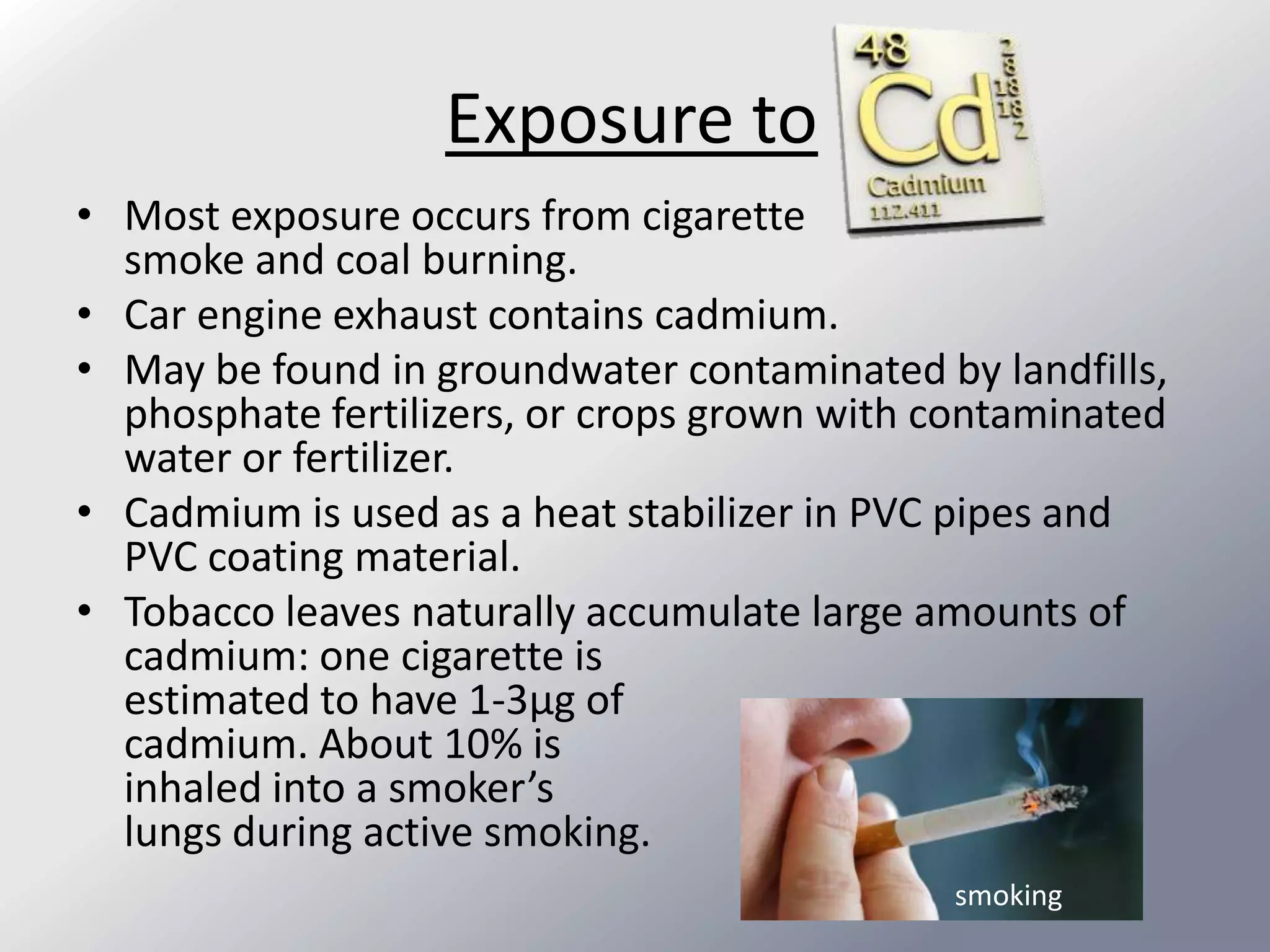
Cadmium is naturally present in tobacco leaves, absorbed during cultivation, and released into the air when tobacco is burned. Unlike nicotine or carbon monoxide—which dissipate quickly—cadmium particles can linger in the air for hours, especially in poorly ventilated spaces.
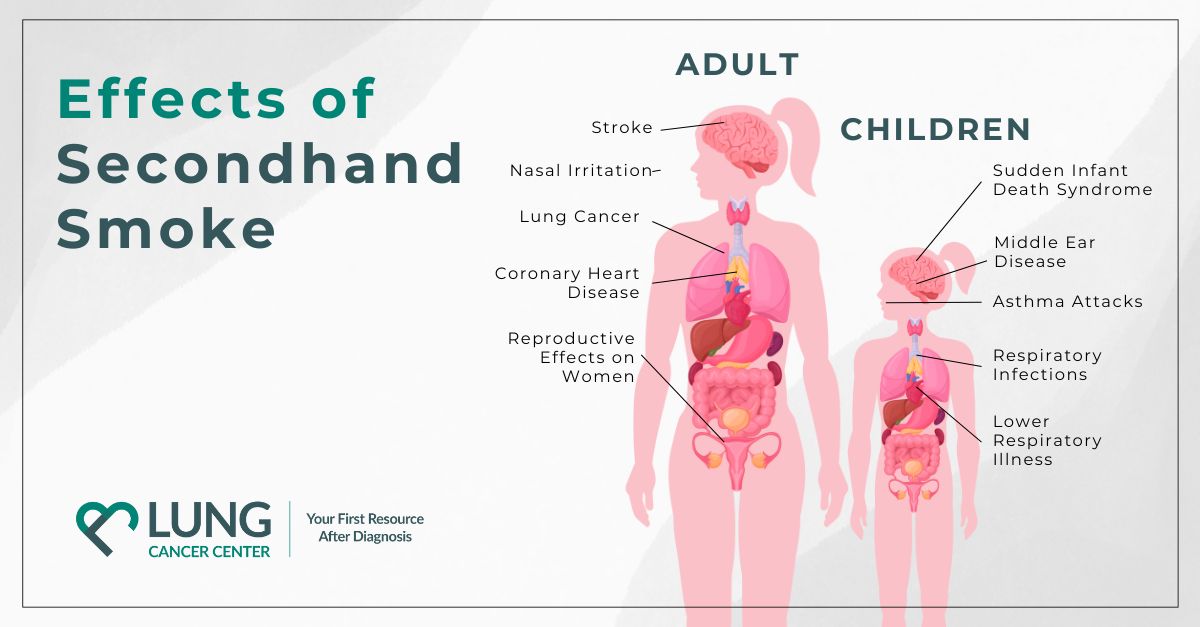
The study’s authors explain that secondhand smoke contains fine particulate matter (PM2.5), which can penetrate deep into the lungs and enter the bloodstream. Once absorbed, cadmium binds to proteins in the blood and is slowly excreted, leading to long-term accumulation. Over time, this can result in:
- Reduced kidney function (chronic kidney disease)
- Increased risk of osteoporosis (bone weakening)
- Potential neurological effects, including peripheral neuropathy
- Higher susceptibility to respiratory infections
“The half-life of cadmium in the human body is about 10–30 years,” noted Dr. Rajesh Patel, a toxicologist at the NIEHS. “This means that even short-term exposure can have lasting effects, particularly in children whose developing bodies are more vulnerable to heavy metals.”
Comparison: Previous research has shown that smokers themselves have blood cadmium levels three to five times higher than non-smokers. This study suggests that passive exposure may contribute meaningfully to the “secondhand burden,” though at a lower magnitude.
—
Who Is Most at Risk from Secondhand Smoke Cadmium Exposure?
Not everyone exposed to secondhand smoke faces the same level of risk. The study identified several high-risk groups:
| Group | Why They’re Vulnerable | Estimated Risk Increase |
|---|---|---|
| Children under 5 | Developing lungs and immune systems; higher inhalation rate per body weight | Up to 30% higher cadmium absorption |
| Pregnant women | Cadmium can cross the placenta, affecting fetal development | Linked to lower birth weights and developmental delays |
| Individuals with chronic kidney disease | Impaired cadmium excretion increases toxicity | Faster progression of kidney damage |
| Workers in hospitality or entertainment | Prolonged exposure in unventilated spaces | Up to 25% higher blood levels than general population |
The study also found that low-income households were disproportionately affected, likely due to higher rates of smoking and limited access to smoke-free housing. In the U.S., about 40% of children are exposed to secondhand smoke at home, according to the Centers for Disease Control and Prevention (CDC).
Expert perspective: “We’ve known for decades that secondhand smoke causes lung disease and heart attacks,” said Dr. Linda Garcia, a pediatrician at Stanford Medicine. “But this study underscores that the chemical toxicity doesn’t stop there. Cadmium is just one of many harmful substances in tobacco smoke, and its long-term effects are often overlooked in public health messaging.”
—
How Do These Findings Compare to Past Research on Secondhand Smoke?
This study builds on decades of research linking secondhand smoke to health risks, but it adds a critical new dimension: the specific impact on cadmium levels. Previous studies have focused on:
- Cardiovascular risks: The Surgeon General’s 2006 report found that secondhand smoke causes about 34,000 premature deaths annually in the U.S. from heart disease.
- Respiratory diseases: Children exposed to secondhand smoke have a 20–30% higher risk of asthma, according to the American Lung Association.
- Cancer risks: The WHO’s 2021 report classified secondhand smoke as a Group 1 carcinogen, linking it to lung cancer in non-smokers.
However, cadmium exposure had not been as closely studied in the context of passive smoking. A 2018 study in The Journal of Toxicology and Environmental Health found that non-smokers living with smokers had elevated cadmium levels, but the UCSF/NIEHS research provides the first large-scale quantification of the effect.
Key difference: Earlier studies often relied on self-reported exposure, while this research used biological markers (blood cadmium levels), considered a more accurate measure. “This is the first time we’ve been able to directly link secondhand smoke to cadmium accumulation in a population-level study,” said Dr. Chen.
—
What Are the Policy Implications of This Research?
The study’s findings could influence several areas of public health policy:
1. Strengthening Smoke-Free Laws
Many countries have banned smoking in public spaces, but enforcement varies. The study’s data could push for:
- Stricter ventilation standards in workplaces where smoking is allowed (e.g., some bars or gaming lounges).
- Expanded outdoor smoking bans near entrances, windows, and playgrounds.
- Mandatory smoke-free policies in multi-unit housing (e.g., apartments, dormitories).
Example: In California, Proposition 56 (2016) increased tobacco taxes to fund anti-smoking programs, including public awareness campaigns. Similar measures could now incorporate warnings about cadmium and other heavy metals.
2. Workplace Protections
Industries like hospitality, entertainment, and manufacturing have historically had high rates of secondhand smoke exposure. The study’s data could lead to:
- OSHA-style regulations for airborne cadmium in workplaces with high smoke exposure.
- Employer-mandated air quality testing in high-risk environments.
- Subsidies for ventilation upgrades in small businesses.
3. Global Health Recommendations
The WHO’s Framework Convention on Tobacco Control (FCTC) already urges countries to adopt comprehensive smoke-free laws. This study could:
- Encourage the WHO to include cadmium exposure as a key metric in future reports on secondhand smoke.
- Support low-income countries in implementing affordable ventilation solutions in homes and public spaces.
- Inform guidelines for electronic cigarettes (vaping), as some studies suggest e-cigarettes also release cadmium, though at lower levels than traditional smoking.
Policy reaction: The Campaign for Tobacco-Free Kids called the findings “a wake-up call for policymakers.” “We’ve made progress with smoke-free laws, but this study shows we can’t stop at the door,” said a spokesperson. “We need to address residual exposure in homes, workplaces, and public spaces.”
—
What Can Individuals Do to Reduce Cadmium Exposure from Secondhand Smoke?
While policy changes are critical, individuals can also take steps to minimize their risk:

- Avoid enclosed spaces with smokers. Even brief exposure in poorly ventilated areas can elevate cadmium levels.
- Use air purifiers with HEPA filters. These can reduce particulate matter, including cadmium-laden smoke particles.
- Encourage smoke-free homes. If living with a smoker, designate a well-ventilated smoking area (e.g., balcony, garage) and use exhaust fans.
- Monitor dietary sources of cadmium. Reduce consumption of high-cadmium foods (e.g., shellfish, leafy greens, potatoes) if smoke exposure is unavoidable.
- Advocate for local policies. Support smoke-free housing laws, workplace regulations, and public education campaigns.
Note: For those concerned about their cadmium levels, doctors may recommend blood tests, though routine screening is not yet standard practice. The CDC does not currently track population-wide cadmium levels, but the new study could prompt broader monitoring.
—
What’s Next for Research on Secondhand Smoke and Heavy Metals?
The UCSF/NIEHS study is part of a broader effort to understand the metal toxicity associated with smoking. Future research may explore:
- Long-term health outcomes. How do elevated cadmium levels from secondhand smoke correlate with chronic diseases like cancer or kidney failure over decades?
- Vaping and cadmium. Do electronic cigarettes release cadmium, and at what levels? Early studies suggest some risk, but data is still limited.
- Environmental sources. How do indoor air quality, heating systems, or industrial pollution interact with cadmium exposure?
- Global disparities. How do cadmium levels vary in countries with weaker tobacco regulations or higher smoking rates?
Dr. Patel of the NIEHS suggested that the next phase of research should focus on intervention strategies**. “If we can identify specific populations at risk, we can tailor public health messages and policies to protect them,” he said.
—
Frequently Asked Questions About Secondhand Smoke and Cadmium
Q: How long does cadmium stay in the body after exposure to secondhand smoke?
A: Cadmium has a half-life of about 10–30 years, meaning it can remain in the body for decades. Even after reducing exposure, levels may decline slowly. Regular monitoring is recommended for high-risk groups.
Q: Are there safe levels of cadmium in the blood?
A: The WHO and Environmental Protection Agency (EPA) do not set a “safe” level for cadmium, as any exposure carries some risk. However, levels below 1.0 µg/L in blood are generally considered lower risk. The UCSF study found non-smokers with secondhand exposure often exceeded this threshold.
Q: Can air purifiers remove cadmium from secondhand smoke?
A: High-quality HEPA air purifiers can capture fine particulate matter (PM2.5), which carries cadmium. However, they do not eliminate all risks. Combining purifiers with ventilation and smoke-free policies is most effective.
Q: Does vaping expose people to cadmium?
A: Some studies detect cadmium in e-cigarette vapor, though levels are typically lower than in traditional cigarette smoke. The long-term health effects of vaping-related cadmium exposure are not yet fully understood.
Q: How does secondhand smoke cadmium exposure compare to other sources?
A: Diet is the primary source of cadmium for most people, with shellfish, leafy greens, and potatoes contributing the most. Occupational exposure (e.g., battery manufacturing, mining) can also elevate levels. Secondhand smoke is a minor but significant contributor, especially for frequent or prolonged exposure.
Q: What are the symptoms of cadmium poisoning?
A: Chronic exposure can lead to:
- Fatigue and muscle weakness
- Kidney damage (protein in urine, frequent urination)
- Bone pain or fractures (due to osteoporosis)
- Nervous system issues (tingling in hands/feet)
Symptoms often develop slowly over years, making early detection difficult.
—
The link between secondhand smoke and elevated blood cadmium levels adds another layer to the well-documented dangers of passive smoking. While policies like smoke-free laws have reduced exposure in public spaces, this study underscores that residual risks remain—particularly for children, pregnant women, and workers in high-exposure environments.
As research advances, public health authorities may refine guidelines to address not just nicotine and carbon monoxide, but the broader toxic chemical profile of tobacco smoke. For now, the message is clear: the safest level of secondhand smoke exposure is zero.
Related reading:
- How smoking bans have reduced heart disease in the U.S.
- The hidden dangers of thirdhand smoke in homes and cars
- Global trends in tobacco control policies
