Atomic Nucleus Clocks Are Making History After Decades Of Theorizing: The New Era of Precision Timekeeping
Scientists have transitioned nuclear clocks from theoretical physics to functional reality, utilizing the Thorium-229 isotope to create timekeeping devices that exceed the precision of current atomic clocks. According to reports from Smithsonian Magazine and BGR, these “nuclear clocks” use the transitions of an atomic nucleus rather than the electrons of an atom, providing a more stable frequency that could allow researchers to detect dark matter and test the fundamental constants of the universe.
What is a nuclear clock and how does it differ from a standard atomic clock?
To understand why atomic nucleus clocks are making history after decades of theorizing, it is necessary to distinguish between the two types of high-precision timekeeping. Current atomic clocks, which synchronize GPS satellites and internet protocols, rely on the energy transitions of electrons orbiting an atom’s nucleus. These electrons are located in the outer shells of the atom, making them susceptible to external interference from magnetic fields and temperature fluctuations.
A nuclear clock, by contrast, looks deeper. It measures the energy transition within the nucleus itself. According to technical data cited by Smithsonian Magazine, the nucleus is orders of magnitude smaller than the overall atom and is effectively shielded by the surrounding electron cloud. This shielding protects the “ticking” mechanism from the environment, resulting in a clock that is significantly more stable and less prone to drift than any existing electronic atomic clock.
The core difference lies in the frequency of the oscillation. While electronic transitions occur at microwave or optical frequencies, nuclear transitions involve much higher energy levels. This allows for a “finer” division of time, meaning the clock can tick faster and more consistently, providing a level of resolution that was previously mathematically predicted but physically unreachable.
- Atomic Clocks: Rely on electron shell transitions; sensitive to external electromagnetic noise.
- Nuclear Clocks: Rely on nuclear isomer transitions; shielded from external interference.
- Precision: Nuclear clocks are theorized to maintain accuracy over billions of years without losing a second.
Why is Thorium-229 the essential element for this breakthrough?
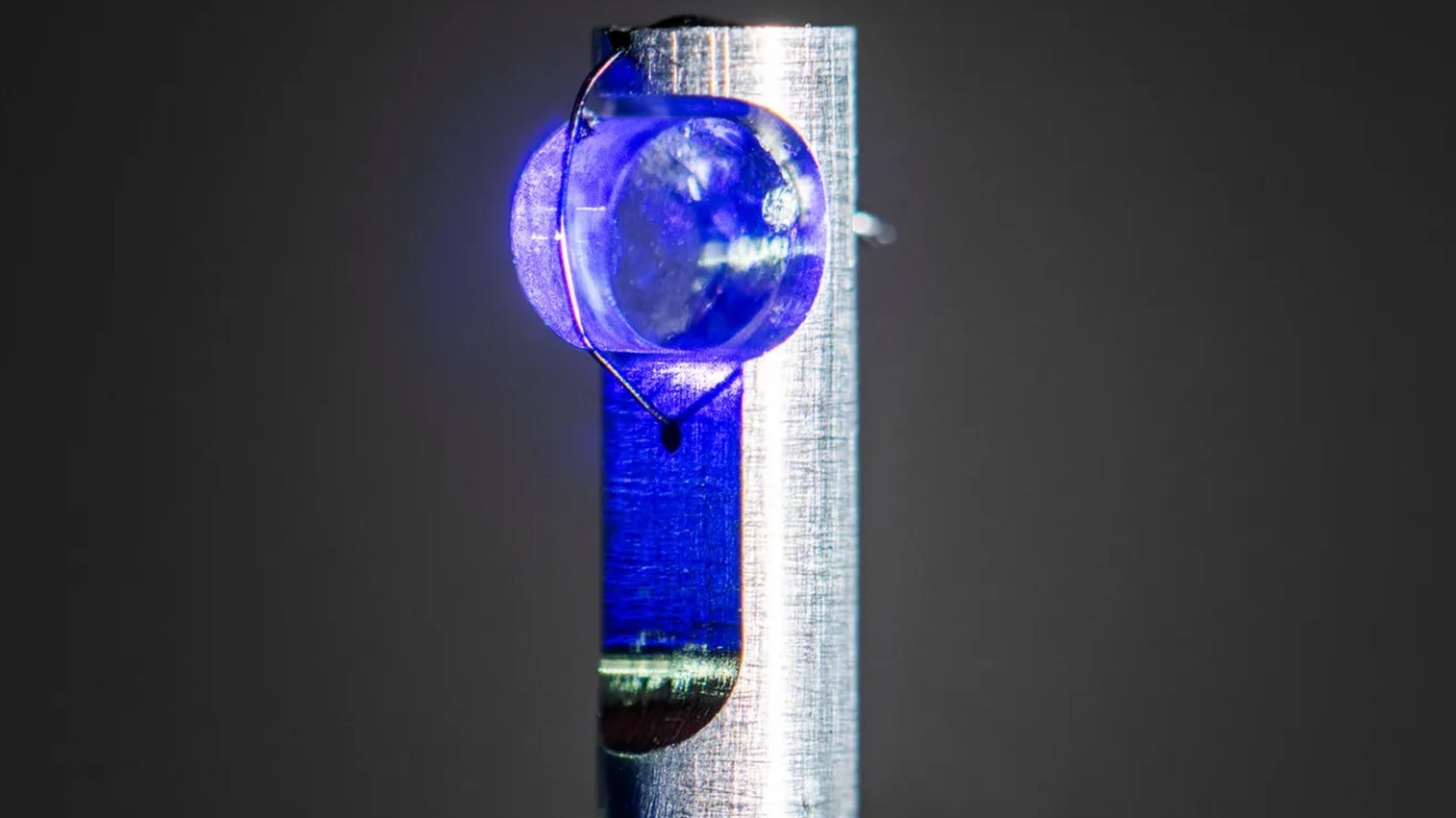
Not every element is suitable for a nuclear clock. Most nuclear transitions involve gamma rays with immense energy, which are nearly impossible to manipulate with current laser technology. However, Thorium-229 possesses a unique property: an exceptionally low-energy “isomer” state. According to reports from BGR, this specific isotope has a nuclear transition that falls within the vacuum ultraviolet (VUV) spectrum.
This low energy requirement is the “golden ticket” for physicists. Because the energy gap is small enough, scientists can use specialized lasers to trigger the transition. For decades, the exact energy level of this transition was a mystery, known only as a rough estimate. Recent breakthroughs in laser spectroscopy have allowed researchers to pinpoint the exact frequency needed to “excite” the Thorium-229 nucleus, moving the project from the realm of theory into experimental hardware.
The transition in Thorium-229 is the only known nuclear transition that can be accessed by current laser technology, making it the only viable candidate for a practical nuclear clock.
How will nuclear clocks help scientists investigate dark matter?
The primary driver for developing these clocks is not just better timekeeping, but the pursuit of “new physics.” A significant portion of the universe consists of dark matter and dark energy, neither of which can be seen or measured by traditional instruments. According to Smithsonian Magazine, nuclear clocks provide a new method for detecting these invisible forces.

Dark matter is theorized to interact with the fundamental constants of nature, such as the fine-structure constant, which governs the strength of electromagnetic interactions. If a cloud of dark matter passes through a nuclear clock, it could cause a minute, temporary shift in the nuclear transition frequency. Because nuclear clocks are so stable, they can detect these tiny fluctuations—changes that would be drowned out by the “noise” in a standard atomic clock.
By comparing two nuclear clocks in different locations or comparing a nuclear clock to a standard atomic clock, researchers can look for “drifts” in time. If the clocks diverge in a way that cannot be explained by gravity or motion, it could serve as the first direct evidence of dark matter interacting with ordinary matter.
Potential discoveries enabled by nuclear precision:
- Variation of Fundamental Constants: Determining if the laws of physics have changed over billions of years.
- Dark Matter Detection: Identifying scalar field dark matter through frequency shifts.
- Quantum Gravity: Testing the intersection of general relativity and quantum mechanics.
What are the practical applications of nuclear-level precision?
While the search for dark matter captures the scientific imagination, the practical implications of nuclear clocks are grounded in measurement and navigation. The ability to measure time with extreme precision is directly linked to the ability to measure distance and gravity.
According to BGR, one of the most immediate applications is in the field of relativistic geodesy. Einstein’s theory of general relativity states that time moves slower in stronger gravitational fields. A nuclear clock is so sensitive that it can detect a change in height of just a few centimeters based solely on how the gravitational pull of the Earth affects the passage of time. This would allow geologists to map the Earth’s interior, detect magma movements under volcanoes, and monitor sea-level changes with unprecedented accuracy.
Furthermore, the navigation industry stands to benefit. Current GPS systems rely on atomic clocks; however, these clocks must be constantly synchronized with ground stations because they drift over time. A nuclear clock’s stability would potentially allow satellites to maintain perfect time for much longer periods, reducing the need for ground-based corrections and increasing the precision of positioning data to the millimeter level.
| Feature | Standard Atomic Clock | Nuclear Clock (Thorium-229) |
|---|---|---|
| Mechanism | Electron orbital transition | Nuclear isomer transition |
| Stability | High (drift over days/weeks) | Extreme (theorized stability over eons) |
| Sensitivity | Affected by external EM fields | Shielded by electron cloud |
| Primary Use | GPS, Network Sync, UTC | Fundamental Physics, Geodesy, Dark Matter |
The timeline: From decades of theory to physical reality
The journey toward the nuclear clock began in the late 1990s. For nearly 25 years, the concept remained a theoretical curiosity. Physicists knew that Thorium-229 had a low-energy state, but they didn’t know exactly where it was. Attempting to find the transition was described by researchers as searching for a needle in a haystack, where the haystack was the entire electromagnetic spectrum.
The breakthrough occurred through a combination of improved crystal growth and the development of Vacuum Ultraviolet (VUV) lasers. According to Smithsonian Magazine, scientists began embedding Thorium ions into crystals, which allowed them to hold thousands of nuclei in a small space, increasing the signal strength. Once the VUV lasers were tuned to the correct frequency, the nucleus finally responded, confirming that the theoretical “tick” of the nuclear clock was possible.
This progression represents a shift in the hierarchy of measurement. We moved from mechanical clocks (pendulums) to quartz clocks (vibrating crystals), then to atomic clocks (electron transitions), and now to nuclear clocks. Each step has moved the measurement closer to the core of the atom, increasing stability and precision by orders of magnitude.
Common misconceptions about nuclear clocks
Because the word “nuclear” is used, there are frequent misunderstandings regarding the nature of these devices. It is important to clarify what a nuclear clock is—and what it is not.
Misconception 1: Nuclear clocks use nuclear fission or fusion.
Nuclear clocks do not involve splitting atoms (fission) or fusing them (fusion). They do not produce the kind of energy associated with nuclear power plants. Instead, they use “nuclear excitation,” where a nucleus absorbs a photon and moves to a slightly higher energy state. This is a clean, low-energy process.
Misconception 2: They are radioactive hazards.
While Thorium-229 is a radioactive isotope, the amounts used in these clocks are microscopic. Furthermore, the clocks are designed to be sealed within vacuum chambers or crystal lattices, ensuring that there is no risk to the operators or the environment. The “nuclear” aspect refers to the location of the clock’s pendulum—the nucleus—not the production of dangerous radiation.
Misconception 3: They will replace all current clocks immediately.
Nuclear clocks are currently massive laboratory installations. They are not designed for wristwatches or smartphones. Their primary role is to serve as “primary standards”—the ultimate reference points from which all other clocks are calibrated. It will take decades before the technology is miniaturized enough for commercial satellite or industrial use.
How this changes our understanding of the universe
The realization that atomic nucleus clocks are making history after decades of theorizing suggests that we are approaching a limit in how we measure the physical world. When time is measured with this level of precision, the distinction between “time” and “space” becomes blurred. We begin to see time not as a constant background, but as a dynamic variable that reacts to the presence of matter and energy.
According to reports from BGR, the ability to detect shifts in the fine-structure constant would be a landmark achievement. If the constant is found to vary, it would mean that the laws of physics are not universal or eternal, but evolve as the universe expands. This would force a complete rewrite of the Standard Model of particle physics.
Moreover, the synergy between nuclear clocks and gravitational wave detectors could allow us to “hear” the universe in a new way. By monitoring the frequency of a nuclear clock during a cosmic event, such as a black hole merger, scientists might be able to detect the ripple of spacetime passing through the Earth with far greater resolution than current interferometers allow.
For those interested in the broader implications of precision measurement, a related explainer on quantum metrology provides further context on how the measurement of atoms is redefining our technological capabilities.
Frequently Asked Questions
What is the main advantage of a nuclear clock over an atomic clock?
The main advantage is stability. Because nuclear clocks use the nucleus of an atom rather than its electrons, they are shielded from external electromagnetic interference. According to Smithsonian Magazine, this makes them far more precise and less prone to “drifting” over time.
/https://tf-cmsv2-smithsonianmag-media.s3.amazonaws.com/filer/5e/59/5e59ccfc-d455-4583-84dc-9c09beab7735/42-46204310.jpg "What is the main advantage of a nuclear clock over an atomic clock?")
Does a nuclear clock use nuclear energy?
No. It does not use nuclear fission or fusion. It utilizes a low-energy transition within the Thorium-229 nucleus triggered by a laser, which is a process of excitation rather than energy production.
How do nuclear clocks detect dark matter?
Dark matter is theorized to cause tiny fluctuations in the fundamental constants of physics. Because nuclear clocks are incredibly stable, they can detect these minute frequency shifts, which would be invisible to less precise instruments.
Will nuclear clocks make GPS more accurate?
Yes. According to BGR, the extreme stability of nuclear clocks could allow GPS satellites to maintain synchronization for much longer periods, potentially improving positioning accuracy from meters to millimeters.
Why was it so hard to build these clocks for so long?
The primary challenge was identifying the exact energy frequency of the Thorium-229 transition. This required the development of highly specialized Vacuum Ultraviolet (VUV) lasers and the ability to isolate the isotope in crystals, a process that took decades of theoretical and experimental refinement.
As these devices move from experimental prototypes to established standards, the focus will shift toward miniaturization and integration. The transition from theorizing to ticking marks a new chapter in physics, where the most stable point in the known universe—the atomic nucleus—becomes the heartbeat of human technology. The ability to track time with such fidelity does more than just keep us on schedule; it provides a sensor capable of detecting the invisible scaffolding of the cosmos.
