How NASA’s STEREO-A Spacecraft Captured a Near-Miss ‘Carrington-Class’ Solar Storm in 2012
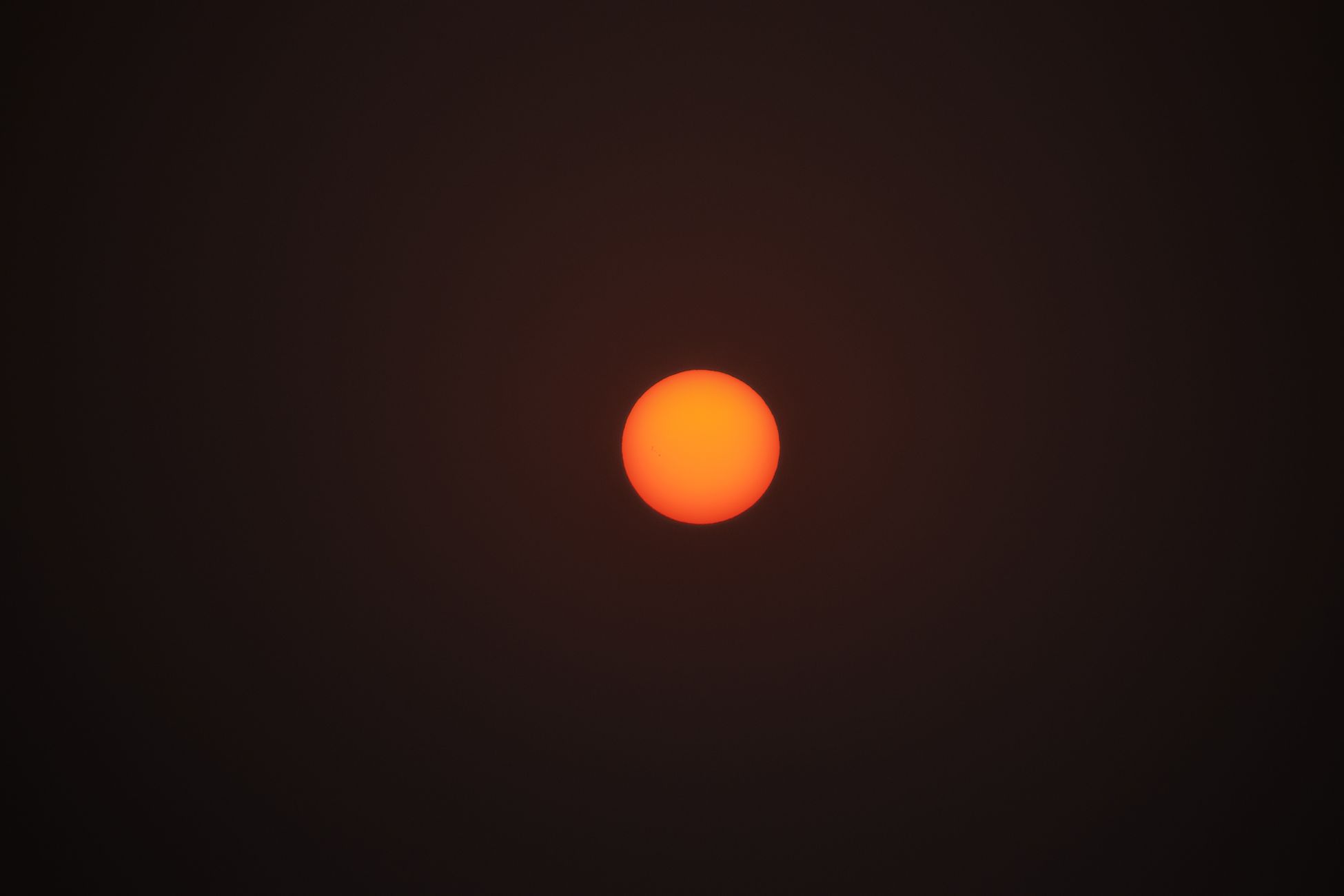
In July 2012, a massive solar storm capable of disrupting global power grids narrowly missed Earth. NASA’s STEREO-A spacecraft, positioned in the direct path of the Coronal Mass Ejection (CME), recorded the full impact. According to NASA data, this event provided critical measurements of a “Carrington-class” storm that would have otherwise gone unmeasured, offering a blueprint for the risks facing modern electronic infrastructure.
What happened during the July 2012 solar storm?
On July 23, 2012, the sun released a powerful Coronal Mass Ejection—a massive burst of magnetized plasma and solar particles. This specific CME was characterized by its extreme velocity and magnetic intensity, markers that solar physicists categorize as “Carrington-class.” This designation refers to the 1859 Carrington Event, the most intense geomagnetic storm in recorded history.
The 2012 storm traveled through the solar system at speeds significantly higher than average CMEs. While most solar storms are detected and tracked as they move toward Earth, this event was headed for a coordinate in space that Earth had recently vacated. The planet missed the direct hit by only a few days; had the eruption occurred roughly a week earlier, the CME would have struck Earth’s magnetosphere head-on.
Because Earth was not in the line of fire, the general public experienced no disruptions. There were no widespread power outages, no satellite failures, and no anomalous aurorae at low latitudes. However, the storm did not vanish into the void. It collided directly with the STEREO-A spacecraft, which was orbiting the sun at a different angle than Earth.
Key characteristics of the July 2012 CME
- Velocity: The plasma cloud moved at speeds exceeding 2,000 kilometers per second.
- Magnetic Field: The storm carried a strong southward-pointing magnetic field, which is the primary requirement for a CME to penetrate Earth’s protective magnetic shield.
- Scale: The volume of the plasma cloud was sufficient to envelop a significant portion of the inner solar system.
How the STEREO-A spacecraft acted as a scientific proxy for Earth
The Solar Terrestrial Relations Observatory (STEREO) mission consists of two spacecraft, STEREO-A and STEREO-B, designed to provide a three-dimensional view of the sun. In July 2012, STEREO-A was positioned in a region of space that placed it directly in the trajectory of the incoming CME. While the spacecraft did not “shield” Earth in a physical sense—it was far too small to deflect the plasma—it served as a proxy sensor.
As the storm hit, STEREO-A’s instruments recorded a sudden, violent spike in proton flux and magnetic field strength. According to NASA mission reports, the spacecraft’s sensors captured the exact composition and energy levels of the storm’s “shock front.” This provided scientists with a real-time data set of what a direct hit from a Carrington-class event looks like in the 21st century.
“The STEREO-A spacecraft happened to be sitting in the path of the July 2012 Carrington-class storm and took the full hit instead of Earth — the only reason we have detailed measurements of a blow we never felt,” reports NASA-affiliated research analysis.
Without STEREO-A, the 2012 event would have been a “ghost storm”—visible through telescopes as it moved away from Earth, but lacking the in-situ measurements required to understand its true potency. The data gathered allows researchers to model how such a storm would interact with Earth’s ionosphere and power grids.
Instruments that captured the data
STEREO-A utilized several key instruments to analyze the storm:
- SECCHI (Sun Earth Connection Coronal Imaging System): Provided the visual tracking of the CME’s departure from the solar corona.
- PLASTIC (Plasma and Ion Composition Instrument): Measured the speed, density, and temperature of the solar wind and the CME plasma.
- Magnetometers: Recorded the intensity and orientation of the magnetic field within the storm.
Comparing the 2012 event to the 1859 Carrington Event
To understand why the 2012 near-miss was so significant, it must be compared to the 1859 Carrington Event. In 1859, British astronomer Richard Carrington observed a massive white-light flare on the sun. Shortly after, a geomagnetic storm struck Earth, causing telegraph systems to fail globally. In some cases, telegraph operators reported that their machines continued to send messages even after they had disconnected the batteries, powered entirely by the electricity induced in the wires by the storm.
The 2012 event shared the same physical signatures as the 1859 storm. However, the technological landscape has shifted from simple copper wires to a global, interdependent network of semiconductors, satellites, and high-voltage transformers.
| Feature | 1859 Carrington Event | July 2012 Near-Miss |
|---|---|---|
| Primary Technology | Telegraph lines | GPS, Internet, Power Grids |
| Observation Method | Visual telescope (Carrington) | STEREO-A Spacecraft / Satellite |
| Impact on Earth | Direct hit; global aurorae | Missed Earth; hit STEREO-A |
| Primary Risk | Telegraph failure | Grid collapse / Satellite fry |
The contrast highlights a dangerous paradox: as our ability to detect these storms improves, our vulnerability to them increases. A storm of this magnitude today would not just disrupt telegrams; it could potentially disable the transformers that anchor national power grids, leading to outages that could last months.
Why a Carrington-class storm threatens modern infrastructure
The danger of a Carrington-class event lies in Geomagnetically Induced Currents (GICs). When a massive cloud of magnetized plasma hits Earth’s magnetic field, it causes the field to vibrate and shift. This movement induces electrical currents in any long, conductive material on the ground.
According to power grid engineers, the most vulnerable points are high-voltage transformers. These machines are designed to handle electricity flowing in specific directions and at specific frequencies. GICs are direct currents (DC), which can cause the core of a transformer to saturate, leading to overheating and permanent failure. Because these transformers are custom-built and weigh tons, they cannot be replaced quickly.
Potential points of failure in a direct hit
- The Electrical Grid: Widespread transformer failure could lead to regional or national blackouts.
- Satellite Communications: High-energy particles can “fry” the electronics of satellites or cause atmospheric drag that pulls low-earth orbit (LEO) satellites back into the atmosphere.
- GPS and Navigation: Ionospheric disturbances can distort the signals sent from GPS satellites, making precision navigation impossible for aviation and shipping.
- Undersea Cables: While fiber optics are immune to electromagnetic interference, the repeaters used to boost signals every few dozen kilometers are powered by conductive wires that can be affected by GICs.
The 2012 data from STEREO-A allows agencies like the National Oceanic and Atmospheric Administration (NOAA) to refine their related explainer on space weather forecasting and create better early-warning systems to protect these assets.
The role of STEREO-A in solar weather forecasting
The data provided by STEREO-A has fundamentally changed how NASA and other space agencies view the “probability” of extreme solar events. Previously, Carrington-class events were often viewed as “once-in-a-century” anomalies. The 2012 event proved that the sun is capable of producing these monsters more frequently than previously estimated.
By analyzing the 2012 data, scientists have improved their “CME arrival time” models. Knowing exactly when a storm will hit allows grid operators to “load-shed” or temporarily shut down vulnerable transformers to prevent them from burning out. This window of a few hours or days is the difference between a controlled brownout and a catastrophic grid collapse.
Furthermore, the STEREO mission’s unique positioning provided a “side-view” of the CME. Most solar observatories look at the sun from Earth’s perspective. STEREO-A’s off-axis view allowed scientists to see the 3D structure of the CME, revealing that these storms are not simple spheres but complex, twisted ribbons of plasma.
Common misconceptions about solar storms
There is often a conflation between solar flares and Coronal Mass Ejections (CMEs). While they often happen together, they are different phenomena with different impacts.
Misconception 1: Solar flares cause power outages.
A solar flare is a flash of light (X-rays and UV radiation). It reaches Earth in about eight minutes. While it can disrupt high-frequency radio communications, it does not cause the massive electrical currents that blow out transformers. CMEs, which are the physical clouds of plasma, take days to arrive and are the true culprits behind grid failure.
Misconception 2: The atmosphere protects us from all solar radiation.
While the atmosphere protects humans on the ground from harmful radiation, it does nothing to stop the magnetic interaction between a CME and the Earth’s magnetosphere. The “protection” comes from the magnetic field, but a Carrington-class storm is powerful enough to compress and warp that field, pushing the energy down into the crust and power lines.
Misconception 3: We would see the storm coming and be completely safe.
Detection is not the same as mitigation. Even if we know a storm is coming, the physical infrastructure of the global power grid is not currently built to withstand GICs. Mitigation requires manual intervention—switching off grids and disconnecting equipment—which is a high-risk economic decision.
The long-term implications of the 2012 near-miss
The July 2012 event serves as a scientific warning. The fact that STEREO-A “took the hit” provides a baseline for the “worst-case scenario.” It confirms that the sun can launch a payload of plasma with enough energy to threaten the digital foundations of modern civilization.
Current efforts in space weather resilience focus on “hardening” the grid. This includes installing GIC-blocking capacitors in transformers and developing more robust satellite shielding. The data from STEREO-A is used in simulations to determine exactly how much shielding is required to survive a direct hit.
As the sun moves through its 11-year solar cycle, the frequency of CMEs increases toward the solar maximum. The 2012 event reminds researchers that the timing of these eruptions is unpredictable. The planet’s survival of the 2012 storm was a matter of orbital geometry—a celestial coincidence that provided an invaluable lesson in vulnerability.
Frequently Asked Questions
What exactly is a “Carrington-class” storm?
It is a solar storm of similar intensity to the 1859 Carrington Event. These are characterized by extreme magnetic field strength and high plasma velocity, capable of inducing powerful electrical currents in ground-based infrastructure.
Did STEREO-A survive the 2012 hit?
Yes. While the spacecraft experienced intense radiation and magnetic fluctuations, it was designed to operate in the harsh environment of space. Its primary purpose was to measure these exact conditions, and it continued to transmit data back to Earth.
Would the internet have gone down in 2012?
Likely yes, in various capacities. While the fiber optic cables themselves wouldn’t melt, the power grids supporting the data centers and the electronic repeaters in undersea cables would have been at high risk of failure.
How often do these massive CMEs occur?
Based on the 2012 event and historical data, researchers believe Carrington-class events occur more frequently than once every 150 years, though they rarely hit Earth directly due to the narrow trajectory required.
Can we stop a solar storm from hitting Earth?
No. There is no known technology capable of deflecting or stopping a Coronal Mass Ejection. The only defense is early detection and the temporary shutdown of vulnerable electrical systems.
