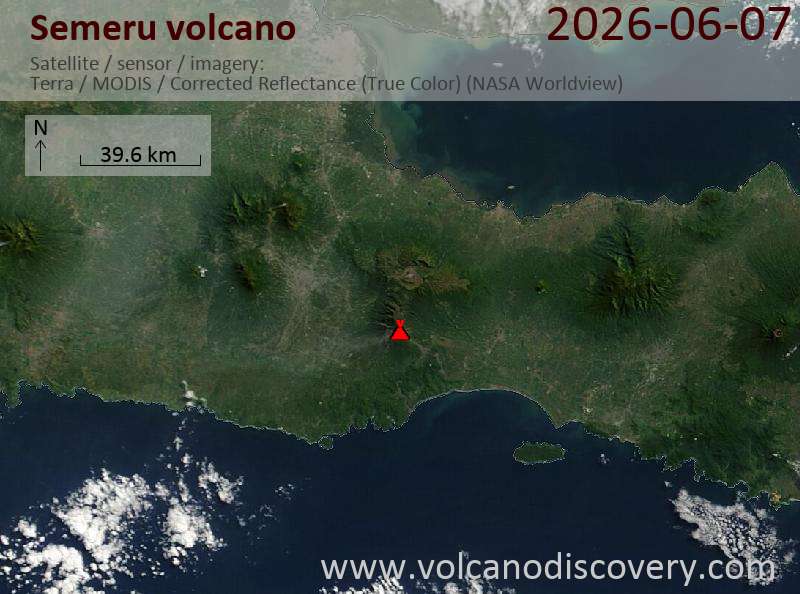
Semeru Volcano Volcanic Ash Advisory: VA TO FL140 OBS AT 07/0820Z MOV W OBS VA DTG: 07/0830Z to 14000 ft (4300 m) – Volcano Discovery
A critical aviation alert has been issued following recent activity at Mount Semeru, with a Semeru Volcano Volcanic Ash Advisory: VA TO FL140 OBS AT 07/0820Z MOV W OBS VA DTG: 07/0830Z to 14000 ft (4300 m) – Volcano Discovery signaling that volcanic ash has reached an altitude of 14,000 feet (approximately 4,300 meters). This advisory, observed on June 7, 2026, indicates the ash cloud is moving westward, following a period of heightened instability that included a fresh eruption on June 5 and hundreds of eruptive earthquakes in late May.
What is the current status of the Semeru Volcanic Ash Advisory?
According to data from Volcano Discovery, the most recent volcanic ash advisory for Mount Semeru confirms that ash has been observed reaching Flight Level 140 (FL140). In aviation terms, this means the ash plume has ascended to 14,000 feet, or roughly 4,300 meters above sea level. The observation was recorded at 0820Z on June 7, with a subsequent data time group (DTG) of 0830Z confirming the altitude.
The advisory specifically notes that the ash is moving west (MOV W). This movement is a primary concern for regional aviation, as volcanic ash consists of tiny fragments of jagged glass and rock that can cause catastrophic engine failure if ingested by aircraft. By tracking the direction and height of the plume, aviation authorities can reroute flights to avoid the contaminated airspace.
Key technical details from the advisory include:
- Maximum Altitude: 14,000 feet / 4,300 meters (FL140).
- Movement: Westward trajectory.
- Observation Times: 0820Z and 0830Z on June 7, 2026.
The June 5 Eruption: A Catalyst for Current Activity
The current ash advisory does not exist in a vacuum. It follows a documented eruption that occurred on Friday, June 5, 2026. According to Katadata Databoks, Mount Semeru erupted again that morning, signaling a continuation of the volcano’s volatile phase. This event likely contributed to the volume of particulate matter now being tracked by aviation monitoring systems.
When a volcano erupts, the intensity of the explosion determines how high the ash is propelled. The fact that ash is now observed at 14,000 feet suggests a significant release of energy. For residents and travelers in the region, these eruptions often bring the risk of ashfall, which can contaminate water sources, damage crops, and cause respiratory issues for local populations.
The eruption on June 5 serves as a critical link between the seismic unrest seen in May and the atmospheric hazards observed on June 7.
Seismic Warning Signs: 583 Eruptive Earthquakes in Late May
The instability at Mount Semeru began escalating well before the June eruptions. Reporting from Tempo.co English reveals that the volcano was hit by 583 eruptive earthquakes in late May. These are not standard tectonic shifts; eruptive earthquakes are specifically linked to the movement of magma and gas as they force their way toward the surface.
The sheer volume of these seismic events—nearly 600 in a short window—provided a clear warning of the pressure building within the volcanic conduit. This seismic swarm is a classic precursor to the type of eruptive behavior seen on June 5 and the subsequent ash plume reported by Volcano Discovery on June 7.
To understand the progression of this event, it is helpful to view the timeline of activity:
| Timeframe | Event | Source | Impact/Observation |
|---|---|---|---|
| Late May 2026 | Seismic Swarm | Tempo.co English | 583 eruptive earthquakes recorded |
| June 5, 2026 | Volcanic Eruption | Katadata Databoks | Eruption occurred Friday morning |
| June 7, 2026 | Ash Advisory | Volcano Discovery | Ash reached 14,000 ft, moving West |
Why Flight Level 140 (FL140) Matters for Aviation Safety
The mention of “FL140” in the Semeru Volcano Volcanic Ash Advisory: VA TO FL140 OBS AT 07/0820Z MOV W OBS VA DTG: 07/0830Z to 14000 ft (4300 m) – Volcano Discovery is the most critical piece of information for pilots and air traffic controllers. Flight levels are used to standardize altitude across different pressure settings, and FL140 refers to 14,000 feet.
While commercial jetliners typically fly much higher (often between FL300 and FL400), regional aircraft, turboprops, and private charters frequently operate within the FL100 to FL200 range. An ash plume reaching 14,000 feet creates a hazardous zone for these aircraft. If a plane enters a volcanic ash cloud, the silica-rich particles can melt inside the jet engine, coating the turbine blades in glass and causing the engine to flame out.
Furthermore, ash is abrasive. It can sandblast cockpit windows, making them opaque and hindering visibility for pilots during critical phases of flight. The westward movement (MOV W) of the plume means that any flight paths crossing the region from east to west are at the highest risk of intersection with the ash cloud.
Understanding the “MOV W” Designation
The “MOV W” shorthand indicates that the wind currents at the altitude of the ash plume are carrying the material toward the west. This requires aviation authorities to establish “no-fly” zones or diverted corridors. Because ash can linger in the atmosphere for days, the westward drift could potentially impact airports or air corridors far from the crater of Mount Semeru itself.
Connecting the Dots: From Earthquakes to Ash Clouds
The sequence of events at Mount Semeru demonstrates a textbook progression of volcanic unrest. The process typically follows a predictable, albeit dangerous, chain of causality:
- Magmatic Intrusion: Magma begins to move upward, cracking the surrounding rock. This produces the “eruptive earthquakes” reported by Tempo.co English. The 583 events in late May were the first major red flag.
- Pressure Release: Once the pressure exceeds the strength of the volcanic plug or the surrounding rock, an eruption occurs. This is what was observed on June 5, according to Katadata Databoks.
- Atmospheric Dispersion: The eruption ejects tephra and gas into the atmosphere. Depending on the force of the blast, this ash can reach high altitudes, triggering the Volcanic Ash Advisory (VAA) issued by Volcano Discovery on June 7.
By analyzing these three data points together, it becomes clear that Semeru is currently in a state of active instability. The transition from seismic activity to an actual eruption, and finally to a high-altitude ash cloud, shows a volcano that is actively venting internal pressure.
Potential Implications for Local Communities and Infrastructure
While the aviation advisory focuses on altitude and movement, the ground-level impact of a volcano reaching this level of activity is significant. When ash is propelled to 14,000 feet, it eventually settles back to earth, often miles away from the source.
The westward movement of the ash means that communities to the west of Mount Semeru are most likely to experience ashfall. This can lead to several immediate challenges:
- Agricultural Damage: Heavy ashfall can collapse greenhouses and smother crops, leading to economic losses for local farmers.
- Health Hazards: Volcanic ash is not like wood ash; it is composed of tiny shards of glass. When inhaled, it can cause severe irritation to the lungs and exacerbate asthma or other respiratory conditions.
- Infrastructure Strain: Ash is heavy, especially when wet. This can lead to the collapse of roofs and the clogging of drainage systems, increasing the risk of flash floods during rain events.
For more detailed information on volcanic hazards, readers may find a related explainer on volcanic ash impacts useful for understanding the long-term environmental effects of such events.
Frequently Asked Questions about the Semeru Ash Advisory
What does FL140 mean in the Semeru advisory?
FL140 stands for Flight Level 140, which indicates that the volcanic ash has reached an altitude of 14,000 feet (approximately 4,300 meters). This is a critical measurement used by aviation authorities to determine which flight paths are unsafe.

When did the most recent eruption occur?
According to Katadata Databoks, Mount Semeru erupted on the morning of Friday, June 5, 2026.
What is the significance of the 583 earthquakes mentioned in the reports?
As reported by Tempo.co English, 583 eruptive earthquakes occurred in late May. These seismic events are caused by magma moving toward the surface and usually serve as a warning sign that an eruption is imminent.
Which direction is the volcanic ash moving?
The advisory from Volcano Discovery states that the ash is moving west (MOV W).
Is the ash cloud dangerous to commercial flights?
Yes. Volcanic ash can cause jet engines to fail and damage aircraft windshields. While most long-haul jets fly above 14,000 feet, regional and private aircraft are at significant risk, and all aviation in the area must be coordinated to avoid the plume.
The current situation at Mount Semeru remains dynamic. With a history of seismic unrest in May, a confirmed eruption on June 5, and a high-altitude ash plume moving west on June 7, the region remains under close surveillance by both geological and aviation monitors. The primary focus remains the movement of the ash cloud and whether further seismic activity will trigger additional eruptions.
