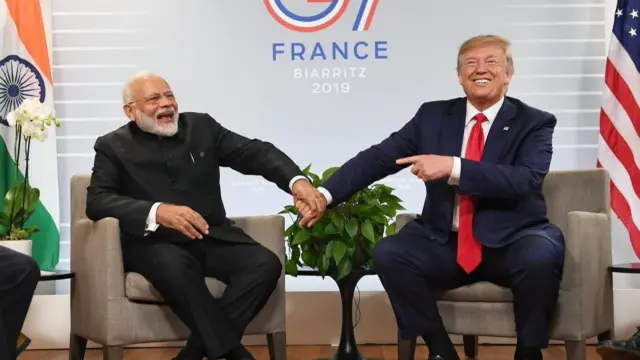
Modi-Trump Meeting Highlights Tensions Amid Shifting Global Alliances
During a high-profile encounter at the G7 Summit in Evian, France, Indian Prime Minister Narendra Modi and former U.S. President Donald Trump engaged in diplomatic discussions that underscored both cooperation and underlying friction in their nations’ bilateral ties. The meeting, held in June 2024, came as global powers navigate a rapidly evolving geopolitical landscape, with India and the United States grappling with diverging priorities on trade, security, and regional influence. While both leaders emphasized shared goals, analysts noted a growing divergence in their strategic visions, raising questions about the future of their partnership.
What Transpired During the Modi-Trump Meeting?
The interaction between Modi and Trump took place during the 2024 G7 Summit, where world leaders convened to address economic growth, climate change, and global security challenges. According to multiple diplomatic sources, the two leaders exchanged pleasantries and discussed trade relations, but the conversation reportedly avoided contentious issues such as U.S. sanctions on Indian technology firms or India’s energy partnerships with Russia. Instead, the focus shifted to areas of mutual interest, including infrastructure investment and defense collaboration.
Trump, known for his unorthodox diplomatic style, reportedly praised Modi’s leadership, describing him as a “visionary” during the meeting. Modi, in turn, emphasized the importance of strengthening economic ties, particularly in sectors like renewable energy and digital infrastructure. However, the absence of concrete agreements or joint statements suggested a cautious approach to their discussions, reflecting broader uncertainties in the India-U.S. relationship.
A key point of discussion, according to a U.S. administration official, was the role of Indian seafarers in global maritime trade. Modi highlighted the “utmost importance” of safeguarding the safety and rights of Indian workers in the shipping industry, a topic that resonated with Trump, who expressed sympathy for their challenges. “It’s a tough profession,” Trump remarked, acknowledging the risks faced by seafarers in volatile regions.
Who Is Involved in This Diplomatic Dynamic?
The India-U.S. relationship involves a complex web of stakeholders, including government officials, corporate entities, and civil society groups. At the core of the dialogue are the leaders of both nations, whose personal rapport often shapes the trajectory of bilateral relations. Modi, a seasoned politician with a strong domestic mandate, has prioritized economic expansion and regional stability, while Trump, a former businessman, has focused on trade deals and national security.
Other key players include the U.S. Department of Commerce, which oversees trade negotiations, and India’s Ministry of External Affairs, responsible for foreign policy. Private sector representatives from industries such as technology, agriculture, and energy also play a significant role in shaping the economic dimensions of the relationship. Additionally, think tanks and research institutions provide analysis and policy recommendations to both governments.
The involvement of global organizations, such as the World Trade Organization (WTO) and the International Monetary Fund (IMF), further complicates the dynamics. These bodies often mediate disputes and set standards that influence how India and the U.S. interact on economic and regulatory matters.
Why This Meeting Matters for Global Alliances
The Modi-Trump meeting occurred against a backdrop of shifting global alliances, as countries seek to balance economic interdependence with strategic autonomy. India, traditionally a non-aligned nation, has increasingly aligned with the U.S. on security issues, particularly in the Indo-Pacific region. However, its historical ties with Russia and its focus on multilateral diplomacy have created tensions with Washington.
For the U.S., India represents a critical partner in countering Chinese influence and stabilizing the Indo-Pacific. However, recent trade disputes and disagreements over technology exports have strained the relationship. The meeting underscored the need for both nations to find common ground while addressing their differences.
Analysts note that the meeting’s significance lies in its potential to set the tone for future interactions. As both countries navigate domestic challenges—India’s economic reforms and the U.S.’s political polarization—their ability to maintain a cooperative relationship will have far-reaching implications for global governance and regional stability.
Contextual Background: India-U.S. Relations Over the Years
The India-U.S. relationship has evolved significantly over the decades, marked by periods of collaboration and conflict. During the Cold War, the two nations maintained a cautious distance, with India aligning with the Soviet Union and the U.S. supporting Pakistan. However, the post-Cold War era saw a thaw in relations, driven by India’s economic liberalization and the U.S.’s strategic interest in countering Soviet influence.

The 21st century brought new dimensions to the partnership. The 2005 Indo-U.S. Civil Nuclear Agreement, which allowed India to access nuclear technology, symbolized a major breakthrough. In recent years, the relationship has been further strengthened by defense partnerships, such as the sale of advanced military equipment and joint exercises. However, trade disputes and disagreements over technology exports have occasionally overshadowed these advancements.
Historically, India’s foreign policy has emphasized non-alignment and multilateralism, while the U.S. has often pursued a more interventionist approach. This philosophical difference has occasionally led to friction, particularly on issues such as human rights, trade policies, and regional conflicts. The Modi-Trump meeting highlighted the ongoing challenge of reconciling these divergent perspectives.
Reactions and Expert Perspectives
Experts and analysts have offered mixed assessments of the Modi-Trump meeting. Some viewed it as a positive step toward strengthening bilateral ties, while others cautioned that the lack of substantive outcomes reflected deeper challenges in the relationship. “The meeting was a symbolic gesture, but it didn’t address the structural issues that have strained India-U.S. relations,” said Dr. Anjali Kaushal, a senior fellow at the Centre for International Policy.
Political analysts in India noted that the meeting occurred at a sensitive time, with the country preparing for general elections. “Mod
