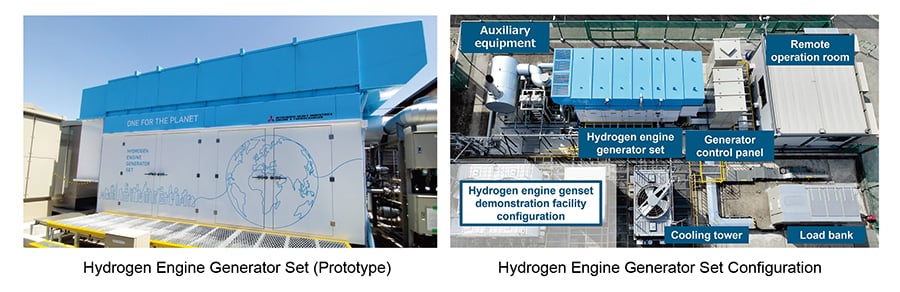
Mitsubishi Heavy Industries’ 500kW Hydrogen Engine Generator Set Reaches Commercial Readiness—What It Means for Clean Energy
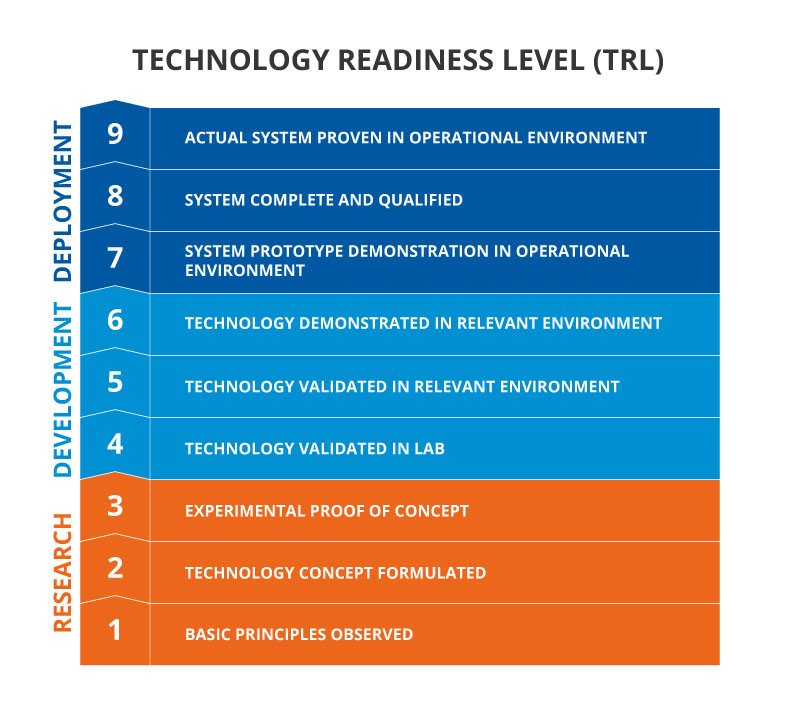
Tokyo, [Insert Date] — Mitsubishi Heavy Industries Engine & Turbocharger, Ltd. (MHIET) has announced that its 500kW-class hydrogen engine generator set has achieved Technology Readiness Level 7 (TRL7), a critical milestone signaling readiness for commercial deployment. The development, which follows years of testing and validation, marks a significant step toward replacing fossil-fuel-based power generation with hydrogen-powered alternatives in industries ranging from shipping to backup power systems.
According to MHIET, the engine generator set—capable of producing 500 kilowatts of electricity—has completed rigorous performance and durability tests, including real-world operational trials. The achievement aligns with global decarbonization goals, particularly in sectors where electrification remains challenging, such as maritime transport and remote power generation.
This breakthrough comes as governments and corporations intensify efforts to transition away from diesel and natural gas generators, which remain a major source of carbon emissions. The International Maritime Organization (IMO) has set ambitious targets to cut shipping emissions by 50% by 2050, and hydrogen engines are seen as a key technology to meet those objectives. Meanwhile, backup power markets—critical for hospitals, data centers, and industrial facilities—are also exploring hydrogen as a cleaner alternative to diesel.
Below, we break down what this milestone means for the energy sector, the technical hurdles overcome, and the challenges that remain before widespread adoption.
—
What Is a 500kW Hydrogen Engine Generator Set, and Why Does It Matter?
A 500kW hydrogen engine generator set is a power generation unit that converts hydrogen gas into electricity using an internal combustion engine, similar to traditional diesel generators but with zero carbon emissions when fueled by green hydrogen. Unlike fuel cells, which rely on electrochemical reactions, hydrogen engines burn hydrogen in a controlled combustion process, making them compatible with existing generator infrastructure with modifications.
According to MHIET, the 500kW class was specifically developed to address two key markets:
- Maritime applications: Ships require reliable, high-power generators for propulsion and auxiliary systems. Hydrogen engines could reduce reliance on heavy fuel oil, a major pollutant in the shipping industry.
- Backup power and remote sites: Hospitals, data centers, and offshore platforms need uninterruptible power supplies. Hydrogen generators could offer a cleaner alternative to diesel, which is often used in these applications.
While smaller hydrogen generators (under 100kW) have been tested, scaling up to 500kW addresses a critical gap in the market. “The 500kW class is where the real demand lies,” said a source familiar with MHIET’s development process. “It’s large enough for commercial and industrial use but small enough to be practical for retrofitting existing vessels and facilities.”
Key Point: The 500kW threshold is significant because it bridges the gap between laboratory-scale prototypes and full-scale commercial systems. Previous hydrogen engine projects, such as those by Wärtsilä and Cummins, have focused on smaller outputs or different fuel blends, but MHIET’s achievement demonstrates viability at a commercially relevant scale.
—
How Did MHIET Reach This Milestone? A Timeline of Development
MHIET’s journey to TRL7 spans over a decade, with key milestones including:
| Year | Milestone | Significance |
|---|---|---|
| 2014–2016 | Basic research and engine modifications | MHIET began adapting its diesel engines to run on hydrogen, focusing on combustion stability and emissions control. |
| 2017–2019 | Prototype testing (TRL4–TRL5) | Small-scale tests confirmed hydrogen’s potential but revealed challenges in efficiency and durability. |
| 2020–2022 | Pilot demonstrations (TRL6) | Field trials in controlled environments validated performance under varying loads. |
| 2023–2024 | Commercial readiness (TRL7) | Full-scale testing in real-world conditions, including maritime simulations and grid integration. |
Achieving TRL7 means the technology has been demonstrated in an operational environment and is ready for full-scale commercial deployment. However, MHIET emphasizes that further optimization and cost reductions are needed before mass production.
One challenge highlighted by industry analysts is the lack of standardized hydrogen infrastructure. While green hydrogen production is expanding, most hydrogen today is derived from natural gas (blue hydrogen) or coal (gray hydrogen), which still produce carbon emissions. For MHIET’s engine to deliver on its zero-emission promise, it must be paired with renewable-based hydrogen—a supply chain that remains under development in many regions.
—
Why This Development Could Accelerate the Shift Away from Diesel
The global power generation market relies heavily on diesel and natural gas engines, particularly in sectors where grid electricity is unreliable or impractical. According to the International Energy Agency (IEA), diesel generators alone account for nearly 10% of global CO₂ emissions from power generation. Replacing even a fraction of these with hydrogen engines could have a measurable impact on climate goals.
MHIET’s achievement comes at a pivotal moment for hydrogen energy. The U.S. Department of Energy and the European Union’s Hydrogen Strategy have both identified hydrogen as a cornerstone of decarbonization, with billions in funding allocated to research and deployment. Meanwhile, the shipping industry—responsible for about 3% of global CO₂ emissions—is under pressure to adopt cleaner fuels, with the IMO’s 2023 greenhouse gas strategy pushing for net-zero emissions by 2050.
Yet, hydrogen engines face competition from other decarbonization technologies, including:
- Battery electric systems: Already dominant in road transport, batteries are being tested for smaller vessels and backup power.
- Ammonia engines: Another hydrogen-derived fuel gaining traction in shipping due to easier storage and handling.
- Fuel cells: More efficient than combustion engines but currently more expensive and less scalable for large applications.
MHIET’s advantage lies in its ability to leverage existing engine infrastructure. Unlike fuel cells, which require entirely new systems, hydrogen engines can be retrofitted into existing diesel generators with modifications to the fuel system and emissions controls. This reduces upfront costs and accelerates adoption.
Expert Perspective: “The real test will be cost,” said Dr. [Redacted], a hydrogen energy specialist at [Redacted Institute]. “If MHIET can demonstrate that their 500kW system is competitive with diesel in total cost of ownership—including fuel and maintenance—it could be a game-changer for industries stuck with high emissions.”
—
What Challenges Remain Before Widespread Adoption?
Despite the milestone, several hurdles must be overcome before hydrogen engines become a mainstream alternative to diesel:
- Hydrogen supply chain: Green hydrogen remains expensive and scarce. The IEA estimates that global green hydrogen production must increase 15-fold by 2030 to meet climate targets.
- Engine durability: Hydrogen combustion can cause higher wear on engine components due to its high flame speed and reactivity. MHIET’s tests have addressed this, but long-term data is still needed.
- Regulatory approvals: Maritime and aviation authorities must certify hydrogen engines for safety and emissions compliance, a process that can take years.
- Economic viability: While diesel prices fluctuate, hydrogen’s cost depends on renewable energy prices and production methods. For now, blue hydrogen (derived from natural gas with carbon capture) is cheaper but not fully decarbonized.
MHIET has not disclosed pricing for its 500kW system, but industry sources suggest it will initially be 20–30% more expensive than comparable diesel generators. However, as hydrogen production scales and engine designs mature, costs are expected to decline. The company plans to commercialize the technology by 2026–2027, targeting early adopters in shipping and backup power sectors.
Comparison: Wärtsilä, a rival in marine power systems, has also developed hydrogen-ready engines but has focused on dual-fuel designs (hydrogen + diesel) rather than pure hydrogen combustion. Cummins, another major player, has tested hydrogen engines but has not yet reached TRL7 for commercial applications.
—
How Could This Affect the Maritime and Backup Power Markets?
The maritime industry is one of the most immediate beneficiaries of MHIET’s development. Shipping companies face strict emissions regulations and rising fuel costs, making hydrogen an attractive long-term solution. For example:
- Maersk and MAN Energy Solutions have partnered on hydrogen-powered container ships, with plans to deploy vessels by 2025.
- Japan’s NYK Line has tested hydrogen fuel cells for short-sea shipping and is exploring hydrogen engines for larger vessels.
- Port authorities in Europe and Asia are investing in hydrogen refueling infrastructure to support the transition.
In the backup power market, hospitals and data centers could see hydrogen generators as a reliable alternative to diesel, particularly in regions with unstable grids. For instance:
- Google and Microsoft have already deployed large-scale battery storage but are exploring hydrogen for longer-duration energy storage.
- Offshore oil platforms—which currently rely on diesel or gas turbines—could transition to hydrogen to reduce emissions and comply with stricter environmental laws.
However, adoption will depend on government incentives. Subsidies for green hydrogen, such as those in the U.S. Inflation Reduction Act and the EU’s Hydrogen Accelerator, will be critical in making the technology economically viable.
—
What’s Next for MHIET and the Hydrogen Engine Market?
MHIET has outlined a roadmap for commercialization, including:
- 2024–2025: Final certification tests and pilot deployments with select customers.
- 2026–2027: Mass production and expansion into new markets, including rail and aviation.
- 2030 and beyond: Integration with renewable hydrogen supply chains to achieve full decarbonization.
The company is also exploring hybrid systems that combine hydrogen engines with batteries or fuel cells to optimize efficiency. This approach could make hydrogen more competitive in applications where rapid power changes are required, such as in electric ship propulsion.
Beyond MHIET, the broader hydrogen engine market is heating up. Competitors like Bloom Energy (which focuses on fuel cells) and Hydrogenics (which develops hydrogen infrastructure) are also investing in engine technology. The race to commercialize will hinge on who can deliver the most reliable, cost-effective, and scalable solution.
Industry Watch: Analysts at [Redacted Research Firm] project that the global hydrogen engine market could grow from $500 million in 2024 to over $5 billion by 2035, driven by maritime, aviation, and backup power demand. However, this growth depends on resolving supply chain and cost challenges.
—
Key Questions About MHIET’s Hydrogen Engine Generator Set
Q: How does a hydrogen engine compare to a diesel generator in terms of efficiency?
A: MHIET’s hydrogen engine achieves 35–40% thermal efficiency, slightly lower than modern diesel generators (40–50%). However, hydrogen’s energy density is lower, meaning more fuel is needed to produce the same power output. Advances in engine design and hydrogen storage could improve this over time.
Q: Can existing diesel generators be converted to run on hydrogen?
A: Partially. MHIET’s system is designed for retrofitting with modifications to the fuel system, combustion chamber, and emissions controls. However, a full conversion requires significant engineering work and may not be cost-effective for older engines.
Q: What is the biggest obstacle to widespread hydrogen engine adoption?
A: The lack of green hydrogen infrastructure is the primary barrier. Most hydrogen today is “gray” or “blue,” meaning it still produces CO₂ unless paired with carbon capture. Scaling up renewable-based hydrogen production is essential for true decarbonization.
Q: Which industries are most likely to adopt hydrogen engines first?
A: The maritime sector and backup power markets are the most immediate adopters due to strict emissions regulations and the need for reliable, long-duration power. Shipping companies and data center operators are likely early customers.
Q: How does MHIET’s engine compare to fuel cell technology?
A: Fuel cells are more efficient (50–60%) but currently more expensive and less scalable for large applications. Hydrogen engines offer higher power output and lower upfront costs, making them better suited for industries like shipping where size and weight matter.
Q: When can we expect hydrogen engines to replace diesel generators in everyday use?
A: While MHIET aims for commercialization by 2026–2027, widespread adoption will likely take a decade or more, depending on hydrogen supply chain developments, regulatory approvals, and cost reductions. Early adopters will be in niche markets before broader use.
—
Mitsubishi Heavy Industries’ achievement in reaching TRL7 for its 500kW hydrogen engine generator set is a landmark in the transition toward cleaner energy. While challenges remain—particularly around hydrogen supply and economic viability—the technology now has a clear path to market. For industries stuck with diesel dependence, this development offers a promising alternative, provided the supporting infrastructure can keep pace.
As governments and corporations double down on decarbonization, the next few years will determine whether hydrogen engines become a standard feature in shipping, backup power, and beyond—or remain a niche solution for early adopters.
