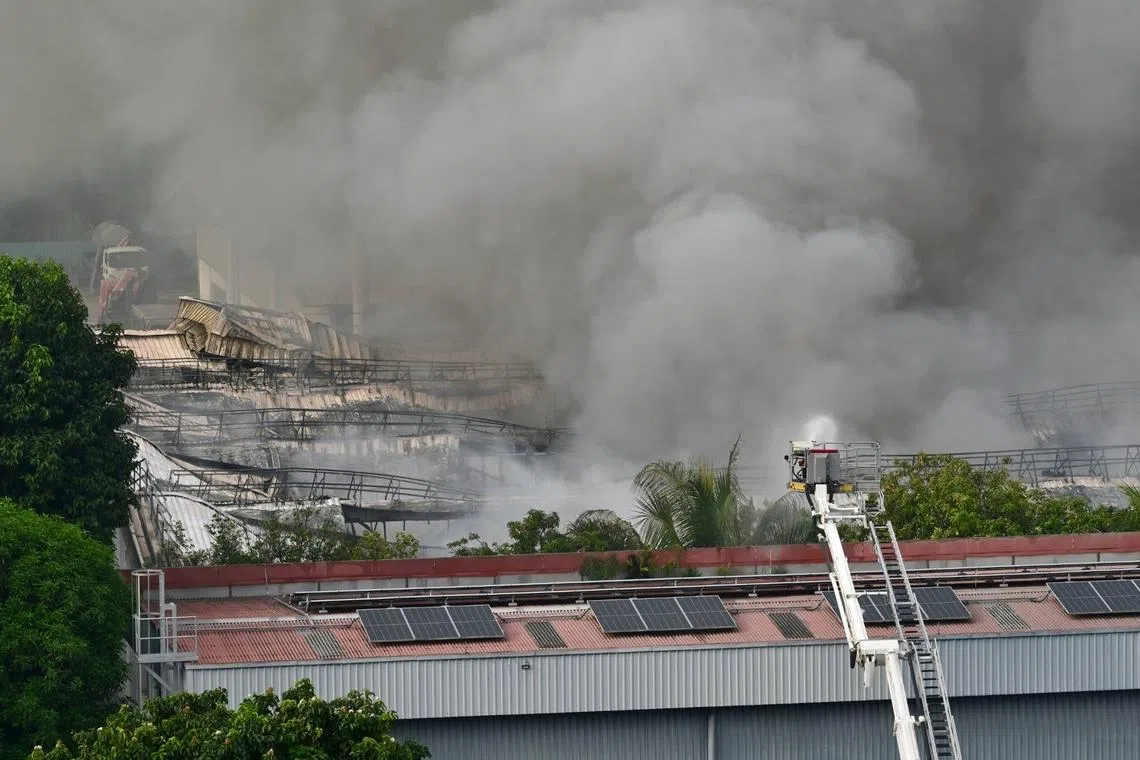
Damping-down operations under way after Tuas industrial warehouse fire; no reported injuries – The Straits Times
The Singapore Civil Defence Force (SCDF) has transitioned to damping-down operations following a large-scale fire at a chemical warehouse located at 3 Gul Crescent in Tuas. According to reports from The Straits Times and other local outlets, 80 firefighters were deployed to extinguish the blaze, and no injuries have been reported in connection with the incident.
How did SCDF manage the Tuas chemical warehouse fire?
The Singapore Civil Defence Force deployed a significant contingent of 80 firefighters to tackle the blaze at the Tuas industrial site. According to reports from The Online Citizen and The Independent Singapore News, the scale of the deployment reflects the complexity of the fire, which involved chemicals stored within the warehouse.

Firefighting teams focused on containment and suppression to prevent the fire from spreading to adjacent industrial units. Once the main body of the fire was extinguished, the SCDF moved into the “damping-down” phase. This process involves the systematic application of water to cool remaining hot spots and saturated debris to ensure the fire does not reignite.
- Initial Response: Rapid deployment of 80 firefighters to manage a chemical-involved blaze.
- Containment: Efforts focused on the warehouse premises at 3 Gul Crescent.
- Current Status: Transition from active firefighting to damping-down operations.
- Casualties: No reported injuries to staff or emergency responders.
Which facility was affected at 3 Gul Crescent?
The fire broke out at the premises of Enviro-Hub, located at 3 Gul Crescent. According to The Edge Singapore, the facility’s operations were directly impacted by the incident. While specific details regarding the volume of materials lost were not immediately released, the site is identified as an industrial warehouse.
The presence of chemicals at the site added a layer of risk to the operation. Chemical fires often require specialized firefighting foam or specific water-application techniques to avoid volatile reactions, which explains the heavy deployment of SCDF personnel. The focus for Enviro-Hub and the SCDF now shifts toward assessing the structural integrity of the building and managing any potential chemical runoff from the firefighting efforts.
The fire at the Tuas warehouse containing chemicals has been extinguished, and damping-down operations are currently under way to ensure the site is fully secure.
Why are damping-down operations necessary after a chemical blaze?
Damping-down is a critical tactical phase in industrial firefighting, particularly when chemicals are involved. In a standard warehouse fire, the primary goal is to knock down the flames. However, in a chemical environment, materials can smolder internally or create “deep-seated” fires that are not visible from the surface.
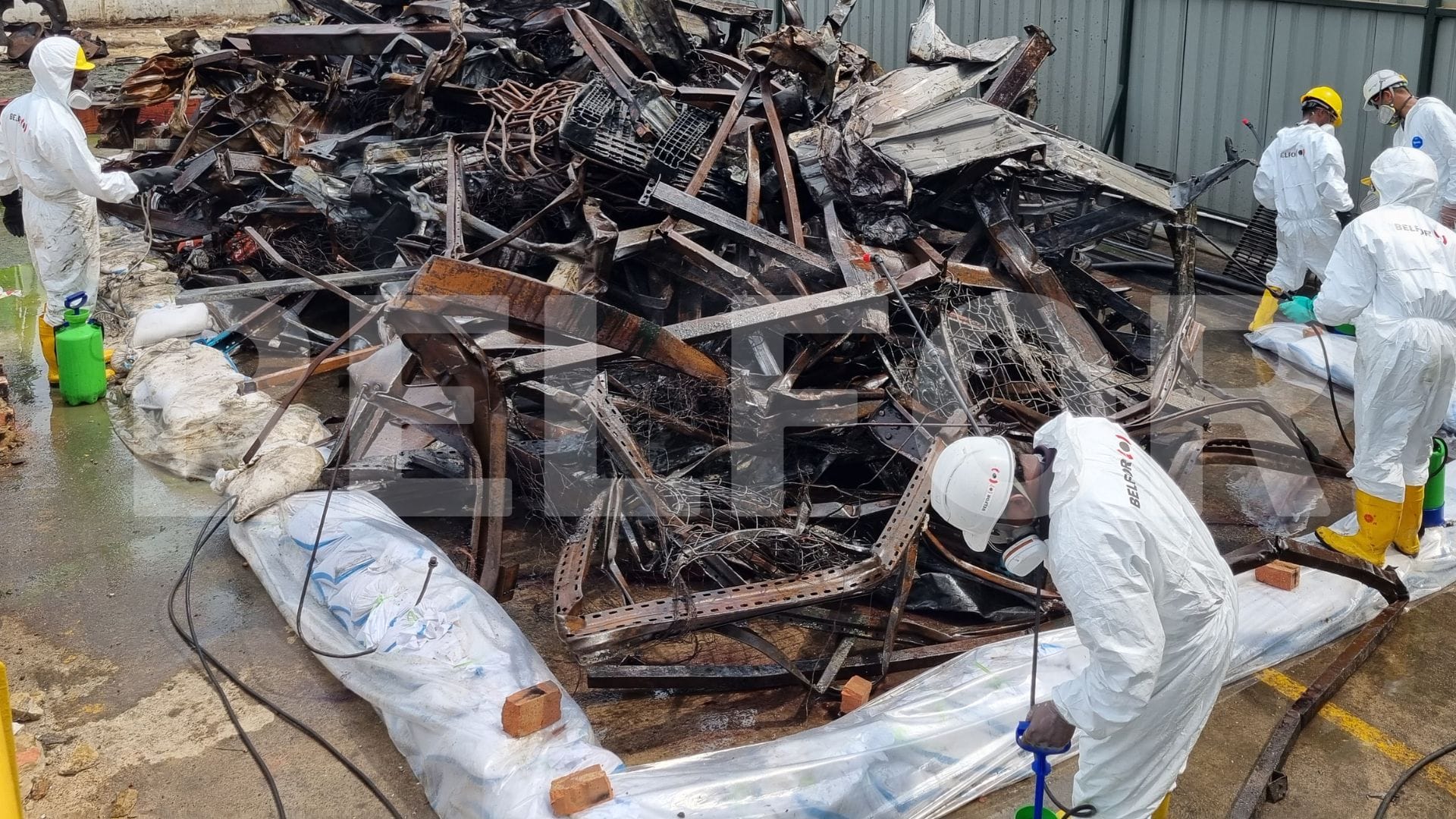
According to standard emergency response protocols, damping-down serves several purposes:
- Heat Reduction: Lowering the temperature of the remaining materials to stop the chemical process of combustion.
- Preventing Re-ignition: Ensuring that pockets of flammable chemicals or hot embers do not ignite fresh fuel sources once the primary crews leave the scene.
- Safe Entry: Cooling the structure so that investigators and cleanup crews can safely enter the premises to determine the cause of the fire.
Because the blaze at 3 Gul Crescent involved chemicals, the SCDF must be meticulous in this phase. Any overlooked hot spot could lead to a secondary flare-up, which is a common risk in industrial warehouse settings.
How did different news outlets report the incident?
The reporting across various Singaporean media outlets highlighted different aspects of the event, ranging from the corporate impact to the sheer scale of the emergency response. While all sources agreed on the location and the lack of injuries, the framing varied.
| Source | Primary Focus | Key Detail Highlighted |
|---|---|---|
| The Straits Times | Operational Status | Emphasis on damping-down operations and zero injuries. |
| The Edge Singapore | Corporate Impact | Specifically identified Enviro-Hub as the affected party. |
| The Online Citizen / The Independent | Emergency Scale | Foregrounded the deployment of 80 firefighters. |
| AsiaOne | Outcome | Focused on the fact that the chemical fire was extinguished. |
The contrast in reporting shows a divide between business-centric coverage—which focuses on the entity (Enviro-Hub)—and general news coverage, which prioritizes the public safety aspect and the SCDF’s tactical response.
What are the safety risks associated with Tuas industrial fires?
The Tuas industrial estate is one of Singapore’s primary hubs for manufacturing, logistics, and chemical storage. Fires in this region are treated with high priority due to the “domino effect” risk, where a fire in one warehouse can easily spread to neighboring facilities containing hazardous materials.
Industrial fires in Tuas often present three primary challenges for the SCDF:
- Chemical Volatility: Different chemicals react differently to water. Some may release toxic fumes or explode when cooled rapidly, requiring firefighters to use specialized equipment.
- Structural Load: Large warehouses often have high ceilings and heavy racking systems. The heat from a chemical fire can weaken steel supports, leading to potential collapses during the damping-down phase.
- Environmental Contamination: The water used to extinguish a chemical fire becomes contaminated. SCDF and environmental agencies must ensure that runoff does not enter the public drainage system or contaminate the surrounding soil.
For those interested in industrial safety standards, a related explainer on hazardous material handling may provide further context on how these facilities are regulated to prevent such incidents.
Common misconceptions about industrial fire responses
A common misconception is that once the flames are gone, the danger has passed. In reality, the transition to damping-down operations, as seen in the Tuas warehouse fire, is where much of the technical work occurs. The absence of visible smoke does not mean the site is safe.
/movietalkies/media/media_files/2026/05/01/chand-mera-dil-18-2026-05-01-12-01-02.jpg "Common misconceptions about industrial fire responses")
Another misconception is that all chemical fires are handled the same way. SCDF personnel must identify the specific chemicals involved—often using manifests provided by the company—before deciding whether to use water, foam, or dry chemical powder. The deployment of 80 firefighters suggests a high-complexity event that required multiple specialized teams working in tandem.
Finally, some believe that “no reported injuries” means there was no risk to life. In industrial settings, the successful evacuation of personnel before the fire reaches a critical stage is a sign of effective safety protocols, not necessarily a low-risk fire.
Frequently Asked Questions
What does “damping-down” mean in the context of the Tuas fire?
Damping-down is the process where firefighters apply water to cool down the debris and hot spots after the main fire is extinguished. This prevents the fire from starting again (re-ignition).
Where exactly did the fire take place?
The incident occurred at a warehouse located at 3 Gul Crescent in the Tuas industrial area, specifically affecting the premises of Enviro-Hub.
Were there any casualties in the Enviro-Hub fire?
No. According to reports from The Straits Times and other sources, there were no reported injuries resulting from the blaze.
How many firefighters were involved in the operation?
The SCDF deployed 80 firefighters to manage the warehouse fire, reflecting the size of the facility and the presence of chemicals.
What caused the fire at the Tuas warehouse?
The official cause of the fire has not been released. SCDF typically conducts an investigation after damping-down operations are complete and the site is deemed safe for entry.
