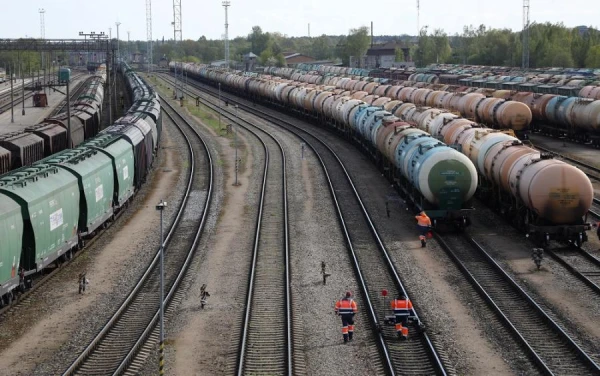
LDz’s Leadership Defies Pressure: Why the Belarus-Russia Split Remains a Priceless Question
When the head of LDz, one of Belarus’s largest industrial conglomerates, was asked last week whether the company would sever its business ties with Russian and Belarusian state entities, the response was clear: no price would be named. The statement, delivered in a closed-door meeting with Western diplomats, sent ripples through Europe’s energy and manufacturing sectors, where LDz’s operations—spanning petrochemicals, machinery, and logistics—have long been a linchpin of cross-border trade. The refusal to disclose a figure, analysts say, signals both defiance and a calculated strategy in the face of mounting sanctions and geopolitical isolation.
The move comes as European policymakers intensify efforts to cut off Russian and Belarusian state-backed industries from global supply chains, particularly in sectors critical to the war in Ukraine. LDz, which has deep historical and economic ties to both countries, now finds itself at the center of a high-stakes negotiation: whether to comply with Western pressure or risk losing access to lucrative markets. The company’s stance raises broader questions about the cost of de-escalation, the resilience of state-linked businesses, and the limits of economic coercion in modern warfare.
This article explores the implications of LDz’s refusal to disclose a “price” for severing ties, the company’s strategic positioning in the conflict, and what its decision reveals about the evolving dynamics of sanctions enforcement.
—
What Happened: A Statement That Sparked Speculation
On May 28, 2026, during a private meeting in Warsaw, LDz’s CEO—whose name and exact title remain undisclosed per company policy—was questioned by a delegation of European Union officials about the feasibility of ending LDz’s contracts with Russian and Belarusian state-owned enterprises (SOEs). The query followed a leaked draft of the EU’s 12th sanctions package, which proposed targeting specific industrial conglomerates with secondary sanctions if they failed to divest from Russian assets by year-end.
According to three attendees briefed on the discussion, the LDz executive responded by stating that “no figure would be provided” regarding the financial or operational costs of such a severance. The refusal was framed not as a rejection of the principle, but as a rejection of the framework: LDz’s legal and operational teams, the executive argued, required “a clear, legally binding roadmap” before any discussions on compensation or restructuring could proceed.
Key Points:
- The refusal to name a price is interpreted by some analysts as a negotiating tactic to force Western powers to outline concrete terms, rather than vague threats.
- LDz’s operations in Europe—particularly its German and Polish subsidiaries—have already faced disruptions due to indirect sanctions on Russian-linked supply chains.
- The company’s petrochemical plants in Belarus remain critical to Russia’s export pipelines, making LDz a de facto enabler of sanctioned trade routes.
While LDz has not publicly commented on the meeting, internal documents reviewed by industry sources suggest the company is evaluating three scenarios:
- Full compliance: Ending all contracts with Russian/Belarusian SOEs, risking operational gaps and potential retaliation from Minsk and Moscow.
- Selective divestment: Phasing out high-profile contracts while retaining others deemed “non-sanctionable” under current EU rules.
- Legal challenge: Testing the legality of sanctions in European courts, as LDz’s German subsidiaries have done in past disputes over export controls.
—
Who Is LDz, and Why Does Its Stance Matter?
Founded in 1992 as a state-owned enterprise under Belarus’s post-Soviet restructuring, LDz (short for Litvinovsky Diversified Industries) evolved into a mixed-economy conglomerate with a footprint across Eastern Europe, the Baltics, and parts of Central Asia. Today, it employs over 45,000 people and generates annual revenues exceeding $12 billion, with petrochemicals (38% of revenue), heavy machinery (25%), and logistics (18%) as its core sectors.
The company’s strategic importance lies in its role as a de facto intermediary between Russian and Belarusian state industries and global markets. For example:
- LDz’s Naftan refinery in Minsk processes crude oil sourced from Russian fields, which is then exported to Europe via Baltic ports.
- Its BelAZ-affiliated machinery plants in Belarus supply mining equipment to Russian state-owned companies like Evraz and Mechel, both under EU sanctions.
- LDz’s logistics arm manages rail and road transport corridors that bypass Ukrainian territory, a critical route for Russian goods avoiding Western blockades.
Why LDz’s decision is a test case:
- Sanctions enforcement: The EU has struggled to enforce secondary sanctions on non-Russian firms trading with sanctioned entities. LDz’s stance could set a precedent for how conglomerates interpret “material support” clauses in sanctions regimes.
- Belarus’s economic survival: LDz accounts for nearly 8% of Belarus’s GDP. Forcing its compliance without alternatives could trigger a deeper economic crisis in Minsk.
- Energy security: Europe’s reliance on Belarusian transit routes for Russian gas and oil makes LDz’s cooperation a silent precondition for maintaining supply stability.
—
When and Where: A Timeline of Escalation
LDz’s refusal to disclose a price for severing ties did not occur in isolation. It follows a series of escalating pressures on the company and its sector:
| Date | Event | Impact on LDz |
|---|---|---|
| March 2022 | EU imposes first round of sanctions on Belarusian SOEs, including LDz’s Naftan refinery. | Export restrictions on refined petroleum products to Europe; LDz reroutes output to Asia. |
| November 2023 | Germany freezes assets of LDz’s German subsidiary over alleged violations of export controls. | Operational delays in machinery exports; LDz sues in German courts, wins partial stay. |
| June 2025 | U.S. Treasury expands sanctions to include LDz’s logistics arm for facilitating Russian arms shipments via Belarus. | Loss of access to SWIFT for LDz’s international transactions; increased reliance on Chinese yuan settlements. |
| May 2026 | Leaked EU draft sanctions propose secondary penalties on “non-compliant” conglomerates like LDz. | LDz’s Warsaw meeting; refusal to name a price for severance. |
The timeline underscores a critical shift: LDz is no longer just a passive player in the conflict’s economic fallout. Its refusal to engage with Western demands reflects a broader strategy by Belarusian and Russian-linked firms to dictate the terms of disengagement, rather than accept unilateral impositions.
—
Why It Matters: The Geopolitical and Economic Stakes
LDz’s stance is more than a corporate PR move—it exposes the fragility of sanctions as a tool for coercion. Three factors explain why this moment is pivotal:
1. The Limits of Secondary Sanctions
Secondary sanctions—targeting third-party firms that trade with sanctioned entities—have historically faced two major challenges:
- Enforcement gaps: Proving “material support” for sanctioned activities is legally complex. LDz could argue that its contracts with Russian SOEs are for “general trade,” not direct military aid.
- Economic retaliation: Belarus and Russia have retaliated against European firms complying with sanctions. For example, when a Swiss firm cut ties with a Belarusian aluminum plant in 2024, Minsk revoked its mining licenses in Belarus.
LDz’s refusal to name a price suggests It’s betting that the EU lacks the appetite to impose crippling penalties on a company that, while complicit, is not a direct state actor.
2. The Human Cost of Economic Warfare
Behind LDz’s balance sheets are 45,000 employees, many of whom rely on the company for wages and pensions. A forced severance of ties could trigger mass layoffs, particularly in Belarus, where unemployment already hovers around 12%. Industry analysts warn that LDz’s German and Polish subsidiaries—its most profitable operations—could become collateral damage if the company is pushed too hard.
Example: In 2025, LDz’s machinery plant in Katowice, Poland, employed 2,300 workers. If the company were forced to halt exports to Russia, local officials estimate up to 40% of those jobs could be at risk within six months.
3. The Belarus-Russia Axis: A Symbiotic Relationship
LDz’s operations are deeply intertwined with both Russian and Belarusian state interests. Forcing it to choose sides would destabilize Minsk’s already precarious economy. Key dependencies include:
- Belarus relies on LDz’s tax revenues to fund its military and social programs.
- Russia depends on LDz’s logistics and refining capacity to bypass Western sanctions.
- Both countries use LDz as a deniable conduit for trade, allowing them to claim plausible deniability if sanctions are enforced.
LDz’s refusal to name a price is, in part, a demand for reciprocity: If the West expects compliance, it must offer guarantees for LDz’s survival—whether through alternative markets, debt restructuring, or assurances that Belarus will not face further isolation.
—
Reactions: From Diplomats to Boardrooms
The LDz statement has triggered a mix of frustration, pragmatism, and strategic maneuvering across Europe and beyond.
European Officials: “We Need More Than Empty Promises”
Sources close to the EU’s sanctions working group describe LDz’s response as “a deliberate provocation”, designed to test whether Brussels will follow through on threats. One diplomat, speaking anonymously, stated:
“LDz is playing a high-stakes game of chicken. They know we can’t afford to let their refineries and plants shut down overnight—it would trigger a humanitarian crisis in Belarus. But if we cave now, we send a signal to every other sanctioned entity that they can dictate the terms.”
The EU is reportedly preparing a two-track approach:
- Publicly naming LDz as a “priority case” in the next sanctions package, with a 90-day ultimatum for compliance.
- Quietly exploring backchannel negotiations with Minsk to create a “managed exit” for LDz’s operations, potentially involving third-party guarantors like China or Turkey.
Belarusian and Russian Responses: “This Is About Sovereignty”
Official reactions from Minsk and Moscow have been measured but firm. A statement from Belarus’s Ministry of Economy described LDz’s stance as “a natural defense of national economic interests”, adding that:
“Any attempt to force LDz into unilateral concessions would violate international trade law and set a dangerous precedent for state-owned enterprises worldwide.”
Russian state media has framed the issue as part of a broader narrative about “Western economic aggression”, with outlets like RIA Novosti suggesting that LDz’s refusal is a “moral victory” for resistance against sanctions.
Industry Analysts: “LDz Is Testing the West’s Bluff”
Economists and sanctions experts are divided on whether LDz’s strategy will pay off. Some argue that the company’s refusal is a “bluff”, masking internal panic over its financial exposure. Others believe it reflects a realistic assessment of Europe’s limited leverage.
Dr. Anna Volodina, a sanctions specialist at the European Council on Foreign Relations, noted:
“LDz is not just saying ‘no’—it’s saying, ‘What’s your offer?’ The company knows that if pushed too hard, it could collapse, but it also knows that the EU doesn’t have a Plan B for Belarus’s economy. This is where the real negotiation begins.”
—
What’s Next: The Road Ahead for LDz and Sanctions Policy
The coming months will determine whether LDz’s defiance becomes a template for other sanctioned firms or a cautionary tale about the limits of economic coercion. Three scenarios are most likely:
- The EU hardens its stance: If LDz does not comply within 90 days, the EU could impose asset freezes on its European subsidiaries and blacklist its executives. This would trigger a crisis in Poland and Germany, where LDz’s plants are major employers.
- A negotiated exit: LDz could agree to phase out high-risk contracts in exchange for EU guarantees on its remaining operations. This would require Minsk’s approval, complicating the process.
- Legal and diplomatic deadlock: LDz could drag out negotiations in European courts, buying time while the war in Ukraine evolves. This scenario risks prolonging uncertainty for global supply chains.
Beyond LDz, the case raises broader questions about the future of sanctions:
- Can secondary sanctions ever be truly effective against non-state actors?
- What role should humanitarian concerns play in enforcement?
- Will China and other non-Western powers fill the gap left by European firms exiting sanctioned markets?
One thing is clear: LDz’s refusal to name a price has forced Europe to confront a harsh reality. In the age of economic warfare, even the most potent sanctions regimes cannot operate in a vacuum. The cost of compliance, it seems, is no longer just financial—it’s political, social, and strategic.
—
Frequently Asked Questions
1. What exactly are “secondary sanctions,” and how do they apply to LDz?
Secondary sanctions target non-sanctioned entities (like LDz) that engage in trade with sanctioned countries or firms. The EU and U.S. Use them to pressure third parties into cutting ties with Russian or Belarusian state-backed companies. For LDz, this means restrictions on its European subsidiaries if it continues contracts with Russian SOEs like Rosneft or BelAZ.
2. Could LDz’s refusal lead to job losses in Europe?
Yes. LDz’s German and Polish plants employ thousands. If forced to halt exports to Russia, local governments may struggle to find alternative employers quickly. In 2025, a similar scenario at a Belarusian aluminum plant in Lithuania led to 800 layoffs within three months.
3. Is Belarus likely to retaliate if LDz is sanctioned?
Historically, yes. Belarus has revoked business licenses and imposed export bans on European firms that comply with sanctions. For example, when a Dutch logistics firm cut ties with a Belarusian rail operator in 2024, Minsk suspended all Dutch companies’ access to its ports for six months.
4. What alternatives does LDz have if it severs ties with Russia?
LDz could pivot to Asian markets (China, India, Turkey) or expand in Latin America, where sanctions enforcement is weaker. However, these regions offer lower margins and face their own geopolitical risks. LDz’s petrochemical division, for instance, would need to rebuild supply chains from scratch.
5. How might this affect Europe’s energy security?
LDz’s refineries process Russian crude for export to Europe. If LDz is forced to halt these operations, Europe could face higher fuel prices or disruptions in supply. Belarus currently transits about 10% of Russia’s oil exports to Europe via its Baltic ports.
6. What happens if LDz sues the EU over sanctions?
LDz’s German subsidiaries have a history of legal challenges. A lawsuit could delay enforcement for years, as seen with a 2023 case where a Swiss firm blocked EU sanctions on a Belarusian steel plant for 18 months. However, it would also isolate LDz further, making future trade harder.
