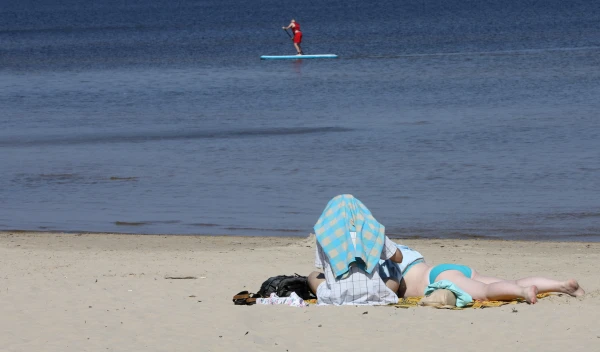
Latvia Issues Warning Over Dangerous UV Radiation Levels; Sunburn Possible in 20 Minutes
Latvia is facing a dangerous level of ultraviolet (UV) radiation, with reports indicating that unprotected skin can suffer sunburn in as little as 20 minutes. According to alerts shared via Inbox.eu, residents and visitors are urged to take immediate precautions, including using high-SPF sunscreen and seeking shade, to avoid acute skin damage during peak sunlight hours.
The Current UV Crisis in Latvia
Public health warnings have intensified as ultraviolet radiation levels in Latvia reach thresholds categorized as dangerous. The core of the alert, as highlighted in reports from Inbox.eu, centers on the speed at which skin damage occurs. While many people associate sunburns with hours of exposure, current atmospheric conditions in Latvia have reduced that window to just 20 minutes for some individuals.
This rapid onset of erythema—the medical term for skin redness caused by inflammation—indicates an exceptionally high UV Index (UVI). When the UVI reaches these levels, the atmosphere filters fewer harmful rays, allowing a higher concentration of UVB radiation to hit the earth’s surface. This creates a high-risk environment for anyone spending time outdoors without professional-grade protection.
The warning is not limited to beachgoers. Urban environments, where sunlight reflects off concrete and glass, can amplify exposure. Local authorities and health advocates emphasize that the “invisible” nature of UV radiation often leads to complacency, as the air may feel cool even while the radiation levels remain extreme.
- Immediate Risk: Sunburn possible within 20 minutes of exposure.
- Primary Cause: High UV Index (UVI) levels reaching dangerous thresholds.
- Critical Window: Peak radiation typically occurs between 11:00 AM and 4:00 PM.
- Affected Areas: Nationwide across Latvia, with higher risks in open, unshaded areas.
What is the UV Index and Why Does It Matter?
The UV Index is an international standard measurement of the strength of sunburn-producing ultraviolet radiation at a particular place and time. It is used by meteorologists and health organizations to categorize the risk of skin and eye damage. According to the World Health Organization (WHO), the index is divided into categories ranging from low to extreme.
When a report states that “a dangerous level of ultraviolet radiation expected in Latvia: sunburn can occur in 20 minutes – Inbox.eu,” it implies the UVI has likely entered the “Very High” (8-10) or “Extreme” (11+) categories. In these ranges, the skin’s natural defenses are overwhelmed quickly, leading to DNA damage in skin cells.
Understanding UVA vs. UVB
To understand why the current situation in Latvia is hazardous, it is necessary to distinguish between the two main types of UV radiation reaching the ground:
UVB Rays: These are the primary cause of sunburn and play a key role in the development of skin cancer. UVB rays have a shorter wavelength and are more easily absorbed by the ozone layer, but during peaks of high UV radiation, they penetrate the epidermis (the outer layer of skin) aggressively. This is the radiation responsible for the “20-minute sunburn” warning.
UVA Rays: These rays have a longer wavelength and penetrate deeper into the dermis. While they do not cause the immediate redness associated with a sunburn, they contribute to premature aging, wrinkles, and long-term skin damage. UVA rays are present with relatively equal intensity during all daylight hours throughout the year.
| UV Index Level | Category | Risk Level | Required Action |
|---|---|---|---|
| 0–2 | Low | Low | Minimal protection needed. |
| 3–5 | Moderate | Moderate | Apply sunscreen; seek shade at midday. |
| 6–7 | High | High | Protection essential; wear hats and sunglasses. |
| 8–10 | Very High | Very High | Avoid sun between 11 AM and 4 PM; high SPF required. |
| 11+ | Extreme | Extreme | Take all precautions; avoid sun exposure if possible. |
The 20-Minute Window: How Rapid Skin Damage Occurs
The warning that sunburn can occur in 20 minutes is a critical data point for public safety. This timeframe varies based on the “Fitzpatrick Skin Scale,” which categorizes skin types by their reaction to UV radiation. People with Type I skin (pale white skin, always burns, never tans) are at the highest risk and may experience damage even faster than the reported 20-minute mark.
When UV radiation hits the skin, it causes a chemical reaction that damages the DNA in skin cells. The body responds by triggering an inflammatory process to clear away the damaged cells, which results in the redness, heat, and pain of a sunburn. In extreme conditions, this process begins almost immediately.
“The danger of high UV levels is that the damage happens before the skin feels hot. By the time you feel the burn, the cellular damage is already done.”
Several factors can accelerate this process in Latvia:
- Reflection: Sand and water reflect UV rays, meaning a person can be hit by radiation from both above and below.
- Altitude and Air Quality: Clear, cloudless skies allow more UV radiation to reach the surface without interference.
- Lack of Acclimatization: Residents who have spent the winter in low-light conditions often have lower melanin levels, making their skin more susceptible to rapid burning.
Essential Protection Strategies for High UV Days
Given the severity of the current radiation levels, standard precautions may not be sufficient. Health experts recommend a multi-layered approach to protection to ensure the skin is not exposed to direct, high-intensity rays.
Choosing the Right SPF
Sun Protection Factor (SPF) measures how much UV radiation a sunscreen can filter out. However, SPF only measures UVB protection. For the current conditions in Latvia, “broad-spectrum” sunscreens are mandatory, as these protect against both UVA and UVB rays.
According to dermatological standards, an SPF 30 filters approximately 97% of UVB rays, while SPF 50 filters about 98%. While the difference seems small, in an “extreme” UV environment, that 1% difference can be the gap between a mild tan and a second-degree burn. It is also vital to apply sunscreen 20 minutes before going outside to allow the product to bind to the skin.
Timing and Environmental Shielding
The most effective way to avoid a 20-minute sunburn is to avoid the sun during its peak intensity. The solar zenith—the point when the sun is highest in the sky—typically occurs between 11:00 AM and 4:00 PM. During this window, the path of the sun’s rays through the atmosphere is the shortest, meaning less radiation is absorbed by the air.
Protective clothing is often more reliable than sunscreen because it does not wear off or require reapplication. Recommended gear includes:
- UPF Clothing: Fabrics with an Ultraviolet Protection Factor (UPF) rating provide a physical barrier.
- Wide-Brimmed Hats: A hat should shade the face, ears, and the back of the neck.
- UV-Rated Sunglasses: High UV levels can cause photokeratitis (sunburn of the cornea), which feels like sand in the eyes.
For those working outdoors, the use of portable shade or frequent “shade breaks” every 15 to 20 minutes is advised to prevent cumulative damage.
Long-Term Health Risks of UV Exposure
While the immediate concern is the acute pain of a sunburn, the long-term implications of high UV radiation are more severe. Every instance of a sunburn, particularly those occurring in childhood or adolescence, increases the lifetime risk of developing skin cancer.
The primary types of skin cancer linked to UV exposure include:
- Basal Cell Carcinoma (BCC): The most common form of skin cancer, typically growing slowly and rarely spreading, but can be disfiguring if not treated.
- Squamous Cell Carcinoma (SCC): More likely to spread than BCC, often appearing as scaly red patches.
- Melanoma: The most dangerous form of skin cancer, which can spread rapidly to other organs. It is strongly linked to intense, blistering sunburns.
Beyond cancer, chronic exposure to high UV levels leads to photoaging. This involves the breakdown of collagen and elastin fibers in the skin, resulting in deep wrinkles, leathery skin texture, and “age spots” or solar lentigines. Because the current radiation levels in Latvia are so high, even a few days of unprotected exposure can contribute to this long-term degradation.
For more information on identifying early signs of skin damage, readers may look for a related explainer on skin cancer screenings.
UV Patterns in the Baltic Region
Latvia’s geographical position in the Baltics creates a unique UV profile. For much of the year, UV levels are low to moderate. This often leads to a “false sense of security” among the population. When a sudden spike occurs, as reported by Inbox.eu, the local population is often less prepared than those living in tropical or equatorial regions.
The phenomenon of “spring/summer spikes” is common in Northern Europe. As the tilt of the Earth brings the Northern Hemisphere closer to the sun and the ozone layer fluctuates, the intensity of radiation can jump significantly over a short period. This is why the warning about a 20-minute sunburn is so critical; it marks a transition from “safe” weather to “hazardous” weather.
Comparatively, while Southern European countries like Spain or Italy face high UV levels for more months of the year, the rate of increase in the Baltics can be more jarring. This rapid shift often catches tourists and locals off guard, leading to a surge in emergency room visits for severe sunburns during the early summer months.
Frequently Asked Questions
How do I know if the UV level is dangerous today?
The most reliable way is to check a local weather app or a meteorological service that provides the current UV Index (UVI). If the UVI is 6 or higher, it is considered high to extreme, and precautions are necessary. Reports from outlets like Inbox.eu often relay these official warnings to the public.
Can I get sunburned on a cloudy day?
Yes. Up to 80% of UV rays can penetrate clouds. In some cases, “broken cloud” conditions can actually increase UV radiation due to a phenomenon called “cloud enhancement,” where rays reflect off the sides of clouds, concentrating the radiation hitting the ground.
How often should I reapply sunscreen during a high UV alert?
Standard guidelines suggest reapplying every two hours. However, if you are swimming or sweating, you should reapply every 40 to 80 minutes, depending on the “water-resistant” rating of your product. In conditions where sunburn occurs in 20 minutes, strict adherence to reapplication is vital.
What should I do if I already have a severe sunburn?
Immediately get out of the sun. Use cool compresses or take a cool bath to lower the skin temperature. Apply aloe vera or a fragrance-free moisturizer to soothe the area. Drink plenty of water to combat dehydration. If you experience fever, chills, or severe blistering, seek medical attention immediately, as this may indicate sun poisoning.
Does a “base tan” protect me from high UV levels?
No. A tan is actually a sign that the skin has already been damaged by UV radiation; the skin produces melanin to try and protect itself from further harm. A typical tan only provides an SPF equivalent of about 3 to 4, which is completely insufficient when the UV Index is high enough to cause burns in 20 minutes.
Maintaining vigilance during these peaks is the only way to prevent acute injury. By monitoring the UV Index and employing a combination of broad-spectrum SPF, protective clothing, and strategic timing, individuals can enjoy the outdoors without risking permanent skin damage.
