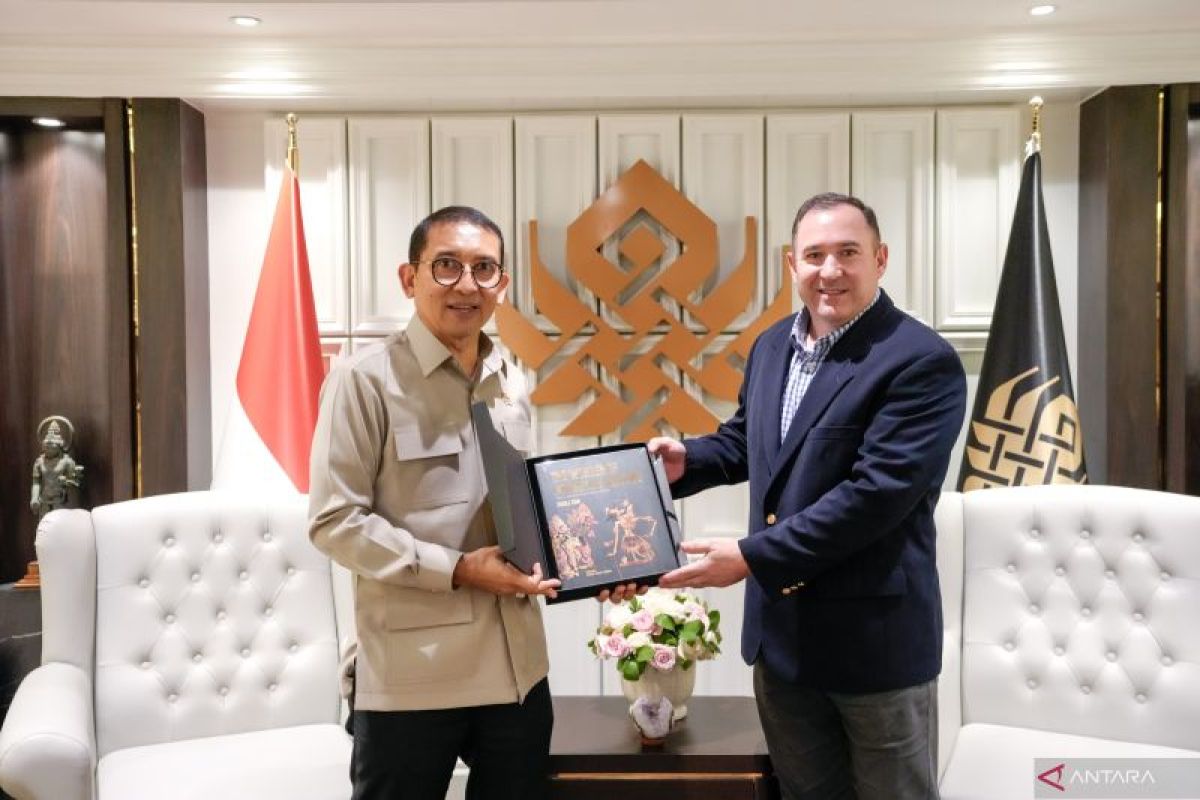
Indonesia and FBI Intensify Collaboration to Recover Stolen Cultural Artifacts
Indonesia has intensified its collaboration with the Federal Bureau of Investigation (FBI) to recover cultural artifacts looted or illicitly exported from the nation, according to multiple official statements and diplomatic communications. The effort marks a significant escalation in the long-standing battle to reclaim heritage items that have been dispersed globally, often through historical colonial ties or modern black-market networks. The FBI’s involvement underscores the growing intersection of law enforcement, cultural preservation, and international diplomacy in addressing the global trade of stolen art.
What Has Happened and Why It Matters
The renewed focus on repatriation follows a series of high-profile seizures and diplomatic negotiations over the past year. In 2023, Indonesian officials confirmed the recovery of several artifacts, including a 17th-century Javanese ceremonial sword and a collection of Hindu-Buddhist statues, from private collectors in the United States and Europe. These items were reportedly acquired through illegal channels, often without proper documentation or legal provenance. The FBI’s role in these recoveries has been pivotal, leveraging its expertise in financial investigations and cross-border law enforcement to trace the movement of stolen goods.
Cultural artifacts are more than historical relics; they represent the identity, spirituality, and sovereignty of the communities they originate from. For Indonesia, a nation with a rich and diverse heritage spanning thousands of years, the loss of such items has deep cultural and political implications. “These artifacts are not just objects—they are the memory of our people,” said a spokesperson for Indonesia’s Ministry of Education and Culture, speaking on condition of anonymity. “Reclaiming them is a step toward healing historical wounds and asserting our right to cultural self-determination.”
The FBI’s involvement reflects a broader trend in the U.S. government to address the illicit trade of cultural property. In 2021, the U.S. Department of Justice launched a task force dedicated to investigating the smuggling of heritage items, citing a surge in cases linked to conflict zones and historical thefts. The agency has also worked with other nations, such as Iraq and Greece, to repatriate looted artifacts, often through partnerships with Interpol and the United Nations Educational, Scientific and Cultural Organization (UNESCO).
Key Players and Their Roles
The collaboration between Indonesia and the FBI involves multiple stakeholders, including government agencies, international organizations, and private entities. At the core of the effort is the Indonesian National Commission for UNESCO, which coordinates the country’s cultural repatriation initiatives. This body works closely with the Indonesian Directorate General of Cultural Heritage, which maintains records of the nation’s cultural assets and identifies items that may have been lost or stolen.
The FBI’s role is primarily investigative. Through its Art Crime Team, the agency conducts forensic analyses, traces financial transactions, and collaborates with foreign law enforcement to dismantle trafficking networks. In recent months, the FBI has also partnered with the U.S. Customs and Border Protection (CBP) to monitor shipments of cultural artifacts entering the country, using advanced technology to detect illicit items.
Private collectors and museums have also become key players in the repatriation process. In some cases, individuals have voluntarily returned artifacts after being shown evidence of their illicit origins. For example, a California-based collector recently surrendered a 19th-century Balinese ceremonial mask after the FBI traced its ownership to a 1970s smuggling operation. However, not all cases are resolved amicably. Legal battles over ownership rights continue, particularly when artifacts have been sold through reputable auction houses or private dealers.
International law also plays a critical role. The 1970 UNESCO Convention, which Indonesia ratified in 1977, establishes guidelines for the protection of cultural property and the return of illicitly exported items. However, enforcement of the convention varies by country, and legal loopholes often allow stolen artifacts to remain in foreign collections. Indonesia has pushed for stronger international cooperation, including the creation of a centralized database to track the provenance of cultural artifacts.
Historical Context and Ongoing Challenges
The repatriation efforts are rooted in Indonesia’s colonial history. During the Dutch colonial period (1602–1949), vast quantities of cultural artifacts were taken from the archipelago, many of which remain in European museums and private collections. While some items have been returned in recent decades, the process has been slow and often contentious. For instance, the Rijksmuseum in the Netherlands holds a significant collection of Indonesian artifacts, including a 19th-century Javanese coronation sword, which Indonesia has sought to repatriate.

Modern challenges include the complexity of tracing artifacts that have changed hands multiple times. Many items were sold in the 20th century through intermediaries, making it difficult to establish a clear chain of ownership. Additionally, the rise of online marketplaces and digital auctions has created new avenues for the illicit trade of cultural property. “The internet has made it easier for traffickers to hide their activities,” said a senior FBI agent specializing in art crimes. “But it has also given us new tools to track and dismantle these networks.”
Another major hurdle is the lack of standardized legal frameworks. While the 1970 UNESCO Convention provides a basis for repatriation, many countries have different laws governing the ownership of cultural artifacts. For example, the U.S. allows the import of artifacts that can be proven to have been legally exported, even if they were taken from their country of origin during colonial times. This has led to disputes over whether repatriation should be based on historical ownership or current legal possession.
Reactions and Implications
The intensified collaboration between Indonesia and the FBI has received mixed reactions. Cultural preservation groups have praised the effort as a necessary step toward rectifying historical injustices. “This is a long-overdue recognition of the value of Indonesia’s heritage,” said a representative from the International Council of Museums (ICOM). “It sets a precedent for other nations to follow.”
