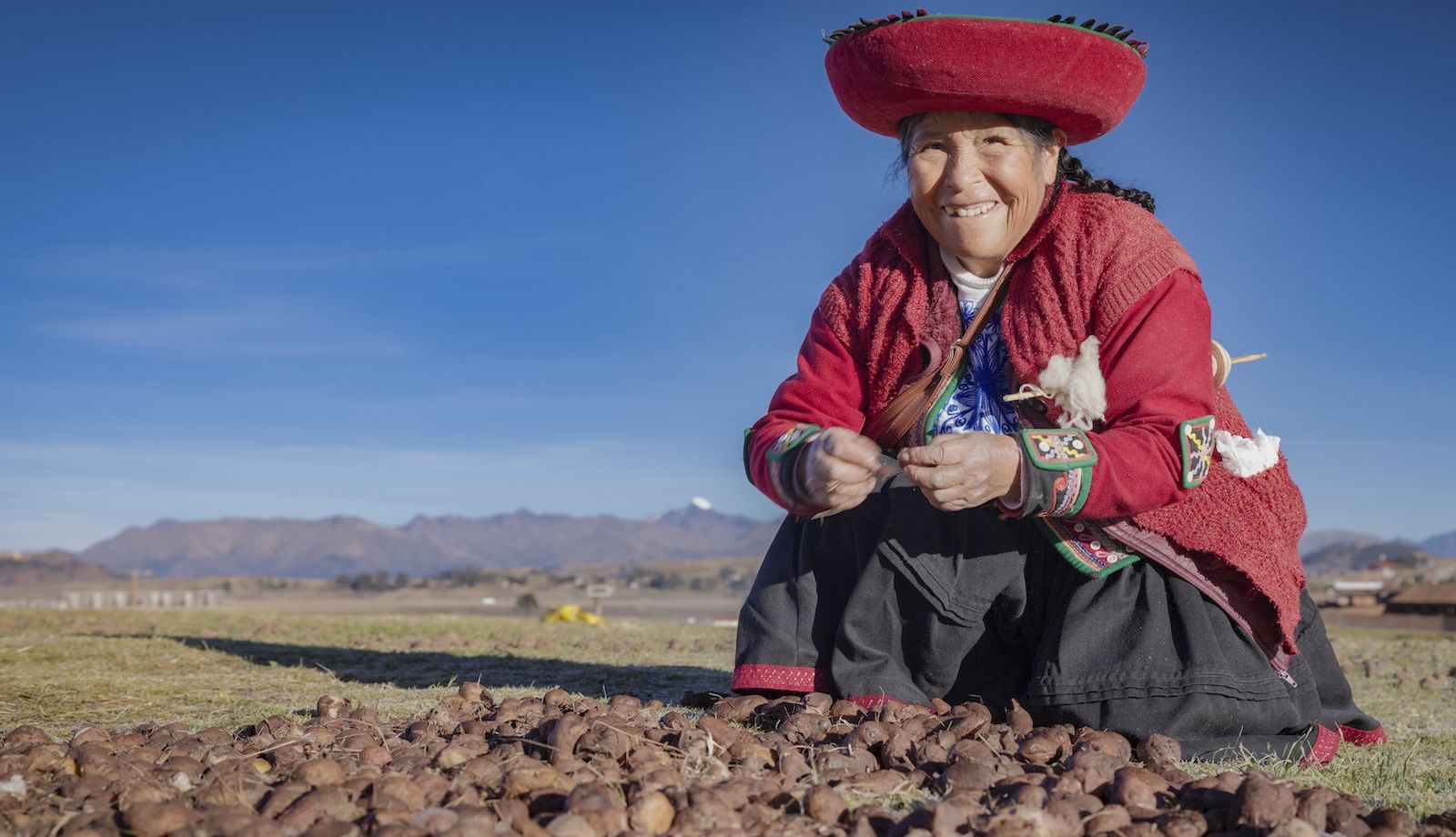
Thanks to Natural Selection, Indigenous Andeans May Digest Potatoes Better Than Anyone Else in the World, Study Finds
Indigenous Andean populations in Peru possess the highest known concentration of the AMY1 gene, allowing them to digest starch more efficiently than any other global population. According to a study published May 5, 2026, in Nature Communications, this genetic adaptation was driven by natural selection between 6,000 and 10,000 years ago as these populations domesticated the potato.
How the AMY1 Gene Enhances Starch Digestion
The ability to process complex carbohydrates is not uniform across human populations. At the center of this biological variation is the AMY1 gene, which is responsible for the production of salivary amylase. This enzyme begins the process of breaking down starch into simpler sugars the moment food enters the mouth.
Research co-led by the University at Buffalo and UCLA reveals that Indigenous people of the Andes carry an unusually high number of copies of the AMY1 gene. In genetics, having more copies of a specific gene—known as copy number variation—often leads to a higher production of the associated protein or enzyme. In this case, more AMY1 copies result in a higher volume of amylase in the saliva.
“People with a high number of AMY1 copies tend to produce more of the amylase enzyme in their saliva and are thought to digest starch more effectively,” stated Abigail Bigham, an associate professor of anthropology at UCLA.
This biological mechanism provides a distinct advantage for populations whose diets are heavily reliant on starchy staples. By initiating the breakdown of starch more aggressively in the oral cavity, the digestive system can process energy-dense foods more efficiently, which is a critical advantage in harsh environments.
The Evolutionary Timeline of Potato Domestication
The genetic makeup of modern Indigenous Andeans is a living record of their ancestors’ relationship with the land. The study indicates that the shift in the AMY1 gene frequency was not random but was a direct response to dietary changes that occurred thousands of years ago.
Roughly 6,000 to 10,000 years ago, Indigenous populations in the Andean highlands became the first in the world to domesticate the potato. This transition transformed the starch-rich tuber into a primary dietary staple. As the potato became the foundation of their caloric intake, the environmental pressure shifted to favor individuals who could extract the most nutrition from this specific food source.
This process is a prime example of how culture and environment interact to sculpt the human genome. The decision to domesticate a specific crop created a new selective pressure; those who could digest that crop more effectively were more likely to survive and pass their genes to the next generation.
Key Milestones in Andean Genetic Adaptation
| Period | Development | Genetic Impact |
|---|---|---|
| 6,000–10,000 Years Ago | Domestication of the potato in Andean highlands | Natural selection begins favoring high AMY1 copy numbers |
| Intervening Generations | Dietary shift to starch-heavy staples | Gradual increase in salivary amylase production across the population |
| Present Day | Descendants in Peru | Highest known AMY1 gene copies of any population worldwide |
The Quantifiable Advantage of Natural Selection
Natural selection often operates on slim margins over vast periods of time. However, the researchers identified a specific and measurable advantage for those with a high number of AMY1 copies. The study found that individuals possessing roughly 10 or more copies of the AMY1 gene experienced a 1.24% survival or reproductive advantage per generation.
While a 1.24% increase may seem marginal in a single lifetime, the cumulative effect over thousands of years is profound. This slight edge in survival—likely due to better energy acquisition and metabolic efficiency—ensured that the “high-copy” trait became dominant within the Andean population.
This finding highlights the “sculpting” nature of evolution. Rather than building a new trait from scratch, natural selection amplified an existing genetic mechanism (AMY1) to meet the demands of a high-altitude, potato-based diet.
Why This Discovery Matters for Modern Health
The implications of this research extend beyond historical anthropology. Understanding how the AMY1 gene evolved in the Andes provides critical insights into the broader relationship between human genetics and nutrition. The study points to several key areas of scientific interest:
- Metabolism: By studying populations with extreme genetic adaptations to starch, researchers can better understand how the body regulates blood sugar and processes energy.
- The Microbiome: The efficiency of initial starch digestion in the mouth affects what reaches the gut, potentially influencing the composition and health of the gut microbiome.
- Gene-Diet Interactions: This research underscores that there is no “one size fits all” human diet. Genetic predispositions, shaped by ancestral history, influence how different populations respond to specific nutrients.
As global health moves toward personalized nutrition, these findings suggest that ancestral dietary staples play a significant role in determining an individual’s metabolic efficiency. For those with fewer AMY1 copies, a diet identical to that of an Indigenous Andean might be processed differently, potentially impacting health outcomes.
The Intersection of High-Altitude Living and Diet
The Andean highlands present a challenging environment characterized by low oxygen levels and extreme temperatures. In such settings, caloric efficiency is not just a matter of convenience but a requirement for survival. The domestication of the potato provided a reliable, energy-dense food source that could thrive in high altitudes where other crops might fail.
The evolution of the AMY1 gene was therefore a dual adaptation. It was a response to the availability of the potato and a necessity for survival in a demanding geography. This synergy between agricultural innovation (domestication) and biological evolution (gene duplication) allowed Indigenous Andeans to flourish in one of the most challenging inhabited regions on Earth.
For further context on how geography influences biology, readers may find a related explainer on high-altitude genetic adaptations useful.
Common Misconceptions About Genetic Adaptation
When discussing “superpowers” or “superior” digestion, it is easy to fall into oversimplifications. It is important to clarify what this research does and does not mean.
Misconception: This is a “mutation” in the traditional sense.
In reality, this is an example of copy number variation. The AMY1 gene exists in most humans; the difference in Andean populations is the number of copies of that gene, not the creation of a brand-new genetic sequence.
Misconception: Everyone in the Andes has the same number of copies.
While the population average is the highest in the world, there is still individual variation. The study focuses on the selective advantage of those with 10 or more copies, implying a distribution across the population.
Misconception: This means potatoes are the “best” food for everyone.
On the contrary, the study suggests that the ability to digest starch efficiently is a specific adaptation. People from populations that did not rely on starch-heavy diets for millennia may not possess the same AMY1 copy numbers and may process these foods differently.
Frequently Asked Questions
What is the AMY1 gene?
The AMY1 gene provides the instructions for producing salivary amylase, an enzyme in the saliva that breaks down complex starches into simpler sugars, beginning the digestion process before food even reaches the stomach.
Why do Indigenous Andeans have more copies of this gene?
According to the UCLA and University at Buffalo study, natural selection favored individuals with more AMY1 copies because they could more effectively digest the starch-rich potatoes that became a dietary staple in the Andean highlands 6,000 to 10,000 years ago.
How much of an advantage did this gene provide?
Researchers found that individuals with 10 or more copies of the AMY1 gene had approximately a 1.24% survival or reproductive advantage per generation compared to those with fewer copies.
Where was this study published?
The findings were published on May 5, 2026, in the scientific journal Nature Communications.
Does this affect how people should eat today?
While the study doesn’t provide specific dietary prescriptions, it highlights the importance of gene-diet interactions, suggesting that ancestral diets shape our current metabolic capabilities and how we process specific nutrients like starch.
The discovery that Indigenous Andeans may digest potatoes better than anyone else in the world serves as a powerful reminder of the fluidity of the human genome. It demonstrates that our biological identity is not static but is continuously shaped by the foods we grow, the environments we inhabit, and the cultural choices of our ancestors.
