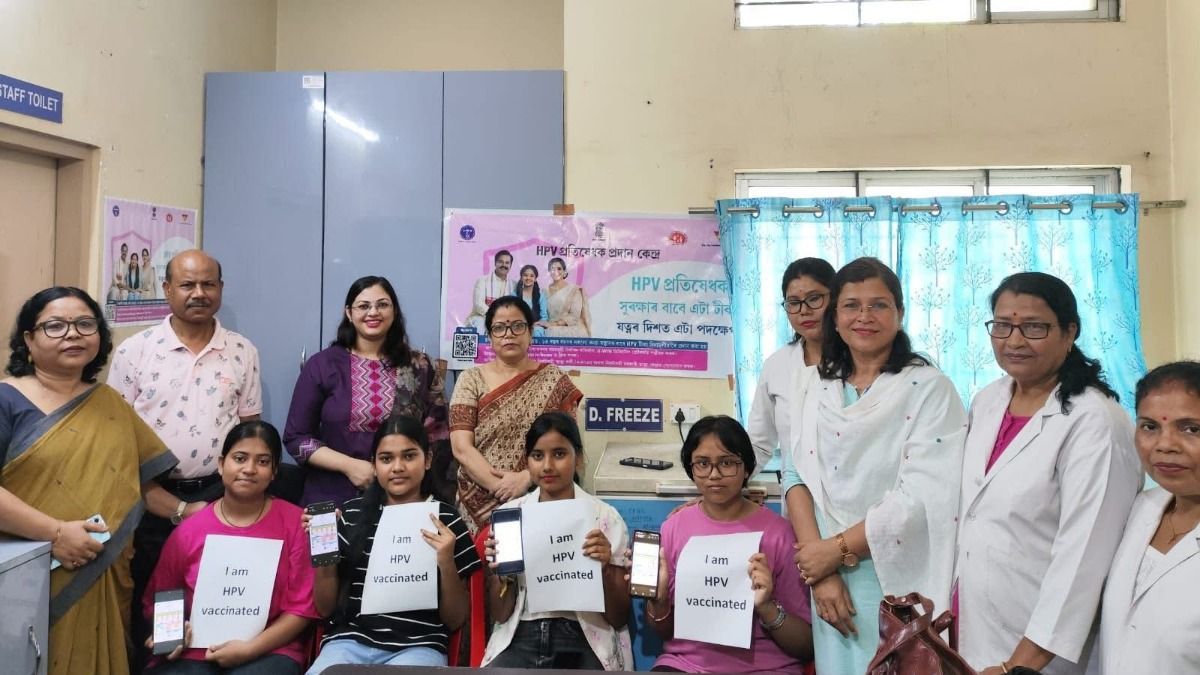
Kamrup Metro becomes first district in Assam to surpass HPV vaccination target – India Today NE
Kamrup Metro is the first district in Assam to exceed its vaccination targets for the Human Papillomavirus (HPV), according to India Today NE. This milestone contributes to a wider national campaign where, as reported by The Economic Times, HPV vaccination drives have reached 50 lakh girls within a three-month window.
How Kamrup Metro Led Assam’s HPV Vaccination Drive
Kamrup Metro has set a precedent for other districts in Assam by surpassing its established goals for HPV vaccine administration. According to India Today NE, the district’s success marks the first time a region in the state has hit and exceeded its specific target for the drive. This effort targets young girls to prevent the onset of cervical cancer later in life.
The drive focuses on administering the HPV vaccine to a specific age cohort, ensuring that the most vulnerable population is protected before exposure to the virus. While the specific percentage of the overage is not detailed, the designation of “first district” indicates a higher rate of compliance and administration compared to neighboring districts in Assam.
- Primary Goal: Reduction of cervical cancer incidence through early immunization.
- Regional Status: Kamrup Metro is currently the lead district in Assam for target achievement.
- Implementation: The drive utilizes local health centers and school-based outreach to reach the target demographic.
National Scale: 50 Lakh Girls Vaccinated in Three Months
The achievement in Kamrup Metro mirrors a larger trend across India. The Economic Times reports that the HPV vaccination drive has reached 50 lakh girls across the country in just three months. This rapid scale-up indicates a centralized push to integrate the HPV vaccine into the national immunization framework.
The speed of the rollout suggests a high level of coordination between state health departments and central authorities. By targeting millions of girls in a short timeframe, health officials aim to create a “herd effect” that significantly lowers the prevalence of high-risk HPV strains across the general population.
However, the national success is not uniform. While the total number of vaccinations is high, the distribution remains uneven across different states and urban-rural divides.
Regional Comparisons: Telangana and Other State Efforts
Data from other states shows varying levels of success and different scales of operation. The Deccan Chronicle reports that the HPV vaccination drive in Telangana has reached 91,289 individuals. When compared to the national figure of 50 lakh reported by The Economic Times, it is evident that different states are at different stages of their rollout or are operating with different target quotas.
The disparity between a district-level success in Assam and the state-level numbers in Telangana highlights the localized nature of health administration in India. Success in Kamrup Metro may be attributed to localized mobilization efforts that other districts and states are now attempting to replicate.
| Region/Scope | Reported Reach/Status | Source |
|---|---|---|
| Kamrup Metro (Assam) | Surpassed Target (1st in State) | India Today NE |
| National (India) | 50 Lakh Girls (3 Months) | The Economic Times |
| Telangana | 91,289 Individuals | Deccan Chronicle |
The Gap in Protection: Exclusion of Older Women
Despite the success in reaching young girls, a significant gap in the public health strategy has emerged regarding age. The Bangalore Mirror reports that older women are “paying the price” for their exclusion from these HPV vaccine drives. Because the current focus is strictly on the pediatric and adolescent demographic, women who have already passed the target age are left without access to government-funded preventative measures.
Medical experts generally agree that while the vaccine is most effective when administered before any HPV exposure, it can still provide benefits to older adults. The exclusion of this group means that a large portion of the current adult female population remains susceptible to HPV-related cervical lesions and cancers, shifting the burden of cost to the individual for private vaccinations.
“Older women pay price of HPV vaccine exclusion” — Bangalore Mirror
Challenges in Uptake Despite Vaccine Availability
Availability of the vaccine does not always equate to high administration rates. The Indian Practitioner notes that some free cervical cancer vaccination drives have seen low uptake, even when the vaccines are readily available. This suggests that logistical availability is only one part of the equation; social and educational barriers remain significant.

Factors contributing to low uptake often include:
- Vaccine Hesitancy: Misconceptions about the safety or necessity of the HPV vaccine.
- Lack of Awareness: Parents or guardians may not understand the link between HPV and cervical cancer.
- Social Stigma: Because HPV is a sexually transmitted infection, some families hesitate to vaccinate their daughters due to the perceived implication of the vaccine.
- Access Barriers: Even “free” vaccines can have hidden costs, such as travel time to clinics or lost wages for parents.
Understanding the Link Between HPV and Cervical Cancer
To understand why the success in Kamrup Metro is significant, it is necessary to examine the medical context of the Human Papillomavirus (HPV). HPV is a common virus that can lead to various health issues, but the most severe consequence is the development of cervical cancer.
Most cervical cancers are caused by “high-risk” strains of HPV. When the body fails to clear the virus, it can cause cellular changes in the cervix that, over many years, progress into malignancy. The vaccine works by stimulating the immune system to produce antibodies that prevent the virus from entering the cells of the cervix.
The primary goal of the current drives in Assam and across India is to intervene early. By vaccinating girls before they are exposed to the virus, the healthcare system can effectively prevent the majority of cervical cancer cases before they ever begin. This is a shift from a “screen and treat” model—which finds cancer after it has started—to a “prevent” model.
Comparison of Prevention Strategies
Public health officials often balance two primary strategies for fighting cervical cancer: screening and vaccination. While Kamrup Metro focuses on the latter, both are essential for a comprehensive health strategy.
- Vaccination (Primary Prevention): Stops the infection from occurring. Most effective in children and adolescents.
- Screening/Pap Smears (Secondary Prevention): Detects precancerous changes or early-stage cancer. Essential for older women who were not vaccinated.
The report from the Bangalore Mirror regarding the exclusion of older women emphasizes that without a combined approach—vaccinating the young and screening the old—the overall burden of cervical cancer will remain high.
Public Health Implications of Target-Driven Success
When a district like Kamrup Metro surpasses its target, it provides a data point for “what works.” Health administrators can analyze the specific tactics used in that district—such as school partnerships, community leader endorsements, or streamlined registration—and apply them to lagging districts.
However, the pressure to meet “targets” can sometimes lead to a focus on quantity over quality. The Indian Practitioner’s report on low uptake in other areas suggests that a “one size fits all” target may not account for cultural nuances in different regions. A target-driven approach is effective for rapid scaling, but a demand-driven approach—where the community is educated first—may be more sustainable for long-term health outcomes.
The contrast between the 50 lakh national figure and the localized struggles mentioned in other reports suggests a fragmented landscape. India is seeing massive wins in some pockets, while others struggle with basic uptake despite having the medicine on the shelf.
Addressing Common Misconceptions About HPV Vaccines
A recurring theme in the reports of low uptake is the presence of misinformation. To ensure districts like Kamrup Metro remain successful, public health communication must address these common myths:
- Myth: The vaccine encourages early sexual activity.
Fact: Multiple global studies show no link between HPV vaccination and earlier onset of sexual activity. - Myth: The vaccine is only for those already exposed to the virus.
Fact: The vaccine is a preventative tool; it is most effective before exposure. - Myth: If you are vaccinated, you don’t need cervical screenings.
Fact: While the vaccine protects against the most dangerous strains, it does not protect against all types of HPV; screening remains necessary.
By correcting these narratives, health workers can move from simply “hitting a target” to ensuring long-term community health literacy.
The Road Ahead for Vaccination in India
The success of Kamrup Metro serves as a proof-of-concept for the Assam health department. The next phase of the drive will likely involve expanding these successful tactics to the rest of the state’s districts. On a national level, the challenge remains the integration of this vaccine into the routine immunization schedule to avoid the “stop-start” nature of special drives.
Furthermore, the pressure to include older women, as highlighted by the Bangalore Mirror, may lead to a policy shift. If the government expands the age bracket for the free vaccine, it could significantly reduce the cancer burden among adult women, though this would require a massive increase in vaccine procurement and funding.
The current trajectory indicates a strong start, with millions of girls protected, but the sustainability of the program depends on overcoming the hesitancy and exclusion gaps reported across various states.
Frequently Asked Questions
Which district in Assam was the first to surpass its HPV vaccination target?
According to India Today NE, Kamrup Metro is the first district in Assam to exceed its HPV vaccination targets.
How many girls have been reached by the HPV drive nationally?
The Economic Times reports that the vaccination drive has reached 50 lakh girls across India within a period of three months.
Why is the HPV vaccine given to young girls instead of older women?
The vaccine is most effective when administered before exposure to the Human Papillomavirus. However, the Bangalore Mirror has noted that excluding older women leaves a significant portion of the population without preventative protection.
What is the difference between HPV vaccination and cervical cancer screening?
Vaccination is primary prevention, meaning it stops the virus from causing the infection. Screening (like Pap smears) is secondary prevention, which identifies cancer or precancerous cells that have already developed so they can be treated.
Why is there low uptake in some areas despite the vaccine being free?
As reported by The Indian Practitioner, low uptake is often driven by vaccine hesitancy, lack of awareness, and social stigmas associated with the nature of the HPV virus.
For more information on regional health initiatives, you may find a related explainer on India’s national immunization schedule helpful in understanding how these drives fit into the broader healthcare strategy.
