How Waste Build-up in the Brain Occurs in Aging and Neurodegeneration
Waste build-up in the brain occurs when the glymphatic system—the central nervous system’s waste clearance mechanism—fails to efficiently remove metabolic byproducts such as amyloid-beta and tau proteins. According to reports from Medical Xpress and Earth.com, this failure accelerates during the aging process and serves as a primary driver for neurodegenerative diseases, including Alzheimer’s, by allowing toxic proteins to accumulate and disrupt neural signaling.
How the Brain’s Waste Disposal System Functions
The brain lacks a traditional lymphatic system like the rest of the body. Instead, it relies on a specialized process known as the glymphatic system to flush out cellular debris. According to Medical Xpress, this system utilizes a network of channels formed by glial cells, specifically astrocytes, to move cerebrospinal fluid (CSF) through the brain tissue.
This process involves a rhythmic exchange where CSF from the subarachnoid space enters the brain parenchyma. As it flows, it mixes with interstitial fluid (ISF), which carries metabolic waste from the neurons. This mixture is then pushed toward the venous system and lymphatic vessels for removal from the skull. Earth.com reports that when this plumbing system operates correctly, it prevents the accumulation of proteins that would otherwise trigger inflammation or cell death.
Key components of this system include:
- Aquaporin-4 (AQP4) Channels: Water channels located on the end-feet of astrocytes that facilitate the flow of fluid.
- Cerebrospinal Fluid (CSF): The clear liquid that acts as the primary solvent for waste.
- Interstitial Fluid (ISF): The fluid surrounding brain cells that collects metabolic byproducts.
- Perivascular Spaces: The gaps surrounding blood vessels that serve as the primary conduits for fluid movement.
Why Waste Accumulation Increases During Aging
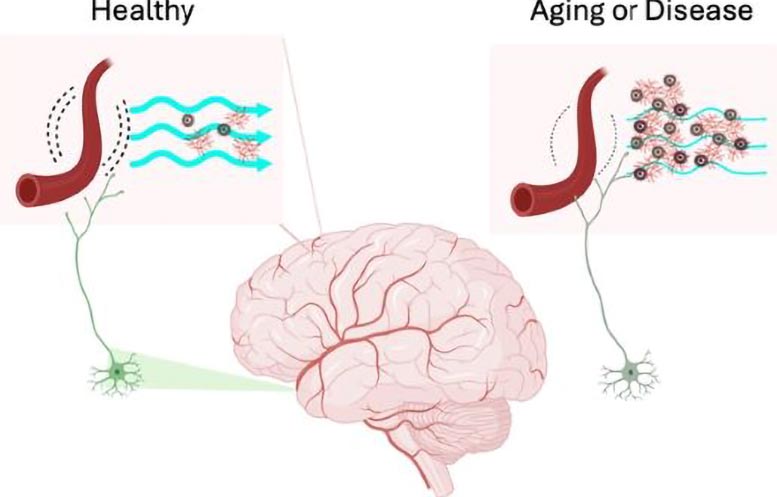
As the human body ages, the efficiency of the glymphatic system declines. According to geneonline.com, the degradation of the brain’s waste routes is not a sudden event but a progressive failure of the biological infrastructure. This decline often manifests as a reduction in the expression or proper localization of AQP4 channels, which slows the movement of CSF through the brain tissue.
Medical Xpress notes that aging also involves the stiffening of cerebral arteries. Because the pulsing of these arteries helps drive the flow of CSF, reduced arterial elasticity leads to a slower “pump” mechanism. This results in a stagnant environment where metabolic waste remains in the brain longer than intended, eventually forming aggregates.
The consequences of this age-related decline are summarized in the following table:
| Feature | Healthy Young Brain | Aging/Neurodegenerative Brain |
|---|---|---|
| AQP4 Channel Function | High efficiency; clear fluid movement | Reduced expression; fluid stagnation |
| Arterial Pulsatility | Strong; drives CSF flow effectively | Weakened; reduced waste clearance speed |
| Protein Levels | Low levels of amyloid-beta and tau | High accumulation of toxic protein plaques |
| Neural Inflammation | Minimal/Controlled | Chronic low-grade inflammation |
The Critical Role of Sleep in Brain Clearance
The brain’s waste disposal system does not operate at full capacity at all times. MedPage Today reports that the glymphatic system is significantly more active during sleep than during wakefulness. During non-rapid eye movement (NREM) sleep, the interstitial space between neurons increases by up to 60%, allowing CSF to flow more freely and wash away toxins.
When sleep is chronically disrupted, the brain loses its primary window for detoxification. According to MedPage Today, this lack of “nightly cleaning” leads to a build-up of proteins that can interfere with synaptic plasticity and cognitive function. This explains why sleep deprivation is frequently linked to an increased risk of cognitive decline and the acceleration of neurodegenerative symptoms.
“The brain works at night to clear the metabolic debris accumulated during the day’s activity, making sleep a biological necessity for neural maintenance.” — Analysis based on MedPage Today reporting.
How Waste Build-up Drives Neurodegeneration
The transition from normal aging to a neurodegenerative disease often hinges on the volume and type of waste that accumulates. Earth.com and geneonline.com highlight two specific proteins—amyloid-beta and tau—as the primary culprits in this process.
Amyloid-Beta Plaques
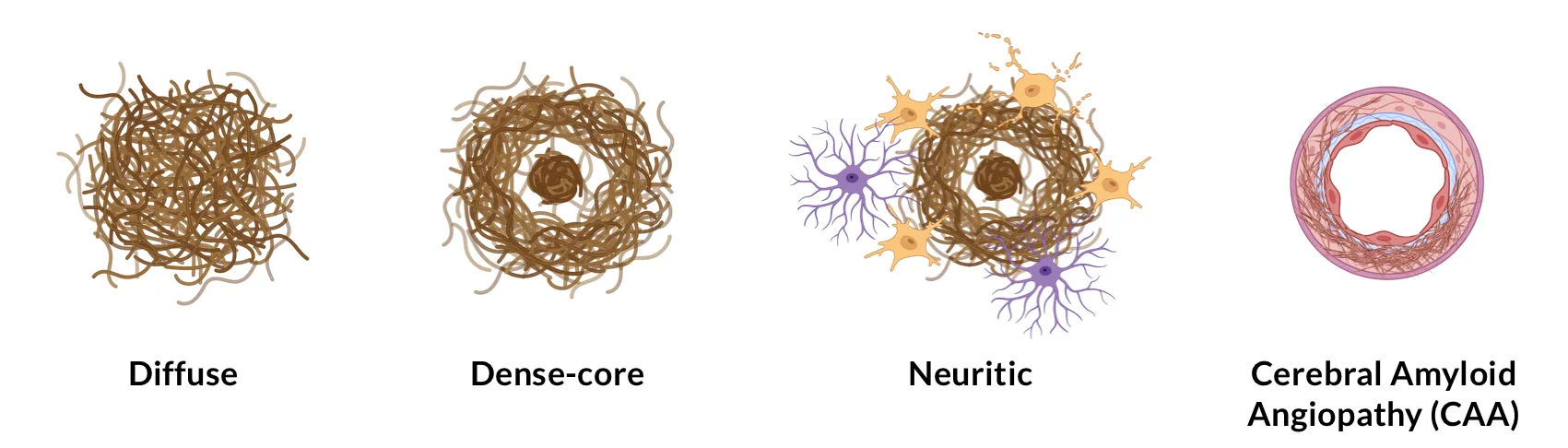
Amyloid-beta is a protein fragment that is normally produced and cleared. However, when the glymphatic system fails, these fragments clump together to form extracellular plaques. According to Earth.com, these plaques act as physical barriers that further obstruct the flow of CSF, creating a vicious cycle where waste build-up impairs the very system meant to remove it.
Tau Tangles
While amyloid-beta builds up outside the cells, tau proteins accumulate inside the neurons. Geneonline.com reports that when waste clearance fails, tau proteins misfold and form “tangles.” These tangles destroy the cell’s transport system, effectively starving the neuron of nutrients and leading to cell death.
The intersection of these two processes leads to the clinical symptoms of Alzheimer’s and other dementias, including memory loss, disorientation, and executive dysfunction. Related explainer on Alzheimer’s biomarkers.
Recent Discoveries in Hidden Waste Routes
Recent research highlighted by EMJ and Medical Xpress suggests that the glymphatic system is more complex than previously understood. Scientists have uncovered “hidden” waste disposal routes that may operate alongside the primary glymphatic channels. These newly identified pathways may involve different glial cell interactions or alternative drainage routes through the meningeal lymphatics.
According to EMJ, uncovering these hidden systems provides new targets for therapeutic intervention. If researchers can identify how to “re-open” these blocked routes or stimulate the hidden pathways, it may be possible to slow the progression of neurodegenerative diseases even after symptoms have appeared.
These findings contrast with earlier scientific beliefs that the brain was largely an isolated system. The evidence from EMJ and Medical Xpress confirms that the brain is deeply integrated with the body’s overall lymphatic and circulatory systems, meaning systemic health (such as cardiovascular fitness) directly impacts brain cleanliness.
Clinical Implications and Potential Risks
Understanding brain waste clearance has immediate implications for how doctors treat neurodegeneration. However, manipulating these systems carries risks. MedPage Today mentions cases of Amyloid-Related Imaging Abnormalities (ARIA), which can occur during the use of new Alzheimer’s drugs designed to clear amyloid plaques.
ARIA can involve swelling or small bleeds in the brain. This occurs because the rapid removal of plaques can weaken the blood-brain barrier or cause sudden shifts in fluid pressure. This highlights the complexity of the brain’s waste system: simply removing the “trash” is not enough; the removal must happen at a pace and through a mechanism that the brain’s vascular structure can support.
Furthermore, the integration of technology in monitoring these conditions is increasing. MedPage Today reports on the use of smartwatches to detect seizures, suggesting a future where wearable tech might one day monitor biomarkers related to sleep quality and glymphatic efficiency to predict neurodegenerative risk before cognitive decline begins.
Common Misconceptions About Brain Waste
There are several frequent misunderstandings regarding how the brain handles metabolic waste. Based on the reporting from geneonline.com and Earth.com, the following clarifications are necessary:

- Misconception: The brain cleans itself constantly at the same rate.
Fact: Clearance is highly cyclical and peaks during deep sleep. - Misconception: “Brain fog” is always a sign of permanent neurodegeneration.
Fact: Temporary waste build-up due to a single night of poor sleep can cause cognitive impairment, but this is often reversible with restorative sleep. - Misconception: Amyloid plaques are the only cause of Alzheimer’s.
Fact: While plaques are a hallmark, the failure of the clearance system and the subsequent build-up of tau tangles and inflammatory markers are equally critical.
Frequently Asked Questions
What is the glymphatic system?
According to Medical Xpress, the glymphatic system is a waste clearance pathway in the brain that uses cerebrospinal fluid (CSF) and glial cells to flush out metabolic toxins, such as amyloid-beta, which accumulate during wakefulness.
Why does sleep help clear brain waste?
MedPage Today reports that during sleep, the space between brain cells increases, which allows cerebrospinal fluid to flow more efficiently through the brain tissue and carry away waste products that would otherwise build up.
Can brain waste build-up be reversed?
While permanent plaques and tangles associated with advanced neurodegeneration are difficult to reverse, research cited by EMJ suggests that improving glymphatic efficiency through sleep and potentially new therapies could slow the accumulation of waste.
What are amyloid-beta and tau proteins?
As explained by Earth.com and geneonline.com, amyloid-beta proteins form plaques outside of neurons, and tau proteins form tangles inside neurons. Both are metabolic waste products that, when not cleared, contribute to the death of brain cells.
How does aging affect the brain’s ability to clean itself?
Medical Xpress reports that aging leads to a decline in the function of AQP4 water channels and a decrease in arterial pulsing, both of which are necessary to drive the flow of waste-clearing fluids through the brain.
The ongoing discovery of hidden waste routes and the refinement of glymphatic research suggest a shift in how medicine approaches aging. Rather than focusing solely on the proteins themselves, the focus is expanding to include the “plumbing” of the brain. Future strategies may prioritize the maintenance of these clearance routes to prevent the onset of neurodegenerative diseases. Detailed guide on sleep hygiene for brain health.
