
Hermen Hulst Allegedly Said Sony’s PC Ports Didn’t Make Enough Money – Push Square
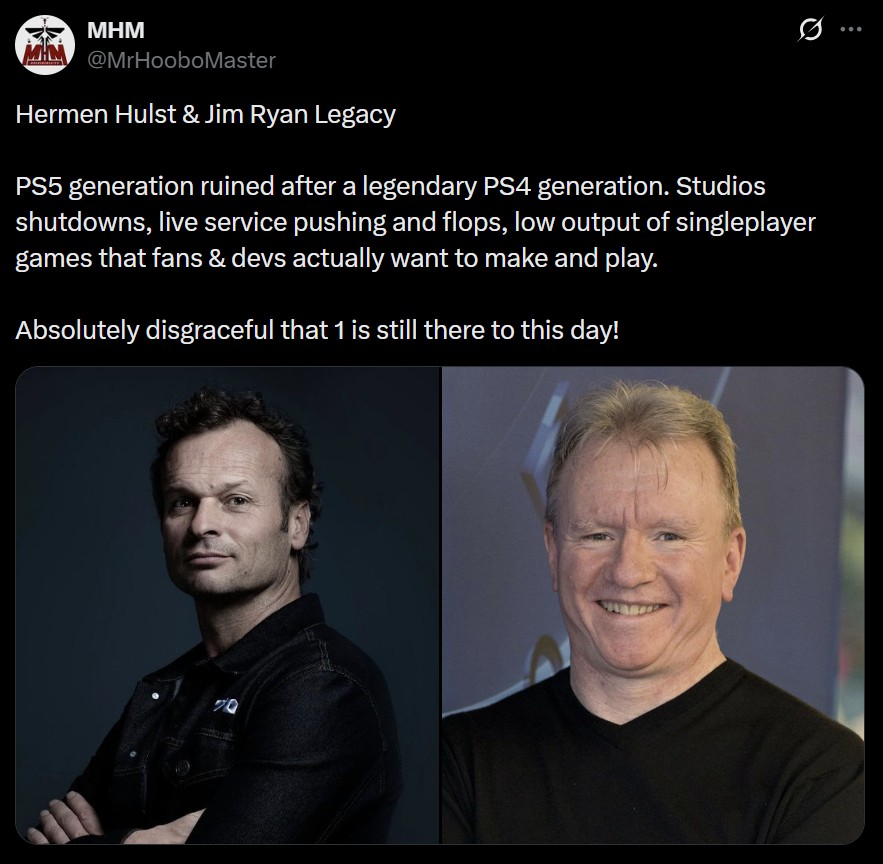
Hermen Hulst reportedly stated that Sony’s efforts to bring PlayStation titles to PC have not generated sufficient revenue. This allegation suggests a potential shift in Sony Interactive Entertainment’s strategy regarding how and when exclusive games reach the PC platform, according to reports detailing internal sentiments at the company.
What are the allegations regarding Hermen Hulst and PC port revenue?
Reports indicate that Hermen Hulst, the CEO of Sony Interactive Entertainment (SIE), expressed dissatisfaction with the financial returns associated with porting PlayStation exclusives to the PC. The core of the allegation is that the costs required to optimize and launch these titles on Windows do not always align with the resulting profit margins, leading to internal questions about the sustainability of the current PC strategy.
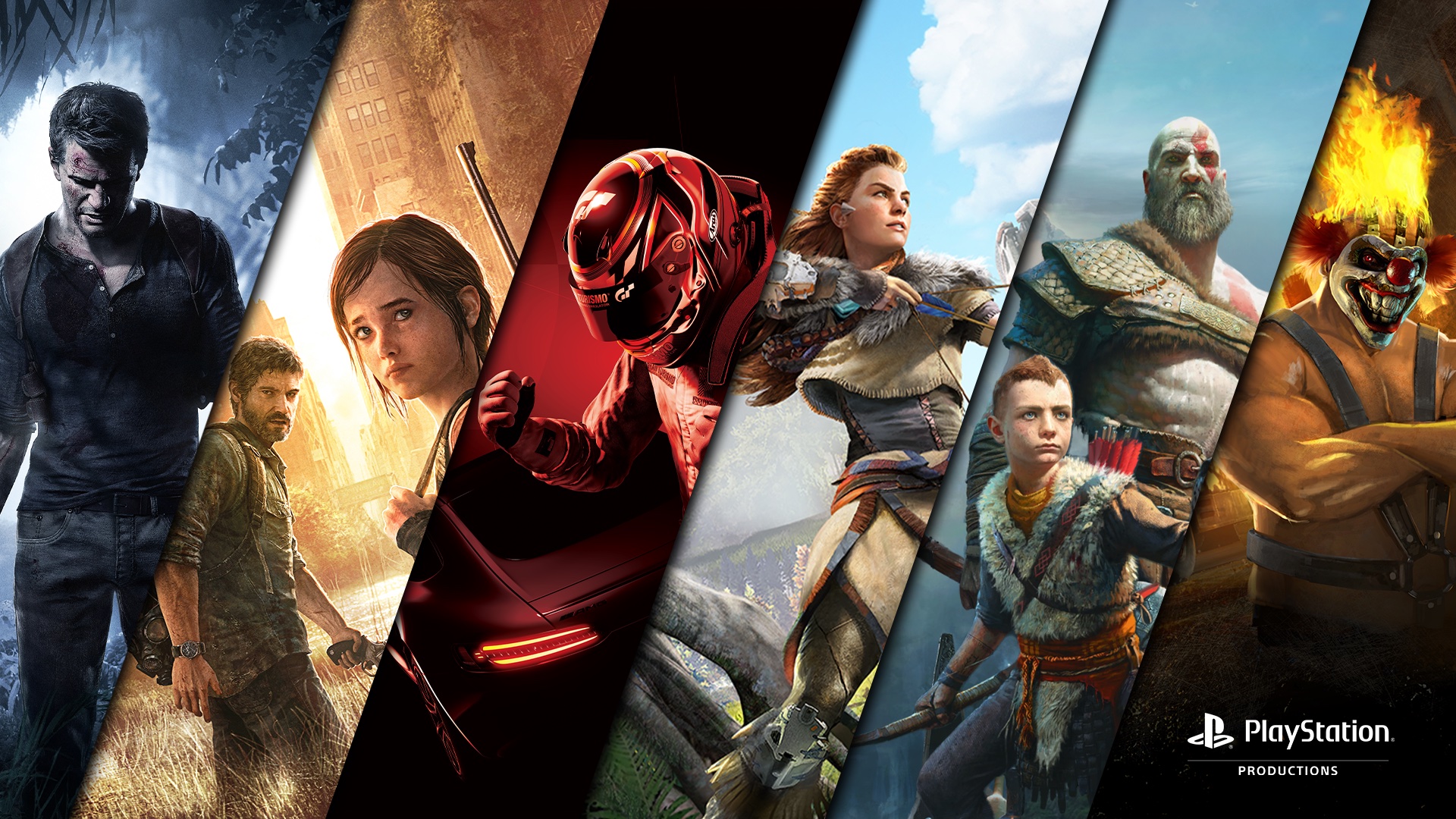
These claims surface at a time when Sony has been gradually expanding its footprint on Steam and the Epic Games Store. While titles like God of War, Horizon Zero Dawn, and The Last of Us Part I have seen commercial success, the allegation suggests that the “success” measured by unit sales may not translate to the high-margin profitability Sony expects from its first-party ecosystem.
The tension stems from the inherent conflict between two business goals: maximizing software reach and protecting the value of the PlayStation 5 hardware. If a game is too accessible or too affordable on PC, it may reduce the incentive for consumers to purchase a console. According to industry analysis, this “cannibalization” risk is a primary concern for SIE leadership.
The evolution of Sony’s PC gaming strategy
Sony’s approach to the PC market has shifted from total avoidance to cautious experimentation. For years, the company maintained that its first-party titles were the primary drivers for console sales. However, a change in leadership and market pressure led to the creation of a dedicated PC publishing arm.
The strategy has generally followed a “delayed release” model. Sony typically waits several years after a console launch before bringing a title to PC. This ensures that the “hardcore” fanbase buys the console first, while the PC port captures a second wave of revenue from a different demographic. This cycle allows Sony to monetize the same asset twice.
| Phase | Strategy | Primary Goal | Example Titles |
|---|---|---|---|
| Early Phase | Strict Exclusivity | Drive PS4/PS5 Hardware Sales | Bloodborne, Uncharted 4 |
| Experimental | Delayed PC Ports | Recover Development Costs | Horizon Zero Dawn, Days Gone |
| Expansion | Strategic Porting | Brand Awareness & New Revenue | Spider-Man Remastered, Helldivers 2 |
Despite this evolution, the allegation that Hermen Hulst viewed these returns as insufficient indicates that the “Experimental” and “Expansion” phases may not be hitting internal financial benchmarks. The cost of porting—often involving external studios like Nixxes Software—adds a layer of overhead that must be recouped before a port becomes profitable.
Why PC ports may not be making “enough” money
To understand why a CEO would claim PC ports aren’t making enough money despite millions of copies sold, one must look at the specific economics of the PC platform compared to the closed PlayStation ecosystem.
Platform Fees and Revenue Splits
When a game sells on the PlayStation Store, Sony controls the entire pipeline. While they still take a cut, it stays within the corporate family. On PC, Sony must pay a percentage of every sale to storefronts like Valve (Steam) or Epic Games. These fees, typically ranging from 12% to 30%, immediately eat into the margins of a PC port.
The Cost of Optimization
PlayStation games are built for a single set of hardware specifications. PC gaming is the opposite; a game must run on thousands of different combinations of CPUs, GPUs, and RAM. This requires extensive QA testing and optimization. According to technical reports, the cost of “polishing” a port to avoid a negative launch (like the criticized launch of The Last of Us Part I on PC) is significant. If a port launches poorly, the brand damage can outweigh the financial gain.
Pricing Pressures
PC gamers generally expect deeper discounts and more frequent sales than console gamers. While a PS5 exclusive might hold its $69.99 price point for months, PC titles often face pressure to drop in price quickly to remain competitive in a crowded market. This downward pressure on Average Selling Price (ASP) reduces the overall lifetime value of the port.
Key financial hurdles for PC ports:
- Storefront Commissions: Payments to Steam/Epic reduce net profit per unit.
- Development Overhead: High cost of optimization for varied hardware.
- Price Erosion: Faster depreciation of game value on PC platforms.
- Hardware Cannibalization: Potential loss of PS5 console sales.
Comparing Sony’s approach to Microsoft’s PC strategy
The alleged frustration from Hermen Hulst highlights a fundamental difference in philosophy between Sony and Microsoft. Microsoft has adopted a “Platform Agnostic” approach, where almost every Xbox first-party title launches day-and-date on both Xbox and PC.
Microsoft’s goal is not to sell a specific box, but to grow the Game Pass subscription service. In this model, the “profit” is not measured by individual game sales on Steam, but by the monthly recurring revenue of a subscription. Sony, however, still relies heavily on the “razor and blade” model—selling the hardware (the razor) to sell the high-margin software (the blades).
If Sony were to move toward day-and-date PC releases, it would likely increase immediate revenue but could devastate the value proposition of the PlayStation 5. The allegation that current ports aren’t making enough money suggests that Sony is stuck in a middle ground: they are spending the money to port games, but they aren’t seeing the “explosive” growth that would justify abandoning their console-first exclusivity.
Implications for future PlayStation exclusives
If the internal sentiment at SIE is that PC ports are underperforming financially, several shifts in strategy are likely. These changes would impact how fans expect games to arrive on their desktops.
Increased Wait Times
Sony may extend the gap between the console release and the PC port. By waiting longer, they ensure that every single potential console buyer has already made their decision, eliminating the risk of a consumer choosing a PC version over a PS5 purchase.
Selective Porting
Rather than a blanket policy of bringing “everything” to PC eventually, Sony might become more selective. Only titles with massive global brand recognition (like God of War) would receive the porting budget, while smaller, niche exclusives might remain locked to the console.
Shift Toward Live Service
Sony has explicitly stated a desire to move into live-service games. Unlike single-player narratives, live-service games require a massive player base to survive. These titles are naturally suited for PC. We may see a divide where single-player games stay exclusive longer, while multiplayer titles launch on PC immediately to maximize the user base.
For more information on how this affects specific titles, readers may find a related explainer on PlayStation’s live-service pivot useful.
Common misconceptions about Sony’s PC presence
There are several recurring myths regarding Sony’s PC strategy that often cloud the discussion around revenue and porting.

Misconception 1: “PC ports are just free money.”
Many fans believe that since the game is already made, putting it on PC is “free” profit. In reality, as noted in the discussion on optimization, the porting process is a distinct development cycle that requires millions of dollars in investment and hundreds of man-hours.
Misconception 2: “Sony hates PC gamers.”
The reluctance to port is rarely about the audience and almost always about the balance sheet. Sony views the PC as a secondary market. The allegation regarding Hermen Hulst’s comments proves that the decision is driven by ROI (Return on Investment) rather than a lack of interest in the platform.
Misconception 3: “Steam sales numbers equal profit.”
While third-party tools like SteamDB provide estimates of how many copies a game has sold, these figures do not account for the cost of porting, marketing, or the revenue split with Valve. A game can sell a million copies and still fail to meet the internal profitability targets set by a CEO.
Analysis of the “Alleged” nature of the comments
It is critical to note that these comments are reported as “alleged.” Sony Interactive Entertainment has a history of tight communication and rarely admits to financial struggles or strategic pivots until they are officially announced in earnings calls or press releases.
The fact that these statements are surfacing via reports rather than official channels suggests a possible leak of internal tension. In large corporations, there is often a battle between the “creative” side (who want the widest possible audience) and the “financial” side (who want the highest possible margin). Hulst’s alleged comments represent the financial perspective.
If these reports are accurate, they signal a period of austerity or refinement for Sony’s PC efforts. The company is likely analyzing which specific genres or price points yield the best returns before committing to a larger slate of ports for the PS5 era.
What to watch for in the coming quarters
To determine if the alleged dissatisfaction with PC revenue is translating into a real policy change, industry observers should monitor the following indicators:
- The timing of the next major port: If the gap between console and PC launch widens for the next “blockbuster” title, it confirms a more conservative approach.
- Pricing strategies: A shift toward higher launch prices for PC ports would indicate an attempt to fix the margin issues mentioned in the allegations.
- The role of Nixxes and other partners: A reduction in partnerships with external porting houses would suggest a scaling back of the PC program.
- Official earnings reports: Look for mentions of “Network Services” and “Software” revenue growth specifically tied to non-console platforms.
The tension between hardware exclusivity and software accessibility is the defining struggle for Sony in the current generation. Whether Hermen Hulst’s alleged comments lead to a total pivot or a minor adjustment, the era of “blindly” porting every hit to PC may be evolving into a more calculated, profit-driven model.
Frequently Asked Questions
Did Hermen Hulst officially announce that PC ports are failing?
No. The statements are reported as allegations and internal sentiments. Sony Interactive Entertainment has not issued an official press release stating that their PC ports are unprofitable.
Why would Sony port games if they don’t make enough money?
Even if the margins are lower than console sales, PC ports provide brand visibility, attract new fans to the franchise, and allow Sony to monetize an asset that would otherwise sit idle after the initial console sales peak. It is often a choice between “some profit” and “no profit.”
Will this stop PlayStation games from coming to PC?
It is unlikely to stop ports entirely, as the PC market is too large to ignore. However, it may lead to longer wait times, fewer titles being ported, or changes in how the games are priced on Steam and the Epic Games Store.
How does the “cannibalization” effect work?
Cannibalization occurs when a company releases a product that competes with its own existing product. In this case, if a consumer can buy a game on PC for $40, they may decide they don’t need to spend $500 on a PS5 to play it, thereby hurting Sony’s hardware business.
Which PC ports have been the most successful for Sony?
While Sony does not release exact profit margins, titles like Helldivers 2 have seen massive, immediate success on PC due to their multiplayer nature. Single-player titles like God of War and Horizon Zero Dawn have also performed well in terms of raw sales volume.
