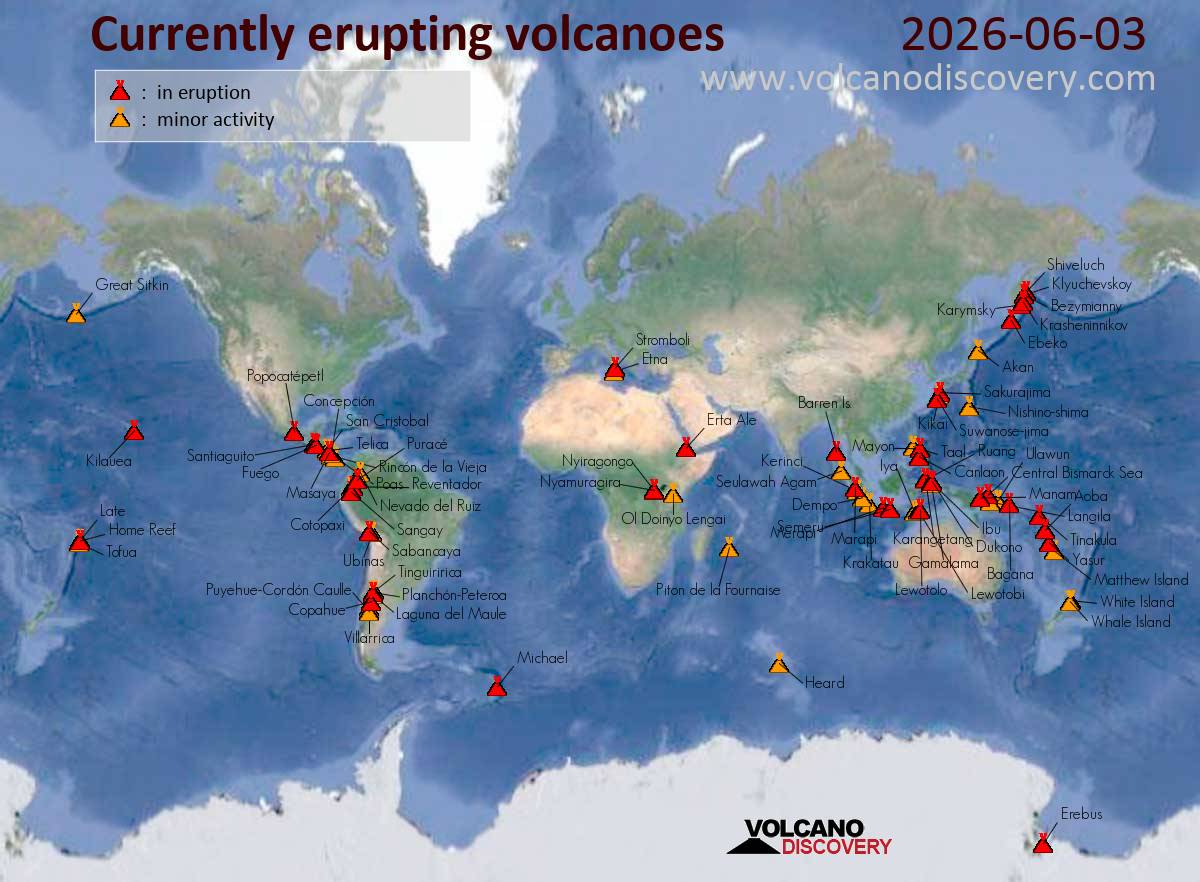
Global Volcanic Activity on June 3, 2026: A Closer Look at Eruptions and Monitoring Efforts
On June 3, 2026, the world’s volcanic monitoring systems registered heightened activity at several key volcanoes, including Fuego in Guatemala, Popocatépetl in Mexico, Semeru in Indonesia, Shiveluch in Russia, Ibu in Indonesia, and Dukono in the Pacific. These events highlight the ongoing interplay between geological forces and human populations, underscoring the importance of real-time surveillance, community preparedness, and scientific collaboration. While volcanic activity is a natural phenomenon, its impact on ecosystems, economies, and safety remains a critical concern for scientists and policymakers alike.
The Global Volcanic Landscape on June 3, 2026
On this date, multiple volcanoes displayed signs of unrest, with some erupting while others experienced increased seismicity or gas emissions. These events occurred across diverse tectonic settings, from the Pacific Ring of Fire to the Andes, reflecting the dynamic nature of Earth’s lithosphere. The activity on June 3, 2026, serves as a reminder of the planet’s geological vitality and the need for sustained monitoring to mitigate risks.
Among the most notable developments was the eruption of Fuego in Guatemala, which has historically been one of the most active volcanoes in Central America. Simultaneously, Popocatépetl, a towering stratovolcano near Mexico City, showed signs of increased activity, raising concerns for nearby communities. In Indonesia, Semeru, Ibu, and Dukono all exhibited heightened behavior, with ash plumes and lava flows reported. Meanwhile, Shiveluch in Russia’s Kamchatka Peninsula continued its long-term eruptive phase, adding to the global tally of active volcanic events.
Fuego Volcano: A Persistent Threat in Central America
Fuego, located in the Sierra Madre de Chiapas, has long been a focal point for volcanic monitoring due to its frequent eruptions and proximity to populated areas. On June 3, 2026, the volcano expelled ash clouds that reached 5,000 meters above sea level, prompting local authorities to issue alerts for nearby villages. Historical records show that Fuego’s eruptions have caused significant damage, including the 2018 event that claimed over 200 lives. The 2026 activity, while not as severe, underscores the need for continuous vigilance.
Geologists attribute Fuego’s activity to the subduction of the Cocos Plate beneath the Caribbean Plate, a process that fuels magma generation. The recent eruptions have been accompanied by pyroclastic flows and lahars, which pose risks to agricultural lands and water sources. Local communities, many of whom rely on farming, face challenges in balancing livelihoods with safety protocols.
Popocatépetl: A Volcano Near a Major Metropolis
Popocatépetl, often referred to as “the sleeping giant” by local residents, is one of the most dangerous volcanoes in the world due to its proximity to Mexico City. On June 3, 2026, the volcano emitted a plume of ash that drifted toward the southeast, leading to temporary flight diversions at Benito Juárez International Airport. Seismic sensors detected increased tremors, signaling the potential for more significant eruptions.
Popocatépetl’s activity is driven by the same tectonic dynamics that shape the Trans-Mexican Volcanic Belt. The volcano’s history includes major eruptions in 1994 and 2000, which forced evacuations of thousands. Scientists emphasize that while the 2026 activity does not yet indicate an imminent catastrophic event, the volcano’s unpredictable nature requires constant monitoring. Local authorities have reinforced emergency plans, including evacuation routes and communication systems, to protect the millions living within a 100-kilometer radius.
