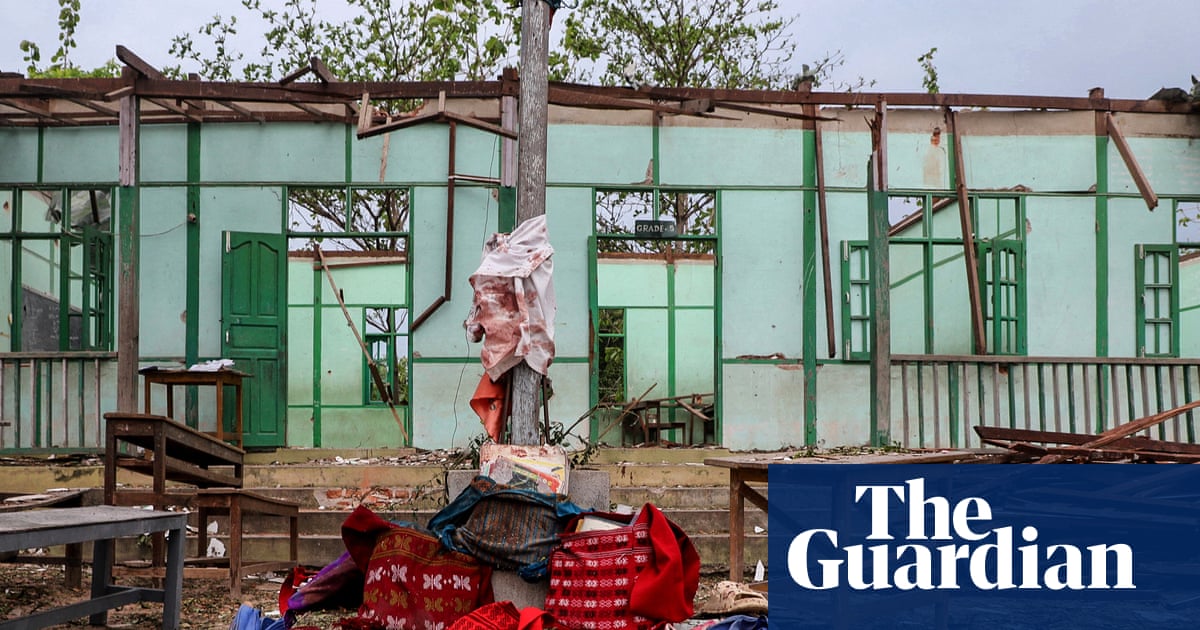
Global Attacks on Education, Pupils, and Staff Increase by 40%, Study Finds
Attacks on education, pupils, and staff around the world increased by 40%, according to a study reported by The Guardian. This surge includes direct violence against students and teachers, as well as the military occupation of school buildings, creating a global crisis in access to safe learning environments.
What drove the 40% increase in attacks on education?
The sharp rise in violence against educational institutions stems from a combination of escalating regional conflicts and a systemic disregard for the protected status of schools. According to the study, the increase is not limited to a single region but reflects a global trend where schools are increasingly viewed as strategic targets or tactical assets by armed groups and state militaries.
The data indicates that the nature of these attacks has evolved. While traditional bombing and shelling remain prevalent, there is a growing trend of “military use” of schools. This occurs when armed forces occupy classrooms to use them as barracks, weapon depots, or surveillance posts. Such occupations effectively turn schools into legitimate military targets under the laws of war, placing students and staff in the direct line of fire.
Key drivers of this trend include:
- Urban Warfare: As conflicts shift into densely populated cities, schools are often the largest and most sturdy buildings available, making them attractive for military occupation.
- Ideological Targeting: In several regions, education—particularly for girls—is viewed as a threat to extremist ideologies, leading to targeted attacks on teachers and pupils.
- Collapse of Local Governance: In “failed states” or regions with weak central authority, schools often lack the protection of law enforcement, leaving them vulnerable to raids and kidnappings.
Who is most affected by the surge in educational violence?
The victims of this 40% increase are primarily students and educators, but the impact extends to entire communities. Teachers are increasingly targeted for abduction or assassination to intimidate local populations and dismantle the social fabric of targeted regions.
Children bear the brunt of the physical violence. Beyond the immediate risk of death or injury from airstrikes and shelling, pupils face the psychological trauma of seeing their places of learning transformed into war zones. The study highlights that the loss of a school is rarely just a loss of a building; it is the loss of a safe haven, a nutrition center, and a primary source of psychological stability for displaced children.
The vulnerability varies by demographic:
- Girls: In specific conflict zones, girls face a double risk—the general danger of war and the specific targeting of their right to education.
- Displaced Pupils: Children in internally displaced persons (IDP) camps often attend makeshift schools that lack any formal protection or recognition, making them easy targets.
- Academic Staff: Educators are often targeted not just for their role in teaching, but for their influence as community leaders.
Where are these attacks occurring most frequently?
While the study notes a global increase, the violence is concentrated in “hotspots” where prolonged conflict and political instability overlap. These regions often see a cyclical pattern: attacks lead to school closures, which leads to increased child recruitment by armed groups, which further destabilizes the region.
Current high-risk areas identified in reporting on global education trends include:
- The Sahel Region: A surge in insurgent activity has led to the closure of thousands of schools through threats and direct attacks on staff.
- Ukraine and Gaza: These areas represent the most intense examples of infrastructure destruction, where schools have been systematically damaged or destroyed by heavy artillery and airstrikes.
- Sudan: The ongoing internal conflict has seen schools repurposed as military bases, rendering them unusable for education and dangerous for civilians.
- Myanmar: Reports indicate a pattern of targeting schools associated with ethnic minorities as part of broader military campaigns.
| Type of Attack | Primary Method | Immediate Impact |
|---|---|---|
| Direct Attack | Bombing, shelling, arson | Casualties, total infrastructure loss |
| Military Use | Occupation, barracks, depots | School closure, target for counter-attacks |
| Targeted Violence | Kidnapping, assassination | Teacher exodus, psychological terror |
Why does the military use of schools increase pupil risk?
The distinction between a “direct attack” and “military use” is critical to understanding why the risk to pupils has grown. Under International Humanitarian Law (IHL), schools are civilian objects and are protected from attack. However, if a military force uses a school for military purposes, that building may lose its protected status and become a legitimate military target.
According to the study, the 40% increase is heavily influenced by this “dual-use” phenomenon. When a school is occupied by soldiers, it ceases to be a sanctuary. Even if pupils are still attempting to attend classes in a different wing of the building, the presence of military assets makes the entire site a target for opposing forces.
This creates a “protection gap.” While governments may sign declarations to protect schools, the tactical reality on the ground often overrides these commitments. The result is a scenario where children are trapped between the forces occupying their school and the forces attacking it.
What are the long-term consequences of attacking education?
The impact of a 40% increase in attacks extends far beyond the immediate casualty count. Education experts warn of a “lost generation” in conflict-affected regions. When schooling is interrupted for years, the window for fundamental literacy and numeracy closes, making it nearly impossible for children to reintegrate into the workforce later in life.
The consequences can be broken down into three primary categories:
1. Socio-Economic Collapse
Education is the primary engine for economic mobility. The destruction of schools and the targeting of teachers remove the only pathway out of poverty for millions. This creates a vacuum that is often filled by illicit economies or organized crime.

2. Psychological Trauma and Radicalization
Schools provide more than just academics; they provide structure and social cohesion. The loss of this environment, coupled with the trauma of witnessing violence, makes children more susceptible to recruitment by armed groups. Militias often offer the “protection” and “belonging” that the destroyed school system can no longer provide.
3. Gender Inequality Gap
Attacks on education disproportionately affect girls. In many cultures, if a school is deemed “unsafe,” parents will prioritize the safety of their daughters by keeping them at home. This leads to a permanent drop in female literacy and an increase in early forced marriages, reversing decades of progress in gender equality.
For more on the systemic failures of international protection, see a related explainer on International Humanitarian Law.
How do international laws fail to protect pupils and staff?
Despite the existence of the Safe Schools Declaration—an intergovernmental political commitment to protect students, teachers, and schools from the effects of armed conflict—the 40% increase suggests a failure in enforcement. The Declaration is not a legally binding treaty, which means there are few consequences for states that violate its principles.
The study highlights a gap between “signature” and “action.” Many countries have signed the Safe Schools Declaration to improve their international image, yet their military forces continue to occupy schools in active conflict zones. This discrepancy creates a false sense of security and undermines the legitimacy of international norms.
Furthermore, the reporting of these attacks is often flawed. Many incidents go undocumented because local journalists are targeted or because governments restrict access to conflict zones. The 40% increase reported by the study may actually be a conservative estimate due to this lack of transparent data.
Comparing direct attacks vs. military occupation
To understand the complexity of the current crisis, it is necessary to contrast the two primary ways education is compromised. While both lead to school closures, their legal and tactical implications differ.

Direct attacks, such as the bombing of a school, are often clear-cut war crimes if the school was not being used for military purposes. These attacks are designed to terrorize the population or destroy the cultural identity of a group. In contrast, military occupation is often framed as a “necessity” of war. Commanders argue that there are no other secure buildings, effectively prioritizing tactical advantage over the fundamental right to education.
The study suggests that while direct attacks get more media attention, the “silent” occupation of schools is more pervasive and equally damaging. An occupied school is a dead school; it cannot function as a place of learning, and it remains a magnet for further violence.
Common misconceptions about attacks on education
There are several frequent oversimplifications regarding the violence targeting schools that the study helps correct.
- Misconception: “Schools are only attacked in ‘failed states’.”
Correction: The data shows that attacks are occurring in a wide variety of contexts, including conflicts involving major world powers and sophisticated state militaries. - Misconception: “The main issue is just the destruction of buildings.”
Correction: The loss of human capital—teachers and trained staff—is often more devastating. A building can be rebuilt in months, but a generation of teachers takes decades to train. - Misconception: “International law is sufficient to stop these attacks.”
Correction: While the laws exist, the lack of an enforcement mechanism means that schools are often treated as “collateral damage” without legal repercussions for the perpetrators.
Frequently Asked Questions
What is the Safe Schools Declaration?
The Safe Schools Declaration is an international political commitment aimed at protecting students, teachers, and schools from the effects of armed conflict. It encourages governments to avoid using schools for military purposes and to ensure that education continues during conflicts.
Why is the 40% increase in attacks significant?
A 40% increase indicates that the global environment for education is deteriorating rapidly. It suggests that previous international efforts to protect schools are failing and that educational infrastructure is becoming a primary target in modern warfare.
How does the military use of schools affect children’s rights?
The military use of schools violates the right to education and the right to safety. It transforms a civilian sanctuary into a military target, increasing the likelihood of children being killed or injured during counter-attacks.
Who is responsible for tracking these attacks?
Tracking is typically conducted by a mix of UN agencies, international NGOs (such as the Global Coalition to Protect Education from Attack), and local human rights monitors who document incidents on the ground.
What can be done to stop these attacks?
Experts suggest moving from voluntary declarations to binding legal treaties, increasing the use of international courts to prosecute those who target schools, and implementing stricter monitoring of military movements in urban areas.
The current trajectory of educational violence suggests that without a shift in how military forces operate in urban environments, the gap in global literacy and safety will continue to widen. The protection of schools is not merely a humanitarian concern but a prerequisite for long-term global stability and peace.
