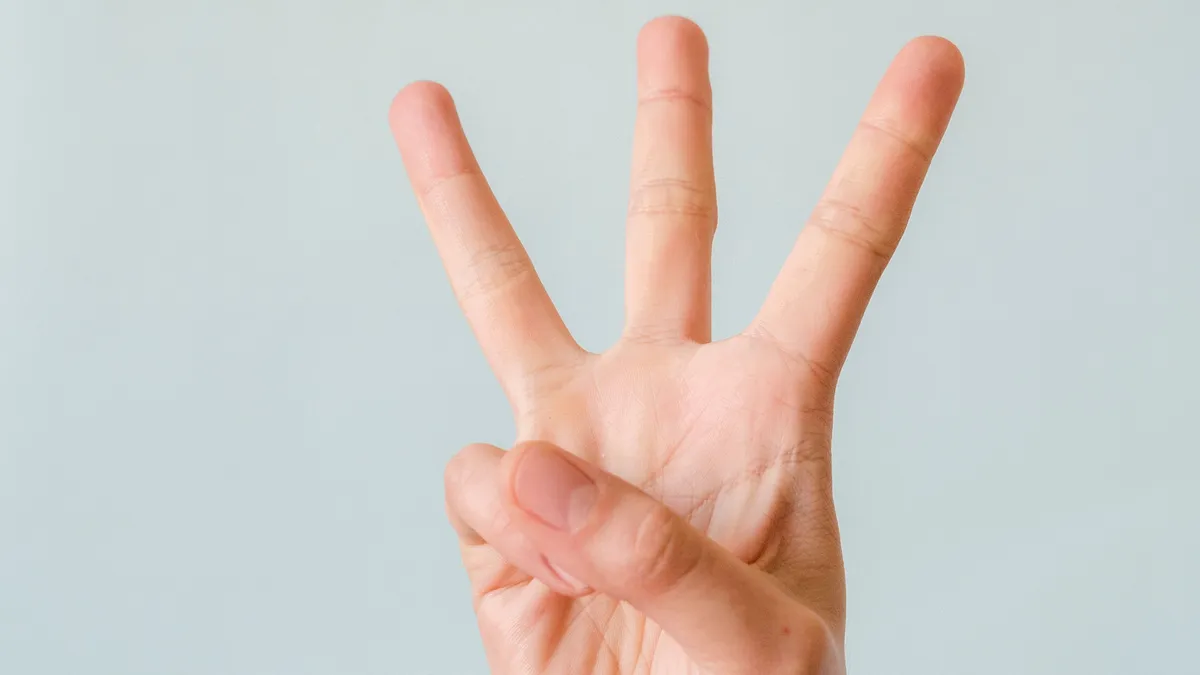
A social media trend utilizing a three-finger hand gesture has emerged as a grassroots method for identifying online scammers, according to local media reports. The technique targets the increasing prevalence of AI-generated profiles and “catfishing” schemes used in financial and romance fraud.
- The Method: Users request a real-time photo of a suspected scammer holding up three fingers to verify identity.
- AI Vulnerability: The trick exploits the known difficulty generative AI has in accurately rendering human hands and specific finger counts.
- Fraud Context: The trend responds to a rise in sophisticated digital deception, including investment and romance scams.
How the Finger-Verification Method Works
The verification process, which has gained traction on platforms like TikTok and Instagram, requires a user to ask a suspected fraudster for a specific, unplanned photograph. According to local media reports, the request typically involves the person holding up three fingers in a clear image.
The logic relies on the inability of scammers to produce such an image instantly. Fraudsters often use stolen galleries of photos or AI-generated imagery to create believable personas. While they may have hundreds of generic photos, they cannot produce a specific, custom gesture on demand without revealing their true identity or attempting to manipulate an image.
The Financial Impact of AI-Driven Fraud
This trend highlights a growing economic concern regarding digital trust and the “industrialization” of online scams. The reports link these deceptive practices to broader trends such as “pig butchering” scams—long-term confidence tricks where victims are lured into fake investment schemes—and romance fraud.

The proliferation of generative AI has lowered the cost for bad actors to create high-quality, fake identities. By using AI to generate photorealistic faces, scammers can bypass traditional visual red flags, making it harder for consumers to distinguish between legitimate business contacts or romantic interests and professional fraudsters.
Limits of Manual Verification
While the three-finger trick provides a quick layer of scrutiny, the effectiveness of manual verification is shifting as technology evolves. Local media reports suggest that while AI historically struggles with rendering human digits—often adding extra fingers or blurring joints—the gap is closing.
Security experts warn that relying solely on a single photo can be risky, as some sophisticated actors may use advanced editing software or “deepfake” tools to mimic specific gestures. However, the requirement for a real-time response remains a significant hurdle for most automated scam operations that rely on pre-recorded or pre-generated content.
