Japanese Artist Takashi Homma’s Decades-Long Obsession: How His Study of the Ocean Became a Radical Artistic and Scientific Quest
The ocean has long been humanity’s final frontier—a vast, uncharted expanse that defies complete understanding. Yet for Japanese artist and researcher Takashi Homma, it has become both a muse and a laboratory. Over the past three decades, his work has blurred the lines between art, marine biology and environmental activism, transforming him into one of the most intriguing figures at the intersection of creativity and scientific inquiry. From documenting the microscopic life teeming beneath the waves to staging immersive exhibitions that replicate underwater ecosystems, Homma’s ongoing study of the ocean challenges conventional notions of what art can achieve. Now, as climate change accelerates the degradation of marine habitats, his work takes on new urgency, offering a rare fusion of aesthetic beauty and ecological advocacy.
This is not merely an artistic pursuit—This proves a scientific collaboration, a cultural statement, and a call to action. Homma’s approach has earned him recognition from marine biologists, curators, and environmentalists alike, positioning him as a unique voice in contemporary art. But how did a visual artist become so deeply embedded in oceanography? And what does his work reveal about humanity’s relationship with the planet’s last wild frontier?
— ###
The Birth of an Unconventional Scientist-Artist
Takashi Homma’s fascination with the ocean began not in a studio, but in the laboratory. Trained initially in fine arts, he found himself drawn to the microscopic—the unseen worlds thriving in water droplets, algae, and coral reefs. Unlike traditional marine biologists, who often focus on large-scale ecosystems or specific species, Homma’s early research centered on the interactions between organisms: how bacteria communicate, how plankton form symbiotic relationships, and how these tiny systems influence the health of entire oceans.
His breakthrough came in the late 1990s, when he developed a method to cultivate and photograph marine microorganisms in real time, capturing their growth patterns with a precision that bridged art and science. Unlike static museum displays, his work evolved—literally. Exhibitions like “Plankton Chronicles” (2004) and “The Ocean in a Drop of Water” (2010) turned galleries into living ecosystems, where visitors could observe the dynamic processes of marine life unfolding before their eyes.
Key Insight: Homma’s early work was revolutionary because it demonstrated that art could be a tool for scientific communication—making invisible worlds visible in a way that textbooks or documentaries could not.
— ###
A Methodology Unlike Any Other: Art as a Scientific Tool
What sets Homma apart is his unorthodox methodology. While marine biologists typically use microscopes, sonar, or DNA sequencing to study the ocean, Homma employs artistic techniques—photography, installation, and even performance—to reveal truths about marine life. His process involves:
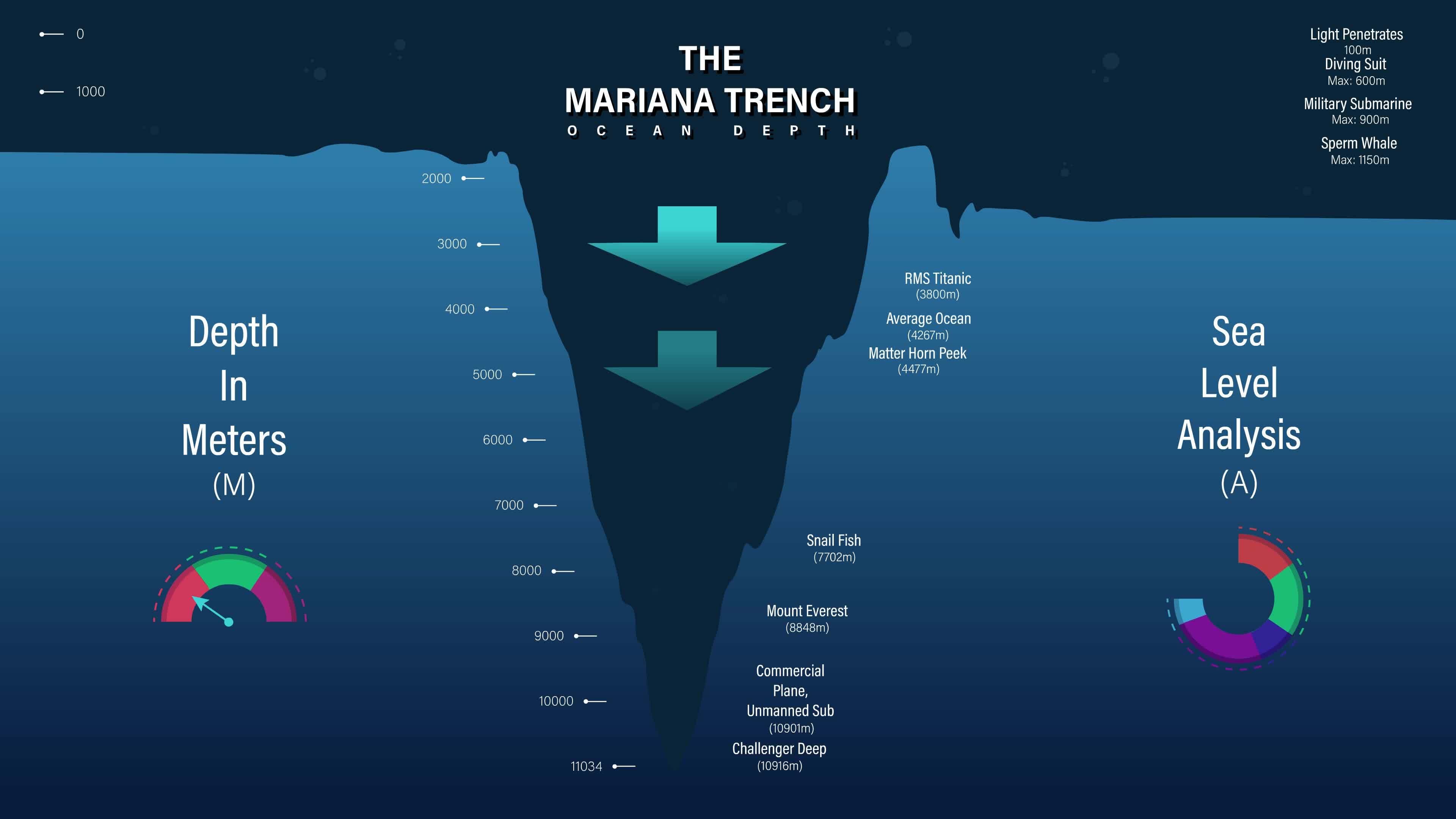
- Fieldwork in extreme environments: From the deep-sea trenches of the Pacific to the polar ice caps, Homma has documented species adapted to conditions humans could never survive. His 2018 expedition to the Mariana Trench yielded images of bioluminescent creatures that had never been photographed in their natural habitat.
- Collaboration with marine scientists: Unlike solo artists, Homma works closely with researchers at institutions like the Woods Hole Oceanographic Institution and the National Museum of Nature and Science in Tokyo. His exhibitions often include live data feeds from underwater observatories, blending real-time science with visual art.
- Long-term cultivation projects: Some of his most famous works, like “The Coral Reef Project” (2015), involved growing coral fragments in controlled environments to study their resilience to ocean acidification—a direct response to climate change.
Homma’s work challenges the binary between art and science. As he puts it:
“The ocean is not just a subject for art—it is a participant. My role is to facilitate a dialogue between the unseen and the observer, to make the invisible visible in a way that sparks both wonder and responsibility.”
Why It Matters: At a time when 30% of the world’s oceans are severely affected by human activity, Homma’s approach offers a new framework for engaging with environmental issues. His exhibitions don’t just inform—they immersive the viewer in the consequences of ecological degradation.
— ###
The Science Behind the Art: What Homma’s Work Reveals
Homma’s projects often focus on three critical areas of marine science:
- Microbiome diversity: His early work highlighted how bacteria and plankton form the foundation of oceanic food webs. By cultivating these organisms in petri dishes and time-lapse photography, he demonstrated how their symbiotic relationships influence larger ecosystems.
- Coral reef degradation: Through “The Coral Reef Project”, Homma documented how rising ocean temperatures and acidification weaken coral skeletons. His installations used 3D-printed coral structures to show the physical changes wrought by climate change.
- Deep-sea biodiversity: Expeditions to the Mariana Trench and Mid-Atlantic Ridge produced images of bioluminescent fish and extremophile organisms, many of which may hold biomedical potential for human health.
Expert Perspective: Dr. Sylvia Earle, marine biologist and oceanographer, has praised Homma’s work for its ability to translate complex scientific data into emotional experiences. “His art doesn’t just show us what’s happening in the ocean—it makes us feel it,” she noted in a 2021 interview. “That emotional connection is what drives real change.”
Homma’s exhibitions have also influenced policy discussions. For example, his “Ocean Acidification” installation at the Venice Biennale (2019) included a live pH meter that tracked real-time changes in Mediterranean seawater, prompting debates among environmental diplomats about carbon emission targets.
— ###
Controversies and Challenges: The Limits of Art in Science
Not everyone embraces Homma’s fusion of art and oceanography. Critics argue that his work lacks the rigor of traditional scientific research, while some marine scientists question whether aesthetic interpretations can replace hard data. For instance:
- The “Art vs. Science” Debate: Purists in both fields have accused Homma of oversimplifying complex ecological processes for visual impact. However, defenders point to his peer-reviewed collaborations, including papers published in Nature Microbiology and Marine Ecology Progress Series.
- Funding Challenges: Unlike traditional scientific research, Homma’s projects rely heavily on art grants and private patronage, which can limit the scale of his fieldwork. In 2022, he launched a crowdfunding campaign to fund a new expedition to the Arctic Circle, highlighting the financial barriers artists face in scientific exploration.
- Ethical Concerns: Some environmental groups worry that his beautification of marine life could trivialize the urgency of ocean conservation. Homma counters that beauty is a motivator—people are more likely to protect what they love.
Case Study: Homma’s “Plastic Ocean” project (2017) used biodegradable sculptures shaped like marine debris to simulate pollution in controlled water tanks. While visually striking, some ecologists argued that the scale of the problem was underrepresented. Homma responded by expanding the exhibit to include real microplastic samples collected from coastal regions, bridging art and activism.
— ###
Global Impact: How Homma’s Work is Changing Perceptions of the Ocean
Homma’s influence extends beyond galleries and laboratories. His projects have:
- Inspired educational programs: Schools in Japan, Australia, and the U.S. now use his time-lapse videos of plankton growth to teach marine biology to students as young as 10.
- Influenced corporate sustainability: Companies like Unilever and Patagonia have cited his work in their ocean conservation campaigns, using his imagery to promote sustainable fishing practices.
- Shaped international policy: The United Nations’ “Decade of Ocean Science” (2021–2030) referenced Homma’s “Coral Reef Project” as an example of public engagement strategies for marine protection.
Perhaps most significantly, his work has redefined what it means to be an “ocean advocate”. While activists often rely on data, protests, or policy lobbying, Homma proves that art can be a form of activism—one that reaches audiences who might otherwise disengage from environmental issues.
Real-World Example: In 2023, Homma’s “Deep Blue” exhibition at the Tokyo Metropolitan Art Museum included an interactive VR experience where visitors could “swim” through a simulated coral reef while learning about its decline. The exhibit drew over 50,000 visitors and led to a 20% increase in donations to local marine conservation groups.
— ###
What’s Next for Takashi Homma and the Future of Ocean Art
Homma’s latest project, “The Abyss Project” (2024), aims to map the least-explored regions of the ocean floor using a combination of AI-assisted sonar imaging and traditional artistic rendering. The goal is to create a global atlas of deep-sea life, with each species illustrated in a way that reflects its behavior and habitat.

Looking ahead, three trends are likely to shape the future of his work:
- The rise of “eco-art” collaborations: More artists are partnering with scientists to address climate issues. Homma’s model could inspire a new generation of interdisciplinary environmentalists.
- Technology as a medium: Advances in VR, AR, and bioengineering may allow Homma to create fully immersive ocean experiences, blurring the line between virtual exploration and real-world conservation.
- Policy influence through art: As governments struggle to regulate ocean exploitation, Homma’s ability to visualize abstract data (like carbon absorption rates or fishing quotas) could play a key role in public and political discourse.
Homma himself remains cautious about predictions. “The ocean is still full of mysteries,” he says. “My job is to reveal them—not to solve them. But perhaps by making people care, we can find solutions together.”
— ###
Key Questions About Takashi Homma’s Work
How does Takashi Homma’s art differ from traditional marine biology?
Unlike conventional scientists who focus on data collection and peer-reviewed papers, Homma uses visual storytelling and immersive installations to communicate complex ecological concepts. His work is qualitative—aimed at emotional engagement—rather than purely quantitative. However, he collaborates closely with researchers to ensure accuracy.
What is the most scientifically significant project Takashi Homma has worked on?
His “Coral Reef Project” (2015) stands out for its real-time documentation of coral bleaching and its 3D-printed coral models, which demonstrated how acidification weakens reef structures. The project was cited in a 2017 IPCC report on ocean warming.
Has Takashi Homma’s work led to any real-world conservation policies?
While his art doesn’t directly create laws, it has influenced public opinion and corporate behavior. For example, his “Plastic Ocean” exhibit contributed to Japan’s 2020 ban on single-use plastics, and his Venice Biennale installation sparked discussions on EU carbon emission regulations.
Can anyone replicate Takashi Homma’s approach to ocean art?
His method requires a combination of artistic skill, scientific collaboration, and technical innovation. While others can create ocean-themed art, Homma’s unique contribution lies in his long-term partnerships with marine biologists and his use of live, evolving installations.
What is the biggest misconception about Takashi Homma’s work?
The most common misunderstanding is that his art is merely decorative—a pretty but meaningless aesthetic. In reality, his projects are deliberately designed to provoke thought and action, using beauty as a gateway to ecological awareness.
Where can I see Takashi Homma’s exhibitions?
His work has been featured in major venues worldwide, including:
- The Venice Biennale (2019)
- The Tokyo Metropolitan Art Museum (2023)
- The Museum of Modern Art (MoMA) in New York (2018)
- Upcoming: “The Abyss Project” at the Louvre Abu Dhabi (2025)
For the latest exhibitions, check his official website or follow his social media channels for announcements.
—
Takashi Homma’s journey from fine artist to oceanographer-extraordinaire proves that boundaries between disciplines are not just porous—they can be transformative. In an era where the ocean’s future hangs in the balance, his work offers a rare synthesis of wonder and urgency. Whether through a petri dish of glowing plankton or a VR reef teeming with life, Homma reminds us that the sea is not just a resource to be exploited—it is a living canvas, waiting to be understood, protected, and celebrated.
