Future Astronauts Could Walk Across Rocks From Deep Inside the Moon
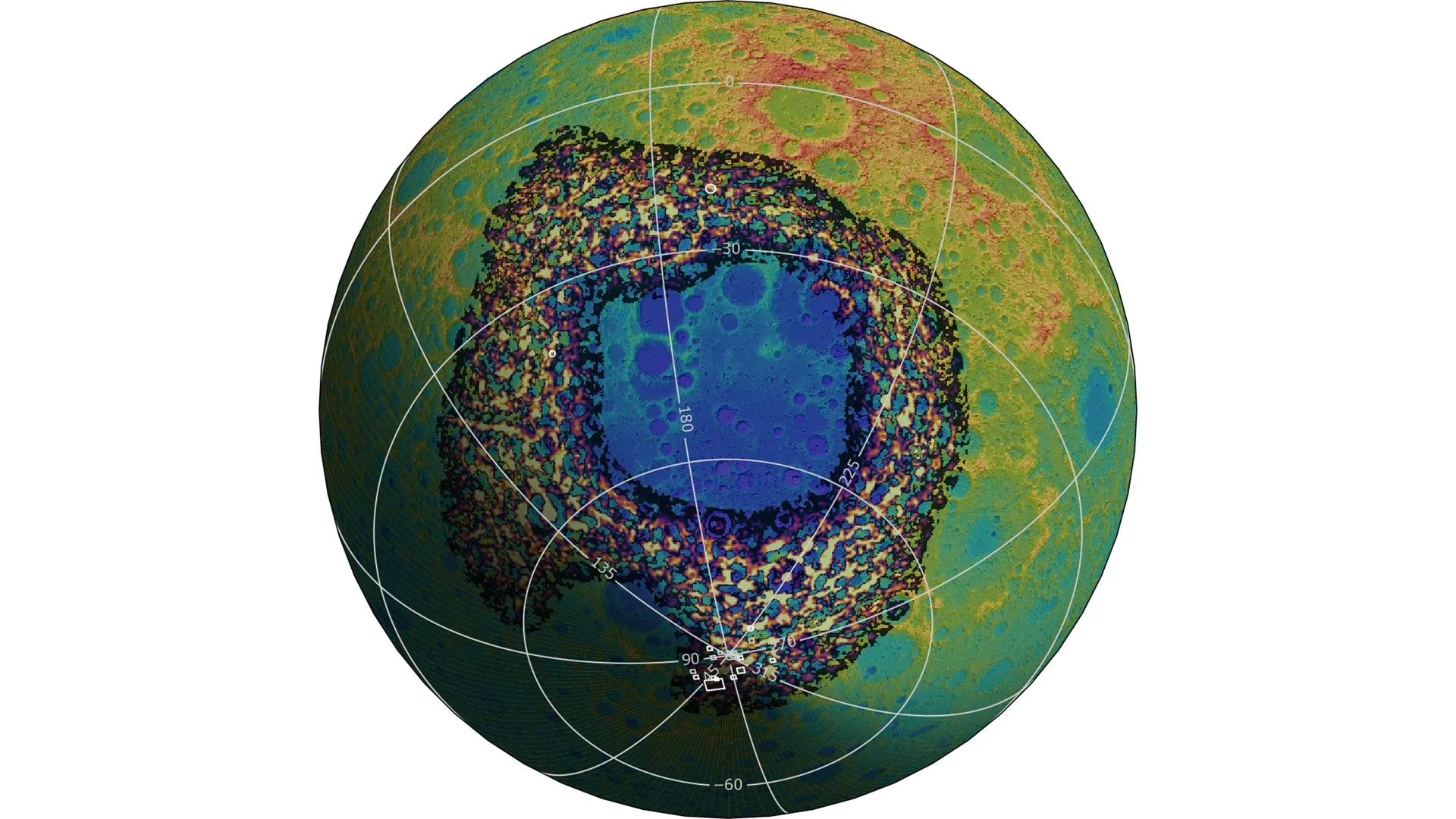
Recent discoveries of a massive underground structure beneath the Moon’s South Pole-Aitken basin have sparked renewed interest in lunar exploration, with scientists suggesting that future astronauts might traverse ancient rock formations hidden deep within the Moon’s crust. The findings, based on data from multiple space agencies and independent research teams, highlight the potential for groundbreaking missions to the lunar south pole, a region now seen as a critical hub for understanding the Moon’s geological history and future human presence.
Unveiling the Hidden Lunar Landscape
Researchers analyzing seismic data and orbital imagery have identified a vast, layered structure beneath the South Pole-Aitken basin, one of the largest and oldest impact craters in the solar system. This subterranean formation, estimated to extend several kilometers below the surface, contains rock types that differ significantly from the Moon’s typical regolith. According to a report by the European Space Agency (ESA), the structure’s composition suggests it formed during the Moon’s early history, possibly from the remnants of a massive asteroid collision or internal volcanic activity.

The discovery was corroborated by data from NASA’s Lunar Reconnaissance Orbiter (LRO) and Japan’s Kaguya mission, which detected anomalies in the basin’s gravitational field and mineral distribution. “These findings challenge previous assumptions about the Moon’s internal architecture,” said Dr. Elena Martinez, a planetary geologist at the Lunar Science Institute. “If we can access these deep rock layers, they could offer a window into the Moon’s formation and the early solar system.”
The Artemis Program and the Race to the Lunar South Pole
The Artemis missions, spearheaded by NASA with international collaboration, have set their sights on the Moon’s south pole as a primary target for human exploration. This region, permanently shadowed in some areas and rich in water ice, is considered a strategic location for establishing a sustainable lunar presence. However, the recent discovery of the underground structure adds a new dimension to the scientific value of the area.
“The South Pole-Aitken basin is not just a site for resource extraction,” explained Dr. James Carter, a mission planner for the Artemis program. “It’s a geological treasure trove. The rocks beneath the surface could reveal insights into the Moon’s volcanic history and the processes that shaped its surface over billions of years.”
NASA’s recent analysis of the lunar south pole identified nine potential landing sites, each offering unique scientific opportunities. These regions, spanning a total area of less than 100 square kilometers—comparable to a few city blocks—have drawn intense scrutiny from scientists and engineers. “The concentration of high-priority sites reflects the region’s immense scientific potential,” said a spokesperson for the agency. “Every square meter here is a candidate for discovery.”
Implications for Lunar Exploration and Beyond
The presence of deep-seated rock formations raises questions about the feasibility of accessing these layers. Current robotic missions, such as the Lunar Reconnaissance Orbiter and the upcoming VIPER rover, are equipped to map the surface and analyze shallow subsurface materials. However, extracting samples from kilometers below the surface would require advanced drilling technologies and new approaches to lunar excavation.
Experts suggest that future missions might employ autonomous drilling systems or use seismic waves to “listen” to the Moon’s interior. “If we can develop tools to probe these depths, we could unlock a wealth of information,” said Dr. Aisha Patel, a geophysicist at the Jet Propulsion Laboratory. “This isn’t just about the Moon—it could inform our understanding of other celestial bodies, like Mars or Mercury.”
The discovery also has implications for the long-term sustainability of lunar bases. Water ice deposits in the south pole’s shadowed craters are seen as a critical resource for life support and fuel production. However, the presence of deep rock formations could complicate mining operations or provide new materials for construction. “We need to balance scientific curiosity with practical considerations,” said Dr. Carter. “Every mission must weigh the risks and rewards of exploring these uncharted depths.”
Challenges and Opportunities for International Collaboration
The exploration of the Moon’s south pole is a global endeavor, involving space agencies from the United States, Europe, China, and Japan. Each nation brings unique expertise and resources to the table, but the complexity of the region demands unprecedented cooperation. “This is a moment where international collaboration can set a precedent for future space exploration,” said Dr. Martinez. “The Moon is no longer just a destination—it’s a shared laboratory.”
China’s Chang’e program, for example, has already launched missions to the lunar far side and is planning a sample return from the south pole. Meanwhile, the European Space Agency and NASA are working on joint initiatives to develop lunar habitats and scientific instruments. “The key is to avoid duplication of efforts and focus on complementary goals,” said Dr. Patel. “By pooling resources, we can accelerate progress and reduce costs.”
What’s Next for Lunar Exploration?
As the Artemis program progresses, the focus will shift from orbiting surveys to surface operations. The first crewed missions to the Moon’s south pole are expected to occur in the mid-2020s, with plans for a permanent research base by the 2030s. These missions will prioritize both scientific research and the testing of technologies needed for deep-space exploration, including Mars.
The discovery of the underground structure underscores the need for careful planning. “We must ensure that our activities do not disrupt the integrity of these ancient formations,” said Dr. Carter. “The Moon’s geological record is fragile, and we have a responsibility to preserve it for future generations.”
For now, the scientific community remains focused on analyzing data and refining mission strategies. As Dr. Martinez noted, “Every new finding brings us closer to answering fundamental questions about our solar system. The Moon’s hidden depths may hold the keys to understanding not just our nearest celestial neighbor, but the origins of the universe itself.”
Frequently Asked Questions
What is the South Pole-Aitken basin, and why is it significant?
The South Pole-Aitken
