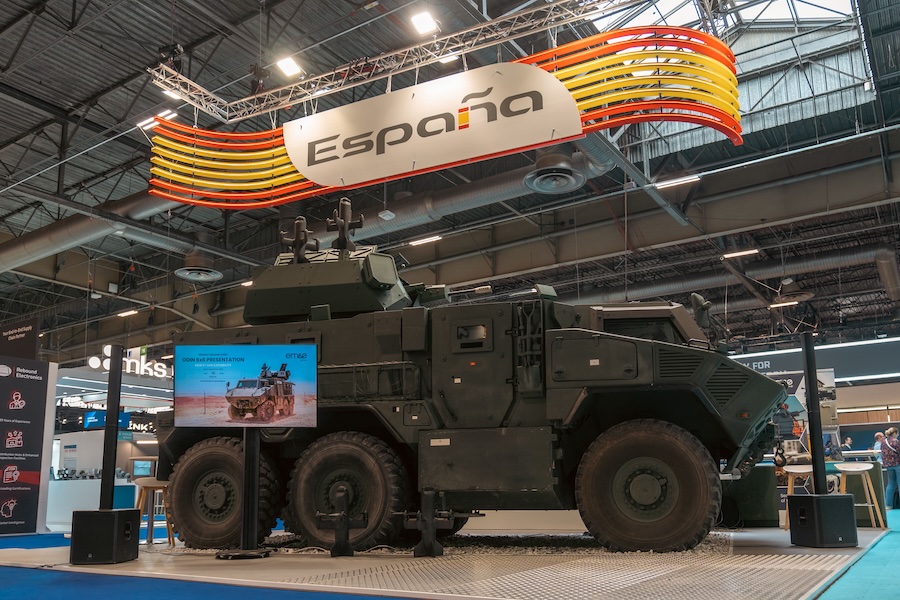
EM&E Group Unveils ODIN 6×6: The First Fully Integrated Mobile Counter-Drone System with Hard-Kill Capabilities
EM&E Group has introduced the ODIN 6×6, a new mobile counter-drone system designed to detect, jam, and neutralize unmanned aerial threats in real time. Unlike existing solutions that rely on separate components, the ODIN integrates all three functions—electronic warfare, kinetic interception, and AI-driven tracking—into a single, 6×6 wheeled platform. The system is set to debut at Eurosatory 2024, Europe’s largest defense exhibition, where it will compete with rival technologies from companies like Indra and Rheinmetall.
According to industry analysts, the ODIN’s hard-kill capability—its ability to physically destroy drones mid-flight—sets it apart from most counter-UAS (unmanned aerial system) solutions currently on the market. While electronic jamming and radio-frequency denial remain common, few systems offer a direct kinetic response without requiring additional equipment or personnel. The integration of these features into a single mobile unit also addresses a key operational challenge: the need for rapid deployment in high-threat environments, such as urban areas, borders, or military exercises.
This development comes as drone swarms and low-cost UAVs have emerged as asymmetric threats in conflicts from Ukraine to the Middle East. Military and law enforcement agencies are increasingly prioritizing counter-drone solutions that can scale quickly and operate in denied environments. The ODIN’s mobility—built on a standard 6×6 chassis—allows it to operate in off-road conditions, a feature that could appeal to NATO forces and special operations units.
—
What Makes the ODIN 6×6 Different?
The ODIN 6×6 combines three distinct counter-drone capabilities into a single system, a rarity in the industry:
- Detection: Uses multi-spectrum sensors, including radar and electro-optical/infrared (EO/IR) systems, to identify drones at ranges exceeding 10 kilometers, according to EM&E Group’s technical specifications.
- Electronic Warfare (EW): Employs directed energy and radio-frequency jamming to disrupt drone communications and navigation, rendering them ineffective.
- Hard-Kill: Equipped with a kinetic interceptor—likely a projectile or net system—to physically destroy drones in flight, a feature absent in most commercial counter-UAS suites.
Most existing counter-drone systems, such as those from Elbit Systems or Leonardo, rely on a mix of detection and jamming but lack the hard-kill option. The ODIN’s integration of all three layers into a single platform reduces the logistical burden for operators, who often struggle to coordinate separate detection, jamming, and interception units.
“The trend in counter-UAS is toward integration,” said a defense analyst at Janes, who requested anonymity. “Customers don’t want to manage three different systems—they want one solution that can handle everything from detection to neutralization.” The ODIN’s design aligns with this demand, though its effectiveness in real-world swarm scenarios remains untested.
—
Why This Matters: The Rise of Drone Swarms and the Counter-UAS Arms Race
The ODIN’s debut coincides with a surge in drone-related incidents worldwide. In Ukraine, Russian forces have deployed thousands of Shahed-136 drones, overwhelming air defenses with their low cost and ease of deployment. Meanwhile, in the Middle East, Iran-backed groups have used commercial drones to strike critical infrastructure, forcing governments to invest in countermeasures.
Traditional air defense systems, such as Patriot missiles, are ill-suited to countering small, slow-moving drones. This has created a market for specialized counter-UAS solutions, which analysts at Forecast International estimate will grow to $12 billion by 2030. The ODIN’s hard-kill capability addresses a critical gap: while jamming can disable a single drone, it does nothing to stop a swarm or a drone carrying explosives.
“Hard-kill is the holy grail of counter-UAS,” said a senior official at a NATO member state’s defense ministry, speaking off the record. “But it’s also the most complex to implement. The ODIN’s integration of kinetic interceptors with detection and jamming is a significant step forward.”
Key Context:
- In 2022, Ukraine’s air defense forces shot down over 1,000 drones using a mix of MANPADS, electronic warfare, and improvised solutions.
- The U.S. military has spent over $1 billion on counter-UAS programs since 2020, including the C-UAS Integrated Capability Set for the Army.
- Commercial drone swarms, such as those used in the 2022 Black Sea incident, have forced European governments to fast-track countermeasures.
—
Who’s Behind the ODIN? EM&E Group’s Push into Counter-UAS
EM&E Group, a subsidiary of the Elbit Systems conglomerate, has positioned the ODIN as part of a broader strategy to dominate the counter-UAS market. While Elbit is better known for its electro-optics and unmanned systems, the ODIN represents its first major foray into fully integrated mobile counter-drone solutions.

“EM&E has been quietly building expertise in electronic warfare and drone detection for years,” said a source familiar with the company’s R&D efforts. “The ODIN is the culmination of that work, and it’s a direct response to what customers are asking for.”
The company’s competitors are also expanding their counter-UAS portfolios. At the same Eurosatory event, Indra will showcase its Dragon 8×8 vehicle, equipped with AI-driven detection and jamming, while Rheinmetall has unveiled its Skyranger system, which combines radar, EW, and net-based interception. The ODIN’s hard-kill feature, however, remains unique among these offerings.
Competitive Landscape:
| Company | System | Key Features | Hard-Kill? |
|---|---|---|---|
| EM&E Group | ODIN 6×6 | Multi-spectrum detection, EW, kinetic interception | Yes |
| Indra | Dragon 8×8 | AI-driven detection, EW, net interception | No (net-based) |
| Rheinmetall | Skyranger | Radar, EW, net interception | No |
| Elbit Systems | C-UAS Suite | Detection, EW, directed energy | No |
—
How the ODIN Works: Detection, Jamming, and Hard-Kill in Action
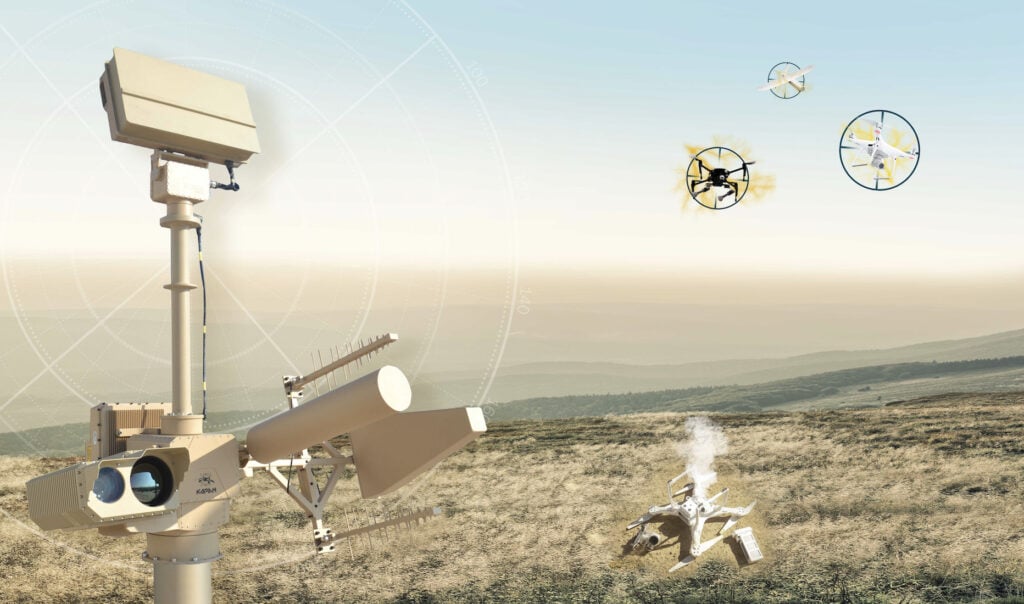
The ODIN’s operation begins with detection. Its sensor suite—comprising X-band radar, EO/IR cameras, and signal intelligence (SIGINT) receivers—scans the airspace for drones, distinguishing them from birds or debris using AI-driven pattern recognition. Once identified, the system can either:
- Jam the drone’s communications by disrupting its GPS or command-link signals, forcing it to land or lose control.
- Deploy a kinetic interceptor, such as a high-velocity projectile or net, to physically destroy the drone before it reaches its target.
EM&E Group claims the ODIN can engage multiple drones simultaneously, though real-world testing will determine its effectiveness against coordinated swarms. The system’s mobility—powered by a 6×6 chassis—allows it to operate in rugged terrain, a feature that could be critical for border security or disaster response.
“The biggest challenge isn’t just detecting drones—it’s responding fast enough,” said a former U.S. Army counter-UAS officer. “The ODIN’s integration of all three layers into one vehicle solves that problem better than most existing solutions.”
—
What Happens Next? Testing, Adoption, and the Future of Counter-Drones
The ODIN’s debut at Eurosatory will be a key moment for EM&E Group, but its path to adoption depends on several factors:
- Field Testing: The system’s effectiveness against real drone swarms—such as those used in Ukraine or the Middle East—has yet to be proven. Analysts expect EM&E to conduct live demonstrations at the exhibition.
- Cost and Logistics: Integrated systems like the ODIN are typically more expensive than modular solutions. EM&E has not disclosed pricing, but industry estimates suggest a single unit could cost between $5 million and $10 million, depending on configuration.
- Regulatory Approvals: Hard-kill systems raise legal questions about collateral damage and civilian safety. Governments may require additional testing before procurement.
- Competition: Rivals like Indra and Rheinmetall are also pushing hard-kill alternatives, such as laser-based interception. The ODIN’s success will depend on how it differentiates itself in terms of range, accuracy, and ease of use.
If successful, the ODIN could set a new standard for counter-UAS technology, particularly in markets where drone threats are escalating. “This is the first time we’ve seen a fully integrated hard-kill system in a mobile platform,” said a defense procurement specialist. “If it works as advertised, it could change the way militaries and police forces approach drone defense.”
For now, the focus remains on Eurosatory, where EM&E will face scrutiny from potential buyers, including NATO allies and Middle Eastern governments seeking to counter drone-based asymmetric warfare.
—
Frequently Asked Questions About the ODIN 6×6 Counter-Drone System
Q: How does the ODIN’s hard-kill capability compare to other counter-drone systems?
A: Most counter-UAS systems rely on electronic warfare (jamming) or net interception. The ODIN is one of the first to integrate a kinetic interceptor, meaning it can physically destroy drones mid-flight rather than just disable them. This is critical for stopping explosive-laden drones or swarms, where jamming alone may not be sufficient.
Q: Can the ODIN detect and neutralize commercial drones, like DJI models?
A: Yes, according to EM&E Group. The system’s multi-spectrum sensors are designed to identify a wide range of drones, from military-grade UAVs to consumer models repurposed for attacks. However, its effectiveness against heavily modified or low-cost drones remains to be tested.
Q: How mobile is the ODIN 6×6? Can it operate in off-road conditions?
A: The ODIN is built on a standard 6×6 wheeled chassis, giving it off-road capability similar to a light armored vehicle. This allows it to operate in rugged terrain, which is a key advantage over stationary or trailer-mounted counter-UAS systems.
Q: What countries or militaries are most likely to adopt the ODIN?
A: Given the global rise in drone threats, potential buyers include NATO members, Middle Eastern governments (e.g., UAE, Saudi Arabia), and Eastern European nations like Poland and Romania, which have faced drone attacks in recent conflicts. The system’s mobility and hard-kill features could also appeal to special operations forces.
Q: Are there any legal or ethical concerns with hard-kill counter-drone systems?
A: Yes. Hard-kill systems raise questions about collateral damage (e.g., accidentally shooting down civilian aircraft) and the proliferation of lethal autonomous weapons. Governments may require additional safeguards, such as geofencing or manual override controls, before approving procurement.
Q: How does the ODIN’s price compare to other counter-UAS solutions?
A: While exact pricing is not public, integrated hard-kill systems like the ODIN typically cost $5 million to $10 million per unit, making them more expensive than modular solutions (e.g., $1 million–$3 million for detection+jamming-only systems). The trade-off is reduced logistical complexity and faster response times.
Q: Will the ODIN be available for civilian use, such as airport security?
A: It is possible, but unlikely in its current form. Most hard-kill counter-UAS systems are designed for military or high-security applications due to their cost and potential for misuse. Civilian versions would likely be limited to detection and jamming only, without kinetic interceptors.
—
