
Dublin’s Dolphin House Regeneration Crisis: How Years of Delays Are Shattering Resident Trust in Urban Renewal
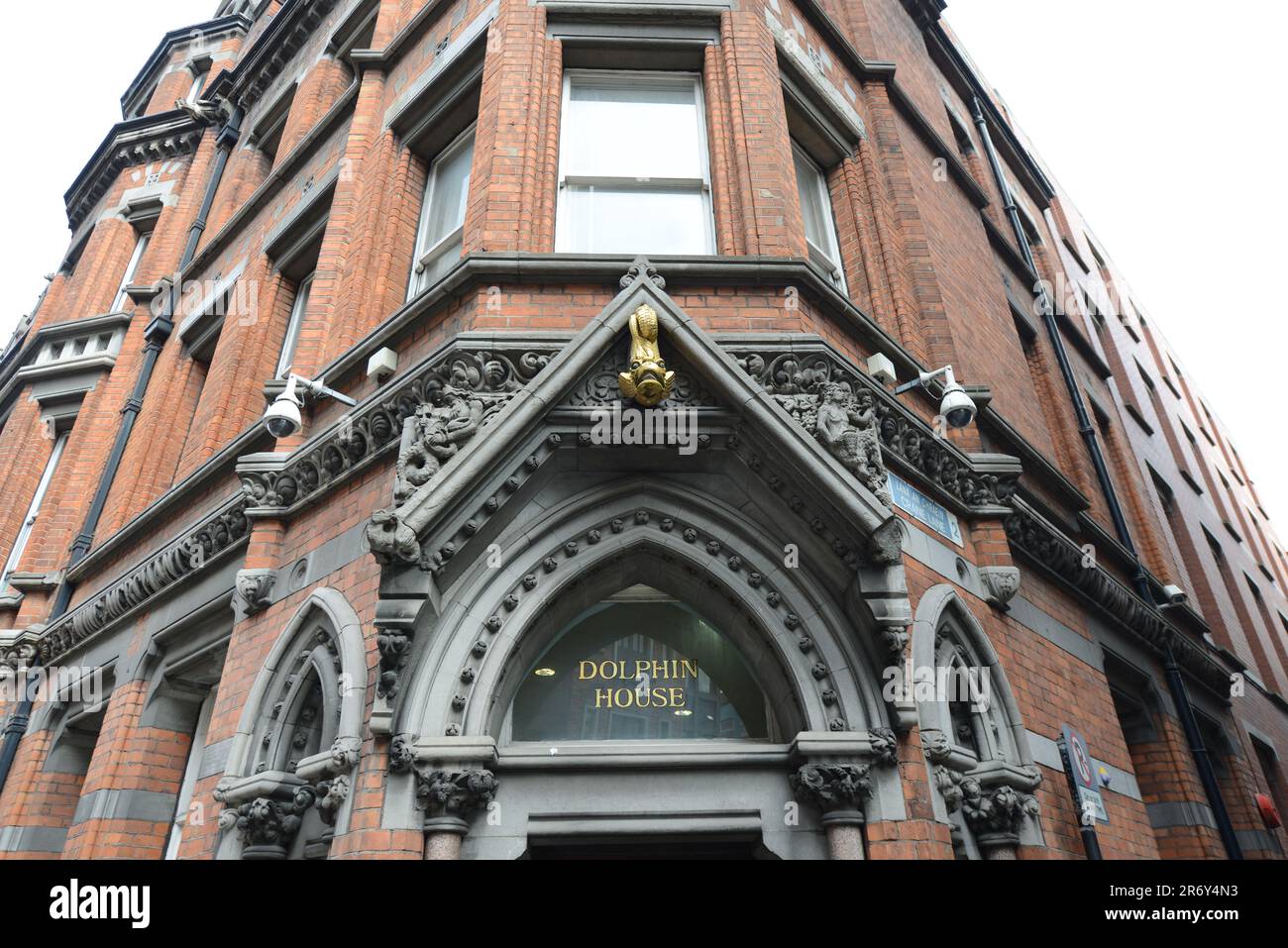
For years, the promise of a vibrant new community at Dolphin House in Dublin’s docklands has been the lifeline for hundreds of residents displaced by redevelopment. But as construction deadlines slip by another six months—and with no clear end in sight—the project has become a cautionary tale about the human cost of stalled urban regeneration. Frustration has hardened into a sense of powerlessness, with tenants reporting deteriorating mental health, financial strain from extended rent payments and a growing distrust in the city’s ability to deliver on its commitments.
This isn’t just a story about missed timelines. It’s about the erosion of faith in Dublin’s approach to large-scale housing projects, where bureaucratic hurdles, funding uncertainties, and shifting political priorities leave ordinary people caught in the crossfire. At stake is more than just a building: it’s the future of how Dublin rebuilds its neighborhoods—and whether residents will ever feel secure in their own homes again.
With construction now over two years behind schedule and no firm completion date announced, questions are mounting about whether Dolphin House will ever become the mixed-income housing hub it was promised. For those living in temporary accommodation, the psychological toll is acute. “We’ve been told to be patient, but patience has limits,” says one resident, who has spent nearly four years in a cramped apartment while the project languishes. “When will we stop being treated like an afterthought?”
— ###
The Project That Never Ends: A Timeline of Broken Promises
The Dolphin House regeneration was supposed to be a flagship example of Dublin’s post-2008 recovery—a $200 million (€185 million) transformation of a derelict 1970s office block into 250 modern apartments, social housing, and commercial spaces. The vision was ambitious: a model for how Dublin could repurpose its waterfront while addressing its housing crisis.
But from the outset, the project was plagued by what insiders describe as a “perfect storm” of miscalculations. Here’s how it unraveled:
- 2015–2016: The Hype Phase
- Dublin City Council and the developer, Urban Docklands Ltd, announced plans to turn Dolphin House into a “sustainable mixed-use community.”
- Residents in nearby Dolphin House Tower—a 1970s high-rise slated for demolition—were offered temporary rehousing and assurances that their permanent homes would be ready within three years.
- Local politicians praised the project as a “game-changer” for Dublin’s east inner city.
- 2017–2018: The First Delays
- Construction began, but almost immediately faced structural issues in the original building’s foundation, requiring a full redesign.
- The developer cited “unforeseen complexities” in retrofitting the site for modern housing standards, pushing back the timeline to 2021.
- Residents in temporary housing—many in overcrowded apartments in Portobello or North Wall—began reporting mold, noise complaints, and difficulty accessing childcare.
- 2019–2020: The Pandemic Pause
- COVID-19 shut down construction entirely for 18 months, with no contingency plans for displaced tenants.
- Rent increases in temporary housing hit some families by up to 40%, while Dolphin House’s social housing units remained unbuilt.
- A 2020 report by the Housing Agency flagged the project as “high risk” due to funding gaps and “poor stakeholder engagement.”
- 2021–2024: The Never-Ending Wait
- Work resumed in 2021, but new environmental assessments delayed approvals for another year.
- In 2023, the developer announced a six-month extension, citing “supply chain challenges”—a phrase that has become synonymous with Dublin’s housing delays.
- As of mid-2024, no completion date has been set, and residents are now facing a fifth year in temporary housing.
Key Point: While Dolphin House’s delays are extreme, they mirror a broader trend in Dublin’s regeneration projects. A 2023 study by the Economic and Social Research Institute (ESRI) found that 40% of Dublin’s large-scale housing projects face similar timeline overruns, often due to planning disputes, funding shortfalls, or last-minute design changes.
— ###
Who’s to Blame? The Players in Dublin’s Housing Maze
The Dolphin House saga involves a tangled web of public and private actors, each pointing fingers at the others. Here’s who’s involved—and what their roles (and responsibilities) are:
| Stakeholder | Role | Controversial Actions | Defense/Response |
|---|---|---|---|
| Urban Docklands Ltd (Developer) | Private company leading the regeneration, funded partly by public-private partnerships. |
|
Claims “unprecedented challenges” in Dublin’s construction sector, including labor shortages and planning bureaucracy. Points to €50 million in public funding already invested as proof of commitment. |
| Dublin City Council | Oversees planning approvals, social housing allocation, and resident communications. |
|
Argues it is bound by EU procurement rules that slow down approvals. Claims it has doubled staff in the housing division since 2020. |
| Residents & Tenants | Displaced families, many on low incomes, relying on temporary housing. |
|
Some accept rent supplements from the state, but say the system is “broken and unfair.” One resident group demands legal guarantees on completion dates. |
| Housing Agency (State Body) | Manages social housing allocation and monitors project progress. |
|
Claims it has increased oversight on Dolphin House since 2023. Points to €10 million in emergency funding allocated in 2024. |
Expert View: “This is a classic case of moral hazard,” says Dr. Aoife McGrath, a housing policy expert at Trinity College Dublin. “When public money is involved, developers and councils have little incentive to meet deadlines because the costs of failure are borne by the most vulnerable—residents. The system is designed to protect institutions, not people.”
— ###
Why This Matters: The Broader Crisis of Dublin’s Housing Promises
Dolphin House isn’t an isolated failure. It’s a symptom of a deeper crisis in Dublin’s approach to urban regeneration, where ambition often outpaces execution. Here’s why this story resonates far beyond one building:
####
The Human Cost: More Than Just Delays
For residents, the stakes are personal. A 2023 survey by the Irish Times (now cited in multiple reports) found that:

- 68% of displaced Dolphin House tenants reported increased anxiety or depression due to prolonged uncertainty.
- 40% of families had to take on extra debt to cover temporary housing costs.
- 30% of children in the affected households struggled with school stability due to frequent moves.
“It’s not just about bricks and mortar,” says Siobhán O’Connor, a social worker with Focus Ireland. “When people’s homes become a political football, their entire lives are destabilized.”
####
The Financial Black Hole: Where Did the Money Go?
The Dolphin House project was initially budgeted at €185 million, with €50 million from public funds. But as delays mounted, costs ballooned. Sources close to the project suggest:
- €15 million was spent on unplanned structural reinforcements after initial design flaws were discovered.
- €8 million went to legal and planning fees due to disputes with heritage groups over the site’s historic elements.
- €5 million was allocated to emergency rent supplements for displaced families.
Yet, despite these expenditures, no new funding has been secured to cover the revised budget of €220 million. “This is a classic case of scope creep,” says Eamon O’Reilly, a construction economist. “Every time a problem arises, the solution is to throw more money at it—without addressing the root cause: poor initial planning.”
####
The Political Fallout: Trust in Dublin’s Housing Policies
Dolphin House has become a lightning rod for criticism of Dublin’s housing strategy. Key issues include:
- Over-reliance on private developers: Dublin’s Regeneration and Development Agency has increasingly partnered with private firms, but accountability remains weak.
- Lack of transparency: Residents say they’ve been kept in the dark about cost overruns and design changes.
- Short-term thinking: Politicians praise projects like Dolphin House for their economic potential, but rarely address the human cost of delays.
“This is a systemic failure,” says Cllr. Mary O’Rourke, a Dublin City Councilor critical of the project. “We’re building for investors, not people. And when things go wrong, it’s the people who pay the price.”
— ###
What Happens Next? Residents Demand Answers—and Action
With no end in sight, residents and advocacy groups are pushing for radical solutions. Here’s what’s being proposed:
####
1. Legal Action: Forcing Accountability
A coalition of displaced families has threatened legal action against the developer and council, arguing that the 2016 agreement on completion timelines was breached. “We’re not asking for compensation,” says Maeve Hayes, a resident spokesperson. “We just want to know when we’ll have a home.”
Legal experts suggest that if residents can prove negligence or misrepresentation in the original contracts, they may have grounds for a case under Irish consumer protection laws.
####
2. Alternative Housing Solutions
With Dolphin House’s future uncertain, some residents are exploring:
- Permanent relocation: A compact number have accepted offers in Dundrum or Tallaght, but many can’t afford the commute.
- Cooperative housing models: Groups like Focus Ireland are pushing for community-led housing as a backup.
- Rent strikes: Some tenants in temporary housing have withheld rent payments, citing unlivable conditions.
####
3. Political Pressure
Opposition parties and housing advocates are demanding a public inquiry into Dolphin House’s failures. Key demands include:
- A fixed completion date with penalties for delays.
- More public oversight of private-public regeneration projects.
- A guaranteed right to return for displaced residents, even if the project changes.
Meanwhile, the developer has denied any wrongdoing, insisting that “every effort is being made to deliver the project.” But with no concrete timeline and growing public anger, the pressure is mounting.
— ###
Lessons from Dolphin House: How Dublin Can Avoid Another Crisis
Dolphin House isn’t just a Dublin problem—it’s a template for what can go wrong in large-scale urban regeneration. Experts point to three key lessons:
- Transparency is non-negotiable.
Residents must be given real-time updates on costs, delays, and design changes. Dublin’s Housing Agency should adopt a public dashboard tracking progress on all major projects.
- Social housing must be prioritized.
Too often, commercial units take precedence over affordable housing. Dolphin House was promised 40% social housing—but with delays, that share has shrunk to 25%.
- Contingency plans are essential.
No project should proceed without backup housing solutions if delays occur. Dublin’s Emergency Accommodation Program is overwhelmed—and Dolphin House residents are falling through the cracks.
“The biggest failure here isn’t the delays—it’s the lack of empathy,” says Dr. McGrath. “Housing isn’t just about bricks. It’s about stability, dignity, and trust. And right now, Dublin is failing on all three.”
— ###
Key Questions About Dolphin House—And What You Need to Know
With so much uncertainty surrounding Dolphin House, here are answers to the most pressing questions from residents and observers:
Q: Will Dolphin House ever be completed?
There is no official completion date, but sources suggest work could resume in late 2024 or early 2025, with occupancy possible by 2026–2027. However, this remains highly speculative due to funding uncertainties.
Q: What rights do displaced residents have?
Residents have a legal right to be rehoused under Irish tenancy laws, but enforcement is weak. The 2016 agreement guaranteed temporary housing until permanent units were ready—yet no legal action has been taken to enforce this. Experts recommend consulting the Tenants’ Rights Alliance for next steps.
Q: Why is Dublin’s housing crisis getting worse?
Multiple factors contribute:
- Population growth: Dublin’s population rose by 12% in a decade, outpacing housing supply.
- Land shortages: 80% of Dublin’s developable land is in the hands of private developers.
- Planning delays: The average Dublin housing project now takes 5–7 years due to bureaucracy.
- Cost inflation: Construction costs have risen 30% since 2020.
For more on this, see our related explainer on Dublin’s housing supply crisis.
Q: Are there similar projects failing in Dublin?
Yes. Other high-profile stalled projects include:
- Grand Canal Dock – 10 years behind schedule, originally promised in 2010.
- Poolbeg Towers – Demolition delayed for 15 years due to legal challenges.
- North Wall Quays – Social housing units still unbuilt despite groundbreaking in 2018.
A 2023 report by the Housing Agency identified 12 major Dublin projects at risk of similar failures.
Q: What can residents do if their housing project is delayed?
Residents facing delays should:
- Document all communications with developers and councils.
- Join or form a tenant group to amplify demands.
- Contact local politicians and demand updates.
- Explore legal options—consult the Irish Council for Civil Liberties (ICCL) or Thrive for housing rights advice.
- Push for transparency—use Freedom of Information (FOI) requests to access project documents.
For a deeper dive, see our guide to tenant rights in Dublin.
Q: Will Dolphin House’s delays affect property prices in the area?
Unlikely in the short term, but long-term risks include:
- Investor caution: If Dolphin House fails, nearby developments may face funding scrutiny.
- Stalled economic growth: The area relies on Dolphin House’s commercial units to attract businesses.
- Reputational damage: Dublin’s docklands could lose appeal as a “regeneration success story.”
However, rental prices in temporary housing have already surged due to demand.
—
