
Discord begins testing age verification with Google Wallet and credit cards, but face scans are still on the table – XDA
Discord is testing new age verification systems that allow users to prove their age using Google Wallet or credit card details, according to reporting from XDA. While these methods focus on digital identity and financial records, the platform has not ruled out the implementation of biometric facial scans to estimate user age.
How Discord’s new age verification tests work
Discord is currently trialing a shift in how it confirms the age of its user base. According to XDA, the platform is experimenting with two primary non-biometric methods: Google Wallet and credit card verification. These tools aim to replace or supplement the manual entry of birthdates, which users frequently falsify to bypass age restrictions.
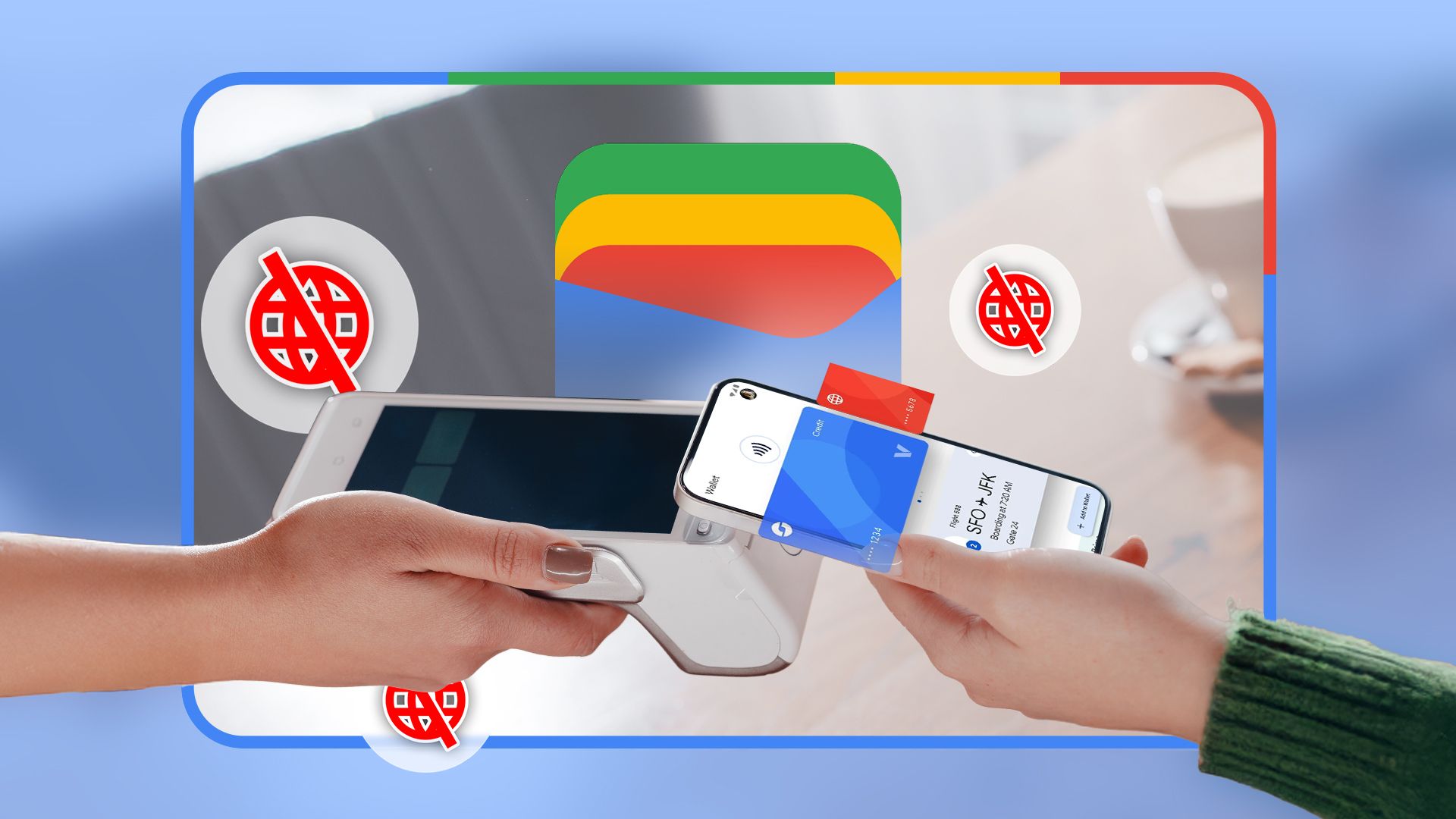
The Google Wallet integration leverages existing digital identity frameworks. In regions where digital IDs are supported, users can share a verified attribute—such as “over 18″—without necessarily disclosing their full legal name or exact date of birth to Discord. This “zero-knowledge” approach is designed to satisfy regulatory requirements while minimizing the amount of sensitive data the platform stores.
The credit card method functions as a financial proxy for age. Because credit cards are generally issued only to adults or supervised minors, a successful authorization charge or a valid card check serves as a signal that the user is likely an adult. This is a common industry practice used by various digital services to gate adult content or restricted features.
- Google Wallet: Uses verified government IDs stored in a secure digital vault to confirm age attributes.
- Credit Cards: Uses financial authorization to verify that the user has access to an adult-controlled payment method.
- Facial Scans: An ongoing consideration involving AI-driven age estimation based on biometric markers.
Why face scans remain a possibility for Discord
Despite the testing of wallet and card-based systems, XDA reports that facial scans remain “on the table.” This refers to “age estimation” technology, which differs significantly from “identity verification.” While a government ID proves who a person is, age estimation uses AI to analyze facial features and predict whether a user is above or below a certain age threshold.
Companies often lean toward biometric estimation because it does not require the user to possess a legal document. For many teenagers or users in regions with poor ID infrastructure, a credit card or a digital passport is unavailable. A face scan provides a frictionless, though less precise, alternative.
“The move toward biometric estimation represents a broader industry trend where platforms attempt to balance user friction with the legal necessity of age gating,” according to analysis of current digital safety trends.
However, facial scanning introduces significant privacy concerns. Critics argue that collecting biometric data creates a honeypot for hackers and raises questions about how that data is stored, who has access to it, and whether it is deleted immediately after the age check is completed.
The regulatory pressure driving age verification
Discord’s push for more robust verification is not happening in a vacuum. Global regulators are increasingly holding social platforms accountable for the presence of minors in adult-oriented spaces. According to XDA, these tests are likely a response to tightening laws regarding online safety and child protection.
In the United Kingdom, the Online Safety Act imposes strict duties on platforms to prevent children from accessing harmful or inappropriate content. Failure to implement “effective” age verification can lead to massive fines. Similarly, several U.S. states have introduced legislation requiring platforms to verify the age of users before allowing them to create accounts or access specific types of content.
The challenge for Discord is that its user base leans heavily toward younger demographics, including gamers and students. Implementing a “hard” age gate—where a user cannot enter the platform without an ID—could lead to a mass exodus of users who value anonymity or lack the required documentation.
Comparison of age verification methods
| Method | Verification Speed | Privacy Level | Accuracy | Accessibility |
|---|---|---|---|---|
| Google Wallet | Fast | High (Attribute-based) | Very High | Medium (Requires ID) |
| Credit Card | Instant | Medium (Financial data) | High | Medium (Requires Card) |
| Facial Scans | Fast | Low (Biometric data) | Medium/High | High (Requires Camera) |
Privacy implications of digital and biometric ID
The transition to third-party verification via Google Wallet shifts the “trust” from Discord to Google. While this means Discord may not see the user’s actual ID, it reinforces the ecosystem of “Big Tech” acting as the primary identity layer for the internet. Users who do not use Google services may find themselves excluded or forced into less private verification methods.
The potential for facial scanning is even more contentious. Biometric data is immutable; unlike a password or a credit card number, a user cannot change their face if a database is breached. This has led to pushback from digital rights organizations who argue that biometric age estimation is a gateway to more invasive surveillance.
Discord has historically positioned itself as a place for communities to gather with a degree of privacy. The introduction of government-linked IDs or biometric scans contradicts the ethos of pseudonymity that many long-term users associate with the platform. This creates a tension between the legal requirement to protect children and the user desire for anonymity.
To mitigate these risks, many platforms are adopting “ephemeral” verification. In this model, the third-party provider (like Google or a biometric firm) confirms the age to Discord, and the actual image or document is deleted instantly. Discord only receives a “Yes/No” token confirming the user meets the age requirement.
How this compares to other social platforms
Discord is following a path already trodden by other major tech entities. Instagram and TikTok have both experimented with various forms of age verification to comply with regional laws. For example, Instagram has used Yoti, a third-party age estimation service that uses AI to analyze “selfie” photos to guess a user’s age.
The difference lies in the intent. While Instagram uses these tools primarily to gate “adult” content or advertising, Discord’s infrastructure is built on servers and channels that can vary wildly in content. A single server might be for a professional coding group, while another is for a gaming clan of 13-year-olds. The “blanket” application of age verification across the entire platform is more complex than applying it to a specific feed of content.
Furthermore, the integration of Google Wallet suggests Discord is looking for a “system-level” solution. By tying verification to the operating system (Android) or the account provider (Google), Discord reduces the friction of the sign-up process, which is critical for user growth.
Potential impact on the user experience
For the average adult user, these changes may be barely noticeable. A quick tap in Google Wallet or a credit card confirmation takes seconds. However, for the “grey area” users—those who are technically of age but lack formal identification—these hurdles could be significant.
There is also the risk of “false negatives” in biometric scanning. AI age estimation is not perfect; it can be fooled by lighting, makeup, or certain facial structures, leading to legitimate adult users being flagged as minors. This often results in a “manual review” process, which is slow and requires the user to upload a photo of their actual ID, defeating the purpose of the automated system.
Discord’s testing phase is likely designed to measure “churn”—the rate at which users abandon the app when faced with a verification wall. If the credit card and Google Wallet methods result in too many users leaving, the company may be more inclined to push the facial scan option, despite the privacy outcry, simply because it is the easiest path for the user.
Users should also consider the “data trail” these methods create. Using a credit card for verification links a financial identity to a social identity. For users who use Discord for sensitive discussions or professional networking under a pseudonym, this linkage represents a significant loss of privacy.
Common misconceptions about age verification
A frequent misconception is that age verification is purely about “stopping kids” from using the app. In reality, it is often about legal liability. If a platform can prove it took “reasonable steps” to verify age, it is more likely to be protected from lawsuits or government fines if a minor still manages to bypass the system.
Another common belief is that “face scans” are the same as “facial recognition.” They are not. Facial recognition identifies who you are by comparing your face to a database of known people. Age estimation identifies how old you are by analyzing patterns in skin elasticity, bone structure, and proportions. One is an identity check; the other is a biological guess.
Finally, some users believe that providing a credit card gives Discord permission to charge them. Generally, these verification checks use a “zero-dollar authorization” or a temporary hold of a small amount (e.g., $0.00 or $1.00) that is immediately released. It is a check of the card’s validity, not a subscription sign-up.
The future of digital identity on social platforms
The tests Discord is conducting are part of a larger movement toward a “verified internet.” For decades, the web operated on a system of self-declared identity. You told a website you were 18, and the website believed you. That era is ending.
As digital IDs become more common in government services, platforms like Discord will likely move toward a “hub and spoke” model of identity. Instead of every app asking for your ID, you will have one verified identity (via Google, Apple, or a government entity) that you “plug into” various services. This increases security and reduces the number of places your raw ID data is stored, but it also concentrates immense power in the hands of the identity providers.
The decision to keep face scans “on the table” indicates that Discord is hedging its bets. If digital wallets don’t gain enough traction or if credit card usage drops among younger adults, biometrics will be the only remaining tool to satisfy regulators without requiring a physical document.
For users, the priority will be transparency. The key question is not whether verification will happen, but how the data is handled. Will Discord store the biometric hash? Will Google share the verification event with advertisers? These are the questions that will define the next phase of the platform’s evolution.
Frequently Asked Questions
Will Discord require a credit card for all users?
No. According to XDA, Discord is testing these as options for age verification. It is unlikely to be the sole method, as many users do not have credit cards. Google Wallet and potentially facial scans are being considered as alternatives.

Does Google Wallet verification give Discord my full identity?
Generally, digital wallet verification is designed to share only the necessary “attribute” (e.g., “User is over 18”) rather than the full legal document, though the exact implementation depends on the API Discord uses.
Is a facial scan the same as facial recognition?
No. Age estimation (the “face scan” mentioned) analyzes facial features to guess an age range. Facial recognition compares a face to a database to identify a specific person. Discord is discussing the former, not the latter.
Why is Discord doing this now?
Discord is responding to increasing global regulatory pressure, such as the UK’s Online Safety Act and various US state laws, which require platforms to implement stricter age verification to protect minors.
Will I be banned if I can’t verify my age?
The current reports focus on testing verification methods. While Discord’s Terms of Service require users to be of a minimum age, the platform has not announced a blanket ban for users who cannot provide a digital ID or credit card at this time.
As the digital landscape shifts toward mandatory verification, the balance between user privacy and child safety remains a point of contention. Discord’s current experiments suggest a preference for third-party verification over internal data collection, but the continued possibility of biometric scans shows the company is preparing for a future where “trust” is replaced by algorithmic proof.
