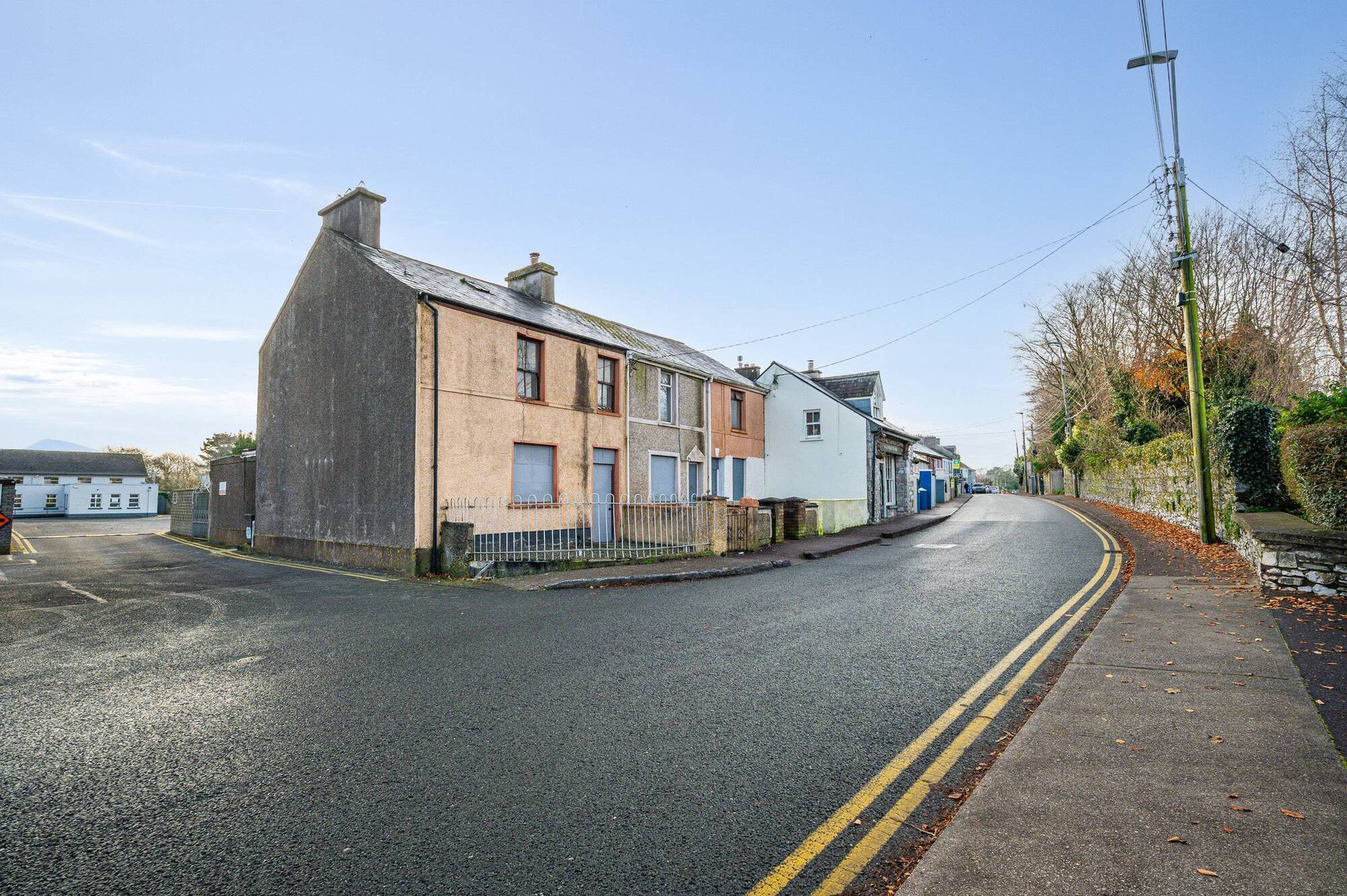
Three Vacant Homes Pit Church Against State in Blackrock Dereliction Row
A legal and administrative standoff has emerged in Blackrock over three vacant properties, as the Catholic Church and the State clash over the future of derelict buildings. Dún Laoghaire-Rathdown County Council is seeking to address the blight of these vacant homes, while the Church maintains ownership of the sites, sparking a broader debate about property rights and the Irish housing crisis.
What is the core of the Blackrock dereliction dispute?
The conflict centers on three specific properties in Blackrock that have fallen into disrepair. According to local records and reports, these buildings are owned by the Catholic Church but have remained unoccupied and unmaintained for a significant period. The local authority, Dún Laoghaire-Rathdown County Council, views these sites as “derelict,” a legal classification that allows the State to intervene when a property is deemed a danger to the public or an eyesore that negatively impacts the community.

The dispute is not merely about the physical state of the buildings but represents a fundamental tension between two powerful institutions. On one side, the State is under intense public pressure to increase housing stock and eliminate dereliction in urban centers. On the other, the Church manages a vast portfolio of assets, often navigating complex internal approvals and historical land titles that slow the process of sale or redevelopment.
Key points of the current dispute include:
- Property Status: Three homes are classified as vacant or derelict, contributing to urban decay in a high-value area of Blackrock.
- State Intervention: The Council is exploring mechanisms to force the occupancy or sale of these homes.
- Church Resistance: The owners have not moved to renovate or sell the properties, leading to accusations of negligence during a national housing emergency.
How does the Derelict Sites Act empower the State?
To understand why these three vacant homes pit Church against State in Blackrock dereliction row, one must look at the Derelict Sites Act 1990. This legislation gives local authorities the power to identify derelict buildings and serve notices on the owners to bring the properties back into use.
According to the Act, if an owner fails to comply with a notice to repair or occupy a building, the local council can levy a derelict sites levy. This is an annual tax designed to make it financially unsustainable for owners to leave properties empty. In more extreme cases, the State can initiate a Compulsory Purchase Order (CPO), where the government forcibly buys the property at a fair market value to ensure it is developed or sold to someone who will.
The Council’s strategy in Blackrock involves a tiered approach:
- Identification: Formally listing the properties as derelict.
- Notice: Serving legal warnings to the Church to rectify the condition of the homes.
- Financial Pressure: Applying levies to incentivize a sale.
- CPO Action: Moving toward compulsory acquisition if negotiations fail.
“The goal of dereliction legislation is to ensure that the housing stock is maximized and that no single entity can hold land in a state of decay while thousands remain on housing waiting lists.”
Why is the Catholic Church reluctant to release these properties?
The Church’s position in the Blackrock row often mirrors its approach to property across Ireland. While the institution does not typically publish a detailed public ledger of every vacant home, representatives have historically cited several reasons for delays in disposing of assets. These include the need for diocesan approval, the search for “appropriate” buyers who will maintain the character of the area, and complex legal titles associated with older ecclesiastical land.

However, critics argue these reasons are insufficient given the scale of the housing crisis. In the Blackrock case, the properties are located in a prime residential area, making their vacancy particularly conspicuous. The friction arises because the Church operates on a timeline of institutional deliberation, while the State is operating on a timeline of political and social urgency.
The tension is heightened by the fact that the Church has previously sold large tracts of land for commercial development. The refusal to quickly move on smaller residential units in Blackrock is seen by some local advocates as a lack of social responsibility.
How does this row reflect the wider Irish housing crisis?
The Blackrock dispute is a microcosm of a national struggle. Ireland is currently facing a severe shortage of affordable housing, with thousands of people unable to find rentals or buy homes. At the same time, thousands of properties across the country sit vacant. This paradox has turned dereliction into a highly charged political issue.
When a high-profile institution like the Church is involved, the story shifts from a simple zoning issue to a moral one. The “Church vs. State” narrative frames the row as a battle between an old-world power structure and a modern government trying to implement social equity through urban planning.
| Stakeholder | Primary Objective | Main Obstacle |
|---|---|---|
| Local Council | Return homes to use/Eliminate blight | Lengthy legal CPO processes |
| The Church | Asset management/Institutional control | Internal bureaucracy/Public pressure |
| Local Residents | Neighborhood improvement/Housing supply | Lack of transparency from owners |
The implications of this row extend beyond Blackrock. If the Council successfully forces the Church to sell or renovate these three homes, it sets a precedent for other derelict Church-owned properties nationwide. If the Church successfully blocks the State, it may signal that institutional owners are effectively immune to the pressures of the Derelict Sites Act.
What are the potential legal outcomes of the standoff?
There are three primary paths this dispute could take. The first is a negotiated sale. In this scenario, the Church agrees to sell the properties to a private developer or a housing association to avoid the embarrassment of a public CPO battle. This is the most common resolution in similar Irish disputes.
The second path is the CPO process. If the Council proceeds with a Compulsory Purchase Order, the matter moves to the courts. The State must prove that the acquisition is “in the public interest.” Given the housing shortage, courts are increasingly likely to side with the State, provided the properties are legitimately derelict. However, CPOs are expensive and can take years to finalize.
The third path is institutional renovation. The Church could choose to renovate the properties and lease them out. While this solves the dereliction problem, it does not necessarily contribute to the wider goal of diversifying home ownership in the area.
For more context on how local governments handle these issues, see our related explainer on compulsory purchase orders in Ireland.
How do Blackrock residents view the dereliction?
Residents in the affected area have expressed a mix of frustration and impatience. In a neighborhood characterized by well-maintained homes and high property values, three decaying buildings act as a visual reminder of inefficiency. Local community groups have pointed out that derelict homes often attract anti-social behavior, vermin, and structural risks to neighboring properties.
The sentiment among locals is that the “sanctity of property” should not outweigh the “sanctity of the community.” There is a widespread belief that the properties should be converted into social housing or high-quality apartments to bring more life into the village center.
The controversy is further fueled by the contrast between the Church’s spiritual mission of serving the poor and the physical reality of holding onto vacant, decaying assets in one of the most affluent parts of the county.
Common misconceptions about derelict property laws
There are several misunderstandings regarding how the State handles vacant homes, which often lead to public confusion during rows like the one in Blackrock.

- “The State can just take the house”: This is false. The State cannot simply seize a property. It must follow a strict legal process, including serving notices and, in the case of a CPO, paying fair market compensation.
- “Vacant means derelict”: Not all vacant homes are derelict. A house can be empty but well-maintained. The Derelict Sites Act specifically targets properties that are in a state of decay or pose a risk. The row in Blackrock persists because the Council has specifically classified these as derelict, not just empty.
- “The Church is the only one with vacant land”: While the Church is a major landowner, many private individuals and corporations also hold derelict sites. However, the Church’s visibility makes these specific cases more symbolic.
Understanding these nuances is critical for anyone following the progress of the three vacant homes pit Church against State in Blackrock dereliction row. The legal battle is not about the right to own land, but the responsibility that comes with ownership in a city facing a housing crisis.
Frequently Asked Questions
Who currently owns the three vacant homes in Blackrock?
The properties are owned by the Catholic Church, specifically under the jurisdiction of the local diocese.
Can the Council force the Church to sell the properties?
Yes, through a Compulsory Purchase Order (CPO), the Council can legally acquire the properties if they are proven to be derelict and the acquisition is in the public interest.
What is a derelict sites levy?
It is a financial penalty imposed by local authorities on owners of derelict properties to encourage them to either repair the building or sell it.
Why can’t the properties just be turned into social housing immediately?
The State must first gain legal ownership or control of the properties. This requires either a voluntary sale from the Church or the completion of a legal CPO process, which can be slow.
Is this happening in other parts of Dublin?
Yes, there are numerous disputes across Dublin and other Irish cities involving both institutional and private owners of derelict properties, as the government ramps up its “Housing for All” strategy.
The outcome of the Blackrock row will likely serve as a bellwether for how the Irish State handles institutional land ownership moving forward. As the Council continues to apply pressure, the Church faces a choice between maintaining its hold on these assets or aligning its property management with the urgent social needs of the community. The resolution will depend on whether the legal machinery of the Derelict Sites Act can move faster than the institutional bureaucracy of the Church.
