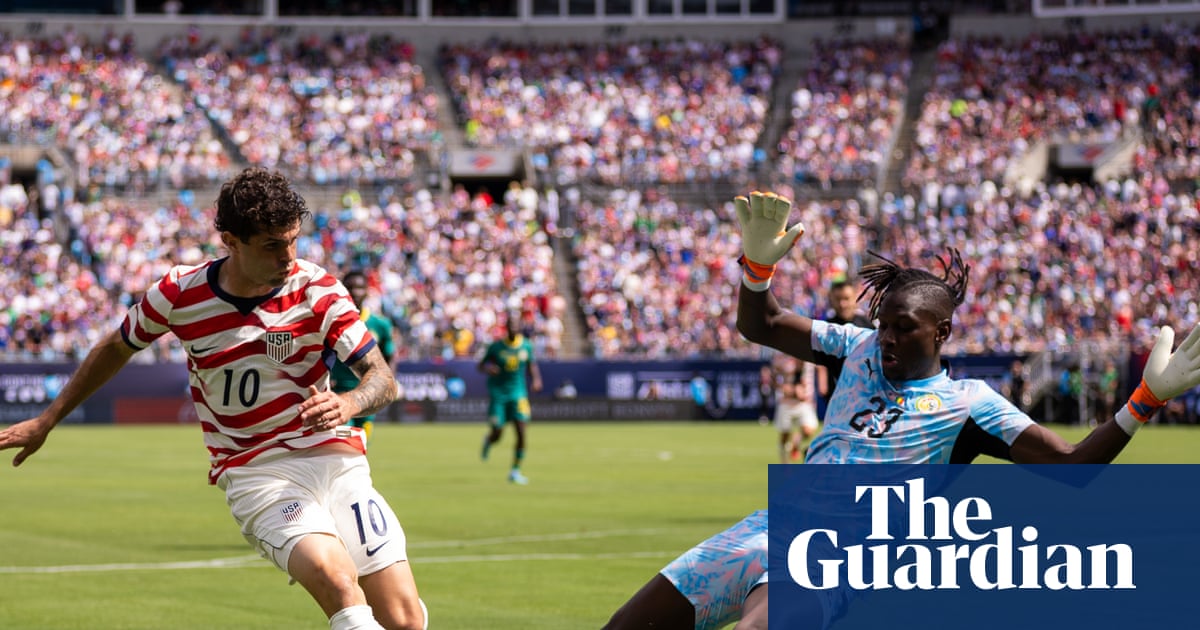
Christian Pulisic Shines as US Kick Off World Cup Preparations with 3-2 Win Over Senegal
The road to the 2026 FIFA World Cup has officially entered its most critical phase for the United States Men’s National Team (USMNT). In a high-stakes encounter that served as a litmus test for the squad’s readiness, the United States secured a hard-fought 3-2 victory over Senegal on May 31, 2026. The match, hosted in Charlotte, North Carolina, was more than just a friendly; it was a statement of intent for a team preparing to lead the world on home soil.
While the final scoreline reflects a competitive contest, the overarching narrative of the evening centered on the performance of Christian Pulisic. After a period of scrutiny and a quest for form, Pulisic delivered a performance that can only be described as redemptive. His ability to influence the game and lead the attack reminded spectators and critics alike why he remains the focal point of the American offensive strategy. However, the victory also highlighted a crucial evolution in the USMNT’s tactical approach: the emergence of a more balanced, multi-dimensional attack that reduces the burden on any single individual.
A Redemptive Night in Charlotte
For Christian Pulisic, the match in Charlotte was about more than just three points or a victory in the win-loss column. It was about silencing doubts and reclaiming his status as the undisputed “leading man” of the national team. Entering the match under the pressure of high expectations, Pulisic’s impact was immediate and decisive, guiding the USMNT to a 3-2 win over a formidable Senegalese side.
The significance of this result was not lost on his teammates. USMNT midfielder Weston McKennie, speaking after the match, emphasized the importance of Pulisic’s performance, characterizing the result in Charlotte as a redemptive moment for the star forward. When a team’s primary playmaker finds his rhythm, it creates a ripple effect across the entire pitch, providing confidence to the midfield and creating space for other attackers to exploit.
“The ability of a key player to bounce back and deliver in these moments is what separates quality teams from great ones. Seeing that confidence return is vital as we head toward the tournament.”
Pulisic’s ability to operate in tight spaces and his clinical nature in front of goal were on full display. For the USMNT, having a healthy and confident Pulisic is not just a luxury—it is a strategic necessity. His presence forces opposing defenses to commit more players to his side of the field, which in turn opens up opportunities for the rest of the squad.
Beyond the ‘Pulisic Show’: The Evolution of the USMNT Attack
One of the most compelling takeaways from the 3-2 victory over Senegal is the shifting dynamic of the American offense. For years, the national team has often been viewed through the lens of the “Christian Pulisic Show,” where the team’s success was disproportionately tied to Pulisic’s individual brilliance. However, the preparations for the 2026 World Cup have seen a concerted effort to diversify the scoring threats.
The match in Charlotte demonstrated that while Pulisic remains the catalyst, he is no longer the sole engine. The USMNT showed a newfound capacity to distribute goals and create chances through various channels. This tactical shift is essential for any team harboring ambitions of a deep run in a World Cup, as over-reliance on a single star makes a team predictable and vulnerable to targeted defensive marking.
| Strategic Shift | Previous Approach | Current World Cup Prep Approach |
|---|---|---|
| Offensive Focus | Heavy reliance on Pulisic for goal creation | Balanced attack with multiple scoring threats |
| Tactical Predictability | High (predictable build-up through the wings) | Low (varied attacking patterns and rotations) |
| Pressure Distribution | Concentrated on the primary playmaker | Shared across the attacking third |
By evolving into a team where Pulisic is the “leading man” rather than the “only man,” the USMNT has become significantly more dangerous. The synergy between the midfield, led by the likes of Weston McKennie and the forward line allows for a more fluid transition from defense to attack. This collective growth suggests that the USMNT is maturing into a side that can compete with the world’s elite by leveraging depth and tactical flexibility.
The Stakes of Home-Soil Preparation
Hosting a FIFA World Cup brings a unique set of pressures that cannot be replicated in any other sporting event. For the USMNT, the 3-2 win over Senegal is a vital building block in managing the psychological and physical demands of playing in front of a home crowd.
- Managing Expectations: The victory provides a psychological boost, proving that the team can handle the pressure of high-profile friendlies in major US cities.
- Acclimatization: Playing matches in cities like Charlotte helps the squad understand the logistical and atmospheric conditions they will face during the tournament.
- Testing Tactical Blueprints: Friendlies against top-tier opposition like Senegal allow the coaching staff to experiment with lineups and strategies without the risk of tournament elimination.
The choice of Senegal as an opponent was deliberate. Known for their physicality, speed, and tactical discipline, Senegal represents the type of challenge the USMNT will inevitably face in the group stages and beyond. Securing a win in such a competitive environment validates the current trajectory of the team’s preparations.
Key Performance Analysis: The Role of the Midfield
While the headlines naturally gravitate toward the goalscorers, the 3-2 result was made possible by the stability provided in the center of the park. The connection between the midfield and the attack has been a primary focus of the USMNT’s recent training camps.
Weston McKennie’s role in this victory extended beyond his post-match comments. His ability to disrupt the opponent’s rhythm and quickly transition the ball to Pulisic was a recurring theme throughout the match. The midfield’s capacity to maintain possession under pressure ensured that the USMNT could dictate the tempo of the game, even when Senegal threatened to take control.
This balance is what allows Pulisic to “shine.” When the midfield provides a secure foundation, the attacking players have the freedom to take risks, attempt creative passes, and drive toward the goal. The chemistry developed in these pre-World Cup friendlies is often what determines the difference between a first-round exit and a historic run.
Addressing Common Misconceptions About Pre-Tournament Friendlies
There is often a misconception among casual fans that friendly matches are merely “exhibitions” with little impact on the actual tournament. In reality, for a host nation, these games are critical diagnostic tools.
Critics might argue that a 3-2 scoreline suggests defensive vulnerabilities. However, from a coaching perspective, a high-scoring game is often more valuable than a scoreless draw. It allows the staff to see how the team reacts to conceding goals and how the defense organizes itself under pressure. The fact that the USMNT could recover and secure a win demonstrates a mental resilience that is far more vital than a clean sheet in a non-competitive match.
the “redemptive” nature of Pulisic’s performance is not just about the goals he scored, but about the timing. Finding peak form in May and June, just as the World Cup approaches, is far more valuable than being in top form six months prior. The goal of these preparations is to peak at the exact moment the tournament begins.
The Road Ahead: From Charlotte to the World Stage
The victory in Charlotte serves as a springboard. As the USMNT continues its preparations, the focus will shift toward refining the defensive transitions and ensuring that the attacking fluidity seen against Senegal becomes a consistent trait.

The narrative has shifted from “Can Pulisic carry the team?” to “How far can this balanced team go with Pulisic leading the way?” This is a subtle but powerful distinction. The USMNT is no longer a team relying on a singular spark; they are building a bonfire of talent and tactical discipline.
As the team moves closer to the opening whistle of the World Cup, the lessons learned in Charlotte—the importance of mental resilience, the value of a diversified attack, and the power of a confident leader—will be the cornerstones of their campaign. The 3-2 win over Senegal is a promising signal that the United States is not just preparing to host the World Cup, but preparing to compete for it.
Frequently Asked Questions
What was the final score of the USMNT vs. Senegal friendly?
The United States Men’s National Team defeated Senegal with a final score of 3-2.
Where and when did the match take place?
The game was played on May 31, 2026, in Charlotte, North Carolina.
Why was Christian Pulisic’s performance considered “redemptive”?
Pulisic had been facing pressure to find his best form leading up to the World Cup. His standout performance in the 3-2 win reaffirmed his role as the team’s leading man and provided a significant boost to his confidence.
Is the USMNT relying solely on Christian Pulisic for goals?
No. While Pulisic remains a key figure, recent game analysis suggests the team has evolved into a more balanced attacking unit, reducing the over-reliance on any single player.
What is the significance of this win for the 2026 World Cup?
As the host nation, the USMNT uses these high-profile friendlies to test their tactics against top-tier international opposition, manage the pressure of playing at home, and ensure key players are peaking at the right time.
For more insights into the team’s journey, you may find our related explainer on USMNT tactical evolutions helpful in understanding how the squad is shaping up for the tournament.
