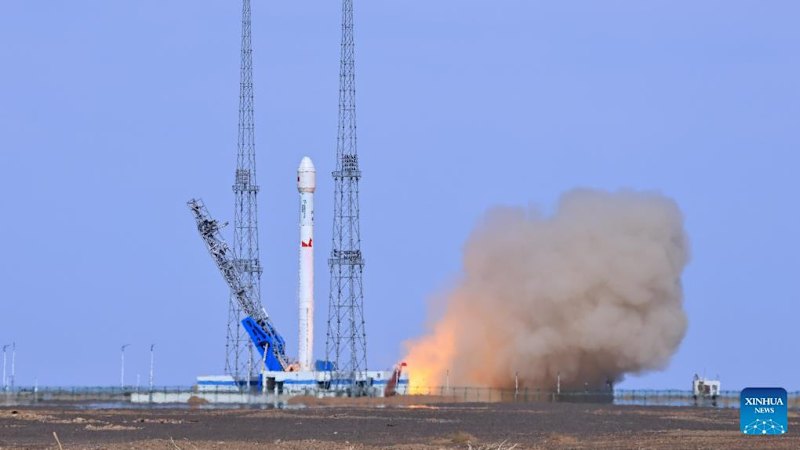
Chinese Rocket Identified as Source of Mystery Light in Australian Skies
A Chinese rocket stage was identified as the cause of mysterious lights reported across Australian skies, according to aerospace tracking data and orbital analysts. The phenomenon occurred as spent rocket hardware re-entered the Earth’s atmosphere, creating a luminous trail of fragmented debris visible to thousands of observers on the ground.
What caused the mystery lights in Australia?
The visual phenomenon reported by residents across multiple Australian states was the result of a Chinese rocket’s upper stage undergoing atmospheric reentry. According to orbital tracking data, the object entered the atmosphere at high velocity, causing the friction between the rocket’s surface and the air to generate intense heat and light. This process, known as ablation, creates a glowing streak across the sky that often breaks into multiple smaller pieces as the structure fails under thermal stress.
Observers described the lights as bright, slow-moving streaks that appeared to fragment or “sparkle” as they moved across the horizon. These descriptions align with the known behavior of large space objects during reentry. Unlike meteors, which typically move much faster and burn up more quickly, rocket stages are larger and more structurally complex, leading to a longer-lasting visual event and a characteristic breaking-apart pattern.
Key characteristics of the event included:
- Fragmentation: The appearance of a single light splitting into several smaller trailing lights.
- Duration: A visible transit time significantly longer than that of a typical shooting star.
- Color: A bright white or yellowish glow, typical of burning metals and composites used in aerospace engineering.
How was the Chinese rocket identified?
Identification of the object relied on a combination of radar tracking and launch manifest analysis. Space surveillance networks, including those that monitor orbital debris, tracked the descent of the object from low Earth orbit (LEO). By correlating the timing and trajectory of the reentry with known Chinese launch schedules, analysts were able to pinpoint the specific rocket stage responsible.
According to tracking specialists, the object was a spent stage from a Chinese launch vehicle. These stages often remain in orbit for weeks or months after their primary mission is complete before their orbits naturally decay. Once the altitude drops to a critical point, the atmosphere becomes dense enough to capture the object, triggering the reentry process.
The identification process typically follows these steps:
- Detection: Ground-based radar identifies an object descending from orbit.
- Trajectory Analysis: Computers calculate the reentry path to determine where the object will enter the atmosphere and where the debris will fall.
- Catalog Matching: The object’s orbital parameters are matched against a database of known satellites and rocket bodies.
- Confirmation: The timing is compared with recent launches from the CNSA (China National Space Administration) or other Chinese agencies.
The science behind the atmospheric glow
The “mystery light” effect is a product of physics rather than a mechanical failure of the rocket during its active phase. When a rocket stage re-enters the atmosphere, it travels at orbital velocities—roughly 7.8 kilometers per second. At these speeds, the air in front of the object is compressed so violently that it creates a shock wave of superheated plasma.
This plasma is what produces the intense light. As the heat increases, the aluminum and other alloys in the rocket’s skin begin to melt and vaporize. Because the rocket is not designed with a heat shield (unlike a reentry capsule), the heat penetrates the structure, causing it to break apart. This fragmentation increases the surface area of the burning material, creating the “burst” or “shower” effect reported by Australian witnesses.
“The visual spectacle of a rocket reentry is essentially the result of a massive piece of industrial hardware being incinerated by the atmosphere,” according to aerospace physics principles.
The visibility of these events depends heavily on the angle of reentry and the atmospheric conditions. A shallower angle leads to a longer path through the upper atmosphere, making the light visible over a much larger geographic area, which explains why reports surfaced from diverse regions across Australia.
Why this event matters for space safety
While the visual event was harmless to those on the ground, the incident highlights the ongoing challenge of “uncontrolled reentries.” A controlled reentry occurs when operators use remaining fuel to steer a rocket stage into a remote area, such as the South Pacific Ocean Uninhabited Area (SPOUA). An uncontrolled reentry happens when a stage is left in orbit to fall wherever gravity and atmospheric drag dictate.
The risk associated with uncontrolled reentries is the potential for larger pieces of debris to survive the heat of reentry and strike the ground. While most of a rocket burns up, dense components—such as engine nozzles or fuel tank mounts made of titanium or stainless steel—can reach the surface.
The following table compares the two types of reentry processes:
| Feature | Controlled Reentry | Uncontrolled Reentry |
|---|---|---|
| Method | Active propulsion steers the object. | Natural orbital decay. |
| Landing Site | Pre-selected uninhabited zones. | Random based on orbital path. |
| Predictability | High precision timing and location. | General window; precise location uncertain. |
| Risk Level | Minimized risk to populations. | Low, but non-zero risk of debris impact. |
Context: China’s role in orbital debris
China has become one of the most active players in space exploration, utilizing the Long March family of rockets for a wide array of missions. However, the agency has faced international scrutiny over its handling of spent rocket stages. Unlike some other space agencies that have moved toward more rigorous de-orbiting protocols, several Chinese missions have resulted in spent stages remaining in orbit for extended periods.
This has led to diplomatic tensions and concerns among the global space community. The “mystery light” event in Australia is a physical manifestation of this orbital congestion. When large objects are left in LEO, they not only risk uncontrolled reentries but also increase the likelihood of collisions with active satellites, which could create clouds of smaller, untrackable debris—a scenario known as the Kessler Syndrome.
International guidelines, such as those provided by the Inter-Agency Space Debris Coordination Committee (IADC), suggest that satellites and rocket stages should be removed from orbit within 25 years of the end of their mission. However, these guidelines are not legally binding treaties, leaving the responsibility to individual nations.
Common misconceptions about sky phenomena
Events like the Chinese rocket reentry often trigger a wave of misinformation on social media. Because the lights move slower than meteors and fragment in a specific way, they are frequently misidentified.
Is it a UFO or UAP?
Unidentified Aerial Phenomena (UAP) reports often spike during rocket reentries. However, the trajectory of the Chinese rocket was consistent with orbital physics—a linear path descending from space. UFO sightings typically involve erratic movements or hovering, which are not characteristics of a falling rocket stage.
Was it a meteor shower?
While meteors also create light through atmospheric friction, they are composed of rock or ice and usually burn up in seconds. A rocket stage is a massive metallic structure that takes minutes to disintegrate, creating a much slower and more sustained visual event.
Is the debris toxic?
Most of the material burns up completely. In the rare event that debris reaches the ground, it is generally composed of aerospace alloys. While some residual chemicals from propellant tanks can be hazardous, the vast majority of the material is inert metal. Authorities typically advise the public not to touch any suspected space debris and to report it to local officials.
Monitoring and reporting space events
For those interested in tracking similar events, several resources provide real-time or near-real-time data on orbital objects. Space-Track.org, operated by the U.S. Space Command, is the primary source for satellite and debris catalogs. Additionally, amateur astronomers often use software to predict when specific rocket bodies will re-enter the atmosphere.
In Australia, the sighting of these lights serves as a reminder of the country’s position under key orbital corridors. Because of its geography, Australia often sees the reentry of objects launched from equatorial sites or those in polar orbits.
If you encounter a potential space debris event, the following steps are recommended:
- Document the event: Note the exact time, direction of travel, and duration of the light.
- Check tracking sites: Use orbital tracking apps to see if any known objects were scheduled for reentry.
- Report debris: If physical fragments are found, contact emergency services or aviation authorities immediately.
Frequently Asked Questions
What exactly is a “rocket stage”?
A rocket stage is a section of a launch vehicle that provides thrust for a specific portion of the flight. Once the fuel in that section is exhausted, the stage is discarded (separated) to reduce weight, allowing the remaining stages to push the payload further into space.
Why was the light visible across so much of Australia?
The visibility depends on the altitude at which the rocket began to burn. Because the atmospheric glow occurs in the upper layers of the atmosphere (the thermosphere and mesosphere), the light can be seen from hundreds of kilometers away, similar to how a high-altitude lightning bolt or a volcano’s ash plume can be seen across vast distances.
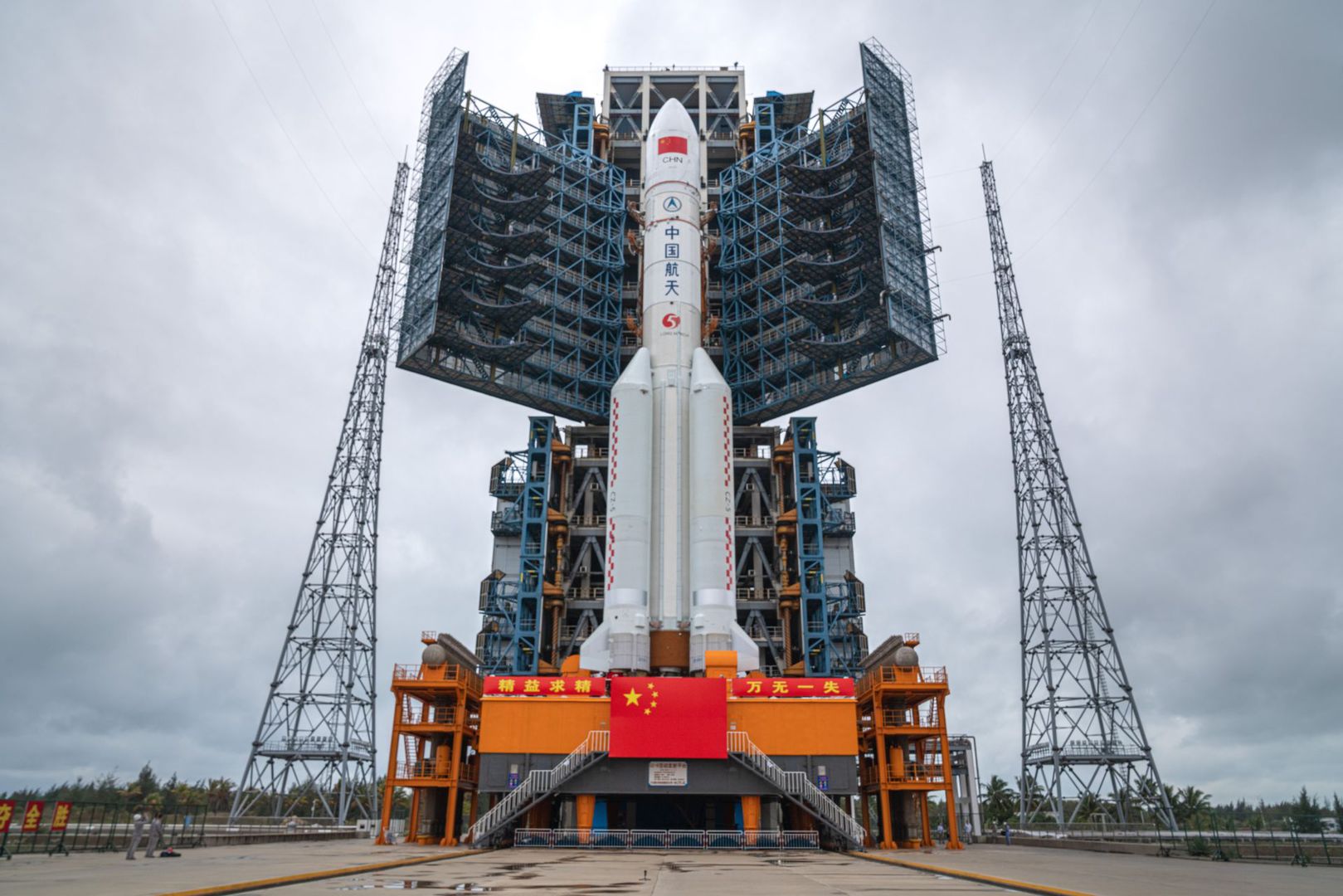
Does this mean China is targeting Australia?
No. The reentry was a result of natural orbital decay. The rocket stage was not “steered” toward Australia; rather, its orbit simply decayed at a point that placed its atmospheric entry over the Australian region. This is a random occurrence based on the laws of orbital mechanics.
How often do these events happen?
Reentries occur frequently, but most happen over the ocean or during the day when they are not visible. Large, bright events that occur at night over populated landmasses are less common but happen several times a year globally.
Is there a risk of these rockets exploding in the sky?
The “explosions” seen during reentry are actually structural failures caused by heat and pressure. While they look like explosions, they are the process of the rocket breaking apart into smaller pieces, which then burn up. There is no chemical explosion in the sense of a bomb; it is a thermal disintegration.
For more information on how orbital mechanics affect ground sightings, you may find a related explainer on space debris tracking useful.
