
Central Banks Repatriate Gold as Global Insecurity Rises – Financial Times
Central banks are increasingly moving gold reserves from overseas vaults back to their home countries and increasing bullion purchases to hedge against geopolitical instability. According to reporting from the Financial Times and other financial outlets, this trend reflects a broader effort by nations to reduce dependence on the U.S. dollar and protect assets from potential foreign sanctions or seizures.
Why are central banks repatriating gold and increasing reserves?
The movement of gold from Western financial hubs, such as New York and London, back to national vaults is driven by a rise in global insecurity. According to the Financial Times, central banks are prioritizing physical control over their assets to mitigate the risk of those assets being frozen or blocked during diplomatic crises. This shift suggests a lack of trust in the custodial security provided by foreign jurisdictions during times of high geopolitical tension.
Gold serves as a “tier-one” reserve asset that carries no counterparty risk. Unlike a government bond or a bank deposit, physical gold held in a home vault cannot be “turned off” by a foreign government or a clearinghouse. This makes it the primary tool for nations seeking a financial safety net that exists independently of the global banking system’s political levers.
Key drivers for this shift include:
- Sanction Risks: The freezing of foreign exchange reserves of certain nations has signaled to other central banks that assets held in Western currencies or vaults are vulnerable.
- Currency Volatility: High inflation and fluctuating interest rates in major economies have made the U.S. dollar less predictable as a stable store of value.
- Geopolitical Fragmentation: The shift toward a multipolar world is prompting countries to diversify their holdings away from a single dominant currency.
The decline of U.S. Treasuries as the primary reserve asset
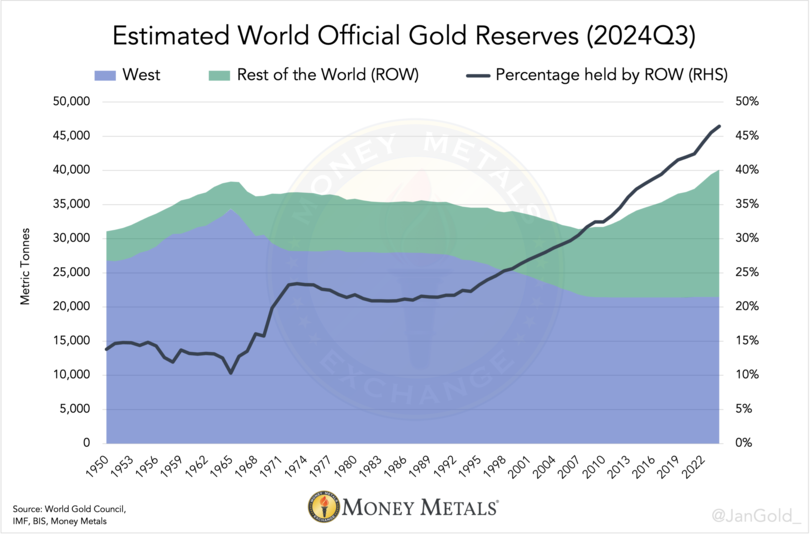
For decades, U.S. Treasuries were the undisputed gold standard for foreign exchange reserves due to their liquidity and perceived safety. However, recent data suggests a significant shift. The Financial Post reports that U.S. Treasuries have been toppled from the “foreign reserve throne,” as central banks pivot toward gold and other alternative assets.

This decline is not merely a matter of preference but a strategic response to the “weaponization” of the dollar. When the U.S. uses the dollar-based financial system to impose sanctions, it creates a systemic risk for any country holding large amounts of dollar-denominated debt. According to CEOWORLD magazine, many central banks are now actively rethinking their dependence on the U.S. dollar to avoid being subject to the political whims of Washington.
| Asset Type | Traditional Role | Current Trend | Primary Risk Factor |
|---|---|---|---|
| U.S. Treasuries | Primary Liquidity Reserve | Decreasing Share | Political/Sanction Risk |
| Physical Gold | Long-term Store of Value | Increasing Share | Storage/Transport Cost |
| Other Currencies | Trade Settlement | Diversifying | Currency Depreciation |
The South China Morning Post notes that as the world’s foreign reserve dominance of the U.S. dollar falls, the expansion of bullion holdings becomes a necessity for financial sovereignty. This is not a sudden collapse but a gradual erosion of the “exorbitant privilege” the U.S. has enjoyed since the Bretton Woods agreement.
Who is buying gold beyond China and India?
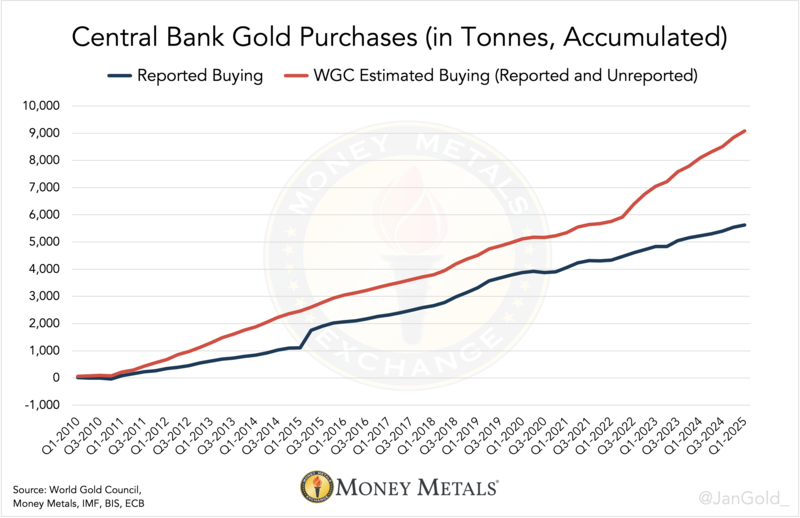
While China and India have historically been the most visible buyers of gold, current trends show a much wider net of accumulation. FXStreet reports that other central banks, beyond the well-known giants of Asia, have been some of the most aggressive buyers of gold this year. This indicates that the drive for gold is a global phenomenon rather than a regional strategy limited to the BRICS nations.
Many emerging market economies in Eastern Europe, Africa, and Southeast Asia are increasing their gold ratios. These nations often lack the economic scale to challenge the dollar in trade, but they can protect their reserves by shifting the composition of their portfolios. By increasing the percentage of gold relative to foreign currency, these banks create a buffer against sudden currency crashes or external financial shocks.
The diversification strategy generally follows these patterns:
- Accumulation: Buying gold from the open market or through official channels to increase total tonnage.
- Repatriation: Bringing existing gold held in the Federal Reserve Bank of New York or the Bank of England back to domestic vaults.
- Diversification: Swapping U.S. Treasury holdings for gold bullion.
The mechanics of gold repatriation
Repatriating gold is a complex logistical and diplomatic operation. Most central banks store their gold in “custodial accounts” in London or New York because it is easier to trade gold that is already located where the major markets operate. Moving this gold requires specialized secure transport, insurance, and the construction of high-security domestic vaults.
According to the Financial Times, the decision to move gold is often a signal of a country’s perceived risk level. When a nation requests the return of its bullion, it is essentially stating that the cost of transporting and storing the gold at home is lower than the risk of leaving it in a foreign jurisdiction. This process is often done quietly to avoid triggering market volatility or diplomatic friction.
“The trend toward repatriation is a physical manifestation of the distrust currently permeating the global financial order.”
For a detailed look at how this affects global trade, see a related explainer on reserve currency dynamics.
Implications for the global financial system
The shift away from the dollar and toward gold has several long-term implications for global economics. First, it may increase the price of gold as demand from institutional buyers (central banks) outweighs the supply from mining operations. Second, it could lead to higher borrowing costs for the United States.
If central banks continue to reduce their holdings of U.S. Treasuries, the U.S. government may find it more expensive to fund its national debt. The “reserve throne” provided a steady stream of buyers for U.S. debt, keeping interest rates lower than they might otherwise be. As that demand wanes, the U.S. may have to offer higher yields to attract private investors, potentially increasing the federal deficit.
Furthermore, the South China Morning Post suggests that this move toward gold is a precursor to a more fragmented financial system. Instead of one global reserve currency, the world may move toward a system of “currency blocs,” where different regions use different assets—some gold-backed, some based on regional currencies—to settle trade.
Comparing Perspectives on De-dollarization
Different outlets frame this shift with varying degrees of urgency. The Financial Post characterizes the loss of the U.S. Treasury’s dominance as a “toppling,” suggesting a rapid and disruptive change. In contrast, the Financial Times focuses more on the “insecurity” and “risk management” aspect, framing it as a defensive move by central banks rather than an offensive attack on the dollar.
CEOWORLD magazine positions the trend as a “rethinking” of dependence, implying a strategic pivot. This contrast shows that while the facts—increased gold buying and repatriation—are consistent across reports, the interpretation varies from a systemic collapse of the dollar to a prudent diversification of risk.
Common misconceptions about gold reserves
One common misconception is that central banks buy gold to “bet” on the price going up. While gold price appreciation is a benefit, central banks primarily buy gold for insurance, not speculation. Their goal is not to make a profit, but to ensure that they have a liquid asset that cannot be frozen by a foreign power.
Another misunderstanding is that the U.S. dollar will disappear overnight. Even as central banks repatriate gold and reduce Treasury holdings, the dollar remains the dominant currency for global trade and invoicing. De-dollarization is a process of reducing dependence and vulnerability, not necessarily a total replacement of the currency in the short term.
Finally, some believe that only “unstable” regimes repatriate gold. However, the Financial Times indicates that this is becoming a standard risk-management practice for a wide variety of nations, regardless of their internal political stability, as a response to the instability of the international order.
What to watch for in the coming months
The trajectory of gold repatriation will likely be influenced by three main factors: the outcome of major global elections, the progression of conflicts in Eurasia, and the Federal Reserve’s interest rate policy.
If geopolitical tensions escalate, the pace of repatriation is expected to accelerate. If the U.S. implements further aggressive financial sanctions, more central banks may view their overseas assets as liabilities. Conversely, if the U.S. manages to stabilize its debt outlook and reduce global tensions, the urgency to move gold may diminish, though the trend toward diversification is unlikely to fully reverse.
Investors and policymakers should monitor the following indicators:
- IMF COFER Data: The International Monetary Fund’s Currency Composition of Official Foreign Exchange Reserves (COFER) reports will show the actual percentage shift from dollars to gold.
- Vault Outflows: Reports of large-scale gold shipments leaving New York or London.
- New Gold-Backed Trade Agreements: Any bilateral trade deals that bypass the dollar in favor of gold or other commodities.
For more on the impact of these shifts on emerging markets, refer to a related explainer on emerging market volatility.
Frequently Asked Questions
Why is the Financial Times reporting on gold repatriation now?
The Financial Times is highlighting this trend because of a marked increase in central banks moving their gold reserves home. This is happening against a backdrop of rising global insecurity and the use of financial sanctions, which has made the safety of overseas assets a primary concern for national treasuries.
Does the repatriation of gold mean the U.S. dollar is crashing?
No, it does not mean the dollar is crashing. It indicates a strategic move by central banks to reduce their dependence on the dollar. While the dollar remains the dominant trade currency, central banks are diversifying their reserves to protect themselves from political risks associated with holding U.S. assets.
Which countries are leading the move toward gold?
While China and India are major players, FXStreet reports that several other central banks—including those in emerging markets and Eastern Europe—have been aggressively purchasing gold. The trend is global, driven by a shared desire for financial sovereignty.
What is the difference between buying gold and repatriating gold?
Buying gold involves increasing the total amount of bullion a country owns. Repatriating gold involves moving gold that the country already owns from a foreign vault (like the Federal Reserve in New York) back to its own national vault.
How does this affect the average investor?
While central bank moves are institutional, they often influence the global price of gold. Increased demand from central banks can provide a “floor” for gold prices, making it a more attractive hedge for private investors during times of volatility. However, this is a macroeconomic shift and doesn’t necessarily dictate short-term market movements.
