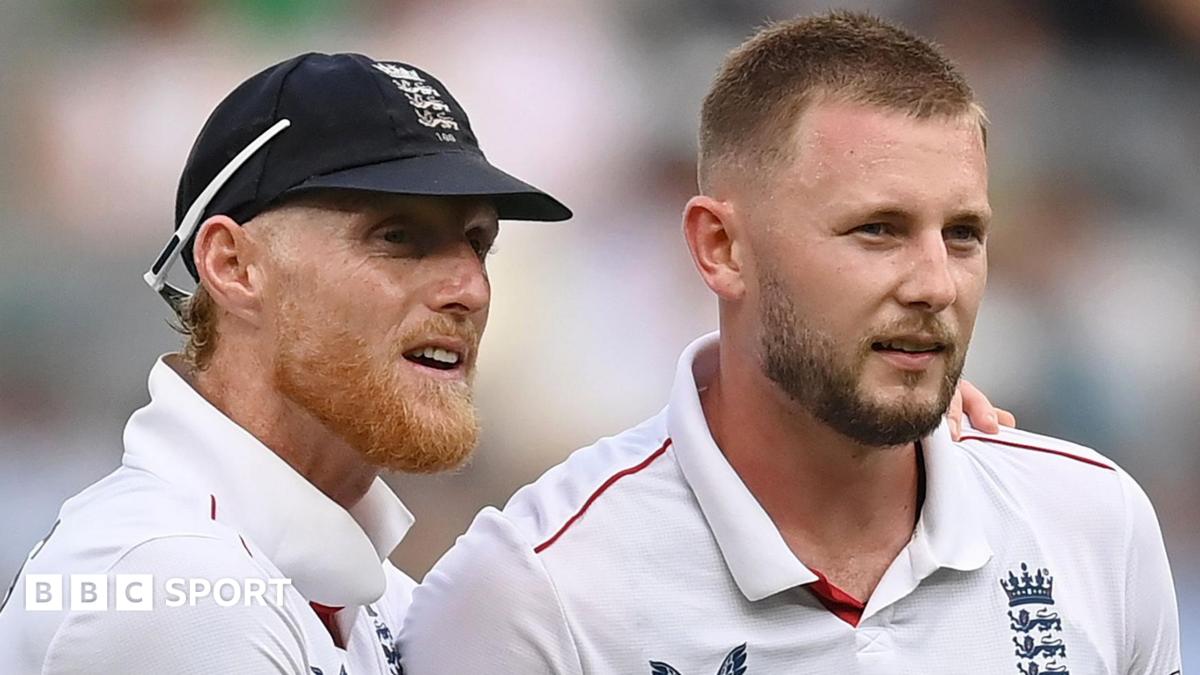
Ben Stokes and Gus Atkinson ‘blameless for violent conduct’ – ECB – BBC
The England and Wales Cricket Board (ECB) has cleared Ben Stokes and Gus Atkinson of blame regarding a nightclub incident involving violent conduct, according to reports from the BBC and Sky News. Both players were subsequently withdrawn from their respective county fixtures at the ECB’s request, a move Sky Sports describes as a strong indication of their imminent return to the England Test squad.
Why the ECB cleared Ben Stokes and Gus Atkinson of violent conduct
The ECB has determined that England Test captain Ben Stokes and bowler Gus Atkinson are not responsible for the violent conduct reported during a recent incident at a nightclub. According to reports from the BBC and Sky News, the governing body’s investigation concluded that the players were not to blame for the altercation. This clearance removes a significant disciplinary cloud that had hung over the duo following the event.
The ruling comes after a period of scrutiny regarding the behavior of the high-profile cricketers. While the incident was characterized as involving “violent conduct,” the ECB’s specific finding that Stokes and Atkinson were “blameless” suggests that their involvement did not meet the threshold for disciplinary action or that they acted in a manner that did not violate the board’s code of conduct.
“England cricketers Stokes and Atkinson ‘not to blame for violent conduct’ during nightclub incident,” as reported by Sky News.
The decision to clear the players is critical for the stability of the England Test setup. With Stokes serving as captain, any prolonged disciplinary battle or suspension would have created a leadership vacuum during a pivotal phase of the international calendar. The ECB’s swift resolution of the matter allows the team to focus on performance rather than off-field controversies.
The sudden withdrawal from County Championship matches
Immediately following the ECB’s decision, both Ben Stokes and Gus Atkinson were removed from their county duties. Ben Stokes was withdrawn from a Durham match, a move reported by The Guardian. Similarly, Gus Atkinson was pulled from his County Championship commitments. Sky Sports notes that these withdrawals occurred specifically at the request of the ECB.
In the context of professional cricket, the ECB rarely requests the withdrawal of players from county matches unless there is a pressing national team requirement or a mandatory medical or disciplinary intervention. Given that the players have been cleared of wrongdoing, the timing of these withdrawals is being interpreted as a tactical move to prepare them for international duty.
Key details of the county withdrawals
- Ben Stokes: Withdrawn from Durham fixtures to facilitate England recall.
- Gus Atkinson: Removed from County Championship play at the ECB’s direct request.
- Implication: Sky Sports describes this as the “strongest hint” that both players are returning to the Test side.
The coordination between the ECB and the county clubs ensures that players are rested and available for selection. For Stokes, returning to the national fold involves a transition from the domestic grind of the County Championship back to the higher intensity of Test cricket, where his leadership is central to the team’s strategy.
Brendon McCullum’s stance on Ben Stokes’ return
England head coach Brendon McCullum has signaled his full support for the returning captain. According to the BBC, McCullum is prepared to work closely with Stokes as he reintegrates into the squad. This public backing is essential for maintaining the unity of the “Bazball” era, which relies heavily on the symbiotic relationship between the coach and the captain.
McCullum’s willingness to move forward suggests that the nightclub incident has not damaged the professional trust between the coaching staff and the captain. The focus has shifted from the investigation to the strategic preparation for upcoming Test matches. The partnership between McCullum and Stokes is the engine behind England’s aggressive brand of cricket, and any friction there would have ripple effects across the entire squad.
The return of Stokes is not merely about his batting or bowling capabilities but about his role as the primary decision-maker on the field. McCullum’s confirmation that he is “prepared to work” with Stokes indicates a seamless transition back into the leadership role, ignoring the noise surrounding the ECB investigation.
Timeline of the incident and ECB response
The sequence of events from the nightclub incident to the confirmation of Test returns follows a rapid trajectory of investigation and clearance.
| Event Phase | Action Taken | Source/Outcome |
|---|---|---|
| Incident | Nightclub altercation involving “violent conduct” | Reported by Sky News/BBC |
| Investigation | ECB review of the conduct of Stokes and Atkinson | Internal ECB Process |
| Verdict | Players declared “blameless” | BBC/Sky News Reports |
| County Action | Stokes (Durham) and Atkinson withdrawn from matches | The Guardian/Sky Sports |
| Team Integration | McCullum confirms readiness to work with Stokes | BBC Report |
The implications for the England Test squad
The return of Ben Stokes and Gus Atkinson provides a significant boost to England’s bowling and leadership options. Atkinson has emerged as a potent force in the bowling attack, and his availability ensures that England maintains its pace battery’s depth. Stokes, meanwhile, provides the tactical aggression and experience required to lead the side through high-pressure scenarios.
This situation highlights the ECB’s approach to player management during the current regime. By quickly resolving the disciplinary aspect and coordinating with county clubs, the ECB has minimized the distraction. The priority remains the success of the Test team, and the “blameless” verdict ensures that the players can return without the baggage of an official sanction.
For those following the team’s trajectory, the return of these two players suggests that the ECB is prioritizing on-field results and leadership continuity over the potential PR fallout of a nightclub incident. The decision to withdraw them from county cricket rather than keep them there as a “punishment” or “cooling-off period” confirms that the board views them as essential assets for the immediate future.
Impact on team dynamics
- Leadership: Stokes returns to captaincy with the full backing of the head coach.
- Bowling Depth: Atkinson’s return strengthens the pace attack.
- Moral Support: The “blameless” ruling prevents a divide within the dressing room.
The synergy between the ECB, the coach, and the players in this instance reflects a unified front. By insulating the players from further county commitments, the ECB is effectively shielding them from further scrutiny while they prepare for the intensity of international cricket.
Understanding the ‘Blameless’ ruling in professional sports
In professional sports, a ruling of being “blameless” in the face of “violent conduct” allegations often indicates a nuance in the evidence. It does not necessarily mean an incident did not occur, but rather that the specific players in question did not act in a way that violated the governing body’s rules, or that they were acting in a defensive or non-aggressive capacity during the event.
The ECB’s code of conduct is designed to protect the image of the game. When the board clears players of blame, it typically means that after reviewing CCTV, witness statements, or police reports, there is insufficient evidence to prove a breach of the “bringing the game into disrepute” clause. This allows the players to return to their professional duties without the need for fines, suspensions, or mandatory rehabilitation programs.
Comparing this to previous sporting disciplinary cases, the speed of this clearance is notable. Often, such investigations can drag on for weeks, leaving players in a state of limbo. The rapid turnaround in the Stokes and Atkinson case suggests the ECB had clear evidence early on to support the “blameless” conclusion, or that the incident was deemed a misunderstanding rather than a deliberate act of aggression.
For a deeper look at how the governing body manages player conduct, readers may find a related explainer on ECB disciplinary procedures useful for understanding the thresholds of “violent conduct” versus “blameless” outcomes.
Potential challenges and public perception
Despite the official clearance, the association of the England captain with “violent conduct” allegations—even when cleared—can create a perception challenge. The public and media often scrutinize the conduct of national captains more heavily than that of rank-and-file players. The “blameless” verdict serves as the legal and professional shield, but the narrative of the nightclub incident may persist in sports commentary.
However, the “Bazball” era has been characterized by a willingness to embrace unconventionality and a certain level of defiance. Brendon McCullum’s public support of Stokes is a continuation of this philosophy. By focusing on the future and the “work” to be done, the coaching staff is effectively telling the public and the media that the off-field incident is irrelevant to the on-field objective.
The primary risk for the ECB is the potential for further information to emerge. However, as it stands, the official word from the governing body is definitive. The transition from the nightclub incident to the withdrawal from Durham and other county matches shows a calculated path back to the international spotlight.
FAQ: Ben Stokes and Gus Atkinson ECB Ruling
Were Ben Stokes and Gus Atkinson suspended by the ECB?
No. According to reports from the BBC and Sky News, the ECB found both players to be “blameless” regarding the violent conduct reported during a nightclub incident. No suspensions were issued.
Why were Stokes and Atkinson withdrawn from their county matches?
The ECB requested their withdrawal from Durham and other County Championship fixtures. Sky Sports reports that this is a strong indication that both players are being prepared for a return to the England Test squad.
Is Ben Stokes still the captain of the England Test team?
Yes. The BBC reports that head coach Brendon McCullum is prepared to work with Stokes as he returns to his role as the England Test captain.
What does ‘blameless for violent conduct’ mean in this context?
It means that the ECB’s investigation concluded that Stokes and Atkinson were not responsible for the violent behavior that occurred during the incident, and therefore they did not breach the board’s code of conduct.
When will Ben Stokes and Gus Atkinson return to the England squad?
While a specific date was not provided, their withdrawal from county cricket at the ECB’s request suggests an imminent recall for upcoming Test matches.
The resolution of this case ensures that England’s leadership and bowling resources remain intact. By clearing Stokes and Atkinson and coordinating their exit from county cricket, the ECB has prioritized the national team’s readiness over the lingering controversy of a nightclub altercation. The focus now shifts entirely to the pitch and the continued evolution of England’s aggressive Test strategy under the Stokes-McCullum partnership.
