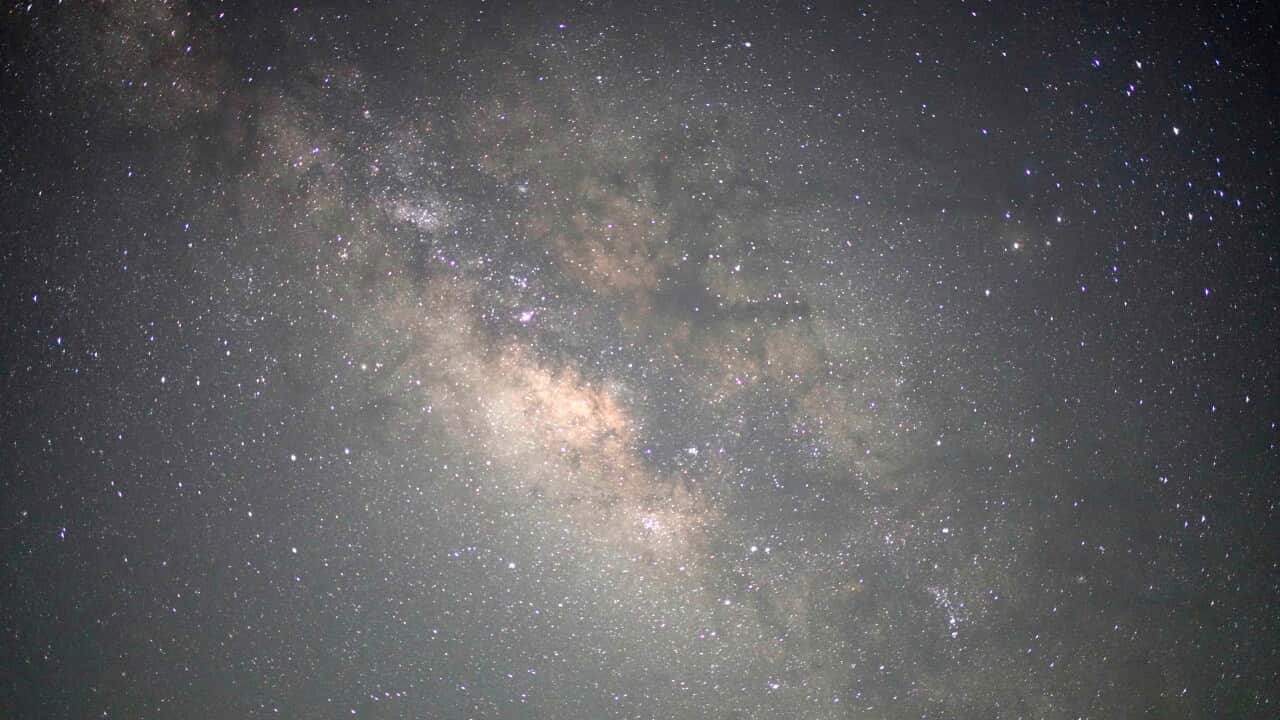
The Australian Scientists Uncovering the Origins of the Milky Way – SBS Australia: Mapping the Cosmic Past
For millennia, humans have looked up at the shimmering band of the Milky Way and wondered about its beginning. While the galaxy appears as a static, serene river of light, it is actually a violent, evolving entity with a history marked by collisions, consumption, and chaotic growth. Today, a dedicated cohort of researchers in the Southern Hemisphere is leading a global effort to decode this history, utilizing a method known as “galactic archaeology.”
The work of the Australian scientists uncovering the origins of the Milky Way – SBS Australia has brought to light the realization that our galaxy is not a solitary creation, but rather a composite structure built from the remnants of smaller, ancestral galaxies. By analyzing the chemical compositions and orbital trajectories of millions of stars, these astronomers are effectively reading the “DNA” of the cosmos to reconstruct a timeline of how our celestial home came to be.
This pursuit is more than a mere academic exercise in mapping; it is a quest to understand the fundamental laws of galactic evolution and the role of dark matter in shaping the visible universe. As we peel back the layers of the Milky Way, we are discovering that the story of our galaxy is one of survival and assimilation, providing a blueprint for how billions of other galaxies across the observable universe may have evolved.
The Science of Galactic Archaeology: Reading Stellar Fossils
To understand how researchers are uncovering the Milky Way’s origins, one must first understand the concept of galactic archaeology. Unlike traditional astronomy, which often focuses on the current state of celestial bodies, galactic archaeology treats stars as fossils. Each star carries a permanent record of the environment in which it was born, etched into its chemical makeup.
When a star forms from a cloud of gas and dust, it inherits the chemical signature of that cloud. Early stars, formed shortly after the Massive Bang, consisted almost entirely of hydrogen and helium. As these first-generation stars lived and died, they exploded as supernovae, seeding the universe with heavier elements like iron, magnesium, and oxygen. Stars born later in the galaxy’s history possess a higher “metallicity”—a term astronomers use to describe the abundance of elements heavier than helium.
“By measuring the precise chemical abundance of a star, One can determine not only its age but also the specific region of the galaxy where it originated, allowing us to trace the migration of stars across billions of years.”
Australian researchers are leveraging high-resolution spectroscopy to analyze these signatures. By splitting the light from distant stars into a spectrum, they can identify the “dark lines” that correspond to specific elements. This process allows them to categorize stars into different populations, distinguishing between those that formed in the Milky Way’s core and those that were “stolen” from other galaxies during ancient mergers.
Key Indicators Used in Galactic Mapping
- Metallicity: The ratio of heavy elements to hydrogen, indicating the star’s generation.
- Kinematics: The speed and direction of a star’s movement, which reveals if it follows the general rotation of the galactic disk or an erratic, foreign orbit.
- Alpha-elements: Elements like magnesium and silicon that provide clues about the speed of star formation in the early universe.
The Great Galactic Merger: A History of Cosmic Cannibalism
One of the most profound revelations emerging from the research conducted by the Australian scientists uncovering the origins of the Milky Way – SBS Australia is the evidence of “galactic cannibalism.” The Milky Way did not grow in isolation; it expanded by absorbing smaller satellite galaxies in a series of violent mergers.
The most significant of these events is the collision with a progenitor galaxy often referred to as Gaia-Enceladus (or the “Gaia Sausage” due to the shape of its distribution in velocity space). Approximately 8 to 11 billion years old, this merger was a pivotal moment in our galaxy’s adolescence. The impact was so massive that it likely puffed up the Milky Way’s existing disk, creating the “thick disk” of stars we see today and depositing a massive amount of foreign stellar material into the galactic halo.
This process of accretion is not just a thing of the past. The Milky Way continues to consume smaller neighbors, such as the Sagittarius Dwarf Spheroidal Galaxy, which is currently being torn apart by the Milky Way’s gravitational tides. These interactions create “stellar streams”—long ribbons of stars that wrap around the galaxy like cosmic streamers, marking the path of the devoured galaxy.
| Merger Event | Estimated Timing | Impact on Milky Way |
|---|---|---|
| Gaia-Enceladus | 8–11 Billion Years Ago | Formation of the thick disk; massive increase in stellar mass. |
| Sagittarius Dwarf | Ongoing / Recent | Creation of stellar streams; perturbation of the galactic disk. |
| LMC (Large Magellanic Cloud) | Future / Approaching | Will eventually merge, potentially transforming the Milky Way into an elliptical galaxy. |
The Role of the Southern Hemisphere and Advanced Infrastructure
Australia occupies a strategic position in the global effort to map the Milky Way. Because of its geographic location, Australian observatories have a superior view of the Galactic Center and the Magellanic Clouds—two satellite galaxies that are crucial for understanding the Milky Way’s interaction with its neighbors.
The integration of ground-based telescopes with space-based data has been the catalyst for recent breakthroughs. The Gaia mission, operated by the European Space Agency, has provided an unprecedented 3D map of over a billion stars, offering precise measurements of distance and motion (astrometry). However, Gaia’s data tells us where stars are and how they move, but not necessarily what they are made of.
This is where Australian expertise in spectroscopy comes into play. By combining Gaia’s positional data with the chemical analysis provided by ground-based surveys, scientists can create a comprehensive “phase-space” map. This allows them to identify groups of stars that move together and share the same chemical fingerprint, effectively identifying the “shards” of dead galaxies that now reside within our own.
the use of radio astronomy through facilities like the Australia Square Kilometre Array (ASKAP) allows scientists to peer through the thick clouds of interstellar dust that obscure the center of the galaxy. While visible light is blocked by dust, radio waves pass through, revealing the hidden structures of the galactic core and the movements of gas that fuel new star formation.
Overcoming the “Inside-Out” Perspective
One of the greatest challenges facing the Australian scientists uncovering the origins of the Milky Way – SBS Australia is the perspective problem. We are attempting to map a forest while standing inside one of the trees. Because we are embedded within the galactic disk, our view of the Milky Way’s overall structure is heavily distorted.
To solve this, astronomers use a technique called statistical reconstruction. By studying other spiral galaxies in the distant universe—galaxies that we can see from the “outside”—they can create models of how a galaxy like ours should look and behave. They then apply these models to the local data collected from our own neighborhood.
There is also the issue of “stellar migration.” Stars do not always stay where they were born. Over billions of years, gravitational interactions with giant molecular clouds or the galactic bar can push stars inward or outward. A star found in the solar neighborhood today might have been born ten thousand light-years away in the inner disk. Disentangling this movement requires complex computer simulations that model the gravitational potential of the entire galaxy over cosmic time.
Common Misconceptions About Galactic Formation
- Misconception: The Milky Way formed from a single, collapsing cloud of gas.
Reality: It is a “hierarchical” structure, formed by the merging of many smaller proto-galaxies. - Misconception: The galaxy is a static disk.
Reality: The disk “rings” and ripples like a bell, likely due to the gravitational wake of passing satellite galaxies. - Misconception: All old stars are in the center.
Reality: Some of the oldest stars in the universe are found in the galactic halo, far from the center, having been captured from other galaxies.
The Broader Implications: Dark Matter and Cosmic Evolution
The quest to uncover the origins of the Milky Way is not just about our own history; it is a window into the nature of the universe. Much of the “glue” that holds the Milky Way together and drives these mergers is dark matter—an invisible substance that does not emit light but exerts a massive gravitational pull.
By mapping the orbits of stars in the outer halo, Australian scientists can infer the distribution of dark matter. If the stars move faster than the visible mass suggests they should, it reveals the presence of a dark matter “halo” surrounding the galaxy. The shape and density of this halo provide critical clues about the early universe and the nature of the particles that make up dark matter.
understanding the Milky Way’s history helps us calibrate our understanding of the “Cosmic Dawn”—the period when the first stars and galaxies began to flicker into existence. By finding the most metal-poor stars in our galaxy, researchers are essentially looking at the first “pollution” of the universe, providing a direct link to the conditions that existed just a few hundred million years after the Big Bang.
For those interested in how this fits into the larger picture of planetary science, you might find a related explainer on the formation of the Solar System useful, as the chemical environment of the Milky Way’s disk directly influenced the materials available to build Earth and its neighboring planets.
The Future of Galactic Mapping
The trajectory of this research is moving toward an era of “precision archaeology.” With the upcoming deployment of next-generation telescopes and the continued refinement of AI-driven data analysis, the resolution of our galactic maps will increase exponentially. We are moving from a “blurry” understanding of the Milky Way’s past to a high-definition movie of its evolution.
Future research will likely focus on the “missing links” of the Milky Way’s history—the smaller mergers that were too subtle to be detected with current technology but which contributed to the galaxy’s overall chemical enrichment. There is also a growing interest in the “Galactic Habitable Zone,” the region of the galaxy where conditions are just right for life to emerge. By understanding the history of radiation and supernovae in different parts of the galaxy, scientists can determine if the Milky Way’s origins made it a sanctuary or a danger zone for biological life.
The collaborative nature of this work, blending Australian ground-based observation with international space missions, underscores the global effort required to solve a puzzle of this magnitude. The stars we see tonight are not just points of light; they are the archived records of a 13-billion-year journey.
Frequently Asked Questions
How do Australian scientists know a star came from another galaxy?
They look for a combination of “chemical anomalies” and “orbital eccentricity.” Stars born in the Milky Way typically move in circular orbits within the disk and have a specific chemical ratio. Stars from captured galaxies often move in highly elliptical or retrograde orbits (moving opposite to the galaxy’s rotation) and possess different levels of alpha-elements and metallicity.
What is the “Gaia-Enceladus” event?
It was a massive galactic collision that occurred billions of years ago. A smaller galaxy, Gaia-Enceladus, merged with the Milky Way, contributing a huge number of stars to our halo and triggering a burst of new star formation that helped shape the Milky Way’s current structure.
Why is Australia a better place for this research than the Northern Hemisphere?
Australia’s latitude provides a clear, unobstructed view of the center of the Milky Way and the Magellanic Clouds. These regions are essential for studying the most active and ancient parts of our galaxy, which are often invisible or obscured from Northern Hemisphere observatories.
Does the Milky Way’s growth affect the Earth?
While the mergers happened millions or billions of years ago, they shaped the environment our Sun was born into. The chemical enrichment caused by these mergers provided the heavy elements (like iron and gold) necessary for the formation of rocky planets and the development of complex life.
Will the Milky Way continue to merge with other galaxies?
Yes. The most significant upcoming event is the predicted collision with the Andromeda Galaxy (M31) in about 4 to 5 billion years. This will eventually merge the two spirals into a single, massive elliptical galaxy.
The ongoing efforts of the Australian scientists uncovering the origins of the Milky Way – SBS Australia continue to redefine our place in the cosmos. By treating the sky as a vast archive, they are transforming astronomy from a study of the present into a detailed history of the past. As more data streams in from the depths of space, the narrative of our galaxy evolves from a simple spiral into a complex epic of cosmic survival, growth, and transformation.
