ASX 200 Index Down as Large-Caps Hammered: Analyzing the Mining Slump and Geopolitical Volatility
The Australian equity market faced a significant downturn in recent trading, with the ASX 200 index down as large-caps hammered – The Australian market sentiment reflecting a confluence of sector-specific shocks and escalating global instability. While the broader index felt the weight of the decline, the damage was concentrated heavily within the mining sector, where the “Big Three”—BHP, Rio Tinto, and Fortescue—experienced sharp sell-offs. This volatility comes at a time when investors are grappling with a complex mixture of supply-side threats in the iron ore market and a fragile geopolitical landscape in the Middle East.
For the average investor, the sudden dip in the ASX 200 serves as a reminder of how heavily the Australian economy remains tethered to commodity prices and international relations. When the heavyweights of the mining sector stumble, the index rarely stays afloat, regardless of performance in other sectors. This current correction is not merely a random fluctuation but a reaction to structural shifts in global ore supply and an increase in “risk-off” sentiment driven by tensions between the United States and Iran.
The Catalyst: The Simandou Effect and the Mining Dive
The primary driver behind the slump in the mining sector is the looming shadow of the Simandou iron ore project in Guinea. For years, Simandou has been described as the “world’s largest untapped high-grade iron ore deposit.” While its development has been plagued by delays, recent progress in exports and infrastructure has sent a shockwave through the Australian mining landscape.
Australia has long enjoyed a dominant position in the global seaborne iron ore market, with BHP, Rio Tinto, and Fortescue providing the lion’s share of high-grade ore to China. However, the entry of Simandou into the global supply chain threatens to disrupt this hegemony. The market fears that a massive influx of high-grade ore from Guinea will lead to an oversupply, thereby depressing global iron ore prices.
“The market is pricing in a long-term shift in supply dynamics. When a project of Simandou’s scale moves toward reality, the premium that Australian miners have enjoyed begins to erode, leading to a valuation reset for the large-caps.”
Why the Big Three Were Hit Hardest
The impact was not distributed evenly across the ASX. The large-cap miners were “hammered” because their revenue models are highly sensitive to the benchmark iron ore price. Even a slight downward revision in future price forecasts can lead to billions of dollars in lost projected revenue, triggering institutional sell-offs.
- BHP: As the largest miner, BHP’s high weighting in the index means its decline drags down the entire ASX 200.
- Rio Tinto: Vulnerable to the same supply-side pressures, Rio has seen investors pivot toward more diversified assets.
- Fortescue: While pivoting toward green energy, Fortescue’s current cash flow remains heavily reliant on iron ore, making it susceptible to the Simandou narrative.
| Driver of Decline | Immediate Impact | Long-term Concern |
|---|---|---|
| Simandou Mine Exports | Drop in iron ore price forecasts | End of Australian supply dominance |
| Geopolitical Tensions | Increased market volatility | Shift toward “safe haven” assets |
| Large-Cap Weighting | Rapid index decline | Over-reliance on commodity cycles |
Geopolitical Headwinds: Middle East Tensions and US-Iran Uncertainty
While the mining slump provided the fundamental trigger, the macro-environment provided the fuel. The ASX 200 did not fall in a vacuum. it reacted to a surge in geopolitical instability, specifically renewed tensions in the Middle East and growing uncertainty regarding US-Iran relations.
Financial markets loathe uncertainty. When tensions rise between global superpowers or in oil-rich regions, investors typically move away from “risk assets”—such as equities—and toward “safe havens” like gold, the US dollar, or government bonds. This “risk-off” pivot was evident in the early trade, as traders liquidated positions in volatile sectors to hedge against potential conflicts.
The Interplay Between Oil and Ore
There is a nuanced relationship between Middle East tensions and the Australian market. Typically, conflict in the Middle East drives oil prices higher. While this might seem positive for energy companies, the broader economic implication is often a rise in inflation and increased shipping costs. For the mining sector, which relies on massive logistics networks to move ore from the Pilbara to Asia, increased operational costs combined with falling ore prices create a “double squeeze” on profit margins.
any escalation in US-Iran friction threatens the stability of global trade routes. Given that Australia is an export-led economy, any threat to the free flow of maritime commerce is viewed as a systemic risk, prompting a sell-off across the board.
The Bright Spot: Treasury Wine Estates and Sector Divergence
Interestingly, the decline of the ASX 200 was not universal. In a striking contrast to the mining carnage, Treasury Wine Estates (TWE) saw its shares soar. This divergence highlights the “selective” nature of current market movements, where company-specific catalysts can override broader index trends.
TWE’s surge is largely attributed to the thawing of trade relations between Australia and China. After years of punitive tariffs that crippled the Australian wine industry, the gradual reopening of the Chinese market has provided a massive growth catalyst for TWE. This demonstrates that while the “large-cap hammer” was falling on miners, companies with exposure to recovering trade corridors are finding new momentum.
This split creates a fascinating dichotomy in the market:
- The Commodity Laggards: Companies facing structural supply threats (Miners).
- The Trade Recoverists: Companies benefiting from diplomatic normalization (Wine/Agriculture).
For those looking for a related explainer on trade tariffs, understanding the history of the Australia-China trade dispute is essential to appreciating why TWE is currently bucking the trend.
Understanding the Mechanics: Why Large-Caps Dictate the Index
To understand why the ASX 200 index down as large-caps hammered – The Australian experience is so common, one must understand the weighting of the index. The ASX 200 is a market-capitalization-weighted index. In other words that companies with the largest total market value have a disproportionate influence on the index’s movement.
When a company like BHP or Commonwealth Bank (CBA) drops by 3%, it has a far greater impact on the index than a small-cap company dropping by 20%. In the current scenario, because the “hammer” hit the largest companies in the mining sector, the index fell sharply even if hundreds of smaller companies remained stable or even grew.
The “Concentration Risk” of the Australian Market
This volatility exposes the inherent concentration risk within the Australian equity market. The ASX is heavily skewed toward two main pillars: Materials (Mining) and Financials (Banking). When both these sectors face headwinds—whether through commodity price drops or interest rate uncertainty—the entire national index suffers.
Many analysts argue that this makes the ASX 200 a “proxy” for the global commodity cycle rather than a reflection of the diverse Australian economy. When China’s construction sector slows or a new mine opens in Africa, the Australian index reacts as if it were a sector fund rather than a broad market index.
Key Takeaways for Investors and Analysts
The recent market action provides several critical lessons for those navigating the current economic climate. First, the “Simandou risk” is no longer a theoretical exercise; it is a tangible factor that is being priced into the valuation of Australian iron ore.
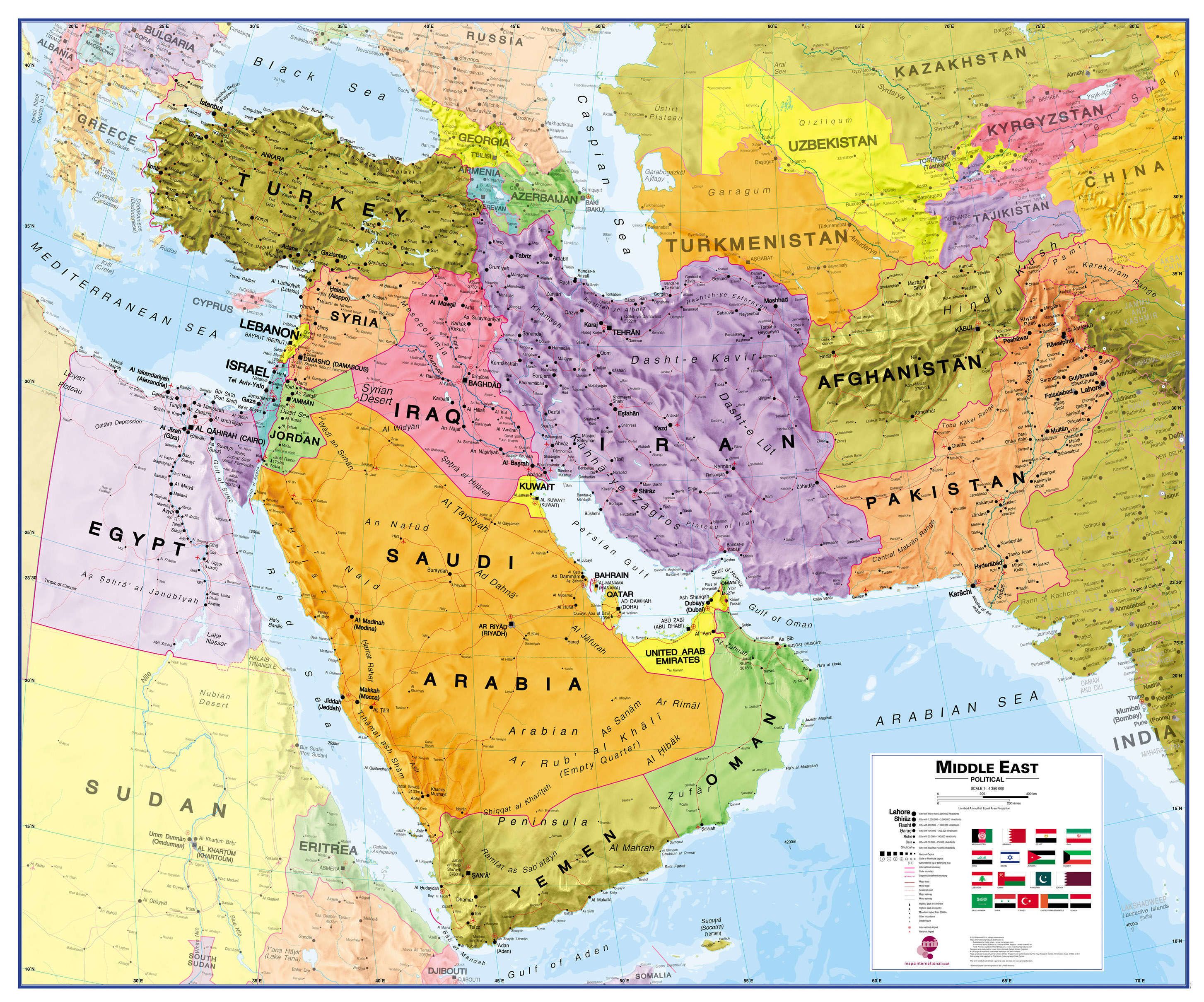
Second, the intersection of geopolitics and finance is tighter than ever. The speed with which Middle East tensions translated into a sell-off in Sydney underscores the interconnectedness of modern capital markets. Investors are no longer just trading on balance sheets; they are trading on geopolitical intelligence.
- Diversification: The TWE rally proves that diversification outside of mining and banking can provide a necessary hedge during commodity downturns.
- Supply Chain Sensitivity: The impact of the Simandou mine highlights the danger of “single-product reliance” for national indices.
- Macro Sentiment: Geopolitical instability often acts as a multiplier for existing fundamental weaknesses.
Common Misconceptions About the Market Drop
In the wake of such a fall, several narratives often emerge that oversimplify the situation. It is important to distinguish between market noise and structural reality.
Misconception 1: “The market is crashing because of a recession.”
While recession fears always linger, this specific drop was not driven by a broad economic collapse. Instead, it was a targeted correction in the mining sector combined with a geopolitical “risk-off” event. The fact that some stocks (like TWE) soared suggests that capital is rotating, not disappearing.
Misconception 2: “Iron ore is dead.”
The fear surrounding the Simandou mine is about margin compression and market share, not the total disappearance of demand for iron ore. Global urbanization and infrastructure projects still require steel. The issue is who provides the ore and at what price.
Misconception 3: “Geopolitical tensions always raise prices.”
While oil often rises during conflict, the broader stock market usually falls. This is because the instability creates uncertainty regarding corporate earnings, shipping costs, and consumer confidence, which outweighs the benefit of higher energy prices for a few specific companies.
Strategic Outlook for the ASX 200
Moving forward, the trajectory of the ASX 200 will likely depend on three primary variables: the actual volume of exports coming out of Guinea, the resolution (or escalation) of tensions in the Middle East, and the health of the Chinese property market.
If the Simandou project faces further delays, the “Big Three” miners may see a relief rally. However, if the project proceeds on schedule, the market will have to accept a “new normal” of lower iron ore prices. Simultaneously, the Australian market will continue to be a barometer for US-Iran relations, as any disruption to global energy flows will inevitably trigger volatility in Sydney.
For long-term holders, the current volatility may be seen as a period of price discovery. The market is trying to figure out what an Australian mining giant is worth in a world where they no longer hold a virtual monopoly on high-grade ore. This transition period is rarely smooth, but it often leads to a more sustainable and diversified valuation of the index.
Frequently Asked Questions
Why did the ASX 200 fall specifically when large-caps were hit?
The ASX 200 is a market-cap-weighted index, meaning the largest companies (like BHP and Rio Tinto) have the most influence. When these “heavyweights” experience a price drop, it pulls the entire index down, even if smaller companies are performing well.
What is the Simandou mine and why does it affect Australia?
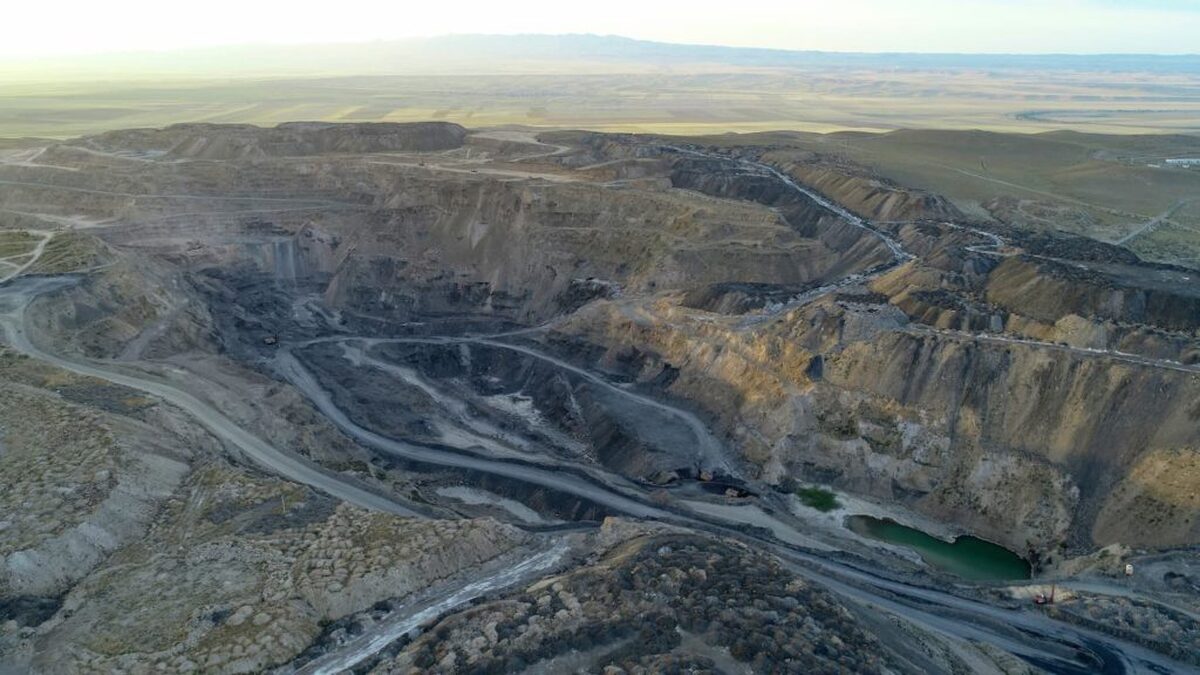
Simandou is a massive, high-grade iron ore deposit in Guinea. Because Australia is the world’s leading exporter of iron ore, a new, large-scale competitor in Africa increases the global supply, which typically pushes prices down and reduces the profit margins of Australian miners.
How do Middle East tensions impact the Australian stock market?
Geopolitical instability creates a “risk-off” environment. Investors sell volatile assets (like stocks) and buy safe assets (like gold or US Treasuries). Tensions in oil-producing regions can increase shipping and operational costs for Australian exporters.
Why did Treasury Wine Estates go up while others went down?
TWE’s growth is tied to the improvement of trade relations between Australia and China. As tariffs on Australian wine are removed, TWE gains access to a massive market, providing a positive catalyst that outweighed the general market decline.
Is this a sign of a long-term bear market for the ASX?
Not necessarily. This event appears to be a combination of a sector-specific correction (mining) and a reaction to external geopolitical shocks. Whether it becomes a long-term trend depends on the sustainability of iron ore prices and global political stability.
For further reading on how to protect a portfolio during commodity swings, consider a related guide on diversification strategies.
