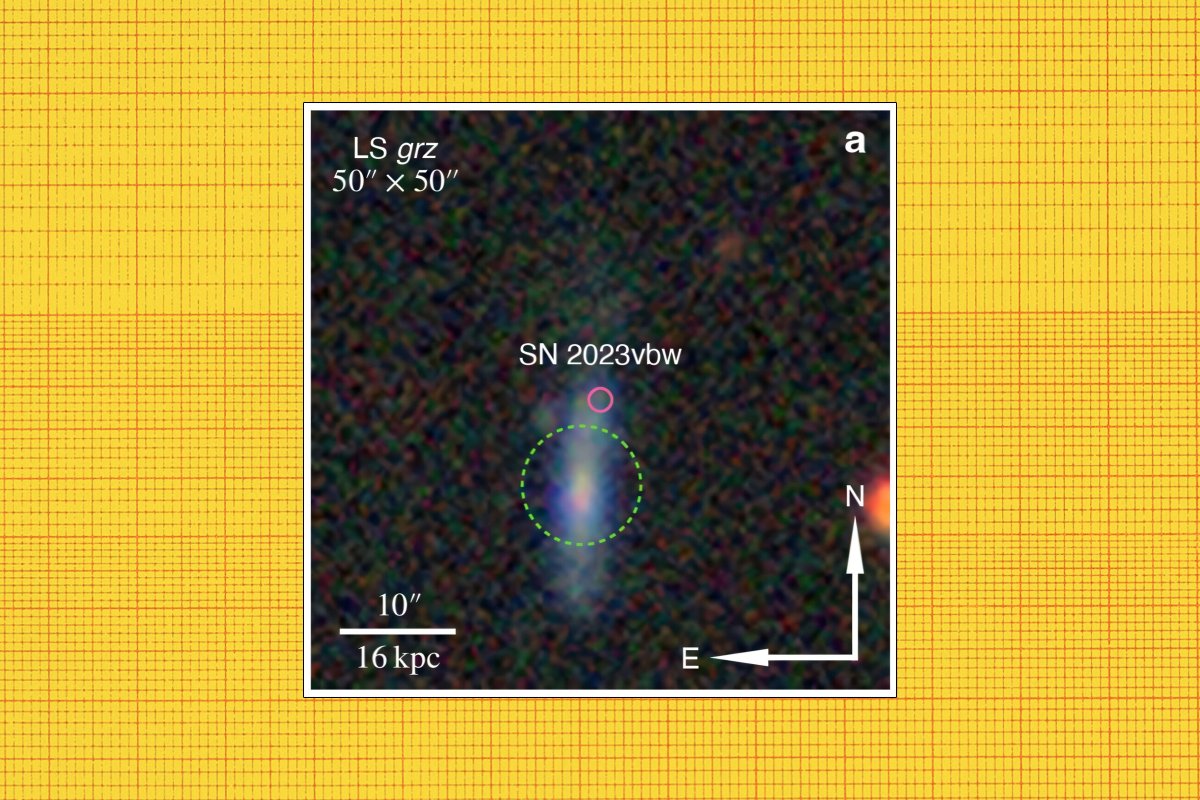
Astronomers Report a Stellar Catastrophe: A Star’s Self-Destruction Left No Trace in the Cosmos
For decades, astronomers have studied the life cycles of stars, from their fiery births in nebulae to their dramatic deaths as supernovae or neutron stars. However, a recent discovery has left the scientific community in awe: a star that seemingly vanished without a trace, its destruction so complete that it left no detectable remnants. This unprecedented event, observed by a team of researchers, challenges existing theories about stellar evolution and raises profound questions about the universe’s most enigmatic phenomena.
The Unseen Cataclysm
Using advanced telescopic data and computational modeling, astronomers detected an anomaly in a distant galaxy. The star, which had been identified in previous surveys, had disappeared entirely. Unlike typical supernovae, which produce luminous explosions and leave behind remnants like neutron stars or black holes, this event left no visible evidence of its existence. The absence of light, gas, or other signatures has baffled scientists, who are now scrambling to understand what could have caused such a complete erasure.
The discovery was first flagged by a team at the European Southern Observatory (ESO), which noticed a sudden drop in light from a region where the star was previously cataloged. Follow-up observations using the Hubble Space Telescope and the James Webb Space Telescope confirmed that no residual energy or debris remained. “It’s as if the star never existed,” said Dr. Elena Martinez, a leading astrophysicist involved in the study. “This is a phenomenon we’ve never seen before.”
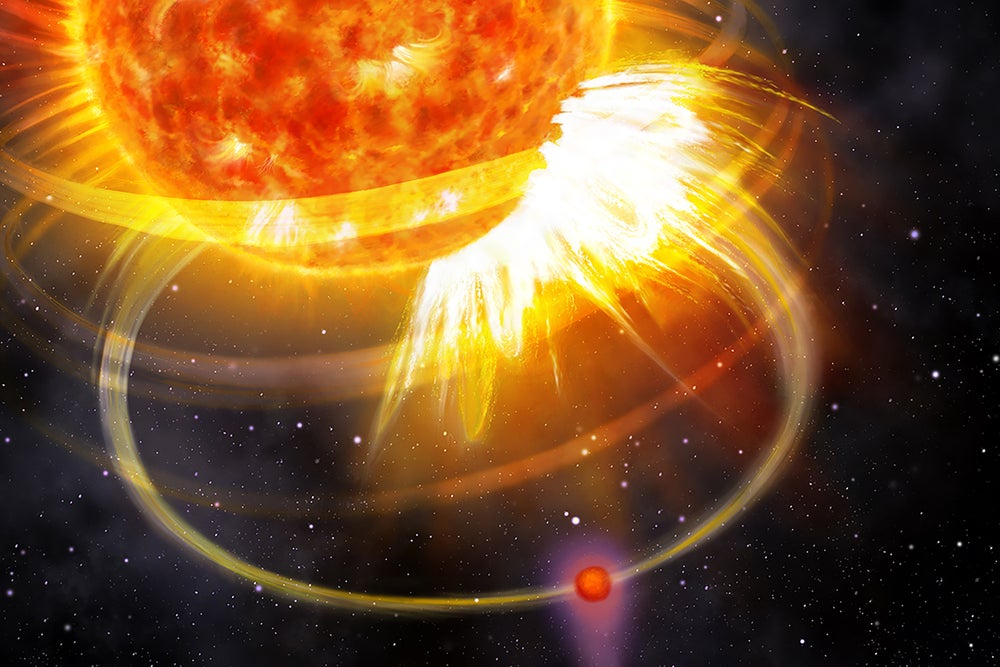
While the exact cause remains unclear, researchers are exploring several theories. One possibility is that the star collapsed into a black hole so rapidly that it did not produce the usual electromagnetic signatures of a supernova. Another hypothesis suggests it underwent a rare type of explosion known as a “pair-instability supernova,” which could theoretically consume the star entirely. However, both scenarios require specific conditions that are not yet fully understood.
Historical Context and Scientific Significance
This event is a rare addition to the catalog of stellar explosions. Historically, astronomers have observed supernovae, which are among the most energetic events in the universe. These explosions can outshine entire galaxies and leave behind remnants such as pulsars or supernova remnants. However, the absence of such features in this case has led to a reevaluation of existing models.
Dr. Marcus Lin, an expert in stellar evolution, noted that “the standard framework for understanding stellar death relies on observable signatures. This discovery forces us to reconsider what we thought were definitive markers of a star’s end.” The team is now investigating whether this event could be part of a previously unrecognized class of stellar phenomena.
The implications for astrophysics are profound. If confirmed, the findings could refine our understanding of how massive stars evolve and die. For instance, the presence of a black hole formed without a visible explosion could challenge assumptions about the relationship between stellar mass and collapse mechanisms. Additionally, the event may provide insights into the formation of dark matter or the behavior of extreme gravitational fields.
Expert Reactions and Theoretical Implications
The scientific community has responded with a mix of excitement and skepticism. While some researchers are eager to explore the new possibilities, others are cautious about drawing conclusions without further evidence. “This is an extraordinary claim, and extraordinary claims require extraordinary evidence,” said Dr. Aisha Patel, a cosmologist at the Max Planck Institute. “We need to rule out alternative explanations, such as observational errors or the star’s sudden migration out of the field of view.”
One of the most intriguing aspects of the discovery is its potential connection to the search for dark matter. Some theories suggest that dark matter could interact with stars in ways that are not yet fully understood. If the star’s collapse was influenced by dark matter, this could provide a new avenue for research. However, this remains speculative, and more data is needed to explore the link.
Another area of interest is the role of binary star systems. Some researchers propose that the star may have been part of a binary system, where its companion star could have played a role in its destruction. However, no evidence of such a companion has been found, leaving this hypothesis unconfirmed.
Future Research Directions
To unravel the mystery, astronomers are planning a series of follow-up observations. These will include deeper scans of the region using radio telescopes and gravitational wave detectors, which could detect any hidden energy signatures. Additionally, the team is analyzing historical data to see if the star exhibited unusual behavior prior to its disappearance.
Dr. Martinez emphasized the importance of international collaboration in this endeavor. “This is a global effort,” she said. “We’re working with teams across the world to cross-verify our findings and explore new angles.” The research is expected to take several years, as the data must be meticulously analyzed to avoid misinterpretation.
One of the challenges lies in distinguishing this event from other rare stellar phenomena. For example, some stars can become “invisible” due to dust clouds or other obscuring factors. However, the absence of any such indicators in this case complicates the analysis. “If we can’t find a star where it was supposed to be, it’s a big deal,” said Dr. Lin. “This is why we need to be methodical.”
What This Means for Astronomy
The discovery highlights the dynamic and unpredictable nature of the universe. While astronomers have made significant progress in understanding stellar life cycles, this event underscores the limitations of current models. It also demonstrates the importance of continued observation and technological advancement in uncovering the universe’s secrets.
For the public, the story serves as a reminder of how much remains unknown. The idea that a star could vanish without a trace challenges our perceptions of cosmic events
