
AHL Announces 2025-26 Top Prospects Team: Carter Yakemchuk Among Elite Selections
The American Hockey League (AHL) has officially announced its 2025-26 Top Prospects Team, identifying the most promising young players expected to impact the professional game. Among the selected players is Carter Yakemchuk of the Binghamton Senators, recognizing his trajectory as a key developmental asset within the Ottawa Senators organization, according to league announcements.
Who made the 2025-26 AHL Top Prospects Team?
The American Hockey League’s selection of the 2025-26 Top Prospects Team serves as a formal recognition of players who demonstrate the skill sets and professional maturity necessary to transition from junior or collegiate ranks to the professional level. A primary highlight of this year’s list is the inclusion of Carter Yakemchuk, a defenseman playing for the Binghamton Senators (B-Sens).
Yakemchuk’s inclusion signals his status as a high-priority prospect. As a defenseman, his role involves not only defensive reliability but also the ability to drive transition play—a critical requirement for modern NHL defenders. The B-Sens, serving as the primary developmental affiliate for the Ottawa Senators, have focused on integrating Yakemchuk into a professional system that emphasizes structural discipline and physical endurance.
While the league’s Top Prospects Team encompasses a variety of positions, the selection of players like Yakemchuk emphasizes the AHL’s role as the final polishing ground before a player reaches the National Hockey League (NHL). These selections are typically based on a combination of statistical performance, scouting reports from NHL parent clubs, and the player’s adaptation to the speed of the professional game.
- Primary Highlight: Carter Yakemchuk (Binghamton Senators).
- Position: Defense.
- Affiliation: Ottawa Senators.
- Recognition: Named to the official 2025-26 AHL Top Prospects Team.
How the AHL Top Prospects Team influences NHL trajectories
Being named to the AHL Top Prospects Team is more than a symbolic honor; it often serves as a leading indicator for upcoming NHL call-ups. According to league developmental patterns, players recognized on these lists are frequently those the parent club views as “NHL-ready” or close to it. This recognition puts a player on the radar of league-wide scouts and analysts, increasing the scrutiny and expectation placed on their performance.
The transition from junior hockey—such as the Western Hockey League (WHL) or Ontario Hockey League (OHL)—to the AHL is often described by coaches as the steepest learning curve in professional sports. The AHL Top Prospects Team highlights players who have successfully navigated this gap. For a player like Yakemchuk, this means proving he can compete against grown men who possess professional strength and tactical experience.
The AHL serves as the primary laboratory for NHL teams to test their prospects under professional conditions, ensuring that when a player is called up to the NHL, they can contribute immediately without hindering the team’s tactical structure.
The implications of this selection typically manifest in three ways:
- Increased Ice Time: Selected prospects often receive more significant roles in power-play or penalty-kill units to accelerate their growth.
- Parent Club Monitoring: NHL general managers closely track these players for potential emergency recalls or planned promotions.
- Market Value: For players on entry-level contracts, these accolades build a resume that supports future contract negotiations and role assignments.
The role of the Binghamton Senators in player development
The Binghamton Senators (B-Sens) operate as a critical link in the Ottawa Senators’ organizational pipeline. The objective of the B-Sens is not merely to win games in the AHL, but to implement the same tactical systems used by the parent club in Ottawa. This ensures that when a prospect like Carter Yakemchuk is promoted, the terminology, breakouts, and defensive zone coverage are identical to what he practiced in Binghamton.
Development in Binghamton focuses on “professional habits.” This includes off-ice conditioning, nutrition, and the mental fortitude required to handle the grueling AHL schedule. For defensemen, the focus is often on gap control and the ability to make a “first pass” under pressure. Yakemchuk’s presence on the Top Prospects Team suggests that the B-Sens’ coaching staff has successfully transitioned his raw talent into a professional framework.
The relationship between the B-Sens and the Ottawa Senators is one of constant communication. Daily reports on prospect progress are shared between the two cities, ensuring that the development plan for Yakemchuk is aligned with the needs of the NHL roster. If the parent club lacks a puck-moving defenseman, the B-Sens will prioritize that specific skill in Yakemchuk’s training.
Developmental Focus Areas for Top Prospects
| Skill Category | Junior Focus | AHL/Professional Focus |
|---|---|---|
| Physicality | Dominating peers in strength | Handling professional-grade strength/size |
| Pacing | Using raw speed to beat defenders | Efficient skating and positional awareness |
| Decision Making | High-risk, high-reward plays | Low-turnover, high-percentage plays |
| Tactics | Basic system adherence | Complex tactical execution and adjustments |
What criteria does the AHL use for prospect selection?
The selection process for the AHL Top Prospects Team is not based solely on point totals. While scoring is a factor for forwards, the league looks at a broader set of metrics to determine who belongs on the list. According to league standards, the following criteria are prioritized:
1. Projection vs. Production
The league distinguishes between a player who is simply producing high numbers in a specific environment and a player whose skills will translate to the NHL. A defenseman might have fewer points than a peer but be selected because his “defensive reliability” and “skating mechanics” are superior. Yakemchuk’s selection indicates a high projection for his future NHL utility.
2. Adaptation Rate
How quickly a player adjusts to the professional game is a key metric. This includes the ability to handle the physical toll of a 72-game season and the ability to execute a coach’s system without repeated errors. Players who show a steep upward trajectory in their first few months of professional play are more likely to be named to the Top Prospects Team.
3. Intangibles and Leadership
Professional teams value “hockey IQ”—the ability to anticipate play before it happens. The AHL evaluates prospects on their positioning, their communication with teammates, and their resilience after a mistake. These intangible qualities are often what separate a “career AHLer” from an NHL mainstay.
For those interested in how these players are tracked, a related explainer on NHL prospect rankings can provide more context on the scoring systems used by professional scouts.
Comparing the AHL development path to other professional leagues
The AHL’s approach to prospect development differs significantly from other professional sports leagues. In baseball, the Minor League system (MiLB) is tiered (Single-A, Double-A, Triple-A). In contrast, the AHL is the singular, primary tier beneath the NHL. This means prospects are thrown into a high-intensity environment immediately.
This “sink or swim” model accelerates development. A player like Carter Yakemchuk is not playing against other teenagers; he is playing against veterans who may have spent years in the league and are fighting for their own NHL opportunities. This creates a competitive friction that forces prospects to evolve faster than they would in a more tiered system.
Furthermore, the AHL’s integration with the NHL is tighter than the relationship between the NBA’s G League and the NBA. Because hockey rosters are smaller and injuries are more frequent, the “shuttle” between the AHL and NHL is constant. This creates a psychological environment where a Top Prospect knows that a strong weekend in Binghamton could result in a plane ticket to an NHL game by Monday.
Key Differences in Pro Development Models
- AHL (Hockey): High-intensity, single-tier affiliate system with frequent “call-ups.”
- MiLB (Baseball): Gradual, multi-tier progression based on specific skill mastery at each level.
- G League (Basketball): Hybrid model focusing on both individual player development and experimental team tactics.
Common misconceptions about “Top Prospect” labels
A frequent misunderstanding among fans is the belief that being named to a Top Prospects Team guarantees a permanent spot in the NHL. In reality, the path is rarely linear. Many players recognized as top prospects encounter “plateaus” where their development stalls, or they suffer injuries that alter their trajectory.
Another misconception is that these lists only prioritize offensive talent. In the case of the 2025-26 team, the inclusion of a defenseman like Yakemchuk proves that the league values “shutdown” capabilities and transition play as much as goal-scoring. The AHL recognizes that a championship-caliber NHL team requires a balance of roles, not just high-scoring stars.
Finally, some assume that the AHL Top Prospects Team is a ranking of the best players currently in the league. It is not. It is a list of the best prospects. A 30-year-old AHL veteran may be the best player on the ice, but he will never be on the Top Prospects Team because his window for “prospect” development has closed. The list is exclusively forward-looking.
Analyzing the impact on the Ottawa Senators pipeline
For the Ottawa Senators, having a player like Carter Yakemchuk recognized by the AHL validates their scouting and drafting process. The organization has invested significant resources into building a pipeline that can sustain a competitive NHL roster without relying solely on expensive free-agent acquisitions.
The success of the B-Sens’ development program is measured by the “graduation rate”—the percentage of prospects who successfully transition to the NHL. By having Yakemchuk named to the Top Prospects Team, the Senators have a clear benchmark for his progress. This allows the front office to make informed decisions about roster spots and contract extensions.
The synergy between the B-Sens and the parent club also benefits other players in the system. When a high-profile prospect like Yakemchuk succeeds, it creates a culture of excellence within the Binghamton locker room. Other young players see the path to recognition and promotion, which increases the overall intensity of practices and games.
Frequently Asked Questions
What is the AHL Top Prospects Team?
The AHL Top Prospects Team is an official recognition by the American Hockey League of the most promising young players expected to make a significant impact in professional hockey. It highlights individuals who show the skill and maturity necessary to potentially transition to the NHL.
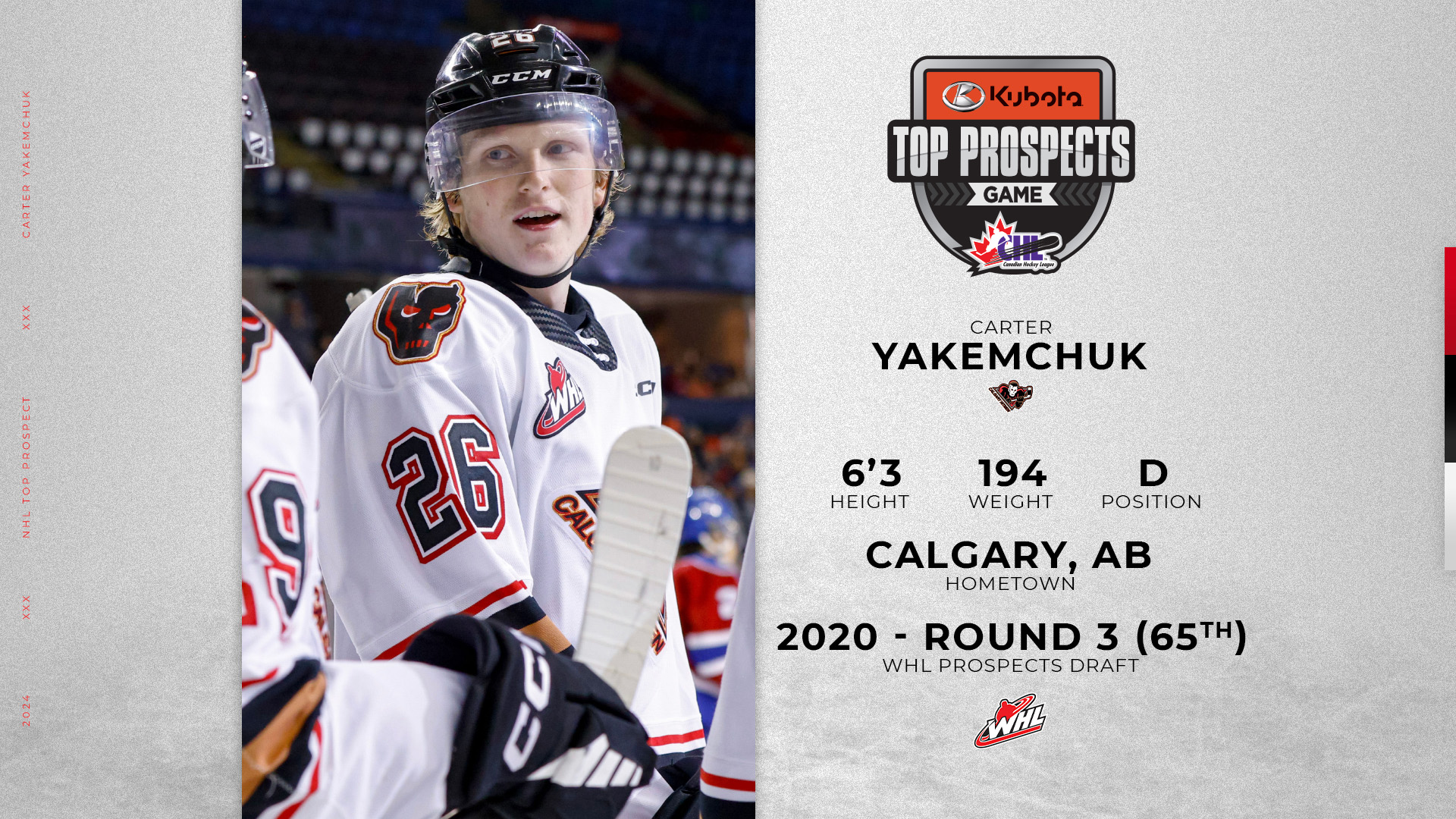
Who is Carter Yakemchuk?
Carter Yakemchuk is a defenseman for the Binghamton Senators (B-Sens), the AHL affiliate of the Ottawa Senators. He was named to the 2025-26 AHL Top Prospects Team, marking him as one of the elite young defensive talents in the league.
Does being a “Top Prospect” guarantee an NHL career?
No. While it indicates high potential and league-wide recognition, it does not guarantee a permanent NHL spot. Players must continue to develop their skills and maintain health to successfully transition to and stay in the NHL.
How does the AHL differ from the NHL?
The AHL is the primary developmental league for the NHL. While it is a professional league with its own standings and championships, its primary purpose is to prepare prospects for the NHL and provide a place for depth players to maintain their form.
Why is the Binghamton Senators team important for the Ottawa Senators?
The Binghamton Senators serve as the training ground where Ottawa’s drafted prospects learn the professional game. They use the same tactical systems as the NHL team, ensuring that players can integrate seamlessly into the parent club upon promotion.
As the 2025-26 season progresses, the performance of the players on the Top Prospects Team will be closely monitored. For Carter Yakemchuk and his peers, the focus now shifts from recognition to execution, as they attempt to turn “prospect” status into a sustained professional career.
