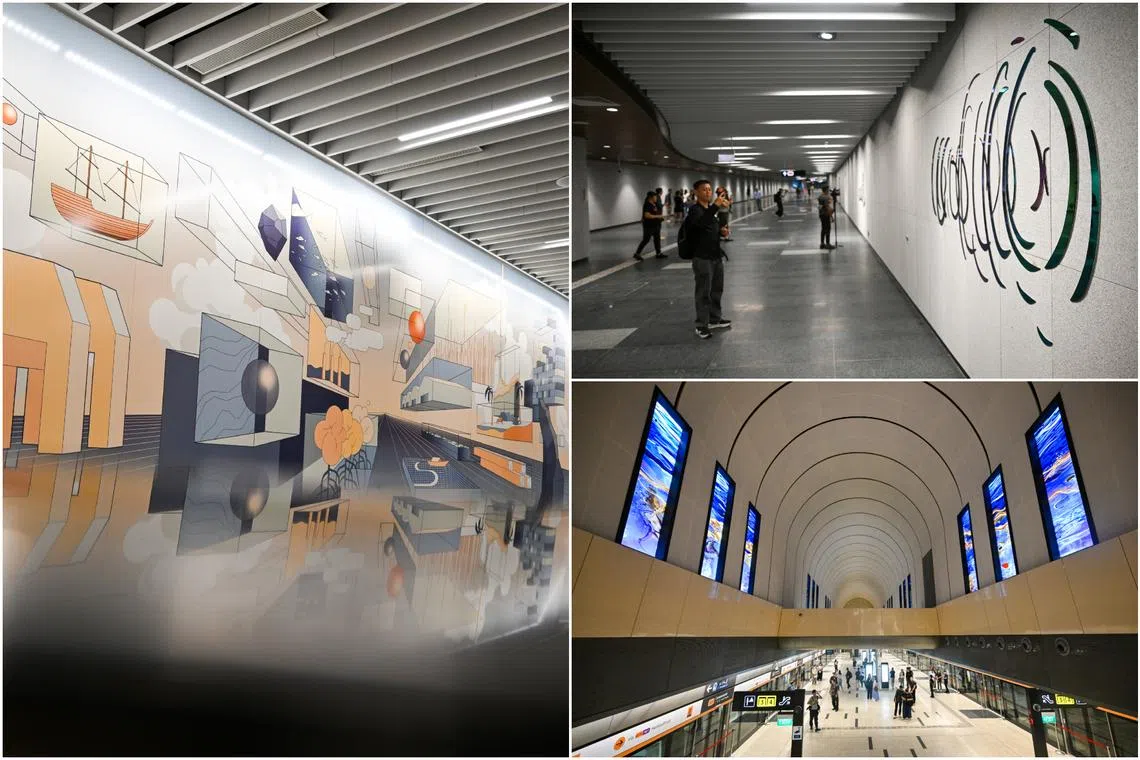
A First Look Inside Singapore’s Circle Line: Keppel, Prince Edward Road, and Cantonment MRT Stations
The completion of Singapore’s Circle Line loop marks a significant milestone in the city-state’s public transportation network, with the opening of three new MRT stations—Keppel, Prince Edward Road, and Cantonment—offering a blend of modern design, cultural expression, and functional innovation. These stations, part of the ongoing expansion of the Circle Line, are designed to enhance connectivity for commuters while reflecting Singapore’s commitment to integrating art and architecture into everyday urban infrastructure. The new additions are expected to alleviate congestion in central areas and support the city’s long-term growth strategy.
Overview of the New Stations
The Circle Line, which first opened in 2009, has long been a critical artery for commuters traveling across Singapore. However, its loop remained incomplete until the recent addition of the three stations, which now connect key commercial, residential, and cultural hubs. The stations are strategically located to serve areas such as Keppel, a major business district, and Prince Edward Road, a central thoroughfare near the Singapore River. Cantonment, known for its historical significance and proximity to the Singapore General Hospital, will also benefit from improved access to public transport.
According to a statement from the Land Transport Authority (LTA), the new stations are part of a broader plan to expand the MRT network by 2030, aiming to reduce travel times and increase coverage. The project, which began in 2020, involved extensive planning and collaboration between engineers, architects, and local artists to ensure the stations meet both practical and aesthetic standards.
Architectural Highlights and Design Philosophy
The design of the three stations reflects a balance between functionality and artistic expression. Each station features unique architectural elements that cater to the specific needs of its surrounding area. For instance, the Keppel station incorporates a sleek, modern aesthetic with large glass panels to maximize natural light, while the Prince Edward Road station emphasizes open spaces and seamless integration with nearby pedestrian pathways.
The Cantonment station, in contrast, draws inspiration from its historical roots. The design includes elements that pay homage to the area’s colonial-era architecture, such as curved arches and ornate detailing. These features not only enhance the visual appeal of the stations but also create a sense of place for commuters and visitors alike.
“The goal was to create spaces that are not only efficient but also welcoming,” said an LTA spokesperson. “These stations are designed to reflect the character of their neighborhoods while providing a comfortable environment for passengers.”
Art and Cultural Integration
A standout feature of the new stations is the inclusion of artworks by local artists, which aim to celebrate Singapore’s diverse cultural heritage. At Keppel station, a large mural depicting the maritime history of the area is prominently displayed, while Prince Edward Road showcases a series of sculptures that highlight the city’s role as a global trading hub. The Cantonment station, meanwhile, features a digital installation that narrates the area’s transformation over the decades.

The artworks were selected through a competitive process involving the National Arts Council and local art institutions. According to the council, the initiative seeks to foster a deeper connection between public spaces and the communities they serve. “Art has the power to transform mundane environments into meaningful experiences,” said a representative from the council. “These installations are a testament to the creativity and talent of Singapore’s artists.”
Community Impact and Feedback
The new stations have already begun to influence local communities, with residents and businesses expressing optimism about the improvements. Commuters in the Keppel area, for example, have noted that the station’s proximity to office buildings has made daily travel more convenient. Similarly, the Prince Edward Road station has been praised for its accessibility to shops and restaurants along the adjacent street.
However, some concerns have been raised about the impact of construction on nearby neighborhoods. During the building phase, temporary road closures and noise disruptions affected local businesses. A survey conducted by a local community group found that while most residents supported the project, they urged authorities to address these challenges more proactively in future developments.
“We understand the temporary inconveniences caused by the construction,” said a community representative. “But we also recognize the long-term benefits of improved infrastructure. It’s a trade-off that we’re willing to make for the greater good.”
Timeline and Development Process
The journey to complete the Circle Line loop began over a decade ago, with initial feasibility studies conducted in the early 2010s. The project faced several delays due to technical challenges and budget constraints, but officials remained committed to its completion. Key milestones included the approval of funding in 2018, the commencement of construction in 2020, and the final testing phase in 2023.
The LTA has emphasized that the stations were built with sustainability in mind. Features such as energy-efficient lighting, rainwater harvesting systems, and green roofs have been incorporated to reduce the environmental footprint. These measures align with Singapore’s broader goals of becoming a “City in a Garden,” where urban development harmonizes with nature.
“Every aspect of the design and construction was guided by the principles of sustainability and resilience,” said an LTA engineer. “We wanted to ensure that these stations not only serve the needs of today but also contribute to a greener future.”
Challenges and Lessons Learned
The development of the new stations was not without its challenges. One of the primary hurdles was navigating the dense urban landscape of Singapore, where space is at a premium. Engineers had to rely on innovative solutions, such as underground tunneling and modular construction techniques, to minimize disruptions to existing infrastructure.
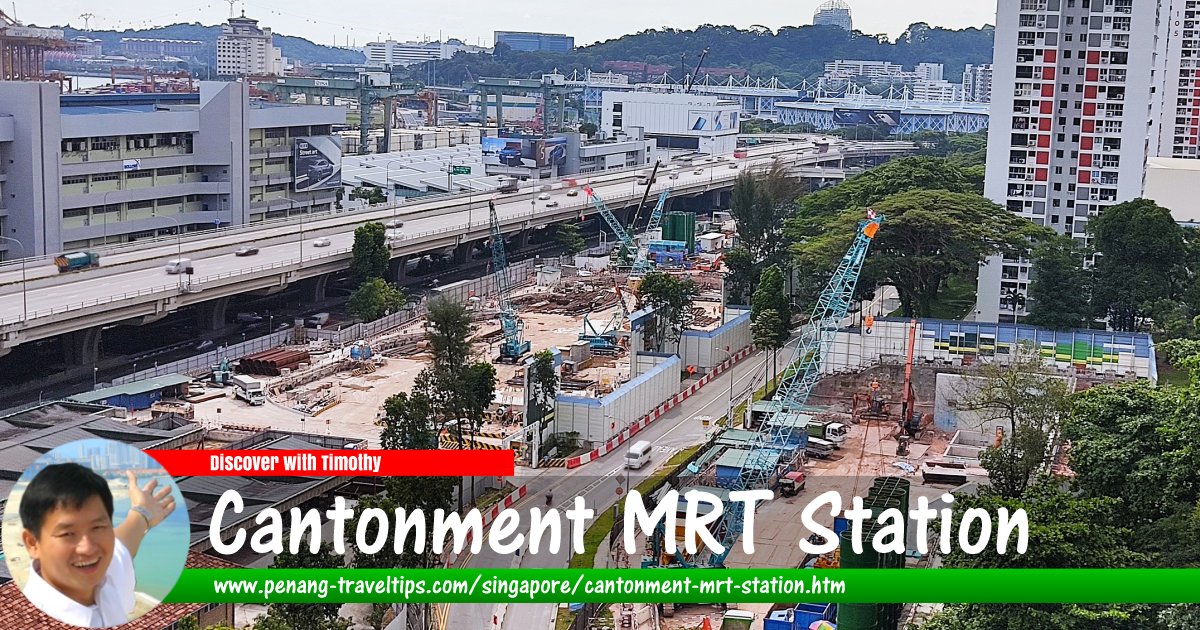
Another challenge was ensuring that the stations met the diverse needs of commuters. For example, the design of the Cantonment station had to accommodate a high volume of elderly and disabled passengers, leading to the inclusion of wider platforms and accessible pathways. These adjustments highlight the importance of inclusive design in public spaces.
“This project taught us the value of adaptability,” said a project manager. “Every decision we made had to balance technical feasibility with the needs of the community. It was a complex process, but the end result is a set of stations that truly serve the people of Singapore.”
Why These Stations Matter
The completion of the Circle Line loop is more than just a logistical achievement;
