Breakthrough in Medical Imaging: Affordable AI-Powered Endomicroscope Aims to Revolutionize Early Cancer Detection
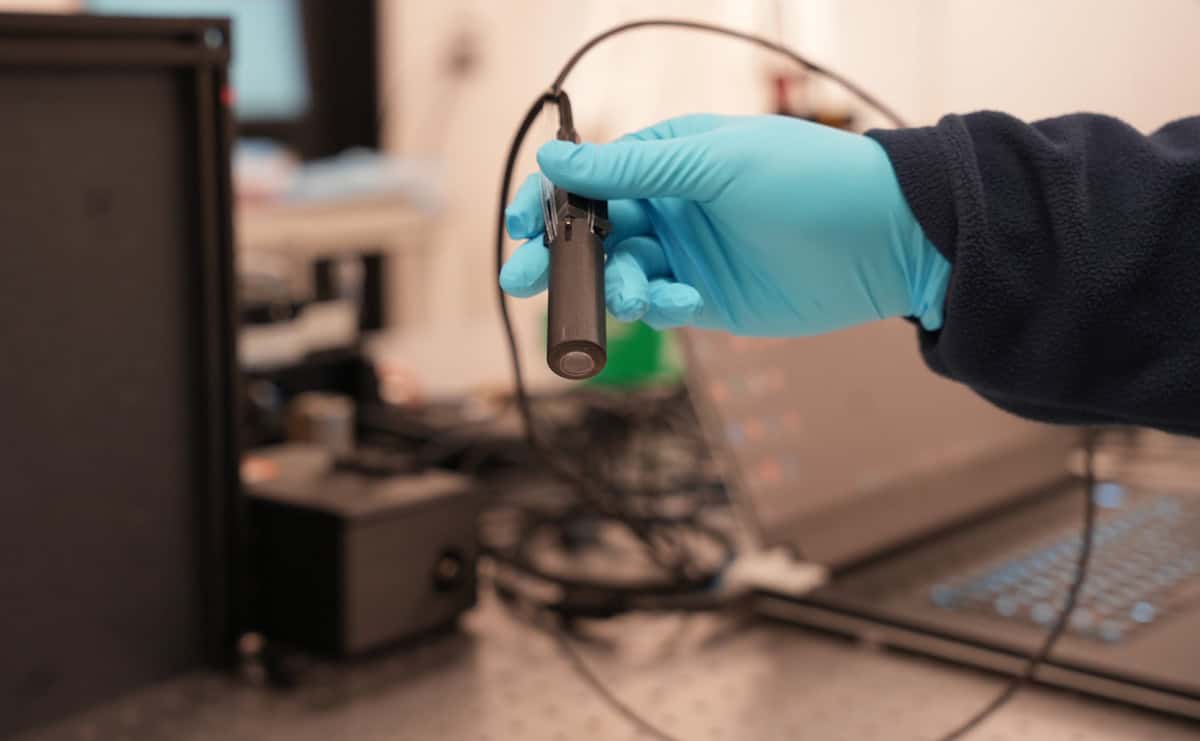
A new generation of medical imaging technology is advancing the fight against cancer, with a compact, AI-driven endomicroscope offering a cost-effective solution for early detection in clinical settings. According to recent research, this innovation could significantly improve diagnostic accuracy and accessibility, particularly in resource-limited regions. The device, developed by a team of engineers and medical professionals, leverages machine learning algorithms to analyze cellular structures in real time during endoscopic procedures.
What Is an Endomicroscope and How Does It Work?
An endomicroscope is a specialized imaging tool designed to provide high-resolution microscopic views of tissues during endoscopic examinations. Traditional endomicroscopes, however, are often large, expensive, and require complex setups, limiting their use in many healthcare facilities. The new AI-powered version addresses these challenges by integrating lightweight design with advanced computational capabilities.
The device uses a fiber-optic probe to capture real-time images of cellular and subcellular structures within the body. These images are then processed by machine learning models trained to identify abnormal tissue patterns associated with cancer. According to a study published in the journal Advanced Healthcare Materials, the system achieved a 92% accuracy rate in detecting precancerous lesions during clinical trials.
“This technology bridges the gap between high-resolution imaging and practical application,” said Dr. Elena Martinez, a biomedical engineer involved in the project. “By making endomicroscopy more affordable and portable, we can bring cutting-edge diagnostics to a broader range of patients.”
Who Is Behind the Innovation?
The development of the AI-powered endomicroscope was led by a multidisciplinary team at the Global Health Innovation Lab, a research collective based in Switzerland. The group includes experts in biomedical engineering, artificial intelligence, and clinical oncology. Their work was supported by a $2.5 million grant from the World Health Organization’s (WHO) Digital Health Initiative, which aims to expand access to advanced diagnostic tools in low- and middle-income countries.
Key collaborators include the University of Geneva’s Department of Medical Imaging and the startup MedTech Innovations, a company specializing in AI-driven medical devices. The partnership highlights the growing trend of public-private collaboration in advancing healthcare technology.
“This project is a testament to the power of cross-sector partnerships,” said Dr. Raj Patel, a co-lead researcher. “By combining academic expertise with industry resources, we’ve created a tool that could transform how we detect and treat cancer.”
Why This Development Matters for Cancer Detection
Cancer remains one of the leading causes of death worldwide, with early detection being a critical factor in improving survival rates. Traditional diagnostic methods, such as biopsies and imaging scans, can be time-consuming, invasive, or costly. The AI-powered endomicroscope offers a non-invasive alternative that provides immediate results during a single procedure.
Experts note that the device’s real-time analysis capability could reduce the need for follow-up tests and expedite treatment decisions. For instance, during a colonoscopy, the endomicroscope can identify abnormal cells in the colon lining and guide targeted biopsies, minimizing patient discomfort and healthcare costs.
“In many cases, early-stage cancers are asymptomatic,” explained Dr. Aisha Khan, a gastroenterologist at the University of Zurich. “This technology allows us to detect lesions that might otherwise go unnoticed, potentially saving lives through timely intervention.”
Historical Context and Previous Attempts
The concept of endomicroscopy is not new. Early versions of the technology emerged in the 1990s, but their high cost and technical complexity restricted widespread adoption. In the past decade, advancements in miniaturization and computing power have spurred renewed interest in the field. However, most existing systems remain prohibitively expensive for many healthcare providers.
One notable predecessor is the Cytoscopy 3D system, developed in the early 2010s, which used laser scanning to create 3D images of tissue. While effective, it required specialized training and was not widely available outside major medical centers. The latest AI-powered endomicroscope builds on these innovations by simplifying the user interface and reducing operational costs.
“This is the next evolution in endomicroscopy,” said Dr. Martinez. “We’ve taken the best aspects of earlier models and made them more accessible through AI integration.”
Challenges and Limitations
Despite its promise, the technology faces several hurdles. Regulatory approval processes for medical devices can be lengthy, and the endomicroscope must undergo extensive clinical trials to demonstrate safety and efficacy. Additionally, the AI algorithms require continuous refinement to avoid false positives or negatives, which could lead to misdiagnosis.
Another concern is the potential for over-reliance on the device. While AI can enhance diagnostic accuracy, it is not a substitute for clinical judgment. Healthcare providers must be trained to interpret the data correctly and use the tool as part of a broader diagnostic strategy.
“AI is a powerful辅助工具, not a replacement for human expertise,” emphasized Dr. Khan. “We need to ensure that clinicians are equipped to use this technology responsibly.”
Global Implications and Future Prospects
The potential impact of the AI-powered endomicroscope extends beyond individual patients. By improving early detection rates, the technology could reduce the overall burden on healthcare systems, lowering long-term treatment costs and improving public health outcomes. In regions with limited access to advanced diagnostics, the device could serve as a critical resource for screening programs.
Looking ahead, researchers plan to expand the device’s applications to other areas of oncology, such as detecting lung and skin cancers. The team is also exploring partnerships with international health organizations to deploy the technology in developing nations.
“This is just the beginning,” said Dr. Patel. “We’re already working on versions tailored for different medical specialties, and we hope to see this technology become a standard tool in cancer care worldwide.”
What Comes Next for the Technology?
The next phase of development involves scaling production and securing regulatory approvals in key markets. The Global Health Innovation Lab has already begun pilot programs in three countries, including Kenya and Brazil, to test the device’s performance in diverse healthcare settings.
