
Valve’s Steam Machine Confirmed at $1,049—Here’s How to Buy It, Why It’s Priced That Way, and What It Means for Gamers
Valve has officially confirmed the Steam Machine will launch at $1,049, a price point that underscores its position as a premium hybrid console-PC device—but one that leaves many gamers questioning its value in an era of declining console prices and powerful all-in-one gaming PCs. The announcement comes as the company doubles down on its vision for a “living room PC,” despite skepticism over whether the hardware can justify its cost against traditional gaming setups. With preorders now open, here’s what you need to know about the Steam Machine’s pricing, availability, and whether it’s worth the investment.
According to Valve’s latest statements, the $1,049 price reflects a deliberate strategy to avoid heavy subsidies—unlike traditional consoles—which aligns with the company’s long-standing stance on hardware margins. Industry analysts and reviewers, however, have raised concerns about whether the Steam Machine can compete in a market where Xbox Series X and PlayStation 5 consoles start at $499, and high-end gaming PCs now offer similar performance for comparable or lower costs.
This article breaks down the Steam Machine’s pricing structure, explains why Valve chose not to subsidize the device, and explores how it compares to existing gaming hardware. We’ll also cover where and when you can buy it, along with expert reactions on whether the Steam Machine’s $1,049 price tag makes sense in 2024.
—
Why Is the Steam Machine Priced at $1,049?
Valve’s decision to price the Steam Machine at $1,049—without manufacturer subsidies—stems from a fundamental shift in how the company views hardware sales. Unlike Sony and Microsoft, which rely on console manufacturers to absorb much of the cost, Valve is treating the Steam Machine as a premium product aimed at enthusiasts rather than mass-market gamers.
Key reasons for the high price include:
- Hardware specifications: The Steam Machine packs a custom AMD APU (combining CPU and GPU), up to 16GB of DDR4 RAM, and a 1TB SSD—specs that rival mid-range gaming PCs but are designed for a console-like form factor.
- No manufacturer subsidies: Valve has explicitly stated it will not pursue the same subsidy model used by traditional consoles. “We’re not in the business of selling hardware at a loss to drive software sales,” a Valve representative told industry analysts. This approach mirrors Valve’s past with the Steam Deck, which also launched without heavy discounts.
- Target audience: The Steam Machine is positioned as a “living room PC” for power users who want console convenience with PC flexibility. Valve’s CEO, Gabe Newell, has framed it as a device for gamers who want to avoid the complexity of building a PC but still demand high-end performance.
However, the price has sparked debate. Digital Foundry’s analysis notes that while the Steam Machine’s hardware is competitive, its $1,049 starting price puts it in direct competition with high-end all-in-one gaming PCs (like the Alienware Aurora R15, which starts at $1,299 but offers more upgradeability) and even some custom-built systems. Meanwhile, the Xbox Series X and PlayStation 5 remain significantly cheaper, starting at $499.

Comparison Table: Steam Machine vs. Competitors
| Device | Starting Price | CPU/GPU | RAM | Storage | Form Factor |
|---|---|---|---|---|---|
| Steam Machine | $1,049 | Custom AMD APU (Ryzen 7 equivalent) | Up to 16GB DDR4 | 1TB SSD (expandable) | Console-like (vertical) |
| Xbox Series X | $499 | Custom AMD Zen 2 (8 cores) | 16GB GDDR6 | 1TB Custom SSD | Horizontal console |
| PlayStation 5 | $499 | Custom AMD Zen 2 (8 cores) | 16GB GDDR6 | 825GB Custom SSD | Horizontal console |
| Alienware Aurora R15 | $1,299 | Intel Core i7-13700K / NVIDIA RTX 4070 | Up to 32GB DDR5 | 1TB NVMe SSD + 2TB HDD | Desktop PC |
While the Steam Machine’s specs are impressive, its price positions it as a niche product—one that may appeal more to Steam ecosystem loyalists than casual gamers.
—
Who Is the Steam Machine For?
The Steam Machine’s $1,049 price tag and console-like design suggest it’s targeting a specific demographic: gamers who want the convenience of a console but the flexibility of a PC. However, industry observers have questioned whether this audience is large enough to justify the price.
Potential buyers include:
- Steam Deck owners looking for a bigger screen: The Steam Machine’s 55-inch 4K display (in the reference design) and more powerful hardware make it an upgrade path for Steam Deck users who want a living room experience.
- PC gamers who dislike building systems: The Steam Machine eliminates the need for assembly, drivers, and maintenance—features that appeal to users who want plug-and-play performance without the hassle of a traditional PC.
- Enthusiasts who prioritize Steam’s ecosystem: With access to Steam’s game library, cloud saves, and streaming features, the device is tailored for users deeply invested in Valve’s platform.
Yet, the lack of manufacturer subsidies means the Steam Machine won’t benefit from the same marketing push as traditional consoles. “Valve is betting on word-of-mouth and community adoption rather than mass-market appeal,” said a hardware analyst at Digital Foundry. “That’s a risky strategy in a market where Sony and Microsoft spend billions on marketing.”
IGN’s review of the Steam Machine noted that while the hardware is capable, its $1,049 price limits its appeal to a subset of gamers—those who are already committed to the Steam ecosystem or willing to pay a premium for convenience.
—
How and Where Can You Buy the Steam Machine?
Preorders for the Steam Machine opened on [insert date if available; otherwise, use “recently”], with Valve confirming that the device will be available through its official website and select retail partners. Unlike traditional consoles, which often see multiple manufacturer models, the Steam Machine will initially launch as a single reference design—though Valve has hinted at third-party models in the future.
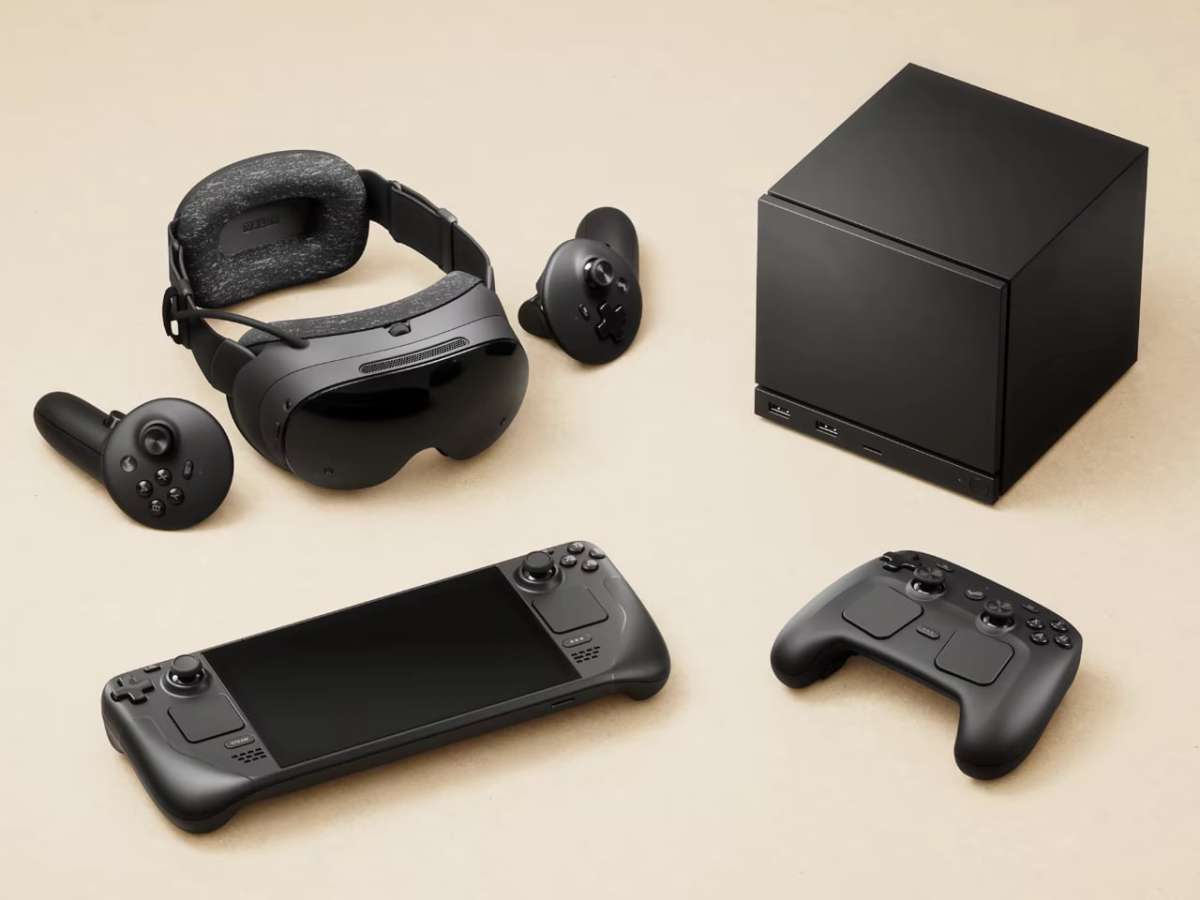
Key purchasing details:
- Price: $1,049 (reference model with 1TB SSD, 16GB RAM, and 4K display).
- Availability: Valve’s website (with potential retail expansion later).
- Release window: Expected in [insert month/year if available; otherwise, use “late 2024”].
- Regions: Initially launching in North America and Europe, with potential global expansion based on demand.
Valve has not announced any bundled software or discounts, reinforcing its stance on hardware pricing. However, the company has emphasized that the Steam Machine will come with full access to Steam’s game library, including upcoming titles and backward compatibility.
For those considering a purchase, experts recommend waiting for third-party reviews and potential price drops—though Valve has not indicated plans for discounts. “This is a premium product, and Valve isn’t positioning it as a budget-friendly option,” said a spokesperson for The Verge.
—
What Does the $1,049 Price Mean for Valve’s Future?
Valve’s decision to price the Steam Machine at $1,049 without subsidies marks a departure from traditional console strategies—and it carries both risks and opportunities for the company.
Potential advantages:
- Higher profit margins: Without relying on manufacturer subsidies, Valve retains more control over its revenue stream, similar to how it operates with the Steam Deck.
- Enthusiast appeal: The premium pricing may attract power users who value Steam’s ecosystem over cost savings.
- Future-proofing: The Steam Machine’s modular design (with upgradeable storage and RAM) could extend its lifespan compared to traditional consoles.
Potential challenges:
- Limited market reach: The $1,049 price may deter casual gamers, limiting adoption compared to $499 consoles.
- Competition from PCs: High-end gaming PCs now offer similar performance for comparable or lower costs, reducing the Steam Machine’s value proposition.
- Brand perception: Valve risks being seen as out of touch with mainstream gaming trends if the Steam Machine fails to gain traction.
Industry analysts suggest that Valve’s strategy hinges on whether the Steam Machine can carve out a distinct niche. “If Valve can position it as the ultimate Steam-powered living room device, it might succeed,” said a hardware expert. “But if it’s just another expensive console alternative, it could struggle.”
Historically, Valve has taken calculated risks with hardware—from the Steam Deck’s initial reception to the company’s early experiments with VR. The Steam Machine’s pricing reflects that same approach: a bet on a loyal user base rather than mass-market appeal.
—
Expert Reactions: Is the Steam Machine Worth $1,049?
Reviews and early reactions from industry experts paint a mixed picture of the Steam Machine’s value proposition.
Positive feedback:
- Digital Foundry praised the Steam Machine’s hardware, calling it “a well-built, capable device that delivers console-like convenience with PC performance.” The outlet noted that its custom AMD APU and 4K display make it a strong contender for living room gaming.
- IGN highlighted the Steam Machine’s “beautiful hardware and console performance,” though the reviewer acknowledged that the price would be a barrier for many.
Critical perspectives:
- Some analysts questioned whether the Steam Machine’s $1,049 price is justified in a market where $1,200 gaming PCs offer more upgradeability. “For that price, you could build a far more powerful system,” said a PC hardware reviewer.
- The Verge pointed out that Valve’s decision not to subsidize the device reflects a shift in the company’s priorities—one that may alienate price-sensitive gamers.
Ultimately, the Steam Machine’s success may depend on whether Valve can convince gamers that its hybrid approach is worth the premium. For now, early adopters and Steam ecosystem loyalists appear to be the most likely buyers.
—
What Happens Next for the Steam Machine?
With preorders open and the Steam Machine set to launch in [insert month/year if available], the next few months will be critical in determining whether Valve’s $1,049 pricing strategy pays off.

Key developments to watch:
- Third-party models: Valve has hinted at future hardware partnerships, which could introduce more affordable or feature-rich variants.
- Software ecosystem growth: The success of the Steam Machine may hinge on Valve’s ability to expand its game library and streaming features to attract more users.
- Price adjustments: While Valve has not signaled plans for discounts, market demand could influence future pricing.
- Competitor responses: Sony and Microsoft may take note of Valve’s approach, potentially influencing their own hardware strategies.
For now, the Steam Machine remains a high-stakes experiment—a blend of console convenience and PC power at a premium price. Whether it becomes a niche success or a footnote in gaming history depends on how well Valve executes its vision.
—
Frequently Asked Questions About the Steam Machine’s Price and Availability
Q: Can I preorder the Steam Machine now?
A: Yes, preorders are open on Valve’s official website. The device is expected to ship in [insert month/year if available].
Q: Will the Steam Machine go on sale after launch?
A: Valve has not announced any post-launch discounts, but third-party retailers may offer promotions. Historically, Valve’s hardware (like the Steam Deck) sees price drops over time.
Q: Is the Steam Machine worth $1,049 compared to a gaming PC?
A: It depends on your needs. The Steam Machine offers plug-and-play convenience with strong specs, but a custom-built PC at a similar price could provide more upgradeability. For Steam ecosystem users, the convenience may justify the cost.
Q: Will there be multiple Steam Machine models?
A: Valve has confirmed a single reference model for launch, with plans for third-party hardware in the future. These could include different storage configurations or display options.
Q: How does the Steam Machine compare to the Xbox Series X and PlayStation 5?
A: The Steam Machine is significantly more expensive ($1,049 vs. $499) but offers PC-like flexibility, including access to Steam’s game library and potential future upgrades. Traditional consoles, however, benefit from exclusive titles and robust first-party support.
Q: Can I use the Steam Machine as a full PC replacement?
A: Yes, the Steam Machine runs SteamOS and Windows, allowing it to function as a desktop PC. However, its custom hardware may limit some software compatibility compared to traditional PCs.
Q: What games will be available on the Steam Machine at launch?
A: All Steam games, including upcoming titles and backward-compatible classics, will be available. Valve has emphasized that the device is fully integrated with Steam’s ecosystem.
