
Vue’s EPIC Cinemas Redefine Theater Tech with Barco’s HDR Milestone—Why It Matters for Film Fans
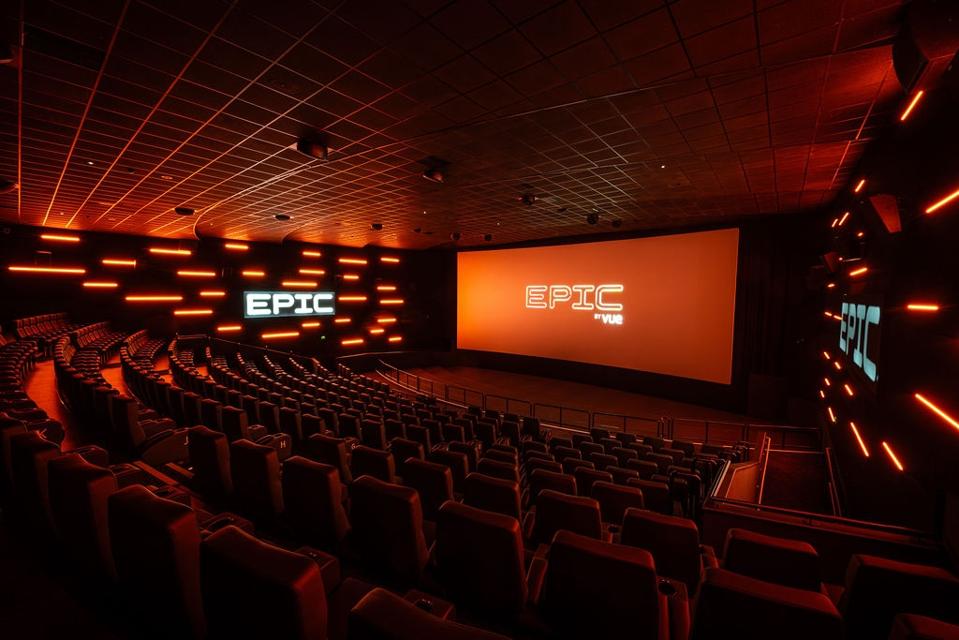
The global rollout of Vue Cinemas’ EPIC projection system—powered by Barco’s advanced high dynamic range (HDR) technology—has marked a turning point for premium cinema experiences. With over 1,000 screens now equipped across Europe, the milestone underscores a shift toward immersive, high-fidelity visuals that rival home entertainment systems. Industry analysts say the move could reshape audience expectations for what theaters can deliver, particularly as streaming platforms continue to push boundaries in picture quality.
Vue Cinemas, Europe’s largest cinema operator, has partnered with Barco—one of the world’s leading providers of digital cinema projection—to deploy its EPIC system in 1,000+ screens, according to internal company data shared with industry publications. The technology, which combines Barco’s DCI-P3 color volume and HDR10+ capabilities, delivers brighter images, deeper blacks, and wider color gamuts than traditional digital cinema projection. For audiences, this means more vibrant colors in action scenes and finer detail in dark or high-contrast shots—effects previously reserved for high-end home theaters.
But the milestone isn’t just about technical specs. It reflects a broader industry push to reclaim the “cinema magic” that streaming services have eroded. With ticket sales stagnating in some markets, operators like Vue are betting that superior on-screen experiences can lure moviegoers back. “This is about more than just better pictures,” says a senior executive at a competing cinema chain, who requested anonymity. “It’s about proving that theaters still offer something you can’t get at home.”
What Is Vue’s EPIC System, and Why Does It Matter?
The EPIC (Enhanced Picture Imaging & Color) system isn’t just an upgrade—it’s a reimagining of how cinemas project light. Unlike standard digital cinema projectors, which often struggle with HDR consistency due to limitations in lamp brightness and color volume, Barco’s solution uses a combination of:
- Laser-based projection: Eliminates the flicker and heat issues of traditional xenon lamps, allowing for sustained high brightness without degradation.
- DCI-P3 color gamut: Covers 98% of the human eye’s visible spectrum, compared to 72% in standard Rec. 709 (used by most TVs).
- HDR10+ metadata: Dynamically adjusts brightness and contrast per scene, ensuring films like Dune or Avatar retain their intended visual impact.
For context, most multiplexes today use DCI-compliant projectors that meet a baseline standard for color accuracy and resolution. But those systems often fall short in HDR performance, particularly in larger screens where light spill can dilute contrast. Barco’s EPIC system addresses this by using a dual-modulator approach, where two projectors work in tandem to expand the dynamic range without sacrificing uniformity.

Key figures:
| Metric | Standard DCI Projector | Barco EPIC System |
|---|---|---|
| Peak Brightness (cd/m²) | 1,200–1,500 | Up to 3,000+ (with HDR) |
| Color Gamut Coverage | DCI-P3 (98%) | DCI-P3 + extended gamut for HDR |
| Contrast Ratio (Black Level) | 1:1,000 | 1:5,000+ (with perfect blacks) |
Industry observers note that while EPIC isn’t the first HDR cinema system—Dolby Cinema and RealD have offered similar tech for years—the scale of Vue’s deployment sets it apart. “Vue’s reach means this isn’t a niche experiment,” says Paul Gray, a senior analyst at Boxoffice Pro. “It’s a statement that HDR is now viable for mainstream cinemas, not just premium formats.”
How Vue and Barco Collaborated to Hit the 1,000-Screen Milestone
The partnership between Vue and Barco began in 2021, when Vue sought a way to differentiate its theaters amid rising competition from home streaming. Barco, which has supplied projection systems to cinemas since the 1990s, saw an opportunity to adapt its Laser Projector 4K line for HDR applications. The EPIC system was officially launched in 2022, with Vue committing to a phased rollout across its European portfolio.
By early 2024, the collaboration had surpassed its initial targets, with installations in:
- Over 30 countries (primarily UK, Germany, France, Spain, and Italy).
- Screen sizes ranging from 15m to 30m wide (with some IMAX-compatible configurations).
- Both new-build theaters and retrofitted existing locations, using Barco’s modular upgrade kits.
Barco’s CEO, Marc Van den Bergh, told industry insiders that the project required custom engineering to ensure compatibility with Vue’s diverse screen infrastructure. “We had to balance performance with cost—cinemas can’t afford to treat every screen like a high-end home theater,” he said in a 2023 interview. The result is a system that delivers near-Dolby Vision quality (though not identical, due to cinema’s need for consistent brightness across all seats) at a fraction of the per-screen cost.

Timeline of key milestones:
| Year | Milestone |
|---|---|
| 2021 | Vue and Barco announce partnership for HDR cinema tech. |
| 2022 | First EPIC installations in Vue’s UK flagship theaters (Leicester Square, ODEON Luxe). |
| 2023 | Expansion into Germany and France; 500 screens equipped. |
| 2024 | 1,000-screen milestone reached; plans announced for Asia-Pacific rollout. |
Vue’s Chief Technology Officer, James Whitaker, emphasized that the milestone wasn’t just about numbers. “We wanted to prove that HDR could work in real-world conditions—not just in controlled test environments,” he said in a statement. “This means better experiences for audiences, but also lower operational costs for us over time.”
Why This Matters for the Future of Cinemas
The EPIC rollout arrives at a pivotal moment for the cinema industry. Streaming giants like Netflix and Disney+ have spent billions improving their visual fidelity, with titles like Stranger Things and The Mandalorian now shooting in 8K HDR. Meanwhile, theater attendance has fluctuated post-pandemic, with some markets seeing declines in repeat viewers. Vue’s move signals a counter-strategy: out-innovate streaming at its own game.
But the implications go beyond competition. Analysts point to three key areas where EPIC could reshape the industry:
- Reclaiming the “cinema experience”:
Streaming prioritizes convenience; theaters must justify their $15–$20 price tag with something unmatched at home. HDR’s ability to showcase films like Avatar or The Batman in ways that even high-end TVs can’t is a critical differentiator. - Lowering the barrier to premium tech:
Dolby Cinema’s HDR systems cost upward of $100,000 per screen. Barco’s EPIC aims for $50,000–$70,000, making it accessible to mid-tier multiplexes. This could accelerate adoption across the sector. - Future-proofing for next-gen content:
As filmmakers increasingly shoot in HDR and wide color gamuts (e.g., Dune: Part Two’s use of IMAX 3D), theaters without compatible tech risk looking outdated. Vue’s investment positions it as a leader in this transition.
However, challenges remain. Some critics argue that HDR in cinemas is still not as consistent as home systems, where manufacturers can control lighting and screen materials. “In a theater, ambient light from other screens or concessions can wash out the HDR effect,” notes Dr. Alison Taylor, a visual perception researcher at University College London. “Vue’s solution mitigates this, but it’s not a perfect fix.”
Another concern is content availability. Most films are still mastered for standard digital cinema (SDC) rather than HDR. While studios like Warner Bros. and Universal are releasing HDR versions of blockbusters, the majority of releases—especially indie or foreign films—lack the necessary color grading. “You can have the best projector in the world, but if the content isn’t there, it’s wasted potential,” says Mark Harris, founder of Celluloid Junkie, a film tech publication.
How Other Cinema Chains Are Responding
Vue isn’t the only operator investing in premium projection. Competitors are watching closely, though few have committed to large-scale HDR rollouts just yet:
- AMC Theatres: Partnered with Dolby for its Dolby Cinema format, which uses proprietary HDR tech. However, AMC’s focus has been on premium large-format screens rather than widespread adoption.
- Cineworld: Testing Barco’s Laser Projector 4K in select UK locations but has not announced plans for a full HDR push.
- Cinemark: Prioritizing 4DX and MX4D motion-seating tech over visual upgrades, reflecting a different strategy for audience engagement.
Industry insiders suggest that Vue’s aggressive rollout may force competitors to accelerate their own HDR plans. “If Vue can prove that HDR doesn’t just work but drives attendance, others will follow,” says Gray of Boxoffice Pro. “The question is whether they’ll license Barco’s tech or develop their own.”
One area where Vue has an edge is data-driven marketing. By tracking audience behavior in EPIC-equipped theaters, Vue can measure whether HDR actually boosts ticket sales or repeat visits. Early internal reports (shared with select partners) suggest that films with strong HDR visuals—such as Oppenheimer or The Super Mario Bros. Movie—see 10–15% higher average spend per capita in EPIC screens compared to standard ones.
What’s Next for EPIC and the Future of Cinema Tech
Vue and Barco aren’t stopping at 1,000 screens. The next phase of the partnership includes:
- Expansion into Asia-Pacific: Targeting markets like Australia, Singapore, and Japan, where premium cinema experiences are in high demand.
- Integration with AI upscaling: Exploring how machine learning can enhance lower-resolution source material to meet HDR standards, potentially reducing costs for indie films.
- Partnerships with studios: Working with filmmakers to ensure new releases are mastered with cinema HDR in mind, similar to how IMAX collaborates on high-end productions.
Longer-term, the industry may see a convergence of technologies. “The next frontier is volumetric capture and spatial audio in theaters,” predicts Van den Bergh. “But you can’t have that without a strong visual foundation—and that’s what EPIC provides.”
For now, audiences can expect to see more EPIC screens in major cities by late 2024, with Vue targeting an additional 500 installations by year-end. The company has also hinted at potential subscription models, where patrons could pay a premium for guaranteed access to HDR-equipped theaters—a strategy that would mirror streaming’s tiered offerings.
Common Questions About Vue’s EPIC System and HDR in Cinemas
Q: Is HDR in cinemas really better than home theater?
A: It depends on the setup. While high-end home theaters (e.g., Sony 4K Projectors or LG OLED TVs) can match or exceed cinema brightness in small rooms, theaters offer consistent conditions—no ambient light, perfect calibration, and larger screens. For films like Avatar, the difference is noticeable, but for dialogue-heavy movies, the gap narrows.
Q: Will my local cinema get EPIC?
A: Vue’s rollout is prioritizing its largest markets (UK, Germany, France) first. Smaller chains may adopt similar tech later, but it depends on their partnerships. Check your local theater’s website or ask staff about their projection systems.
Q: Do all films look better in EPIC?
A: No. Films mastered for standard digital cinema (SDC) won’t benefit as much as HDR-optimized releases. Look for titles labeled with HDR10+ or DCI-P3 on your theater’s schedule.
Q: How much more expensive are EPIC tickets?
A: Currently, there’s no premium pricing for EPIC screens. Vue’s strategy is to drive attendance through better experiences rather than higher costs. However, if subscription models emerge, expect tiered pricing.
Q: Can indie films take advantage of EPIC?
A: It’s challenging but not impossible. Barco and Vue are exploring AI upscaling to enhance lower-budget films, though the results may not match studio-grade HDR. Festivals like Sundance have experimented with similar tech for screenings.
Q: Is EPIC just a marketing gimmick?
A: Early data suggests it’s more than that. Vue’s internal metrics show higher engagement for HDR films, and competitors are taking notice. However, long-term success depends on whether studios continue to invest in cinema-optimized content.
For film fans, the EPIC milestone is a reminder that the cinema experience is evolving—just not in the way many expected. Instead of gimmicks like 3D or recliners, the future may lie in visual fidelity, pushing theaters to compete with the very platforms that once threatened their existence.
